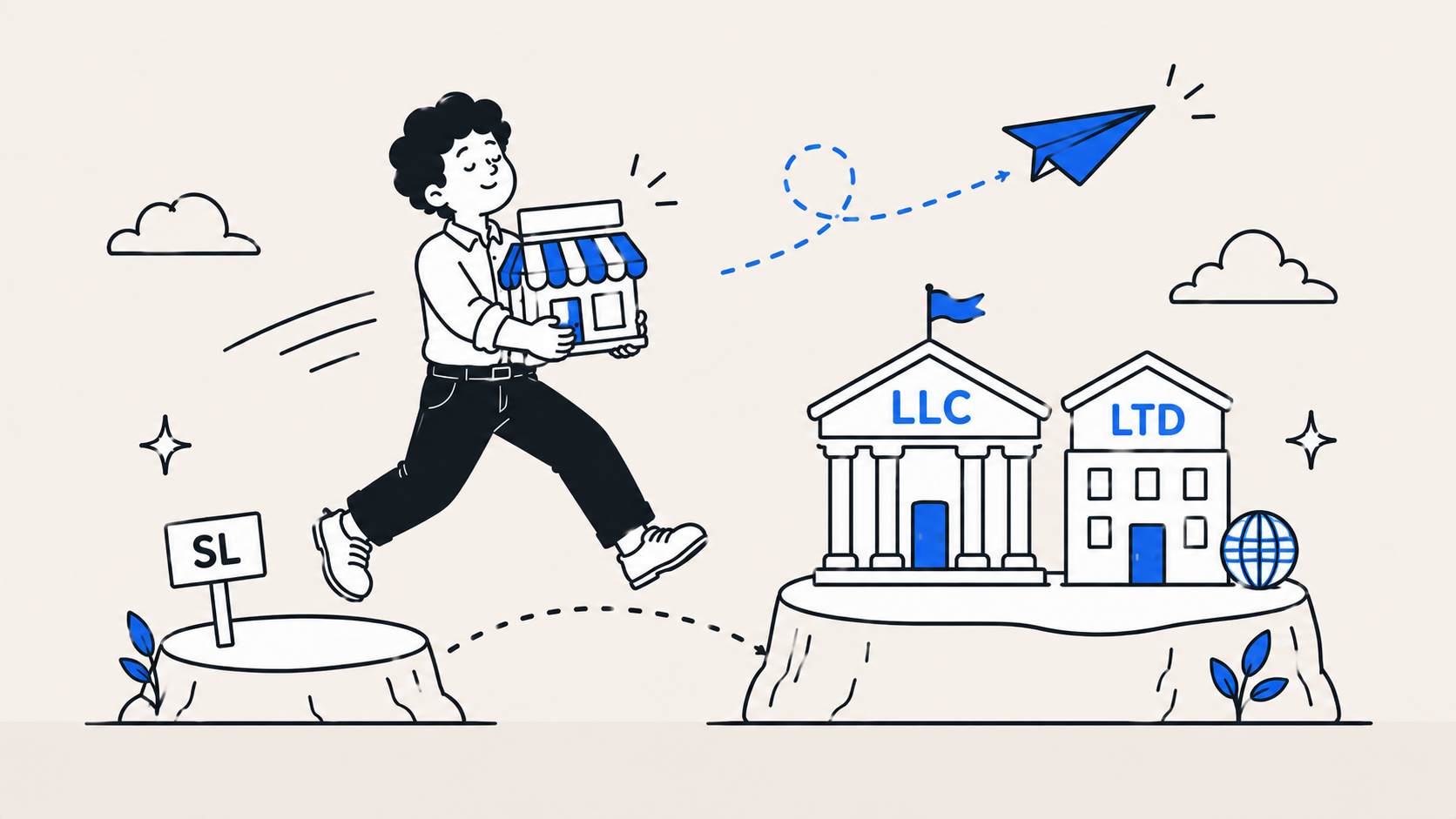
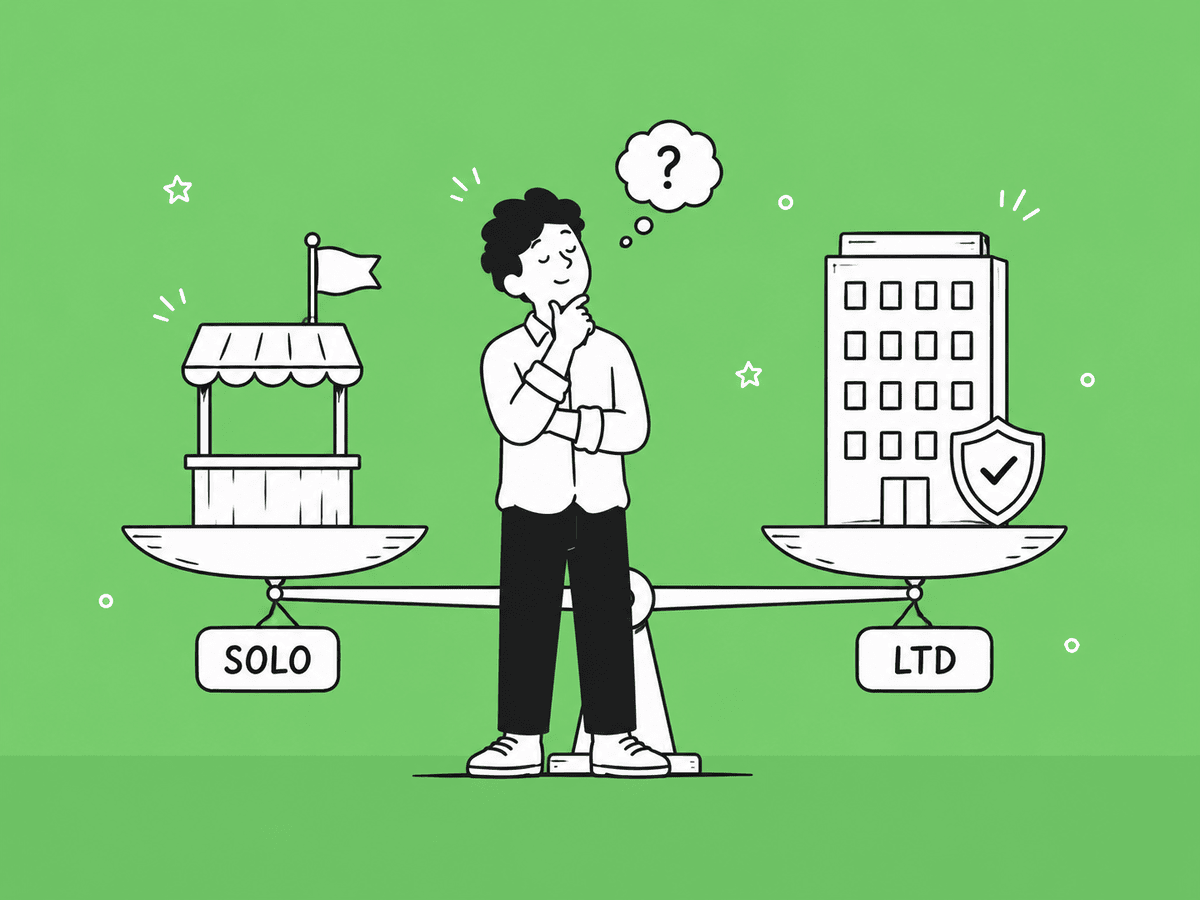
Not every Sri Lankan business needs to register abroad, and not every business benefits from waiting either. The right time depends on specific, practical triggers, such as being blocked by local payment gateways, losing client trust due to perception, needing to raise venture capital, or bidding for contracts that require a locally incorporated entity. When one or more of these situations apply to your business, registering a US LLC or UK Ltd stops being a “nice to have” and becomes the structural fix your business actually needs.
This article breaks down the specific instances where registering abroad makes sense, so you can match your own situation against real triggers instead of guessing. Whether you’re a freelancer hitting payment limits, a startup preparing to raise funding, or a business planning to sell directly to US or UK customers, the sections below will help you identify exactly when it’s time to make the move.
Instance 1: You’re Blocked or Limited by Local Payment Gateways
Sri Lanka’s payment infrastructure is still catching up. Stripe remains unavailable to Sri Lanka-registered businesses, so there’s no way to accept it directly for freelance work, agency billing, or product checkout. PayPal is now officially available, but only through a partnership with select local banks, and funds withdraw straight into LKR, not held or moved as USD.
For businesses that need to retain foreign currency, invoice international clients smoothly, or plug a payment gateway directly into a website or product, these local workarounds still fall short. A native Stripe or PayPal Business account abroad simply offers more.
Registering a US LLC or UK Ltd solves this directly. It qualifies you for a full Stripe account and an unrestricted PayPal Business setup tied to that jurisdiction, independent of local bank partnerships or LKR conversion rules. This matters most if you specifically need Stripe, want to hold earnings in USD/GBP, or are building a product requiring proper gateway integration.
Want to see every way to get paid from overseas before deciding?
Instance 2: You’re Consistently Billing International Clients and Losing Out on Rates/Trust
When clients see a Sri Lankan address on an invoice, pricing conversations often shift before the work even starts. Lower rates get assumed, negotiations get tougher, and some prospects quietly move on to a vendor that looks more “local” to them, even when the quality of work is identical. This isn’t about skill; it’s about the perception a jurisdiction carries when clients are comparing options at a glance.
A US LLC or UK Ltd changes that first impression. Quoting from a Delaware or London-registered entity puts you in the same bracket as competitors clients already trust, which makes it easier to hold your rates instead of justifying them. It also simplifies contracts, invoicing, and expectations around business norms clients are already familiar with. This matters most if you’re repeatedly asked to lower quotes, sense hesitation tied to your location, or want to position your business as a global provider rather than an offshore option.
Instance 3: You Want to Sell Directly to US/UK Consumers (E-commerce/Marketplaces)
Selling directly to US or UK consumers online comes with expectations that a Sri Lanka-based seller often can’t meet. Marketplaces like Amazon, Etsy, and payment-linked platforms increasingly require sellers to provide local tax identification, and buyers themselves tend to trust listings that show a familiar return address and standard consumer protections. Without a US or UK entity, sellers often face account restrictions, slower payouts, or simply lower conversion because the listing looks foreign.
Registering a US LLC or UK Ltd resolves this at the account level. It gives you eligibility for a US EIN or UK VAT registration, access to local fulfillment and return addresses, and marketplace accounts that aren’t flagged as international sellers. This matters most if you’re running or planning an Amazon FBA, Etsy, or Shopify store targeting US/UK buyers, since these platforms are often built around assumptions that only a local entity satisfies.
Instance 4: You’re Raising Venture Capital or Bringing on Investors
Most venture capital firms, particularly in the US, won’t invest in a foreign entity directly. They typically require a Delaware C-Corp before any funding conversation moves forward, since it gives them familiar legal protections, standard equity structures, and a straightforward path to future funding rounds or an exit. This isn’t a soft preference. For many funds, it’s a hard requirement built into their investment mandate. A Sri Lankan-registered company, or even a UK Ltd in some cases, simply doesn’t fit the structure most US investors are set up to work with.
If you’re planning to raise a seed round, bring on angel investors, or eventually pursue a Series A, incorporating as a Delaware C-Corp early avoids a costly restructure later, since converting an existing entity mid-raise can delay funding and add legal complexity. This matters most for startups actively pursuing US-based capital rather than bootstrapped businesses with no funding plans.
Instance 5: You Need a Foreign Bank Account to Get Around Local Forex Constraints
Most Sri Lankan exporters and service providers must repatriate and convert foreign currency earnings into rupees within a set window, currently 30 days under CBSL’s tightened rules introduced in 2026, after covering a limited list of approved foreign currency expenses. This makes it difficult to hold USD or GBP earnings for longer-term planning, hedge against rupee volatility, or simply keep funds in the currency your international clients pay you in.
A US LLC or UK Ltd lets you open a business bank account in that jurisdiction, where earnings can sit in USD or GBP without any local conversion deadline. This gives you control over when to convert funds, protection against currency depreciation, and simpler accounting for businesses billing entirely in foreign currency. This matters most if you’re regularly holding meaningful foreign currency balances, managing multiple international clients, or trying to avoid repeated forced conversions eating into your margins through exchange rate timing.
Instance 6: You’re Bidding for Contracts, Tenders, or Platforms That Require a Local Entity
Many enterprise contracts, government tenders, and B2B platforms simply won’t work with a vendor that isn’t locally incorporated. Procurement teams often have compliance rules requiring suppliers to hold a registered entity in the country where the contract is issued, and platforms conducting Know Your Business (KYB) checks frequently reject applications tied to a foreign address or unfamiliar jurisdiction. For Sri Lankan businesses trying to win larger, higher-value clients in the US or UK, this can mean being excluded before pricing or capability even come into the conversation.
Registering a US LLC or UK Ltd removes this barrier. It gives you a locally recognized entity that satisfies procurement requirements, passes KYB verification more easily, and signals operational legitimacy to enterprise buyers. This matters most if you’re pursuing government contracts, enterprise clients with strict vendor policies, or platforms that gate access behind local incorporation. If your current clients don’t require this, this particular trigger may not be relevant yet.
Instance 7: You’re Building a Brand or IP That Needs Protection in That Market
Trademarks, domain rights, and brand protection are jurisdiction-specific. Registering a business name, logo, or product brand in Sri Lanka doesn’t extend legal protection to the US or UK, so another company could register or use a very similar name in those markets, and you’d have no legal standing to stop them. For businesses planning to scale into US/UK customers, this creates real exposure, since someone else could claim your brand identity before you formally establish it there.
Registering a US LLC or UK Ltd, paired with the relevant trademark filing, secures your legal ownership of the brand in that specific market. It also simplifies domain disputes, marketplace brand registries like Amazon Brand Registry, and enforcement if someone infringes on your name or product identity. This matters most if you’re building a product-led or consumer-facing brand with long-term plans to operate in the US or UK, rather than just billing clients remotely without a public-facing brand presence there.
Additional Instances
A few other situations don’t apply to as many Sri Lankan businesses, but they’re still valid reasons to register abroad.
You’re Hiring or Contracting Talent Based in the US/UK
If you’re hiring or contracting talent based in the US or UK, running payroll, issuing compliant contractor agreements, and handling tax withholding usually requires a local employing entity. Without one, you’re often limited to informal arrangements that create legal and tax risk for both you and the person you’re hiring, and many US/UK-based professionals are hesitant to work with a foreign employer that can’t offer proper documentation or benefits.
A US LLC or UK Ltd lets you hire compliantly, issue standard employment or contractor paperwork, and build a team that expects to be paid and taxed the way local employees normally are.
You’re Planning Physical Presence or Market Entry
If you’re planning physical presence or market entry, meaning an actual office, warehousing, distribution, or eventual relocation of operations rather than remote work, registering ahead of that expansion is usually necessary rather than optional. Most commercial leases, supplier agreements, import/export arrangements, and local licensing require a registered entity in that country before you can even sign contracts.
Businesses planning to physically operate in the US or UK, not just bill clients there, typically need to incorporate first as a foundation for everything else that follows.
Both of these matter mainly for businesses moving beyond remote, client-based work into direct local operations or employment, rather than founders simply looking to bill and get paid more efficiently from abroad.
Need to Register a US LLC or UK Company? BR.LK Makes the Move Simple
Recognizing which of these instances applies to you is the hard part. Once you know why you need a US LLC or UK company, actually setting one up shouldn’t be another obstacle.
At BR.LK, we help Sri Lankan founders register a US LLC or UK company in 24 to 48 hours, fully remote, with everything handled end to end. That includes your Certificate of Formation, registered agent, EIN, Stripe and PayPal setup consultation, US or UK bank account guidance, and ongoing compliance support, so you’re not left figuring out the paperwork on your own once the company is formed.
Whether you’re unblocking payment gateways, preparing for investors, or building a brand that needs protection abroad, we’ve helped 5,000+ Sri Lankan founders make this exact move.
Registering a US LLC or UK company isn’t a default step for every Sri Lankan business, but it stops being optional once specific triggers show up in how you operate. Whether it’s payment gateways limiting how you get paid, client perception affecting your rates, marketplace requirements blocking a sale, investors demanding a specific structure, or forex rules restricting how you hold earnings, each instance points to a real operational gap that a foreign entity directly closes.
The businesses that benefit most aren’t necessarily the biggest ones; they’re the ones that can clearly identify which of these situations already applies to them. If none of these triggers match your current business, registering abroad can wait. But if even one or two do, that’s usually a sign the structure you’re operating under is holding you back more than it’s protecting you.
Key Takeaways
Stripe remains unavailable to Sri Lanka-registered businesses, and even with PayPal now officially available locally, gaps in gateway access and currency handling still push many businesses toward foreign registration.
A Sri Lankan address on an invoice can trigger lower-rate assumptions from international clients, while a US or UK entity puts you in the same bracket as competitors they already trust.
Selling directly to US or UK consumers through marketplaces like Amazon or Etsy often requires local tax registration and a domestic return address that only a foreign entity can provide.
Most US venture capital firms require a Delaware C-Corp before funding conversations begin, making early incorporation essential for startups actively pursuing investment.
CBSL’s tightened forex rules require exporters to convert foreign currency into rupees within 30 days, making a foreign bank account the only way to hold USD or GBP earnings long-term.
Government tenders, enterprise contracts, and platforms with strict KYB checks frequently require vendors to hold a locally incorporated entity before they’ll even consider a bid.
Trademark and brand protection are jurisdiction-specific, so a business name secured in Sri Lanka carries no legal weight in the US or UK unless separately registered there.
Hiring or contracting talent based in the US or UK typically requires a local employing entity to handle payroll, tax withholding, and compliant agreements.
Businesses planning actual physical presence abroad, such as an office, warehousing, or distribution, generally need to incorporate first before leases, supplier agreements, or licensing can move forward.
Registering abroad isn’t necessary for every Sri Lankan business, but becomes the right move once one or more of these specific operational triggers show up.
FAQs
Do I need a minimum revenue or client base before registering a US LLC or UK company?
No fixed threshold exists. What matters is whether you’re actually hitting one of the triggers, like blocked payments, lost deals over trust, or investor requirements, not your revenue size. Some freelancers register early to access Stripe; others wait until a specific deal or client demands it.
Will registering a US LLC or UK company make me a tax resident there?
No. Incorporating a company doesn’t automatically make you a personal tax resident of the US or UK. Tax residency depends on where you live and work, not where your company is registered. You’ll still need proper compliance in both jurisdictions, but formation alone doesn’t shift your residency status.
Can I register and manage a US or UK company without ever visiting in person?
Yes. Most founders register, get an EIN, open a bank account, and run the company entirely remotely from Sri Lanka. A registered agent handles the required local address, and formation services manage the paperwork, so physical presence isn’t necessary for standard LLC or Ltd setups.
Should I choose a US LLC or a UK Ltd for my business?
It depends on your goals. A US LLC suits freelancers, agencies, and service businesses wanting Stripe access and tax flexibility. A UK Ltd often fits businesses targeting UK clients or wanting a more traditional corporate structure. Investors and target market usually decide which fits better.
Does registering abroad mean I have to shut down or stop operating my Sri Lankan business?
No. Most founders keep their Sri Lankan business running alongside the new entity, using the foreign company for specific functions like invoicing, payments, or holding foreign clients, while local operations continue as normal. The two structures typically work together, not as a replacement.
Will I need to pay taxes in both Sri Lanka and the US/UK if I register there?
Possibly, but not automatically double taxed. Many structures, like a single-member US LLC, are pass-through entities with minimal US tax obligations for non-residents. You’ll still need to declare income in Sri Lanka. Proper structuring and tax treaties can prevent double taxation in most cases.
Wise Business isn’t available for companies registered in Sri Lanka, which leaves many local founders stuck when they need a proper way to receive international payments. The workaround most use is forming a US or UK LLC, since Wise supports businesses registered in these jurisdictions regardless of where the owner lives.
Once your LLC is set up, opening a Wise Business account becomes possible, but the process comes with its own eligibility rules, document requirements, and fees that are easy to get wrong if you don’t know what to expect.
This guide walks Sri Lankan LLC owners through exactly that, who qualifies, what documents you’ll need, how much it costs, and the mistakes that most often slow down approval. Whether you already have your LLC or you’re weighing Wise Business as part of your setup, this guide gives you a clear path to opening the account without unnecessary delays.
Why Sri Lankan Founders Need an LLC to Access Wise Business
Wise Business is not available for companies registered in Sri Lanka. If you try to sign up using a Sri Lankan business registration, you won’t get access to multi-currency receiving details, business invoicing tools, or any of the features that make Wise useful for running international payments at scale.
This is why many Sri Lankan founders register a US or UK LLC instead. Once your business is legally formed in a country Wise supports, you can open a full Wise Business account under that entity, no matter where you personally live. Your Sri Lankan passport or NIC works fine for identity verification; what matters is where the company itself is registered.
With a properly formed LLC, you get local account details in USD, EUR, and GBP, letting you receive client payments and manage business finances without the restrictions Sri Lankan founders otherwise face.
Why LLC Owners Choose a Wise Business Account
Running an LLC that works with clients across different countries brings a common problem: getting paid without losing money to fees and poor exchange rates. This is where a Wise Business account fits in.
Multi-currency receiving without multiple accounts: Instead of opening separate bank accounts in every country you work with, Wise gives your LLC local account details in several currencies at once. Clients pay you as if you had a local account in their country.
Lower FX fees than traditional banks: Wise uses the mid-market exchange rate and shows the fee upfront. This usually costs far less than the markups traditional business banks add when converting currencies.
Fast, fully online setup: There are no branch visits or lengthy paperwork chains. Most LLC owners can apply, upload documents, and get verified entirely online, often within days.
Local account details in USD, EUR, and GBP: Your LLC gets account numbers that function like local bank details in major currencies. This makes it easy to invoice international clients and receive payments without extra conversion steps on their end.
For LLC owners handling cross-border income, these features solve real friction points that traditional banks weren’t built to handle.
Who Can Open a Wise Business Account
Wise looks at your LLC when deciding eligibility, not your personal location. If the LLC is properly registered, has a clear structure, and its details check out, a Sri Lankan founder can open the account without issue.
To be eligible, your LLC generally needs:
Legal registration in a Wise-supported jurisdiction (such as the US or UK).
A clear business structure with matching legal name and registration number.
Transparent ownership, since Wise verifies directors, owners, or controlling persons.
Consistent details across your incorporation documents, website, and invoices.
If your LLC meets these criteria, approval is usually straightforward, even for non-US residents applying from Sri Lanka.
What Are the Documents You Need to Provide When Applying for a Wise Business Account ?
To open a Wise Business account, your LLC needs to have its documentation ready before you start the application. Having everything prepared upfront helps avoid delays during verification.
Here’s what you’ll typically need:
Legal name of your LLC, matching your Articles of Organization exactly.
Articles of Organization (also called Certificate of Formation or Certificate of Organization, depending on the state).
EIN confirmation letter, such as the CP575, 147C, or IRS-stamped SS-4. Note that this replaces the SSN/TIN requirement Wise lists for sole proprietors, since an LLC uses an EIN instead.
Business trading address, your actual place of work such as an office or co-working space. This must be a physical location, PO boxes and virtual mailing addresses aren’t accepted.
Government-issued ID, your Sri Lankan passport works for this.
List of beneficial owners, anyone who owns 25% or more of the LLC, along with full name, date of birth, residential address, email, and job title. Non-US owners need a photo ID instead of an SSN.
List of directors, including full name, country of residence, and date of birth.
Company website and business description, along with how you plan to use the account, such as receiving client payments, paying contractors, or converting currencies.
Make sure the business name, address, and ownership details match exactly across all your documents. Mismatches are one of the most common reasons applications get delayed.
How to Open a Wise Business Account for Your LLC (Step-by-Step)
Once your LLC is registered and your documents are ready, the application itself is straightforward. Here’s how it works:
Step 1: Confirm your LLC is active and in good standing. Your business needs to be fully registered before you apply. Wise verifies the entity first, so an incomplete or pending registration will hold up the process.
Step 2: Get your EIN. If you don’t already have one, apply for your EIN through the IRS. Non-residents without an SSN or ITIN can’t use the online EIN tool, so you’ll need to fax or mail Form SS-4 instead.
Step 3: Sign up at wise.com/business. Select your LLC’s country of registration, not Sri Lanka, since the account is tied to where the business is formed.
Step 4: Enter your LLC’s details. Fill in your legal business name, EIN, state of formation, and business address. Your registered agent’s address works here.
Step 5: Upload your documents. This includes your Articles of Organization, operating agreement, EIN confirmation letter, and personal ID for each beneficial owner.
Step 6: Complete identity verification. Wise uses a third-party verification service, which usually involves a selfie alongside your passport photo.
Step 7: Wait for approval. Verification typically takes 3 to 7 business days for non-resident LLC owners, though it can stretch to 10 days in some cases. Once approved, you’ll get your USD account details immediately, with the option to activate other currencies afterward.
Wise Business Account Fees for LLC Owners
Wise Business runs on a pay-as-you-go pricing model, so there’s no monthly subscription to worry about. Registering for the account itself is free, but activating your ability to receive money in 22 currencies comes with a one-time fee of $31 USD. This single fee unlocks every core feature, so there are no hidden add-on charges after setup.
Once your account is active, here’s what LLC owners typically pay:
Holding money in your account is free, no matter how many currencies you keep balances in.
Sending money costs a variable fee starting from 0.57%, depending on the currency and route.
Converting money between currencies also starts from 0.57%, with no markup on the mid-market exchange rate.
Receiving domestic payments in currencies like USD, EUR, GBP, AUD, and CAD is free.
Receiving USD wire or Swift payments costs a fixed $6.11 per payment.
Receiving GBP Swift payments costs £2.16, and EUR Swift payments cost €2.39 per transaction.
Using the Wise Multi-Currency Card to spend is free, and ATM withdrawals up to $250 per month come with no extra fee. After that, a $1.95 + 1.95% fee applies per withdrawal.
For LLC owners who process a high volume of international payments, Wise also offers a volume discount once you convert over $25,000 (or the equivalent) in a given period.
Compared to a traditional bank, where wire fees, conversion markups, and account maintenance charges add up quickly, Wise’s transparent, pay-per-use structure tends to work out cheaper for LLCs handling regular cross-border transactions. The main cost to plan for upfront is the $31 setup fee, everything after that scales with how much you actually send, receive, or convert.
Beyond basic money transfers, Wise Business packs in a set of tools that make it practical for LLCs handling day-to-day operations across borders.
Multi-currency balances: Hold and manage money in 40+ currencies within a single account, so you’re not juggling separate accounts for every country you work with.
Local receiving details: Get account numbers in USD, EUR, GBP, and more, letting international clients pay you as if you had a local bank account in their country.
Batch payments: Pay multiple contractors, vendors, or team members in one go instead of processing transfers one at a time. This is useful once your LLC scales beyond a single freelancer relationship.
Wise Business API: Programmatically create transfers, check live exchange rates, manage recipients, and pull transaction history without logging into the dashboard, handy if you want to connect Wise to your own systems.
Accounting software integration: Connect directly with tools like Xero and QuickBooks, so your Wise transactions sync with your bookkeeping instead of requiring manual entry.
Multi-currency debit card: Spend directly from your account balances in the currency you’re holding, avoiding unnecessary conversion fees when paying for business expenses abroad.
Multiple users and permissions: Add team members or accountants to your account with controlled access, useful as your LLC grows beyond a solo operation.
Together, these features turn Wise Business from a simple transfer tool into an operating account that can support an LLC’s full financial workflow, from getting paid to paying out and reconciling books.
Wise Business vs. a Traditional US Bank Account for Your LLC
For non-resident LLC owners, choosing between Wise Business and a traditional US bank often comes down to speed, cost, and what you actually need day to day.
Setup speed: Wise Business is built for remote applicants. You can register, upload documents, and get verified fully online, often within days. Traditional banks usually require an in-person visit or a much longer remote onboarding process, which can be a dealbreaker for founders based in Sri Lanka.
Fees: Wise charges a one-time $31 setup fee with no monthly charges, and transparent per-transaction fees for sending, converting, and receiving. Traditional banks often carry monthly maintenance fees, wire fees, and marked-up exchange rates that aren’t disclosed upfront.
Currency support: Wise gives you local receiving details in 22+ currencies from a single account. Most traditional banks only offer this through separate, harder-to-open foreign currency accounts.
FDIC insurance: This is where traditional banks win. Wise is an electronic money institution (EMI), not a bank, so balances held with Wise aren’t FDIC-insured. A traditional US bank account carries that protection.
Because of this difference, many LLC owners don’t treat Wise Business as a replacement for a bank. Instead, they use Wise for receiving international payments and converting currencies, then move larger balances into a US bank account like Mercury or Relay for storage and day-to-day operating stability.
Comparison Summary
Feature
Wise Business
Traditional US Bank
Setup process
Fully online, remote-friendly
Often requires in-person visit or lengthy remote onboarding
Limited, usually requires separate foreign currency accounts
Exchange rates
Mid-market rate, no markup
Often marked up
FDIC insurance
Not insured (EMI, not a bank)
Insured
Best for
Receiving payments, converting currencies
Holding large balances, long-term stability
Common Mistakes Sri Lankan LLC Owners Make with Wise Business
Most account delays and rejections aren’t about being based in Sri Lanka, they come down to avoidable errors in how the application is prepared or how the account is used afterward.
Mismatched details across documents: Your business name, address, and ownership details need to match exactly across your Articles of Organization, EIN letter, website, and invoices. Even small inconsistencies, like a shortened business name on one document, are a common reason for delays or follow-up requests.
Vague business descriptions: Writing something generic like “consulting” or “online services” tells Wise very little. The more specific you are about what your LLC does and how you’ll use the account, the fewer questions you’ll get during verification.
Using a PO box as your address: Wise requires a physical trading address. PO boxes, mail forwarding services, and other virtual addresses aren’t accepted, and using one will hold up your application.
Mixing personal and business funds: Running personal transactions through your Wise Business account defeats the purpose of having a separate LLC account and can complicate bookkeeping and compliance later.
Treating Wise as a full bank: Wise Business isn’t FDIC-insured. Some LLC owners keep large balances sitting in Wise long-term, which carries more risk than holding those funds in a traditional US bank account.
Incomplete beneficial owner or director information: Missing details for anyone who owns 25% or more of the LLC, or leaving out a director, is a frequent cause of applications getting stuck in review.
Getting these details right the first time is usually the difference between a smooth approval and a drawn-out back-and-forth with Wise’s verification team.
Need Help Getting Your Wise Business Account Approved?
Wise Business approval often comes down to getting your documentation and business details right the first time. At BR.LK, we help Sri Lankan LLC owners get set up with Wise, Stripe, and US banking, so you avoid delays and back and forth with verification teams.
Wise and Banking Setup Guidance: We help you prepare the right documents and details so your Wise Business application goes through smoothly
EIN and Compliance Handled: If you’re missing an EIN or running into document issues, we help sort that out too
Local Language Support: Get guidance in Sinhala or Tamil throughout the process
If You Don’t Have an LLC Yet: We also handle US LLC formation end to end, in 24 to 48 hours, if you’re setting one up from scratch
Wise Business gives Sri Lankan LLC owners a practical way to receive international payments, hold multiple currencies, and run cross-border operations without the friction of traditional banking. The account itself isn’t complicated to open, most delays come from incomplete documentation or inconsistent details rather than the applicant’s location.
If you already have your LLC set up, the path forward is straightforward: gather your documents, keep your business details consistent, and apply. If you’re still weighing whether to form an LLC, that step comes first, since Wise Business simply isn’t available to Sri Lankan-registered companies.
Treat Wise Business as what it’s built for: fast, low-cost international transfers and multi-currency receiving. For holding large balances long term, pairing it with a traditional US bank account gives you the stability Wise doesn’t provide on its own.
Get the fundamentals right from the start, matching details, clear ownership, a specific business description, and approval typically moves quickly.
Key Takeaways
Wise Business is not available for companies registered in Sri Lanka, so most Sri Lankan founders form a US or UK LLC to access it.
Eligibility depends on your LLC’s registration and structure, not your personal location, so Sri Lankan residents can qualify as long as the entity checks out.
Wise Business gives your LLC local account details in multiple currencies, letting international clients pay you as if you had a local bank account.
Setting up the account requires documents like your Articles of Organization, EIN confirmation letter, business address, and details of beneficial owners and directors.
The application process is fully online and typically takes 3 to 7 business days for non-resident LLC owners, though it can take longer in some cases.
Wise Business charges a one-time $31 setup fee with no monthly subscription, and transaction fees start from 0.57% for sending and converting money.
Beyond transfers, Wise Business includes features like batch payments, an API, accounting software integration, and a multi-currency debit card.
Wise is an electronic money institution, not a bank, so balances held with it aren’t FDIC-insured, unlike a traditional US bank account.
Most account delays come from mismatched business details, vague activity descriptions, or incomplete owner information rather than the applicant’s location.
Many LLC owners use Wise Business for receiving payments and converting currencies, then keep larger balances in a traditional US bank for long-term stability.
FAQs
Can a Sri Lankan resident open a Wise Business account for a US LLC?
Yes. Wise evaluates the LLC’s registration and documentation, not the founder’s residency. As long as your LLC is properly formed in a supported country and your details are consistent, a Sri Lankan resident can apply and get approved without issue.
Do I need an EIN to open a Wise Business account for my LLC?
Yes, for a US LLC. Wise requires an EIN confirmation letter, such as the CP575 or 147C, as part of verification. Without it, your application won’t move forward, so it’s best to secure your EIN before applying.
Can I use my Sri Lankan NIC, or do I need a passport?
A passport is the safer option. Wise’s identity verification is built around passport-style documents, and using one avoids potential mismatches or rejections that can happen with a national ID card during the review process.
Can I connect Wise Business to Stripe or PayPal?
Yes. Many LLC owners link their Wise Business account to Stripe or PayPal to receive payouts, since Wise can provide valid US or UK banking details. This is a common workaround for non-residents without local bank accounts.
Why is Wise asking for more documents after signup?
This usually happens when your business description is vague, or details don’t match across your documents and website. Wise’s compliance team follows up to confirm ownership, activity, or address details before approving the account.
Can freelancers in Sri Lanka use Wise Business without an LLC?
No. Wise Business requires a registered business entity. Freelancers without an LLC can only use a personal Wise account, which works for receiving payments but doesn’t offer business-specific features like invoicing or local receiving details.
Are there alternatives if Wise Business isn’t available for my Sri Lankan company?
Forming a US or UK LLC is the most direct route to full Wise Business access. Some founders also use payment processors or partner accounts as interim workarounds, though these typically offer fewer features than a properly registered LLC.
Going into business with someone else changes more than just the workload. It changes how the business is owned, how profits are split, and importantly, how much personal risk each person is taking on. For many small business owners in Sri Lanka, from two friends opening a shop to family members starting a service business together, a partnership is the natural next step up from working solo.
But a partnership isn’t just a sole proprietorship with more people attached. It comes with its own registration process, its own tax treatment, and a legal principle, joint and several liability, that every partner needs to understand before signing anything.
In this guide, you’ll learn how to do your partnership business registration in Sri Lanka step by step, including the documents you need, how registration fees and taxes work, what a partnership agreement should cover, and what happens if a partner leaves, joins, or the business needs to be wound up.
So, read on to register your partnership the right way and go in with a clear picture of what you’re taking on.
What Is a Partnership Business in Sri Lanka?
A partnership is a business owned and run by two or more people who agree to share the capital, work, and profits. It’s governed by the Partnership Ordinance No. 21 of 1866, one of the oldest pieces of business legislation still in force in Sri Lanka.
Like a sole proprietorship, a partnership is not a separate legal entity. The business and the partners are legally the same thing. This means every partner carries personal liability for the partnership’s debts, not just up to their share of ownership, but potentially the full amount (more on this later).
This structure suits people who want to go into business with someone else, pool resources, and split responsibilities, without the cost and paperwork of incorporating a Private Limited Company.
Requirements to Start a Partnership Business in Sri Lanka:
At least two partners: There’s no fixed legal maximum, but larger groups often outgrow the partnership structure and move toward incorporation.
All partners must be Sri Lankan citizens or permanent residents. Foreign nationals cannot register as partners.
A physical registered business address in the area covered by your local Divisional Secretariat.
A partnership agreement setting out how the business will run (not legally mandatory, but strongly recommended, covered next).
Partnership vs. Sole Proprietorship vs. Pvt Ltd: Where Does It Fit?
If you’re still deciding on a structure, here’s how a partnership compares to the other two options.
Factor
Partnership
Sole Proprietorship
Private Limited (Pvt Ltd)
Legal identity
Same as the partners
Same as the owner
Separate legal entity
Liability
Personal, joint and several
Unlimited personal liability
Limited to company assets
Registration
In person, Divisional Secretariat
In person, Divisional Secretariat
Online, eROC
Taxation
6% partnership tax, then allocated to partners’ personal income
Taxed as personal income
Separate company tax
Foreign ownership
Not allowed
Not allowed
Up to 100% in most sectors
Credibility
Moderate
Lower
Higher
Continuity
Depends on the agreement
Ends with the owner
Continues beyond ownership changes
A partnership sits between the two other structures. It gives you more capacity than a sole proprietorship, since you can pool capital and split the workload with someone else, but it doesn’t offer the liability protection or formality of a Pvt Ltd company. Every partner remains personally on the hook for the business’s debts, regardless of their ownership share.
In practice, a partnership makes the most sense when two or more people want to run a business together, are comfortable sharing that liability, and don’t yet need the cost or complexity of incorporating. It’s a step up from going solo, but a step below forming a company.
Or, if you’re looking to bring in outside investors, limit personal liability, or work with foreign shareholders, our Business Registration guidewalks through incorporating a Pvt Ltd company instead.
Do I Need a Partnership Agreement (Deed)?
Legally, no. Under the Partnership Ordinance, a partnership can be formed with nothing more than a verbal or implied agreement between the partners, and it’s still enforceable in law. There’s no requirement to submit a written agreement to register your business at the Divisional Secretariat.
That said, going without one is one of the riskiest shortcuts a new partnership can take.
Why Is It Recommended to Have a Partnership Agreement (Deed)?
Without a written agreement, disputes between partners fall back on the default rules of the Partnership Ordinance, which may not reflect what any of you actually intended. A written agreement protects everyone by putting expectations on record before problems arise, not after.
It also gives you a clear reference point if a partner wants to leave, a new partner wants to join, or the business needs to be wound up. Without one, these situations tend to become slower, more expensive, and more likely to end in dispute.
Because of how much rests on it, it’s worth having a lawyer draft or review the agreement rather than using a generic template.
A Solid Partnership Agreement Should Set Out:
Capital contribution: how much each partner is putting in, and in what form (cash, assets, property).
Profit and loss split: how earnings and losses are divided, which doesn’t have to match capital contribution.
Roles and responsibilities: who manages what day to day.
Decision-making: how major business decisions get approved.
Admission of new partners: the process and consent required to bring someone else in.
Exit of a partner: what happens if someone wants to leave, retire, or sell their share.
Dispute resolution: how disagreements between partners get settled.
Dissolution terms: what triggers winding up the partnership, and how remaining assets and debts are handled.
A partnership agreement won’t stop disagreements from happening, but it decides how they get resolved before emotions are involved. Treat it as a founding document, not paperwork to get to later. The best time to agree on these terms is before there’s any money, property, or conflict on the table.
What Are the Documents You Need to Submit for Partnership Business Registration in Sri Lanka?
Gathering everything before you visit the Divisional Secretariat will save you a return trip. Here’s what every partner needs to prepare.
1. NIC or passport copies: Every partner must provide a clear copy of their National Identity Card. Since foreign nationals cannot register as partners, a passport is only relevant if a partner is a Sri Lankan citizen residing overseas.
2. Grama Niladhari report: A certified report from the Grama Niladhari of the area where the business operates, confirming the business and its location. This must be countersigned by the Divisional Secretary.
3. Proof of business premises: This depends on how the property is held:
A certified copy of the deed if the premises are owned by a partner
A rent or lease agreement if the premises are rented
A consent letter from the owner, plus their NIC copy, if the premises belong to a family member
4. Trade permit: If required for your business type, obtain this from the relevant municipal or divisional council.
5. Partnership agreement: While not legally mandatory, submitting your written agreement alongside the application helps establish the terms on record from day one.
6. Affidavit and Declaration Statement: Each partner must sign a separate affidavit and declaration confirming the details in the application. These are signed individually, in each partner’s own name, not on behalf of the partnership.
7. Sector-specific approvals: Certain regulated industries require additional clearance before the Divisional Secretariat will process your registration. For example:
Food-related businesses need approval from the Public Health Inspector
Pharmacies need certification from the Sri Lanka Medical Council
Guest houses and spas need reports from the local police division
Ayurvedic practices, nurseries, and vocational service providers each fall under their own sector-specific approving authority
Check with your local Divisional Secretariat to confirm which, if any, apply to your partnership.
Missing any one of these documents typically means resubmitting your application, so it’s worth double-checking the full list before your visit.
How to Do Your Partnership Business Registration: Step-by-Step Guide for 2026
Registering a partnership is an in-person process, handled entirely through your local Divisional Secretariat. There’s no online option, unlike company registration through eROC. Here’s how it works, step by step.
Step 1: Get Form BNR-03. Visit the Divisional Secretariat covering your business location and request the application for registration of a business name of a partnership business. This is a different form from the BNR-01 used for sole proprietorships, so make sure you ask for the right one.
Step 2: Complete the form with all partners’ details. This includes each partner’s full name, date of birth, place of residence, contact details, and signature, along with the business name, principal place of business, date of commencement, and initial capital.
Step 3: Each partner signs a separate affidavit and declaration. These confirm the details in the application and must be signed individually by each partner, not collectively as the partnership.
Step 4: Gather your supporting documents. NIC copies, proof of premises, trade permit if required, and any sector-specific approvals. See the documents section above for the full list.
Step 5: Get your Grama Niladhari report. This certifies the business and premises details and must be countersigned by the Divisional Secretary.
Step 6: Submit everything and pay the registration fee at the Divisional Secretariat office.
Step 7: Receive your Certificate of Registration. Once approved, this must be displayed at your business premises, just as with a sole proprietorship.
Important Note
Your business name must be registered within 14 days of commencing operations, extendable to a ceiling of 30 days in some cases. Don’t wait until the business is already running to start this process.
Once submitted with all documents in order, registration typically takes 7 to 14 working days.
Do I Have to Pay Registration Fees for This Arrangement?
Yes. There’s no fixed nationwide rate for partnership registration. The fee depends on your local Divisional Secretariat and the capital you declare on your application, so amounts can vary from one office to another. It’s best to call or visit your relevant office ahead of time to confirm the exact figure, so there are no surprises on the day you submit.
How Partnerships Are Taxed?
Partnership income isn’t taxed quite like a sole proprietorship’s, and understanding this upfront helps you plan cash flow correctly from year one.
A partnership pays a flat 6% tax on its income once that income exceeds Rs. 1 million. This is a tax on the partnership itself, calculated before profits are split between partners.
Once that 6% is paid, the remaining profit is allocated to each partner according to their agreed ownership share. That share is then added to each partner’s other personal income, if any, and taxed at Sri Lanka’s prevailing personal income tax rates, which range from 6% to 36% depending on total income.
To avoid double taxation, partners can claim a credit for the 6% partnership tax already paid, offsetting it against their personal income tax liability on that same share of profit.
This is worth flagging because it differs from how a sole proprietorship is taxed. As a sole trader, your business income is treated entirely as personal income, and you’re entitled to an annual tax-free relief of Rs. 1.8 million before any tax applies. A partner doesn’t get that same flat individual relief on their share of partnership income in the same way, since the partnership-level tax applies first.
Furthermore, VAT registration works the same way it does for other business structures. If your partnership’s turnover exceeds the current VAT threshold, you’re required to register and charge VAT on taxable sales.
Given how the 6% partnership tax, personal tax credit, and VAT threshold interact, it’s worth speaking to a tax advisor early, particularly if partners have significant income from other sources, since that can affect how much benefit the tax credit actually delivers at an individual level.
What is Meant by Joint and Several in Partnership Business Aspect in Sri Lanka
“Joint and several liability” is the legal principle behind how partnership debt works in Sri Lanka, and it’s the single biggest risk of this business structure.
Under the Partnership Ordinance, every partner is liable for the full debts of the partnership, not just a portion matching their ownership share. “Joint” liability means all partners can be held responsible together. “Several” liability means a creditor can also pursue any one partner individually for the entire outstanding amount, regardless of what that partner actually owns or how much of the debt they personally caused.
Why Does This Matter for Partners?
It removes the protection that ownership percentage might suggest you have. A 20% partner can end up personally covering 100% of a debt if the other partners can’t pay, and can only try to recover that money from them afterward, which is often difficult in practice.
What Are the Practical Risks?
The exposure goes beyond business decisions gone wrong. If one partner signs a bad contract, takes on debt without informing the others, or simply makes a poor call, every partner shares the liability. It also works the other way: if a partner has personal debts or a creditor comes after them individually, that creditor may be able to reach partnership assets to satisfy it, even if the rest of the partners had nothing to do with it.
How Do You Protect Yourself Against This?
This is exactly why a solid written partnership agreement matters so much. While it can’t override the legal principle of joint and several liability toward outside creditors, it can set clear terms for how partners resolve disputes and recover losses from each other internally.
If your risk tolerance is low, or you’re going into business with people whose financial habits you can’t fully vouch for, this is often the point where a Private Limited Company becomes the safer structure instead.
What Happens If a Partner Leaves, Dies, or a New Partner Joins?
This section only applies if your partnership agreement includes a continuity clause. Without one, any of these events can dissolve the partnership entirely, covered in the next section.
If a Partner Leaves: A partner can retire or sell their share voluntarily. The remaining partners typically buy out the exiting partner’s stake or reallocate it among themselves, based on terms set in the agreement. The exiting partner isn’t automatically released from liability for debts incurred while they were still a partner.
If a Partner Dies: If the agreement provides for continuity, the surviving partners can carry on the business rather than winding it up. The deceased partner’s share usually passes to their estate, and the agreement should set out how that share is valued and settled with the heirs.
If You Want to Add a New Partner: Bringing in a new partner requires consent from the existing partners and an updated written agreement reflecting the new capital contribution, profit share, and role. The new partner should also sign their own affidavit and declaration.
Important note:
Whenever partner details change, whether someone joins, exits, or the business address changes, you need to notify your Divisional Secretariat and update your registration accordingly. Delaying this can create mismatches between your official records and who’s actually running the business.
How to Dissolve a Partnership Business in Sri Lanka
There are a few general pathways that lead to a partnership being dissolved. They are as follows:
Default dissolution: Without a continuity clause in the agreement, a partnership dissolves automatically the moment any single partner dies, withdraws, retires, or becomes bankrupt. This is the default position under the Partnership Ordinance. It applies to the entire partnership, not just the affected partner’s share.
Voluntary dissolution: Partners can also choose to end the partnership by mutual agreement. This is typically done by following the notice period and process set out in the partnership agreement, giving everyone a clear, pre-agreed way to wind things down.
Dissolution by the agreed term or purpose: Some partnerships are formed for a fixed period or a specific project rather than an open-ended business. In these cases, the partnership dissolves automatically once that term ends or the purpose is fulfilled. Partners can choose to continue the business, but doing so usually means renewing or updating the agreement.
Court-ordered dissolution: In cases of serious dispute, misconduct, or a partner unable to fulfil their obligations, a court can order the partnership to be dissolved.
Things You Have to Do When Winding Up Your Partnership Bussiness
Once dissolution is triggered, you need to:
Settle outstanding debts before distributing any remaining assets. Creditors are paid first.
Distribute remaining assets among the partners according to their agreed shares in the partnership agreement.
Finalise accounts, including any outstanding tax filings for the partnership and its partners.
Deregister the business with your Divisional Secretariat once winding up is complete.
Notify relevant parties, including banks, landlords, and any regulatory bodies tied to sector-specific approvals your business held.
This is a more informal process than closing a Pvt Ltd company, which involves formally striking off the company with the Registrar of Companies and settling any outstanding annual return obligations.
Common Mistakes to Avoid When You’re Partnering Up for a Business
Even a simple structure like a partnership can run into trouble if a few basics get overlooked early on. Here’s what to watch out for.
Operating without a written agreement: Verbal agreements are legally enforceable, but they leave far too much open to interpretation once real money and disagreements are involved. Put the terms in writing before you start operating, not after a dispute forces the issue.
Not filing separate affidavits per partner: Each partner needs to sign their own affidavit and declaration individually. Submitting a single joint statement or missing one partner’s signature is a common reason applications get sent back.
Missing the 14-day registration window: Many partners start operating before registering, assuming they can formalise things later. The Ordinance requires registration within 14 days of commencing business, extendable to a 30-day ceiling. Waiting longer than that puts you out of compliance from day one.
Assuming profit share equals liability share: A partner who owns 20% of the business can still be personally liable for 100% of the partnership’s debts. Don’t mistake your ownership percentage for a cap on your financial exposure.
Not planning for a partner’s exit or death upfront: Without a continuity clause in the agreement, one partner leaving or passing away can dissolve the entire partnership, even if the remaining partners want to keep going. Address this in the agreement from the start, not when it actually happens.
Skipping sector-specific approvals: If your business falls under a regulated industry, registering the partnership name alone isn’t enough to operate legally. Confirm what additional approvals apply to you before you open your doors.
Can Foreigners Join a Partnership?
No. Only Sri Lankan citizens and permanent residents can register as partners in a partnership business. This holds true even if a foreign national holds a valid visa or temporary residency in Sri Lanka.
This is the same restriction that applies to sole proprietorships, since neither structure is a separate legal entity from its owners. A foreign national who wants to go into business in Sri Lanka, whether alone or with others, cannot do so through a partnership or sole proprietorship.
If you’re a foreign investor looking to start a business with local or international partners, incorporating a Private Limited Company is the path available to you instead. A Pvt Ltd company allows up to 100% foreign ownership in most sectors, and is registered entirely online through the eROC portal rather than in person at a Divisional Secretariat.
Conclusion
Registering a partnership in Sri Lanka is a straightforward, in-person process, but the real work happens before you ever visit the Divisional Secretariat. Getting the partnership agreement right, understanding how joint and several liability exposes every partner personally, and knowing how partnership income is taxed all matter far more than the paperwork itself.
If you take one thing from this guide, let it be this: a written partnership agreement isn’t optional in practice, even if it’s optional in law. It’s what decides how disputes, exits, and even dissolution play out, long before any of those things actually happen.
From there, the process is simple. Gather your documents, complete Form BNR-03, get each partner’s affidavit signed, and submit everything to your local Divisional Secretariat within 14 days of starting operations.
Go in with the agreement settled, the liability understood, and the tax treatment planned for, and your partnership starts on solid ground instead of catching up to problems later.
Key Takeaways
A partnership business in Sri Lanka is governed by the Partnership Ordinance No. 21 of 1866 and is not a separate legal entity from its partners.
Every partner carries personal, joint and several liability for the partnership’s debts, regardless of their ownership share.
A written partnership agreement is not legally required, but it’s strongly recommended to protect all partners and prevent disputes.
Partnership registration is an in-person process handled through your local Divisional Secretariat, using Form BNR-03.
Each partner must sign a separate affidavit and declaration as part of the registration application, not one joint statement.
Your business name must be registered within 14 days of commencing operations, extendable to a 30-day ceiling.
Registration typically takes 7 to 14 working days once all documents are submitted correctly.
Partnerships pay a flat 6% tax on income above Rs. 1 million, after which remaining profit is allocated to partners and taxed at personal income tax rates.
Without a continuity clause in the agreement, a partner’s death, withdrawal, or bankruptcy can dissolve the entire partnership by default.
Only Sri Lankan citizens and permanent residents can register as partners, so foreign nationals must incorporate a Private Limited Company instead.
FAQs
Is a partnership agreement legally required?
No. Under the Partnership Ordinance, a verbal or implied agreement is legally enforceable, and there’s no requirement to submit a written agreement to register. That said, a written agreement is strongly recommended to protect all partners and avoid disputes down the line.
What happens if one partner wants out but others don’t?
If the agreement includes a continuity clause, the remaining partners typically buy out the exiting partner’s share and continue operating. Without one, that partner’s exit can trigger dissolution of the entire partnership by default under the Ordinance.
How is partnership income taxed differently from a sole proprietorship?
A partnership pays a flat 6% tax on income above Rs. 1 million before profits are split. A sole proprietorship’s income is taxed entirely as personal income, with a Rs. 1.8 million tax-free relief that partners don’t receive the same way.
Can a partnership convert to a Pvt Ltd company later?
Yes. Many businesses start as a partnership and later incorporate as a Private Limited Company once they need limited liability, outside investment, or foreign shareholders. This involves registering a new company separately through the eROC portal.
Are partners liable for debts incurred by another partner without their knowledge?
Yes. Under joint and several liability, each partner can be held responsible for the partnership’s full debts, even ones they didn’t know about or approve. This is one of the biggest risks of the partnership structure.
Does a partnership need its own TIN separate from the partners’ personal TINs?
Yes. A partnership requires its own Taxpayer Identification Number for filing the partnership-level 6% tax, separate from each partner’s personal TIN used to declare their individual share of the profit.
Choosing a name for your business is exciting, but before you can use it, there’s a legal step many first-time entrepreneurs get wrong: registering it correctly. In Sri Lanka, “business name” and “company name” are not interchangeable. They fall under different laws, different authorities, and different processes, and mixing them up can mean rejected applications, wasted fees, or a name you don’t actually have the right to use.
Whether you’re a freelancer trading under a name other than your own, a partnership choosing a shared identity, or an entrepreneur incorporating a Private Limited company, this guide covers exactly what business name registration means for your situation, including the rules your name must follow, how to check availability, and what it costs.
By the end, you’ll know exactly which process applies to you and how to avoid the naming mistakes that slow new businesses down.
Business Name vs Company Name: Is There a Difference in Sri Lanka?
Yes, and mixing them up is one of the most common mistakes new entrepreneurs make when starting out. In Sri Lanka, “business name” and “company name” fall under two completely different laws, are registered with two different authorities, and follow two different processes.
A business name is registered under the Business Names Ordinance. It applies to sole proprietors and partnerships who want to trade under a name other than their own true, full legal name. This registration is handled locally through your area’s Divisional Secretariat or Provincial Council.
A company name is reserved under the Companies Act No. 07 of 2007. It applies to Private Limited Companies, Public Limited Companies, and other incorporated entities, and it is reserved online through the eROC portal run by the Department of the Registrar of Companies.
Keep in mind that these two systems don’t talk to each other. A name being available on the eROC portal does not mean it is free to use as a business name at your Divisional Secretariat, and vice versa.
Quick decision box:
If you are registering as a sole trader or partnership, then register your business name at your local Divisional Secretariat.
If you are incorporating a Private Limited or Public Limited company, then reserve your company name through eROC.
Knowing which path applies to you before you start searching for a name saves you from wasted time, duplicate fees, and rejected applications later.
When Do You Need to Register a Business Name in Sri Lanka?
Not every business needs a separate business name registration. Under the Business Names Ordinance, registration is only required if you are trading under a name that is not your own true, full legal name.
For example, if your legal name is Kasun Perera and you run your business simply as “Kasun Perera,” you generally do not need to register a business name. But if you trade as “KP Digital Solutions” or “Perera Trading,” that name must be registered, because it is not your legal name.
This rule applies to sole proprietors and partnerships. Companies work differently: a company’s name is set at the point of incorporation through the eROC portal, so there is no separate “business name” registration step once the company exists.
Quick reference table:
Scenario
Registration Required?
Trading under your own full legal name
No
Trading under a different or invented name (sole trader)
Yes, business name registration
Partnership trading under any name other than the partners’ full legal names
Yes, business name registration
Incorporating a Private Limited or Public company
Yes, but as company name reservation via eROC, not business name registration
If you are unsure whether your chosen trading name counts as “your own name” or not, it is safer to check with your local Divisional Secretariat before you start operating, since trading under an unregistered business name when required can create compliance issues later.
What are the Rules That Need to Be Followed When Choosing a Valid Business Name?
Before you settle on a name, whether for a sole proprietorship, partnership, or company, it needs to meet a few legal requirements. Getting this wrong is one of the fastest ways to have an application rejected.
No restricted or protected words: Names cannot include terms like “National,” “Sri Lanka,” “Municipal,” “President,” or “Chamber of Commerce” unless you have specific official permission to use them.
No misleading entity type: A sole proprietorship or partnership name cannot include words like “Company” or “Ltd,” since these suggest a level of incorporation that doesn’t actually exist for that business structure. These terms are reserved for entities properly incorporated under the Companies Act.
No identical or deceptively similar names: Your proposed name cannot match, or be confusingly close to, a name that is already registered, whether as a business name or a company name. This is why checking the relevant registry before you apply matters so much.
No offensive or misleading names: Names that could mislead the public about the nature of the business, or that are considered offensive, will not be approved.
A business name is not a trademark: This is a distinction many new business owners miss. Registering a business name only confirms that you are legally trading under it. It does not stop someone else from using a similar name for a different business, and it gives you no exclusive brand rights. If protecting your name and logo as intellectual property matters to you, you would need to separately register a trademark with the National Intellectual Property Office.
Already Running an Online Business? Consider Registering in the USA or UK
If you are a freelancer or online business owner looking to access global payment platforms like Stripe, open a US or UK bank account, or work with international clients more professionally, registering a company abroad may be a smarter move than a local sole proprietorship.
At BR.lk, we handle your US LLC or UK company registration from Sri Lanka in 24 to 48 hours, including registered agent, EIN, and payment platform setup.
Before you pay any reservation or registration fee, you need to confirm your chosen name isn’t already taken. The catch is that there is no single, unified database covering every business in Sri Lanka, so where you check depends on what you’re registering.
For companies (Private Limited or Public): Use the official name search tool on the eROC portal at eroc.gov.lk. This checks your proposed name against the Registrar of Companies database and is free to use.
For sole proprietorships and partnerships: Name checks are handled locally, through your Divisional Secretariat or your Provincial Council’s business registration office. Some provinces have their own online tools for this. Western Province, for example, runs its own portal at bnr.wp.gov.lk, where you can search registered business names before applying. Other provinces may require an in-person or phone check with the relevant Divisional Secretariat.
Because these systems are separate, a name being free on the eROC portal does not mean it is also free at the provincial level, and the reverse is true too.
A few practical tips:
Have two or three backup names ready before you start the process, in case your first choice is rejected.
Don’t assume a name is legally available just because the matching .lk domain is free to register. Domain availability and business name availability are checked through completely different systems.
If your business could expand beyond one province later, it’s worth checking name availability more broadly, not just in your current district, to avoid conflicts down the line.
Business Name Registration for Sole Proprietors & Partnerships
Once you’ve confirmed your name is available, registering it as a sole proprietor or partnership follows a straightforward, in-person process.
You’ll need to visit your local Divisional Secretariat, collect the business name registration application form, and obtain a certified Grama Niladhari report confirming your residential and business details. Along with your NIC and proof of address, these documents are submitted directly to the Divisional Secretariat for review.
Once approved, you’ll receive a Certificate of Registration of Business Name, which you’re required to display at your business premises. The whole process typically takes about one to two weeks, though this can vary depending on your area and how quickly your supporting documents come together.
Company Name Reservation for Pvt Ltd / Public Companies
If you’re incorporating a Private Limited or Public Limited company, name reservation is handled entirely online through the eROC portal, not at a Divisional Secretariat. After searching and confirming your preferred name is available, you reserve it by paying a fee of LKR 2,300 plus 18% VAT, bringing the total to around LKR 2,714.
This reservation isn’t permanent. It holds your name for a limited window while you prepare and submit the rest of your incorporation documents, including Form 1, Form 18, Form 19, and your Articles of Association. If you don’t complete registration within that window, the reservation expires and the name becomes available to others again.
For the full incorporation process, required documents, complete fee breakdown, and timelines, see our Business Registration Guide.
How Long Does a Registered/Reserved Name Stay Valid?
This depends on which type of name you’re dealing with, since a “reservation” and a “registration” aren’t the same thing.
Company Name Reservations (eROC):
When you reserve a company name through the eROC portal, that reservation only holds for a limited window while you complete and submit the rest of your incorporation documents. It is not indefinite. If you let that window lapse without finishing your Form 1, Form 18, Form 19, and Articles of Association submission, the reservation expires and your name becomes available for anyone else to claim.
Additionally, keep in mind that reservation periods and fees can be updated by the Registrar of Companies from time to time. So, it’s worth confirming the current validity window directly on the eROC portal before you plan your timeline around it.
Business Name Registration (sole proprietorships and partnerships):
This works differently. Once your business name is registered at the Divisional Secretariat and your Certificate of Registration is issued, it doesn’t come with the same kind of expiry clock as a company name reservation. It stays valid as long as you continue operating under that name and keep your registration details up to date with the Divisional Secretariat.
The practical takeaway either way is the same: once you’ve reserved or registered a name, treat it as time-sensitive rather than something you can sit on. Delaying the rest of your registration risks losing the name entirely, especially on the company side, where the reservation window is strict.
Can You Change or Renew a Registered Business Name Later?
Yes, but the process looks different depending on whether you’re changing a business name or a company name, and neither one is as simple as just updating a form.
Changing a business name (sole proprietorship or partnership):
If you want to trade under a new name, you’ll need to check the availability of the new name first, then submit a fresh application at your Divisional Secretariat, along with an updated Grama Niladhari report and any other supporting documents they require. Your old business name registration doesn’t automatically transfer over. Until the new name is approved and your updated Certificate of Registration is issued, you should continue operating and invoicing under your currently registered name.
Changing a company name:
For a Private Limited or Public company, renaming is a more formal process handled through the Registrar of Companies. It typically involves passing a board or shareholder resolution to approve the name change, checking availability of the new name through eROC, and submitting the required forms and fee to have the change officially recorded. Your company’s registration number stays the same, but its legal name on record needs to be updated everywhere it’s used, including your Certificate of Incorporation, bank accounts, and contracts.
A note on renewal:
Unlike some countries, business name and company name registrations in Sri Lanka generally don’t require periodic renewal in the same way a license does.
Once approved, the name stays valid as long as you keep your details current and continue operating under it. What does need ongoing attention is keeping your registered address, directors, or partners up to date whenever they change.
What are the Costs Associated With Business Name Registration in Sri Lanka
The cost of registering a name depends entirely on which path applies to you, and the two aren’t directly comparable since one is a flat government rate and the other varies by location.
Registration Type
Fee
Notes
Business name (sole proprietorship or partnership)
Varies by Divisional Secretariat
No fixed nationwide rate. Amount depends on your declared business capital and local office. Confirm directly with your Divisional Secretariat before applying.
Company name reservation (Pvt Ltd or Public)
LKR 2,300 + 18% VAT (~LKR 2,714 total)
Paid online through the eROC portal at the time of reservation. Fee applies once per reservation window.
For sole proprietors and partnerships, the lack of a fixed fee means it’s worth calling or visiting your local Divisional Secretariat ahead of time to confirm the exact amount and avoid surprises on the day you submit your application.
For companies, the LKR 2,714 name reservation fee only covers the reservation itself. It’s separate from the other incorporation costs, such as Form 1, Form 18, Form 19, and your Articles of Association, which are paid later in the process.
Conclusion
Registering a business name in Sri Lanka isn’t complicated once you understand which system applies to you. The real risk isn’t the paperwork itself, it’s assuming “business name” and “company name” mean the same thing, checking the wrong registry, or letting a reservation lapse before you’ve finished the rest of your registration.
If you take one thing away from this guide, let it be this: confirm whether you’re registering a business name under the Business Names Ordinance or reserving a company name under the Companies Act before you do anything else. That single decision determines where you apply, what you pay, how long your name stays valid, and what documents you’ll need.
From there, the process is straightforward. Check availability through the right channel, follow the naming rules, and register through your Divisional Secretariat or the eROC portal depending on your business structure. And if you’re ready to move on to full registration, our Individual Business Registration guide and Business Registration Guide walk you through everything else, from documents to fees to your Certificate of Incorporation or Registration.
Get the name right, and everything else that follows becomes a lot easier to build on.
Key Takeaways
“Business name” and “company name” are legally different in Sri Lanka, governed by different laws and registered through different authorities.
A business name is registered under the Business Names Ordinance and applies to sole proprietors and partnerships trading under a name other than their own legal name.
A company name is reserved under the Companies Act No. 07 of 2007 and is handled entirely online through the eROC portal.
You only need to register a business name if you’re trading under a name that isn’t your true, full legal name.
A valid business name cannot include restricted words, mislead about entity type, or match an existing registered name too closely.
Registering a business name does not give you trademark protection, so a separate trademark registration is needed if you want exclusive brand rights.
Name availability must be checked through the correct system, eROC for companies and your Divisional Secretariat or Provincial portal for sole proprietorships and partnerships.
Company name reservations expire within a limited window, so incorporation documents need to be completed and submitted before that window lapses.
Business name registrations don’t come with the same expiry clock, but changing either type of name later requires a fresh application rather than a simple update.
Registration costs differ by path, with a fixed government fee of around LKR 2,714 for company name reservation and a variable, location-dependent fee for business name registration.
FAQs
Is a business name the same as a company name?
No. A business name is registered under the Business Names Ordinance for sole proprietorships and partnerships trading under a name other than their own legal name. A company name is reserved under the Companies Act No. 07 of 2007 through the eROC portal when incorporating a Private Limited or Public company. They are governed by different laws, registered with different authorities, and one being available doesn’t mean the other is.
Do I need to register a business name if I use my own name?
Generally, no. If you trade strictly under your own true, full legal name, you don’t need to register a separate business name. Registration is only required when you’re trading under a different or invented name, such as “KP Digital Solutions” instead of your personal name. This applies to sole proprietors and partnerships specifically, not to companies.
How long does business name registration take?
For sole proprietorships and partnerships, registration through your Divisional Secretariat typically takes about one to two weeks, depending on your area and how quickly your documents are ready. Company name reservation through eROC is usually much faster, often completed within minutes online, though full incorporation afterward takes longer.
Can two businesses have similar names in different provinces?
Possibly, since business name registration is handled locally through each province’s own registry, and these systems don’t cross-check each other. However, if you plan to expand beyond your current province, it’s worth checking name availability more broadly first, since similar names elsewhere could cause confusion or conflict later.
Does registering a business name protect it like a trademark?
No. Registering a business name only confirms you’re legally trading under it. It doesn’t stop others from using a similar name for a different business and gives you no exclusive brand rights. If protecting your name and logo matters to you, you’ll need to separately register a trademark with the National Intellectual Property Office.
Can I reserve a name without registering the business yet?
For companies, yes. The eROC portal lets you reserve a company name before completing the rest of your incorporation documents, though the reservation only holds for a limited window. For business names, registration and name approval typically happen together as one step through your Divisional Secretariat.
Digital payments are becoming a bigger part of everyday life in Sri Lanka. From scanning QR codes at local shops to paying bills through mobile banking apps, cashless transactions are now faster, easier, and more widely accepted than ever before. As banks, fintech companies, and government initiatives continue to improve digital payment services, consumers and businesses have more options than ever in 2026.
In this guide, you’ll learn how the digital payments landscape in Sri Lanka has evolved, the most popular payment methods and apps, how LANKAQR and online payment gateways work, the benefits and challenges of going cashless, and what the future holds. Read on to discover everything you need to know about digital payments in Sri Lanka in 2026.
What Are Digital Payments?
Digital payments are money transactions made electronically instead of using cash or cheques. This includes paying with a card, mobile app, QR code, or bank transfer. The money moves directly between accounts through a bank or payment network, without any physical currency changing hands.
In Sri Lanka, digital payments now cover everyday activities like paying for groceries, sending money to family, settling utility bills, and shopping online. Banks, telecom companies, and fintech apps all offer ways to make these payments through a phone or computer.
More Sri Lankans are choosing digital payments for several reasons:
Convenience: Payments can be made anytime, without visiting a bank or carrying cash
Speed: Transactions are completed in seconds
Wider access to smartphones: More people now own smartphones with internet access
Government support: Programs like GovPay and fee waivers make digital payments more attractive
Safer than carrying cash: Less risk of theft or loss
QR code payments: LANKAQR has made it easy for even small vendors to accept digital payments
Growing online shopping: More people buy goods and services online, which requires digital payment options
These factors together are pushing Sri Lanka toward a more cashless economy in 2026.
Digital Payments in Sri Lanka at a Glance (2026)
Sri Lanka’s digital payment space has grown fast heading into 2026. More banks, telecom providers, and fintech companies now offer digital payment options, and usage keeps rising across both cities and smaller towns.
Current payment trends:
QR code payments through LANKAQR are now accepted at over 400,000 merchants island-wide.
Mobile banking apps and digital wallets are becoming the preferred choice for daily transactions.
Cross-border QR payments now connect Sri Lanka with countries like Nepal, along with platforms such as Alipay+ and UPI, making it easier for tourists to pay digitally. [Source:Lankapay news]
Growth of cashless payments:
Cash use is gradually declining as more people shift to cards, QR codes, and mobile apps.
E-commerce and online shopping continue to drive demand for digital checkout options.
Small businesses and street vendors are increasingly accepting digital payments alongside cash.
Government and banking support:
The government aims for 100% digital government transactions by 2030.
QR payment fees are waived for transactions below Rs. 5,000.
GovPay allows citizens to pay for government services online.
Banks like Commercial Bank, BOC, and Sampath Bank are expanding partnerships with global platforms like PayPal to support freelancers and businesses.
Together, these trends show Sri Lanka moving steadily toward a cash-lite economy.
Types of Digital Payment Methods Available in Sri Lanka
Sri Lankans now have several ways to pay digitally, each suited to different needs. Some of them are as follows:
Debit Cards: Linked directly to a bank account, debit cards let users pay at shops, online stores, and ATMs. Money is deducted instantly from the account balance.
Credit Cards: Credit cards allow purchases now and repayment later. They’re widely used for online shopping, subscriptions, and larger purchases, often with added rewards or instalment plans.
Mobile Banking Apps: Apps like Combank Digital, Sampath Vishwa, HNB SOLO, and BOC SmartPay let customers check balances, transfer funds, and pay bills directly from their phones.
Digital Wallets: Wallets like FriMi, iPay and Genie store card and account details in one app, letting users pay, top up, and transfer money without entering details each time.
QR Code Payments (LANKAQR): Users scan a merchant’s QR code to pay instantly from their bank app or wallet. It’s fast, low-cost, and widely accepted, from supermarkets to small vendors.
Internet Banking: Web-based banking lets customers pay bills, transfer funds, and manage accounts from a computer, without visiting a branch.
Contactless (Tap-to-Pay) Payments: Cards or phones with NFC technology allow quick payments by simply tapping a POS terminal, no PIN needed for small amounts.
Online Payment Gateways: Platforms like PayHere and WebXPay let businesses accept card and wallet payments on their websites, powering Sri Lanka’s growing e-commerce sector.
Comparison: Bank Apps vs Digital Wallets vs QR Payments
Method
How It Works
Best For
Fees
Where Accepted
Bank Apps
Linked to your bank account for transfers and payments
Existing bank customers
Usually free or low-cost
Most merchants, bills, transfers
Digital Wallets
Store multiple cards/accounts in one app
Quick, flexible everyday payments
Free to low fees
Growing merchant network
QR Payments
Scan and pay via LANKAQR
Small purchases, small vendors
Free below Rs. 5,000
400,000+ merchants island-wide
What is LANKAQR
LANKAQR is Sri Lanka’s national QR code payment standard, developed by LankaPay under guidance from the Central Bank of Sri Lanka. It allows customers to pay by scanning a single QR code with their bank app or digital wallet, instead of using cash or cards. The system follows EMVCo specifications, meaning it works across many different banks and payment apps through one unified code, rather than requiring a separate QR for each provider.
Currently, 22 financial institutions are connected to the LANKAQR network, and it’s accepted at more than 400,000 merchants across the country, from supermarkets to small roadside vendors.
Benefits of LANKAQR
For Consumers
For Businesses
No need to carry cash or cards
Low-cost way to accept digital payments
Pay instantly by scanning a code
No card machine needed
Works across multiple banks and wallets
Faster settlement of funds
Fees waived on payments below Rs. 5,000
Easy to set up, even for small vendors
Reduces risk of theft or lost cash
Builds trust with digitally-minded customers
Recent Updates in 2026
LANKAQR has expanded beyond domestic use in 2026:
Nepal connectivity: Sri Lanka and Nepal launched cross-border QR payment connectivity in May 2026, letting Nepali travellers pay using their own mobile banking apps at LANKAQR merchants
Alipay+ partnership: A collaboration between LankaPay, the Sri Lanka Tourism Development Authority, and Alipay+ now allows tourists from over 40 countries to pay using wallets like Alipay, WeChat Pay, and UPI
Growing international network: These partnerships mark Sri Lanka’s move toward a more connected, tourist-friendly digital payment system, reducing the need for currency exchange
These updates position LANKAQR as a key part of Sri Lanka’s push toward a cash-lite economy, both for locals and visitors.
What are the Most Popular Digital Payment Apps in Sri Lanka
Several apps lead Sri Lanka’s digital payment space, each with its own strengths.
1. FriMi (Nations Trust Bank–backed digital bank/wallet)
FriMi is Sri Lanka’s first fully digital bank, powered by Nations Trust Bank. It offers a real savings account, mobile wallet, and payment features, all managed through the app without visiting a branch. Users can transfer funds, pay merchants via QR or NFC, and access a FriMi debit card at LankaPay ATMs island-wide.
2. Genie (Dialog’s bank-agnostic financial super app)
Genie, powered by Dialog Axiata, works as a financial super app rather than a traditional wallet. It lets users link multiple bank accounts, cards, and the eZ Cash wallet in one place. Unlike FriMi, Genie isn’t tied to a single bank, making it flexible for users across different banking providers. It also supports LANKAQR payments, bill payments, and even stock market investments.
3. Commercial Bank Digital Banking
Commercial Bank’s app allows customers to transfer funds, pay bills, and manage accounts, with strong support for QR payments and international transactions, including the newly launched PayPal partnership.
4. Sampath Vishwa
Sampath Bank’s digital banking platform supports fund transfers, bill payments, and account management, widely used by both individual and business customers.
5. HNB SOLO
HNB’s mobile app offers everyday banking features like transfers, bill payments, and card management, built for ease of use on smartphones.
6. BOC SmartPay
Bank of Ceylon’s payment app supports QR payments and digital transactions, extending BOC’s large customer base into the digital space.
7. People’s Pay
People’s Bank’s mobile app allows customers to make payments, transfer funds, and manage accounts digitally.
8. Other Banking Apps
Most other local banks, including DFCC and NDB, offer their own mobile banking apps with similar core features: transfers, bill payments, and QR-based transactions, reflecting how widespread digital banking has become across Sri Lanka.
What are the Online Payment Gateways Used by Sri Lankan Businesses
Sri Lankan businesses selling online rely on payment gateways to accept card and wallet payments through their websites.
PayHere
PayHere is the most widely used gateway for Sri Lankan online stores. It integrates easily with WooCommerce and Shopify, and supports cards along with wallets like eZ Cash, mCash, FriMi, and Genie. The Lite plan is free to set up, with a card fee of around 3.30% and monthly limits of Rs. 200,000. Higher-volume sellers can move to Plus or Premium plans for lower fees and higher limits.
WebXPay
WebXPay is another local gateway offering card processing and recurring billing for businesses with higher transaction volumes. It’s often chosen by companies needing more advanced payment features or higher monthly caps than PayHere’s entry-level plan.
Direct Bank Payment Gateways
Banks like Commercial Bank and Sampath Bank offer their own payment gateway services (IPGs), letting businesses accept card payments directly through a banking relationship rather than a third-party provider. These typically involve higher setup or annual fees but suit larger, established businesses.
International Payment Options
For businesses earning from overseas clients:
PayPal: Now available in Sri Lanka through partner banks (Bank of Ceylon, Commercial Bank, and Sampath Bank), PayPal helps freelancers and businesses receive international payments and withdraw to a local account.
Dialog Genie: A practical option for freelancers and individual sellers without a registered business, since signup only requires an NIC.
Choosing the right gateway depends on business size, sales volume, and whether payments come from local or international customers. For platform-based freelancers, Wise and Payoneer are also widely used for receiving foreign income.
Want to unlock Stripe from Sri Lanka?
We handle your US LLC or UK company registration in 24 to 48 hours.
Businesses in Sri Lanka now have several ways to accept digital payments, whether they run a physical shop, an online store, or both.
QR Code Payments
Many businesses, from supermarkets to small roadside vendors, display a LANKAQR code at checkout. Customers simply scan it with their bank app or digital wallet to pay instantly. It’s low-cost, requires no extra hardware, and settles quickly, making it popular with small and medium businesses.
Card Machines (POS)
Point-of-sale terminals let businesses accept debit and credit card payments, including contactless tap-to-pay. These are common in retail stores, restaurants, and supermarkets, and are usually provided by banks along with a merchant account.
Online Checkout
E-commerce businesses integrate payment gateways like PayHere or WebXPay directly into their websites. This lets customers pay by card or wallet during checkout without leaving the site, which is essential for online stores and subscription services.
Payment Links
Some businesses, especially small sellers or freelancers, share a simple payment link through WhatsApp, social media, or email. Customers click the link and pay directly, no website or app needed. This is useful for businesses without a full online store.
Mobile Payment Solutions
Apps like Genie and FriMi allow businesses to accept payments directly through mobile devices, sometimes using tools like QR codes or NFC. Mastercard’s Soundbox and Softbots, introduced in 2026, also help small merchants accept and confirm digital payments affordably, without needing a traditional card machine.
What Can You Pay via Digital Payments in Sri Lanka
Digital payments now cover almost every type of transaction, from daily personal expenses to business operations and government services.
Category
What You Can Pay For
Personal
Groceries and retail shopping, restaurant bills, fuel, mobile and internet top-ups, streaming subscriptions, online shopping, food delivery, ride-hailing services, sending money to family and friends
Business
Supplier and vendor payments, employee salaries, office utilities, business loan repayments, POS transactions, invoice settlements, B2B transfers
Government Services
Utility bills (electricity, water), income tax and other taxes, vehicle registration and license renewals, government service fees, local council payments (via GovPay)
Personal Payments
Everyday spending, from buying groceries to paying for a taxi, can now be done through QR codes, mobile wallets, or bank apps. Subscription services like Netflix or Spotify, along with online shopping and food delivery, also rely heavily on digital payment methods.
Business Payments
Businesses use digital payments not just to receive money from customers, but also to pay suppliers, staff, and recurring expenses. This reduces the need for cash handling and makes record-keeping easier for accounting and tax purposes.
Government Services
Citizens can pay for a growing range of government services online through platforms like GovPay, including utility bills, tax payments, and license renewals. This is part of the government’s push toward 100% digital government transactions by 2030, with many local councils now offering digital payment options for services like tax and license issuance.
What are the Challenges Facing Digital Payments in Sri Lanka
Despite rapid growth, digital payments in Sri Lanka still face several hurdles.
Cash still remains popular: Many people, especially in rural areas, continue to prefer cash for everyday transactions. Habit, trust, and familiarity keep cash in wide use, even as digital options grow.
Internet and smartphone access: Reliable internet and smartphone ownership aren’t universal across the country. Areas with weak connectivity or limited device access struggle to adopt digital payment methods fully.
Cybersecurity risks: As digital payments grow, so do risks like phishing, fraud, and scams. Building strong security awareness among users remains an ongoing challenge for banks and fintech providers.
Digital literacy: Not everyone is comfortable using apps, QR codes, or online banking. Older users and those unfamiliar with smartphones often need extra support to shift away from cash.
Merchant adoption: While QR payments are expanding, many small vendors and informal businesses haven’t yet adopted digital payment tools, whether due to cost, complexity, or simply preferring cash transactions.
Addressing these challenges will be key to Sri Lanka’s move toward a truly cash-lite economy.
Things You Need to Keep in Mind When Using Digital Payments Safely
As digital payments become part of daily life, staying safe online is just as important as using the technology itself.
Protect your PIN and passwords: Never share your PIN, password, or OTP with anyone, even if they claim to be from your bank. Avoid writing them down or saving them in easily accessible places.
Enable two-factor authentication: Turn on two-factor authentication (2FA) for banking apps and wallets whenever available. This adds an extra layer of security, making it harder for anyone to access your account even if they know your password.
Avoid public Wi-Fi for banking: Public Wi-Fi networks are less secure and easier to intercept. Use mobile data or a trusted private network when making payments or checking your bank account.
Watch out for scams: Be cautious of unexpected calls, messages, or emails asking for personal or banking details. Scammers often pose as bank representatives or offer fake prizes to trick users into sharing sensitive information.
Check transaction alerts: Keep SMS or app notifications turned on for every transaction. Reviewing alerts regularly helps you spot unauthorized activity early and report it before further damage occurs.
Following these simple habits can help you enjoy the convenience of digital payments while keeping your money and information secure.
Tips for Businesses Moving to Digital Payments
Shifting to digital payments can help businesses grow, but a smooth transition takes some planning.
Choose the right payment method: Pick a payment solution that fits your business size and customer base. A small vendor might only need a LANKAQR code, while a larger business may benefit from a POS machine or online payment gateway.
Accept multiple payment options: Don’t rely on just one method. Offering QR payments, cards, and mobile wallets gives customers flexibility and reduces the chance of losing a sale due to limited payment options.
Display QR codes clearly: If using LANKAQR, place the code somewhere visible and easy to scan, near the checkout counter or at eye level. A clear, well-printed code reduces confusion and speeds up transactions.
Train employees: Make sure staff know how to process digital payments, handle failed transactions, and assist customers who are new to paying digitally. Well-trained employees create a smoother checkout experience.
Monitor payment reports: Regularly check transaction reports from your bank or payment provider. This helps track sales, spot errors early, and keep accurate records for accounting and tax purposes.
Taking these steps helps businesses build customer trust while making the move to digital payments easier and more efficient.
Need help setting up global payments for your Sri Lankan business?
Sri Lanka’s digital payment space is set to keep expanding in the coming years, backed by strong government and private sector support.
Cash-lite economy: With the government targeting 100% digital government transactions by 2030, cash use is expected to keep declining. Fee waivers on small QR payments and continued digitalization of local government services will push more everyday transactions online.
More QR code adoption: LANKAQR is likely to reach even more merchants, including small vendors and informal businesses, as awareness grows and setup becomes easier. Wider acceptance will make QR payments a default choice for everyday purchases.
Growth of fintech: Open banking and API-driven collaboration between banks and fintech companies are expected to bring more personalized financial services, better remittance options, and new digital wallet features.
Cross-border digital payments: Following partnerships with Nepal and Alipay+, more countries are likely to connect with Sri Lanka’s payment network. This will make it easier for tourists and expatriates to transact without currency exchange hassles.
What to expect beyond 2026
Expect deeper integration of digital payments into sectors like agriculture, tourism, and public transport, alongside continued investment in digital ID systems like SL-UDI. As infrastructure and digital literacy improve, digital payments will likely become the standard way Sri Lankans pay, not just an alternative to cash.
Conclusion
Digital payments have become an essential part of everyday life in Sri Lanka, offering faster, safer, and more convenient ways for people and businesses to manage money. From LANKAQR and mobile banking apps to online payment gateways and digital wallets, the country has made significant progress toward a more cash-lite economy. Government initiatives, growing fintech innovation, and wider merchant acceptance are also helping accelerate this shift.
While challenges such as digital literacy, cybersecurity, and cash dependence still remain, the overall outlook for 2026 and beyond is positive. As more Sri Lankans embrace digital payment solutions and new technologies continue to emerge, cashless transactions are expected to become even more common. Whether you’re a consumer, business owner, or freelancer, staying informed about Sri Lanka’s digital payment landscape will help you take full advantage of the opportunities ahead.
Key Takeaways
Digital payments in Sri Lanka include cards, mobile banking apps, digital wallets, QR code payments, and online bank transfers.
LANKAQR has become one of the country’s most widely accepted payment methods, making cashless transactions easier for consumers and businesses.
Mobile banking apps and digital wallets continue to grow in popularity because they offer fast, convenient, and secure payment options.
Online payment gateways such as PayHere and WebXPay help Sri Lankan businesses accept digital payments through their websites.
Digital payments are now commonly used for shopping, paying bills, sending money, business transactions, and government services.
Businesses can improve customer convenience by accepting multiple payment methods, including QR codes, cards, and mobile wallets.
Users should protect their accounts by using strong passwords, enabling two-factor authentication, and staying alert to online scams.
Challenges such as cash dependence, limited digital literacy, cybersecurity risks, and uneven internet access still affect digital payment adoption.
Government initiatives and partnerships with banks and fintech companies are helping expand Sri Lanka’s digital payment ecosystem.
Sri Lanka is moving steadily toward a cash-lite economy, with digital payments expected to become even more common beyond 2026.
FAQs
What is the most popular digital payment method in Sri Lanka?
Mobile banking apps and QR code payments via LANKAQR are currently the most widely used, thanks to wide merchant acceptance and low or zero fees. Digital wallets like FriMi and Genie are also gaining popularity, especially among younger, smartphone-first users.
Is LANKAQR free to use?
Yes, for most everyday transactions. QR payment fees are waived for transactions below Rs. 5,000, making it essentially free for typical purchases like groceries or meals. Some higher-value transactions or specific bank policies may involve small charges.
Are digital payments safe in Sri Lanka?
Yes, when proper precautions are taken. Banks and fintech providers use encryption, two-factor authentication, and fraud monitoring. However, users should still protect their PINs, avoid public Wi-Fi for banking, and stay alert to scams to keep their accounts secure.
Can tourists use digital payments in Sri Lanka?
Yes. Through partnerships with Alipay+, tourists from over 40 countries can pay using wallets like Alipay, WeChat Pay, and UPI. Nepali travellers can also use their domestic apps via cross-border LANKAQR connectivity, reducing the need for currency exchange.
Do I need a bank account to use digital payments in Sri Lanka?
Not always. Bank-agnostic wallets like Genie let users link cards or accounts from multiple banks. However, apps like FriMi require an underlying bank account, since they function as a full digital banking service tied to Nations Trust Bank.
What should I do if a digital payment fails?
Check your transaction history or SMS alerts first, funds are often auto-reversed within a few hours. If the amount isn’t refunded, contact your bank or payment provider with the transaction reference number to report the issue and request assistance.
How has CEFTS changed payments in Sri Lanka?
CEFTS (Common Electronic Fund Transfer Switch) enables real-time, round-the-clock interbank transfers in Sri Lanka. It replaced slower settlement methods, letting users send money between different banks instantly through mobile or internet banking, rather than waiting for next-day processing.
Which regulators oversee digital payments in Sri Lanka?
The Central Bank of Sri Lanka (CBSL) regulates the country’s payment systems and e-money services. LankaClear, operating under CBSL guidance, manages national payment infrastructure like LANKAQR and CEFTS, ensuring security and interoperability across banks and payment providers.
How do digital payments affect e-commerce growth in Sri Lanka?
Digital payments make online shopping faster and more accessible, letting customers pay by card, wallet, or QR code at checkout. This has helped local businesses expand online, reduced reliance on cash-on-delivery, and supported the growth of Sri Lanka’s e-commerce sector.
Starting a business is an exciting step, but choosing the right business structure is just as important as having a good idea. For many entrepreneurs, freelancers, online sellers, and small business owners, forming an individual business, also known as a sole proprietorship, is the simplest and most affordable way to get started in Sri Lanka.
However, before you register, it’s important to understand how this business structure works, its benefits, its limitations, and the legal responsibilities that come with it.
In this guide, you’ll learn everything you need to know about individual business registration in Sri Lanka for 2026. It will help you decide whether a sole proprietorship is the right choice for your business. So, read on to make an informed decision before you take the next step.
What Is Individual Business Registration in Sri Lanka
Individual business registration is the process of legally setting up a business owned and run by one person. This type of business is known as a sole proprietorship. It’s the simplest business structure available in Sri Lanka. There’s no partner, no board, and no separate company. You just run the business under your own name or a registered trade name.
Unlike a private limited company, a sole proprietorship is not a separate legal entity. This means you and your business are treated as the same person under the law. Any profits belong to you directly, and any debts or obligations are also yours to settle personally.
Key features of a sole proprietorship:
Single ownership: one person owns and controls the entire business.
No legal separation: the owner and the business share the same legal identity
Full profit retention: all profits go to the owner, with no need to share.
Personal liability: the owner is personally responsible for all business debts.
Simple taxation: business income is reported and taxed as personal income.
Limited lifespan: the business ends if the owner stops operating or passes away.
Who Can Register an Individual Business in Sri Lanka
Only Sri Lankan citizens and permanent residents can register a sole proprietorship. The registration is handled locally through the Divisional Secretariat or Provincial Council in the area where the business operates.
Additionally, keep in mind that foreign nationals (even those holding visas or temporary residency) cannot register an individual business. Since a sole proprietorship has no separate legal identity, ownership must be tied directly to a citizen or permanent resident. Foreign nationals who want to run a business in Sri Lanka must instead incorporate a private limited company through the Registrar of Companies. [Source: www.cbsl.gov.lk]
Who Should Register an Individual Business?
This structure works well for people starting small or working independently, including:
Pros and Cons of Individual Business Registration in Sri Lanka
Before registering, it helps to weigh the benefits against the trade-offs.
Pros include:
Cons include:
Full control over all business decisions
Unlimited personal liability for business debts
Keep 100% of the profits
No separation between personal and business finances
Simple and low-cost registration process
Limited access to funding and investment
Minimal paperwork and regulatory hurdles
Business ends when the owner stops or passes away
Business income taxed as personal income, keeping tax filing simple
Banks and investors often see it as higher risk
Easy to shut down if the business doesn’t work out
Harder to build long-term credibility with larger clients
Quick to set up, ideal for testing a business idea
No option to bring in partners or shareholders
A sole proprietorship suits people who want to start small and stay in control. If your priority is raising capital, limiting personal risk, or building a business that outlasts you, a private limited company is worth considering instead.
Tips For Choosing a Suitable Business Name for Your Individual Business
Your business name is often the first thing customers notice, so it’s worth choosing carefully.
Keep it simple and easy to remember: A short, clear name is easier for customers to recall and search for online.
Decide between your personal name and a trade name: You can operate under your own legal name, or register a trade name if you want something more brand-focused.
Check the name isn’t already taken: Use the government’s business name search tool before settling on a name, to avoid conflicts with existing registrations.
Avoid names that mislead customers: Names suggesting a different business type (such as “Company” or “Ltd”) aren’t accepted for a sole proprietorship.
Steer clear of restricted or offensive words: Certain words tied to government bodies, professions, or regulated industries may need special approval.
Think about future growth: If you plan to expand your product range later, avoid a name that’s too narrow or specific.
A unique, well-chosen name protects your brand identity and makes registration smoother.
What are the Requirements for Registering an Individual Business
Before you apply, make sure you have the following in place:
Business name: Decide whether you’ll operate under your own legal name or a registered trade name. A trade name needs to be checked for availability first.
Grama Niladhari report: A certified report from your area’s Grama Niladhari, confirming your residential and business details. This is a mandatory supporting document.
National Identity Card (NIC): Proof of identity as a Sri Lankan citizen or permanent resident.
Proof of address: A document confirming your business location, such as a utility bill or lease agreement.
Completed application forms: The business name registration form, collected from your local Divisional Secretariat.
Do I Have to Get Sector-Specific Approvals as Well?
Yes, if your business falls under a regulated industry. Some examples include:
Food-related businesses: Approval from the Public Health Inspector
Pharmacies: Certification from the Sri Lanka Medical Council
Gems and jewellery: Recommendation from the Gem and Jewellery Authority
Guest houses and spas: Reports from local police and the Divisional Secretariat
Check with your local Divisional Secretariat to confirm which approvals apply to your specific business.
How the Application Process Works: A Step by Step Guide for 2026
Registering an individual business is a straightforward, in-person process. Here’s how it works:
Step 1: Visit Your Local Divisional Secretariat. Go to the Divisional Secretariat covering your business address, not your home address if they differ. Sole proprietorships can’t be registered online, so an in-person visit is required.
Step 2: Collect the Application Forms. Request the Business Name Registration form. Staff will guide you on which version applies, depending on whether you’re registering under your own name or a trade name.
Step 3: Get a Grama Niladhari Report. Visit your area’s Grama Niladhari to obtain a certified report confirming your residential and business details. This is a required supporting document.
Step 4: Gather Your Supporting Documents. Prepare your NIC, proof of address, and any sector-specific approvals your business type requires (such as health clearance for food businesses).
Step 5: Complete and Submit the Forms. Fill in the application form, sign it as the business owner, and submit it along with the Grama Niladhari report and other documents at the Divisional Secretariat.
Step 6: Pay the Registration Fee (applicable fee) at the time of submission. The amount varies by Divisional Secretariat and declared capital.
Step 7: Receive Your Certificate of Registration. Once your documents are verified, the Divisional Secretary issues your Certificate of Registration of Business Name, usually within 1 to 2 weeks.
Step 8: Display Your Certificate at your business premises, as required by law.
That’s the full process from start to finish. It’s simple by design, with no online portal, no company secretary, and far less paperwork than registering a private limited company.
Do I Have to Pay Registration Fees and What Will the Timeline Look Like?
Yes, registering an individual business involves a small fee, payable when you submit your application at the Divisional Secretariat.
Registration fees: Fees are low compared to company registration, but the exact amount varies depending on your Divisional Secretariat and your declared business capital. There’s no fixed nationwide rate, so the amount will be confirmed when you apply.
Processing time: Once your documents are submitted and verified, registration typically takes 1 to 2 weeks. This can vary depending on how busy your local Divisional Secretariat is and whether all your documents are in order.
No online registration: Unlike Private Limited Companies, sole proprietorships can’t be registered through an online portal. Everything is handled in person.
Important Note:
Since fees and processing times differ by location, it’s best to contact your relevant Divisional Secretariat directly before you go.
A quick Google search for your area’s Divisional Secretariat will usually bring up their contact number, so you can confirm the exact fee and any documents you might be missing beforehand.
What You Get After Registration
Once your application is approved, you’ll receive a Certificate of Registration of Business Name. This document confirms your business is legally registered and is your proof of registration for banks, clients, and government offices.
You’re required to display this certificate at your business premises, in a visible location. This shows customers and officials that your business is operating legally.
After registration, you’re also expected to issue proper invoices for all sales and services. Each invoice should include your registered business name, business address, and Tax Identification Number (TIN) if applicable. This keeps your transactions compliant and easy to track.
Can You Open a Business Bank Account?
It’s not mandatory, but strongly recommended. Opening an account under your registered business name keeps your business income and expenses separate from your personal finances. Plus, this makes bookkeeping and tax filing much simpler. Most banks will ask for your Certificate of Registration, NIC, and proof of address to open one.
Can You Hire Employees?
Yes, a sole proprietor can legally hire staff. Once you take on employees, you’re required to register with the Department of Labour. Then, make contributions to the Employees’ Provident Fund (EPF) and Employees’ Trust Fund (ETF) on their behalf. Even as a small operation, following basic labour law requirements from the start helps you avoid penalties later and keeps your business compliant as it grows.
Tax Obligations for Individual Businesses
As a sole proprietor, your business income is treated as personal income, which makes tax filing simpler than for a company.
Income tax: Sri Lanka applies a progressive personal income tax system. Every individual gets an annual tax-free relief of LKR 1.8 million, meaning the first LKR 1.8 million you earn each year isn’t taxed. Anything above this threshold is taxed based on the applicable personal income tax rates.
Tax registration: If your income exceeds the tax-free threshold, or if your business requires a Tax Identification Number (TIN) for invoicing or dealing with clients, you’ll need to register with the Inland Revenue Department.
VAT registration: If your annual turnover exceeds the VAT threshold, you’re required to register for VAT. Once registered, VAT applies to your taxable sales at the current rate.
EPF/ETF contributions: If you hire employees, you must register with the Department of Labour and contribute to the Employees’ Provident Fund (EPF) and Employees’ Trust Fund (ETF) on their behalf.
Other taxes: Depending on your business type, you may also need to account for other levies, such as industry-specific taxes or local government charges.
Keeping accurate records of your income and expenses from day one makes all of this far easier to manage, and helps you avoid penalties for late or incorrect filing.
Legal Responsibilities After Registering
Registration isn’t a one-time task. To keep your business compliant, there are a few ongoing responsibilities to stay on top of.
Keep proper business records: Maintain records of your income, expenses, and invoices. Good record-keeping makes tax filing easier and protects you if your business is ever audited.
Renew licences where required: Some sector-specific approvals, such as health certifications or industry licences, need periodic renewal. Missing a renewal deadline can affect your ability to legally operate.
Follow local authority rules: Your Divisional Secretariat may have specific requirements for how your business operates, including signage, premises standards, or reporting changes to your business details.
Maintain industry-specific approvals: If your business operates in a regulated sector, such as food service or pharmacy, continue meeting the standards set by the relevant authority, not just at registration but throughout operation.
Staying on top of these responsibilities keeps your business running smoothly and avoids the penalties or disruptions that come with falling out of compliance.
Individual Business vs. Private Limited Company: Which Should You Choose
Both structures have their place, depending on your goals, risk tolerance, and growth plans.
Factor
Individual Business
Private Limited Company
Legal identity
Same as the owner
Separate legal entity
Liability
Unlimited personal liability
Limited to company assets
Setup cost
Low
Higher, with more paperwork
Registration
In person, Divisional Secretariat
Online, Registrar of Companies
Ownership
Sri Lankan citizens/permanent residents only
Open to foreign ownership
Funding access
Limited, relies on personal savings or loans
Easier to raise capital, issue shares
Continuity
Ends with the owner
Continues beyond ownership changes
Credibility
Lower with banks and investors
Higher, seen as more established
Tax filing
Simple, taxed as personal income
More complex, separate company tax
If you’re starting small, testing an idea, or working independently with limited risk, an individual business is usually the better starting point. It’s cheaper, faster to set up, and easier to manage day to day.
And if you’re planning to raise funds, bring in partners, protect personal assets, or build something meant to outlast you, a private limited company is worth the extra cost and paperwork.
There’s no wrong choice here, just the right one for where your business is right now.
Even with a simple structure like a sole proprietorship, small oversights can create real problems down the line. Here are the ones to watch out for.
Choosing the wrong business structure: Some owners register as a sole proprietorship without considering their long-term plans. If you’re aiming to raise funds or limit personal liability early on, this structure may hold you back sooner than expected.
Ignoring tax obligations: Skipping tax registration or failing to file on time can lead to penalties, even if your income is below the tax-free threshold. It’s better to understand your obligations early than deal with issues later.
Mixing personal and business money: Without a separate bank account, it’s easy to lose track of what’s business income and what’s personal. This makes bookkeeping harder and can create problems at tax time.
Not keeping proper records: Skipping invoices, receipts, or expense tracking might seem harmless at first, but it becomes a real issue if you’re ever audited or need to prove your income.
Starting without required licences: Some industries, like food service or pharmacy, need approvals beyond basic business registration. Operating without them can lead to fines or forced closure.
Assuming registration alone covers every legal requirement: Registering your business name is just the first step. Ongoing compliance, like renewing licences and following labour laws when hiring, is just as important.
Avoiding these mistakes early keeps your business running smoothly and saves you from costly corrections later.
Conclusion
Choosing the right business structure is one of the first and most important decisions you’ll make as an entrepreneur. For many freelancers, online sellers, service providers, and small business owners, an individual business (sole proprietorship) offers a simple, affordable, and flexible way to start operating legally in Sri Lanka. While it gives you full control and requires less paperwork than a private limited company, it also comes with unlimited personal liability and ongoing legal and tax responsibilities.
Before registering, take the time to consider your long-term goals, expected business growth, and the level of personal risk you’re willing to accept. If you’re starting small and want an easy way to launch your business, a sole proprietorship can be an excellent choice.
By understanding the registration requirements, tax obligations, and compliance rules covered in this guide, you’ll be better prepared to build a successful and legally compliant business in Sri Lanka in 2026.
Key Takeaways
An individual business in Sri Lanka is a sole proprietorship owned and managed by a single person.
A sole proprietorship is not a separate legal entity, so the owner is personally responsible for all business debts and obligations.
This business structure is best suited for freelancers, small business owners, online sellers, consultants, and home-based businesses.
Individual business registration is affordable, simple to manage, and allows the owner to keep 100% of the business profits.
Only Sri Lankan citizens and permanent residents can register an individual business in Sri Lanka.
Some businesses require additional licences or approvals from relevant government authorities before they can legally operate.
Sole proprietors are responsible for meeting tax obligations, maintaining proper business records, and complying with all applicable regulations.
Opening a separate business bank account helps keep personal and business finances organized, although it is not mandatory.
An individual business is ideal for starting small, but a private limited company may be a better choice for businesses planning significant growth or outside investment.
Choosing the right business structure from the beginning can help reduce legal, financial, and operational challenges as your business grows.
FAQs
Is an individual business the same as a sole proprietorship?
Yes, the terms are used interchangeably in Sri Lanka. Both refer to a business owned and run by one person, with no separate legal identity from the owner. The owner keeps all profits and is personally responsible for all business debts and obligations.
Can foreigners register a sole proprietorship in Sri Lanka?
No. Only Sri Lankan citizens and permanent residents can register a sole proprietorship, even if a foreign national holds a visa or temporary residency. Foreigners who want to run a business in Sri Lanka must instead incorporate a private limited company through the Registrar of Companies.
Is an individual business a separate legal entity?
No. A sole proprietorship has no separate legal identity from its owner. This means the owner and the business are treated as one under the law, and personal assets can be used to settle business debts if the business can’t pay them.
Can one person own more than one individual business?
Yes, a person can register multiple sole proprietorships, each under a different business name if needed. However, all liabilities across every business you own remain personally tied to you, so risk increases with each additional business.
Can I convert my individual business into a private limited company later?
Yes. Many businesses start as a sole proprietorship and later incorporate as a private limited company once they grow, need funding, or want limited liability. This involves registering a new company separately through the Registrar of Companies.
What is the biggest disadvantage of a sole proprietorship?
Unlimited personal liability. Since the business isn’t a separate legal entity, the owner is personally responsible for all business debts. If the business can’t pay creditors, personal assets like a home or vehicle may be used to settle the debt.
When should you change from an individual business to a private limited company?
Consider switching when your business grows significantly, you need to hire more employees, you’re seeking outside investors, or you want to limit personal liability. A private limited company also builds a stronger, more credible business image.
Starting an online business has never been more accessible for Sri Lankans. With the internet making it possible to reach customers around the world, many people are looking for ways to earn extra income or build a full-time business from home. Whether you are a student, freelancer, employee, or aspiring entrepreneur, there are plenty of online opportunities that require little upfront investment.
In this article, we look at 12 of the best online business ideas for Sri Lankans to try in 2026, including their earning potential, startup requirements, and how to get started. Read on to find the online business that best matches your skills, budget, and goals.
What to Consider Before You Start
Before jumping into any online business, take a few minutes to think through these four things.
Skills you already have: Start with what you know. If you can write, design, teach, or code, you already have something people will pay for. You do not need to learn everything from scratch before you begin.
Time you can commit: Most online businesses take 3 to 6 months before they make consistent money. Be honest about how many hours per week you can give. Even 10 hours a week is enough to get started, as long as you stay consistent.
Startup budget: The good news is that most online businesses in Sri Lanka can be started with under Rs. 10,000. Some cost nothing at all. Know your budget before you pick your idea, so you choose something you can actually launch.
Payment methods and legal requirements: To receive money from foreign clients, you will need a Payoneer, Paypal or Wise account. For local income, PayHere works well. If your income grows, register as a sole proprietor through the Registrar of Companies for around Rs. 5,000 – 25,000.
The 12 Best Online Business Ideas
Sri Lanka’s internet economy is growing fast, and the barrier to starting an online business has never been lower. Whether you want to replace your salary, earn in dollars, or just build something on the side, the right idea makes all the difference.
Here are 12 online business ideas that actually work for Sri Lankans in 2026.
1. Freelancing
Freelancing simply means selling your skills to clients online without being tied to one employer. You work on your own terms, pick your own clients, and get paid per project or per hour.
The beauty of freelancing for Sri Lankans is the currency advantage. When you charge a client in the US or UK even a small amount in dollars, it converts to a solid income in rupees. A Sri Lankan freelancer earning just $500 a month is already doing better than many local salaries.
You can freelance in almost any skill. Writing, graphic design, web development, video editing, social media management, translation and data entry are some of the most popular options. If you are good at something, there is likely someone on the other side of the world willing to pay for it.
Platforms like Upwork, Fiverr and Freelancer.com are the most common starting points.
But do not stop there. LinkedIn is a powerful tool for reaching business owners and decision makers directly. A well-optimised LinkedIn profile with a clear list of services can bring inbound leads without you having to pitch anyone. Facebook groups in your niche and running small Google or Meta ads pointing to your portfolio are also smart ways to get in front of potential clients faster.
The biggest challenge is landing that first client. Once you have two or three solid reviews, work starts coming in much more consistently.
Social media management means handling the online presence of a business on platforms like Facebook, Instagram, TikTok and LinkedIn. You create posts, write captions, reply to comments, run ads and keep the page active and growing. The business owner gets to focus on running their business while you handle everything online.
This is one of the best starting points for Sri Lankans because the demand is massive and the barrier to entry is low. Almost every local business, from clothing shops to restaurants to beauty salons, has a Facebook or Instagram page but very few of them know how to use it properly.
You do not need a degree to get started. If you understand how social media works, know how to write engaging content and have a basic feel for design using tools like Canva, you already have enough to land your first client.
Most social media managers work on a monthly retainer. This means the client pays you a fixed amount every month for managing their pages. This gives you predictable income, which is one of the biggest advantages over one-off freelance projects.
To find clients, start locally. Reach out to small businesses in your area, offer a free trial for two weeks and let your results do the talking.
3. Digital Marketing Agency
A digital marketing agency is essentially freelancing taken to the next level. Instead of working alone as one person offering one service, you build a small team and offer a full package of online marketing services to businesses.
A typical agency offers services like SEO, Google Ads, Facebook and Instagram advertising, content creation, email marketing and website management. Clients prefer working with an agency over hiring individual freelancers because they get everything handled under one roof.
The good news is that you do not need an office or a big team to start. Many successful agencies in Sri Lanka began with one or two people working from home, outsourcing work to other freelancers when needed. You take on the client, manage the relationship and coordinate the work behind the scenes.
The earning potential here is significantly higher than solo freelancing. A single business client paying for a full digital marketing package can bring in anywhere from Rs. 50,000 to Rs. 200,000 per month depending on the scope of work.
Sri Lanka is at a point where thousands of small and medium businesses know they need to be online but have no idea how to do it. That gap is exactly where a digital marketing agency fits in. Start with one or two clients, deliver strong results and grow from there through referrals.
4. Affiliate Marketing
Affiliate marketing means promoting other people’s products or services online and earning a commission every time someone buys through your link. You do not create a product, handle stock or deal with customers. Your only job is to send the right people to the right offer.
The real advantage for Sri Lankans is targeting audiences in high spending countries like the US, UK, Australia and Canada. You earn commissions in dollars while living with local expenses, which makes even modest earnings go a long way.
There are two popular ways to do this.
The first is through written content. You write a blog post in English about something like the best laptops for college students, add affiliate links inside the post and earn every time a reader buys through your link.
The second is through video. Product review videos on YouTube, short recommendation clips on TikTok and Instagram Reels, or quick comparisons on YouTube Shorts all work well. Long form YouTube videos are especially effective for high value products like software, cameras or fitness equipment because viewers are already in research mode before they buy.
The most popular programs to start with are Amazon Associates, ClickBank and web hosting platforms like Hostinger or Bluehost.
It takes a few months to gain traction, but once your content gets consistent traffic, the income becomes largely passive.
5. Blogging and Content Websites
Blogging is one of the most flexible online businesses you can start with almost no money. You create a website, write helpful articles around a specific topic and over time build an audience that keeps coming back. As that audience grows, so does your income.
The key word here is niche. A blog that tries to cover everything ends up reaching no one. The most successful blogs are tightly focused. A blog about budget travel in Southeast Asia, home workouts for beginners or personal finance tips for young professionals will always outperform a general lifestyle blog.
For Sri Lankans, the same principle applies as with affiliate marketing. Writing in English and targeting readers in high spending countries gives you access to much higher advertising rates and affiliate commissions than targeting a local audience would.
Blogs make money in several ways.
Display advertising is the most common starting point, with Google AdSense being the easiest to get approved for. As your traffic grows you can move to premium ad networks like Mediavine or AdThrive, which pay significantly higher rates per visitor.
Affiliate links inside your articles earn commissions on products you recommend.
Contextual link insertions, where other websites pay you to place a link to their site within your content, become another steady income stream once your blog gains authority.
Building an email newsletter around your blog opens doors to sponsored email placements and direct promotions to your subscriber base.
Paid subscriptions through platforms like Substack or Patreon work well if your content is specialist enough that readers are willing to pay for exclusive access.
The honest reality is that blogging takes time. Most blogs take six to twelve months before they see meaningful traffic. But for those who stay consistent, it builds into one of the most reliable sources of passive income available online.
6. YouTube Channel
YouTube is the second largest search engine in the world, and for Sri Lankans it represents one of the most accessible ways to build an online income. All you need to get started is a smartphone, decent lighting and something worth talking about.
The smartest approach for earning in strong currencies is to create content in English targeting international audiences. Tech reviews, personal finance tips, productivity tools, travel guides and educational content perform extremely well with viewers in North America, Europe and Australia, where ad rates are significantly higher than local markets.
That said, Sri Lankan creators building Sinhala or Tamil content for the local audience are also growing fast, especially in categories like cooking, comedy, news commentary and lifestyle.
YouTube pays through AdSense once you hit 1,000 subscribers and 4,000 watch hours. But advertising revenue is just one stream. Sponsorships from brands, affiliate links in your video descriptions, channel memberships, Super Thanks and selling your own products or courses to your audience all add up as your channel grows.
Short form content through YouTube Shorts can accelerate your growth significantly. Many creators use Shorts to pull in new subscribers and then convert them into long form viewers, which is where the deeper ad revenue and audience trust gets built.
A quick note for Sinhala and Tamil creators.
AdSense rates for local language content are considerably lower due to limited advertiser demand in those markets.
However, if you build a large and loyal local audience, the real money comes from sponsorships with Sri Lankan brands, product affiliate deals, and diverting that audience toward your own service platform, online course or community and etc.
The key is building an audience around a clear intent, whether that is learning something, solving a problem or making a decision, because an intentional audience is far more valuable to sponsors and far more likely to convert into paying customers.
7. Online Course Creation
If you know something well enough to teach it, you can turn that knowledge into an online course and sell it to students anywhere in the world. It is one of the few business models where you do the work once and get paid for it repeatedly.
The topic does not have to be academic. Some of the best selling courses online cover practical skills like video editing, social media marketing, spoken English, graphic design, cooking, yoga and personal finance. If there is a group of people who want to learn what you know, there is a course waiting to be built.
For Sri Lankans targeting international students, platforms like Udemy, skool and Teachable give you instant access to a global marketplace. Udemy in particular already has millions of active learners browsing for courses, so you do not need to build an audience from scratch to make your first sale. For those targeting a local audience, hosting your own course through a simple website or even a WhatsApp community paired with a payment link is a low cost way to get started.
Course income grows in two ways.
The first is through the platform marketplace where students find you organically.
The second is by building your own audience through a blog, YouTube channel or social media and directing them to your course.
The second approach gives you full control over pricing and keeps the entire revenue with you rather than splitting it with a platform.
As you can see, the barrier to entry is low. A decent microphone, screen recording software and genuine expertise in your topic is enough to launch your first course.
8. Dropshipping
Dropshipping is an online business model where you sell physical products without ever holding stock. When a customer places an order on your store, you purchase the item from a third party supplier who then ships it directly to the customer. You never touch the product. Your job is to run the store and bring in the customers.
This makes dropshipping one of the lowest risk ways to get into e-commerce. There is no upfront investment in inventory, no warehouse needed and no risk of being stuck with unsold stock. You only pay for the product after you have already collected payment from the customer.
There are two directions you can take this.
The first is targeting international customers, mainly in the US, UK, Australia and Canada, by building a Shopify or WooCommerce store and sourcing products from suppliers on platforms like AliExpress, suppliers in Alibaba, or CJdropshipping. Traffic comes through Facebook Ads, TikTok Ads or organic content. Online shopping in those markets is deeply habitual and average order values are high, which works in your favour.
The second approach is closer to home. Many Sri Lankan sellers source unique or in demand products from Pettah and list them on Daraz, Facebook Marketplace or their own Instagram pages. Running small budget ads on Facebook, Instagram or Google, or creating niche videos targeting a local audience with a specific interest in your product, are both effective ways to drive traffic organically without a big ad spend.
Whichever direction you choose, getting customer reviews early is non negotiable. Reviews build trust and trust is what converts a first time visitor into a buyer.
9. Selling Sri Lankan Products Online
Sri Lanka sits on a goldmine of products that the rest of the world genuinely wants. Ceylon tea, cinnamon, handloom fabrics, batik clothing, coconut based products, traditional handicrafts and organic spices all carry a strong appeal in international markets where buyers are willing to pay a premium for authentic, origin specific goods.
The opportunity here is that most of these products are available locally at very low prices. The gap between what you pay for them here and what someone in Europe, North America or Australia is willing to pay for them online is where your profit sits.
For local buyers, Daraz and Facebook Marketplace are the most active platforms in Sri Lanka right now. For international markets, platforms like Etsy and Amazon offer access to millions of buyers actively looking for unique, origin specific products.
However, it is important to note that Sri Lankans cannot directly create seller accounts on Etsy due to country restrictions. The workaround many local sellers use is registering a legitimate business in the US or UK, which then allows full access to Etsy, Amazon and other restricted platforms. This is a legal route but requires proper setup and local compliance in the country you register in.
The approach that works best is building a story around your products. International buyers are not just purchasing a bottle of cinnamon. They are buying something authentic, ethically sourced and tied to a place with a rich culture. That story is your competitive advantage over generic sellers.
For payments, Payoneer and Wise are the most reliable options for receiving international payments in Sri Lanka. If you plan to export regularly, connecting with the Export Development Board of Sri Lanka is worth doing early.
Caution:
If you are planning to resell products that belong to reputed local or international brands, be very careful. Selling branded goods without proper authorisation violates platform policies and can result in your store being permanently banned. Stick to original, unbranded or self branded products where you have full rights to sell.
10. Selling Digital Products
Selling digital products is one of the most attractive online business models for Sri Lankans because once you create the product, it costs nothing to deliver. There is no shipping, no stock and no physical handling involved. A customer buys, the file downloads automatically and the money hits your account while you sleep.
Digital products come in many forms. Some of them are as follows:
eBooks and guides are the most common starting point. If you have knowledge on a topic that people are actively searching for, packaging that knowledge into a well structured PDF and selling it is a straightforward way to get started.
Templates are another strong category. CV templates, social media post templates, Canva designs, Excel spreadsheets and PowerPoint presentations all sell consistently on platforms like Gumroad and Etsy.
Printables such as planners, habit trackers, budgeting sheets and wall art are particularly popular with buyers in the US and UK.
Photographers and videographers can sell presets and filters.
Developers can sell code snippets, plugins or website themes. Teachers and trainers can sell structured lesson plans or resource packs.
The range of what counts as a digital product is wider than most people realise.
The biggest advantage of this model is scalability. Whether you sell ten copies or ten thousand copies of the same product, your effort stays the same. Pair a strong digital product with a blog, YouTube channel or active social media presence and you have a system that generates income with very little ongoing work.
Start with one product, price it reasonably, collect reviews and expand your catalogue from there.
11. Virtual Assistant Services
A virtual assistant, commonly known as a VA, is someone who provides remote support to business owners, entrepreneurs and busy professionals. You handle tasks they do not have time for, working entirely online from your own home.
The range of work a VA can take on is broad. Email management, calendar scheduling, data entry, customer support, research, bookkeeping, social media posting, travel arrangements and managing online stores are all common VA tasks. Some VAs specialise in one area while others offer a general support package depending on what their clients need.
For Sri Lankans this is an especially practical business to start because it requires no technical skills to get going. If you are organised, reliable, good with communication and comfortable using basic tools like Google Workspace, Zoom and Trello, you already have what most clients are looking for.
The earning potential grows quickly once you build a reputation. Entry level VAs typically charge between $5 and $10 per hour on platforms like Upwork and Fiverr. With experience and specialisation, particularly in areas like e-commerce support, podcast management or executive assistance, rates can climb to $25 to $50 per hour and beyond.
The clients who hire VAs most frequently are small business owners in the US, UK, Australia and Canada who find it far more cost effective to outsource tasks to a reliable overseas VA than to hire locally.
LinkedIn is particularly effective for finding VA clients. A clear profile that spells out exactly what you handle and the tools you work with will attract the right enquiries without you having to pitch cold.
12. AI-Powered Online Services
Artificial intelligence tools have changed what a solo operator can deliver. Tasks that once required a full team, such as writing, graphic design, video production, data analysis and customer support, can now be handled by one person armed with the right AI tools. For Sri Lankans, this opens up a category of online services that is growing faster than almost anything else in 2026.
The most in demand AI powered services right now fall into a few clear areas. Some of them are as follows:
AI content services involve using tools like ChatGPT, Claude and Jasper to produce blog posts, product descriptions, email sequences and social media content at scale for businesses that need a high volume of written material.
AI image and video generation is being hired out by agencies and brands that need creative assets quickly without paying full creative agency rates. Tools like Midjourney for image creation, Gemini for multimodal content and RunwayML for video generation are the most widely used. It is also worth noting that Sora, OpenAI’s video generation model, is no longer a separate standalone tool but is now built directly into ChatGPT, making it far more accessible than before.
AI automation is another growing area. Small businesses are willing to pay well for someone who can set up automated workflows using tools like Zapier, Make or n8n that connect their apps, reduce manual work and save hours every week.
AI research and support services, where you use AI tools to compile market research, competitor analysis or business reports for clients, is also gaining traction as business owners realise they can get solid strategic input without hiring a consultant.
The key thing to understand is that AI tools are only as useful as the person directing them. Clients are not just paying for the output. They are paying for your judgement, your prompting ability and your understanding of what they actually need. That human layer is what makes this a real business rather than just running a chatbot.
Additional Online Businesses You Could Try
If none of the 12 ideas above felt like the right fit, here are a few more worth considering depending on your skills and interests.
Graphic design business: Businesses constantly need logos, branding materials, social media graphics, packaging and marketing collateral. If you have a good eye for design and are comfortable with tools like Adobe Illustrator, Photoshop or Figma, this is a highly sellable skill both locally and internationally.
Print-on-demand business: You create designs and apply them to products like t-shirts, mugs, phone cases and tote bags through platforms like Printful or Printify. When a customer orders, the platform prints and ships on your behalf. No stock, no upfront cost and no fulfilment work on your end.
Web design and development: Every business needs a website and most small businesses in Sri Lanka still do not have a good one. If you can build clean, functional websites using WordPress, Shopify or custom code, there is consistent demand both locally and from international clients on platforms like Upwork.
Niche e-commerce store: Rather than dropshipping random products, you build a store entirely focused on one specific category such as pet accessories, home organisation or outdoor gear, and become the go to destination for that audience.
Online tutoring and coaching: If you have expertise in a subject, language, sport or life skill, platforms like Preply, Italki or even a simple Zoom setup paired with a booking page is enough to start taking paid sessions with students locally or internationally.
Which Online Business Is Best for You?
The honest answer is that it depends entirely on the skills you have, the time you can commit and the kind of work you enjoy doing day to day. There is no single best option for everyone. That said, from a purely financial perspective, here is a general guide to help you narrow it down.
Best for low budget: Freelancing, virtual assistant services and social media management can all be started with nothing more than a laptop and an internet connection. There is no setup cost worth speaking of, which makes them ideal if you are starting with very little.
Best for fast income: Freelancing and virtual assistant services tend to produce the quickest returns because you are exchanging skills for money directly. There is no audience to build and no product to create before you start earning.
Best for long term growth: A digital marketing agency, online course business or blogging website all take longer to build but have significantly higher income ceilings. These are businesses that compound over time and can eventually run with less direct involvement from you.
Best for passive income: Affiliate marketing, blogging, selling digital products and YouTube are the strongest passive income models. The work happens upfront and the income continues flowing long after you have moved on to other things.
If you are still unsure, start with what you already know how to do. The fastest path to your first online income is almost always the one that requires the least amount of learning before you can begin.
Common Mistakes New Online Entrepreneurs Make
Starting an online business is exciting, and that excitement is often what leads people into the most common traps. Here are four mistakes worth avoiding from the beginning.
Trying too many ideas at once: This is the most common one. Someone starts a blog, opens a Fiverr account, launches a dropshipping store and starts a YouTube channel all in the same month. The result is that nothing gets enough attention to grow. Pick one idea, commit to it for at least three to six months and give it a real chance before considering anything else.
Ignoring marketing: Building a great product or service and then waiting for people to find it does not work. Every online business needs consistent marketing effort. Whether that is SEO, social media, paid ads or email outreach, getting your offer in front of the right people is just as important as the offer itself.
Expecting fast results: Most online businesses take three to six months before they generate any meaningful income and up to a year before they feel stable. People who go in expecting overnight results give up too early, right before things start to pick up.
Not building a personal brand: People buy from people they trust. Whether you are freelancing, running an agency or selling courses, putting your name and face behind what you do builds credibility faster than any logo or business name ever will. In 2026, a strong personal brand is one of the most valuable business assets you can have.
How to Start Your First Online Business in 30 Days: A Workable Plan for 2026
Most people spend months thinking about starting and never actually begin. This four week plan is designed to change that by breaking the process into clear, manageable steps.
Week 1: Choose your business model.
Start by listing the skills you already have and the time you can realistically commit each week. Research two or three business ideas from this article that match your situation. Talk to people already doing it, watch videos, read about their experience and then make a decision. The goal of week one is not perfection. It is commitment. Pick one idea and move forward with it.
Week 2: Build your online presence.
Set up the basic foundation for your chosen business. This could mean creating a profile on Upwork or Fiverr, starting a simple website, opening a business Facebook or Instagram page or setting up a PayPal, Payoneer or Wise account to receive payments. Do not spend too long making things look perfect. Done is better than perfect at this stage.
Week 3: Create your offer.
Define exactly what you are selling, who it is for and what it costs. Write it out clearly in plain language. If you are a service provider, put together a simple portfolio with two or three examples of your work, even if they are mock projects you created yourself. If you are selling a product, get your listings live with good photos and honest descriptions.
Week 4: Get your first customer.
This is where most people hesitate, but it is the most important step. Reach out directly to potential clients, share your offer on social media, post in relevant Facebook groups or run a small test ad with a modest budget. Offer an introductory rate if needed to land that first paying customer and get your first review. Everything becomes easier after that first one.
Ready to Turn Your Online Business Idea into Reality?
Starting an online business in Sri Lanka is more possible today than it has ever been. But one of the biggest walls people hit early on is getting set up to receive international payments legally and without hassle. That is exactly where BR.lk comes in.
Whether you are a freelancer looking to get paid on Payoneer or Stripe, a dropshipper wanting to open an Etsy or Amazon seller account, or a digital entrepreneur ready to take your services to global clients, having a properly registered business in the US or UK removes most of those barriers in one move.
At BR.lk, we help Sri Lankans register a US LLC or a UK company from right here in Sri Lanka, so you can access global platforms, collect payments in dollars or pounds and build your online business on solid legal ground.
Here is what you get with BR.lk:
Full registration support: We handle the entire company registration process for you, with compliance covered every step of the way.
Global payment setup: We connect your new company to PayPal, Stripe, Wise and other major payment platforms so you can start receiving international payments right away.
Quick turnaround: Most registrations are completed within 24 to 48 hours with minimal paperwork on your end.
Support in your language: Our team is available in Sinhala and Tamil, making the process straightforward for every Sri Lankan entrepreneur.
You have the idea. You have the drive. Let BR.lk handle the setup so you can focus on building.
Building an online business in 2026 is one of the best ways for Sri Lankans to create additional income, achieve greater flexibility, and access customers around the world. Whether you choose freelancing, affiliate marketing, blogging, e-commerce, online courses, virtual assistant services, or AI-powered solutions, the key is to start with a business model that matches your skills and interests.
Success rarely happens overnight, but consistent effort, continuous learning, and a focus on delivering value can turn a simple online venture into a reliable source of income. Choose one idea, take action, and stay committed. The opportunities available online today are bigger than ever, and there has never been a better time for Sri Lankans to build a business beyond local borders.
Key Takeaways
Freelancing is one of the fastest ways for Sri Lankans to start earning online with little or no upfront investment.
Social media management offers steady monthly income by helping businesses manage their online presence.
A digital marketing agency can provide higher earning potential by offering multiple services to business clients.
Affiliate marketing allows you to earn commissions by promoting products without creating your own products.
Blogging can become a long-term source of passive income through ads, affiliate links, and sponsored content.
A YouTube channel can generate income through advertising, sponsorships, affiliate marketing, and product sales.
Online courses allow you to turn your knowledge into a digital asset that can be sold repeatedly.
Dropshipping and e-commerce businesses let you sell products online without maintaining large inventories.
Selling digital products such as templates, eBooks, and printables offers high profit margins and easy scalability.
Success in any online business depends on choosing one idea, staying consistent, and focusing on marketing and customer value.
FAQs
Do I need a company registration to start?
No, you do not need to register a business to start earning online in Sri Lanka. Most people begin as individuals and register only when their income grows. However, if you plan to access platforms like Etsy, Amazon, or Stripe, registering a business in the US or UK becomes necessary. PayPal is now available locally in Sri Lanka since May 2026, so a foreign company is no longer required just for PayPal access.
Which payment gateways work in Sri Lanka for online businesses?
For local payments, PayHere is the most widely used option. For international payments, Payoneer, Wise, and PayPal are all reliable options. PayPal is now fully available in Sri Lanka since May 2026 for receiving and withdrawing international payments via approved partner banks. Most online earners still prefer Payoneer or Wise for lower fees and better platform integration, but PayPal is a valid option, especially for clients who prefer it.
What taxes apply to online businesses in Sri Lanka?
If you earn income online, whether locally or internationally, it is taxable under Sri Lanka’s Inland Revenue Department. You are required to file a personal income tax return if your annual income exceeds the taxable threshold. Keeping clear records of your earnings and expenses from the start makes this process significantly easier.
Is dropshipping legal in Sri Lanka?
Yes, dropshipping is completely legal in Sri Lanka. There are no restrictions on running an online store and sourcing products from international suppliers. The main thing to be mindful of is declaring your income properly for tax purposes.
What documents are needed to register a business in Sri Lanka?
For a sole proprietorship, you need your National Identity Card and a completed application form submitted to the Registrar of Companies. The process can be done online and costs around Rs. 5,000. For a US LLC or UK company registration, BR.lk handles the entire process on your behalf.
Freelancing from Sri Lanka has become one of the most popular ways to earn an income online and work with clients from around the world. Whether you are a student, professional, stay-at-home parent, or someone looking for more flexibility, freelancing can open the door to global opportunities and earnings in foreign currencies.
However, getting started can feel overwhelming if you do not know where to begin.
In this complete step-by-step guide, you will learn everything you need to know about freelancing from Sri Lanka in 2026. From choosing the right skill and finding your first clients to receiving international payments and managing taxes, this guide covers the entire process. Read on to discover how you can build a successful freelance career and take your services to the global market.
Step 1: Decide If Freelancing Is the Right Path for You
Freelancing means you work for yourself. You find clients, complete projects, get paid, and move on to the next one. There is no boss, no fixed salary, and no office to report to every morning.
For Sri Lankans, this is a big deal. You can earn in US dollars or euros while living in Sri Lanka, which means your money goes much further. A $500 project from a client in the US is a solid income here.
But before you jump in, be honest with yourself.
The Good Side
The Hard Side
Choose your own working hours
Income is not fixed and slow months will happen
Work from home or anywhere with Wi-Fi
You have to find your own clients from day one
Earn in foreign currency
No EPF, ETF, or paid leave benefits
No income ceiling, you grow as you improve
Payment methods in Sri Lanka can be tricky
Work with clients from around the world
Takes time and patience before money comes in
Ask yourself these questions before you start:
Do I have a skill someone will pay for, or am I willing to learn one?
Can I handle a month or two with little to no income while I build up?
Am I self-motivated enough to work without someone managing me?
If you answered yes to all three, freelancing from Sri Lanka is absolutely worth pursuing. Let’s move to the next step.
Step 2: Pick the Right Skill to Sell
Your skill is your product. Before you create a profile or send a single proposal, you need to know exactly what service you are going to offer. Here are the top skills Sri Lankan freelancers are selling globally in 2026.
Top Skills in Demand for Sri Lankan Freelancers in 2026
Writing and Copywriting: Businesses need blog posts, website copy, product descriptions, and email content every single day. If you write well in English, this is one of the easiest skills to start with and scale quickly.
Graphic Design: Logos, social media graphics, brand identity, and marketing materials are always in demand. Tools like Canva, Adobe Illustrator, and Photoshop are your starting point.
Web Development: Building websites and web applications is one of the highest paying skills on platforms like Upwork. HTML, CSS, JavaScript, and WordPress are good places to begin.
Mobile App Development: Clients pay well for Android and iOS app developers. If you know Flutter, React Native, or Swift, you are already ahead of most beginners.
Digital Marketing: SEO, Google Ads, Facebook Ads, and social media management are skills every business needs. Sri Lankan freelancers are already earning $20 to $35 per hour in this space.
Video Editing: YouTube channels, social media reels, and corporate videos need editors constantly. If you know Premiere Pro or DaVinci Resolve, there is steady work waiting for you.
Virtual Assistance: Email management, scheduling, data entry, and research work are tasks businesses happily outsource. This is one of the most beginner-friendly skills to start with.
AI and Automation Services: In 2026, businesses are actively looking for freelancers who can set up AI tools, build automations, and create workflows using platforms like Zapier, Make, and ChatGPT. This is a fast growing and less competitive space right now.
Other High Demand Freelance Skills for 2026: Translation, voice over work, podcast editing, data analysis, and online tutoring are also growing steadily on global platforms.
How to Choose: What You Know vs What Pays Well
The best skill to pick sits in the middle of two things. What you already know or enjoy, and what clients are actually paying for. Starting with something familiar means you can get job-ready faster. But it is also worth checking what the market pays before you commit months of learning to a skill.
A simple way to check: go to Upwork or Fiverr, search your skill, and see how many active jobs or gigs exist and what rates people are charging. If there is demand and the rates are decent, you have found your starting point.
One Rule to Follow from Day One
Do not try to offer five services at once. Pick one skill, go deep, build a strong portfolio around it, and get your first few clients. Once you have reviews and income coming in, you can expand. Spreading yourself thin at the start is one of the biggest reasons beginners give up too early.
Step 3: Learn the Skill and Get Job-Ready
Forget shortcuts. The best way to learn a freelance skill is to live inside it for at least six months without jumping to something else. Practice every day, look at what other professionals have created, and compare your work to theirs honestly.
As you practice, problems will come up. That is actually a good sign. Search for solutions online and use free AI tools like Claude, ChatGPT, Gemini, or Perplexity to get answers fast. YouTube, Google Digital Garage, and Meta Blueprint are also solid free resources to keep nearby.
The key is to stay in one skill long enough to see real progress.
How Long Before You Can Charge for Your Work
Skill
Time to Billable Level
Writing and Copywriting
1 to 3 months
Virtual Assistance
1 to 2 months
Graphic Design
2 to 4 months
Video Editing
2 to 4 months
Digital Marketing
3 to 5 months
Web Development
4 to 6 months
Mobile App Development
5 to 8 months
Caution: These timelines are for people who practice consistently and stay focused on one skill. If you learn casually or keep switching between skills, it will take much longer. Treat this like a goal, not a guarantee.
Build Sample Work Before Your First Job
If you have no client yet, then start creating mock projects. Design a logo for a fictional brand, write a blog post for a made-up business, or build a sample website. These count as real proof of your ability even without a paying client behind them.
One Important Truth for 2026
Certificates alone will not win you jobs. Clients want to see proof that you can actually deliver. Your portfolio matters far more than any course badge, and that is exactly what the next step covers.
Step 4: Build a Portfolio That Wins Clients
In 2026, the first thing a client does before hiring you is look for proof. A certificate tells them you completed a course. A portfolio tells them you can actually do the work. One of these wins jobs, and it is not the certificate.
How to Build One With No Prior Paid Work
You do not need a single paying client to build a strong portfolio. Create work from scratch. Design a brand identity for a fictional café, write three blog posts for an imaginary tech startup, build a sample landing page, or edit a short video using free footage. The work looks exactly the same to a client whether it was paid or not. What matters is the quality.
Aim for five to ten solid samples before you start applying for jobs.
Where to Host Your Portfolio
Different skills suit different platforms, but the goal is the same. Make your work easy to find and easy to browse.
Platform
Best For
Personal Website
Any skill, most professional option
Behance
Graphic design and creative work
GitHub
Web and mobile development
Google Drive
Quick sharing of documents and samples
YouTube or Instagram
Video editing, design, or skill progress content
LinkedIn
Case studies, project write-ups, and growth updates
Important Note: Posting your learning journey on LinkedIn, YouTube, or Instagram also works in your favour. When clients see you actively growing and sharing your work, it builds trust before they even contact you.
What to Include in Your Portfolio
Keep it simple and focused. Each sample should show what you did, what the goal was, and ideally what result it produced. Add a short bio that mentions your skill, your experience level, and what kind of clients or projects you are looking for. Do not overcrowd it. Five great pieces beat twenty average ones every time.
Set Up a Professional Email Address
Before you start reaching out to clients, set up a professional email address. A Gmail like yourname@gmail.com is acceptable when starting out, but an email like hello@yourname.com or work@yourname.com instantly looks more credible.
You can get a custom domain for as little as $10 to $15 a year through platforms like Namecheap or Google Domains, and connect it to Google Workspace or Zoho Mail for free or at a low monthly cost.
This one small detail signals to clients that you take your work seriously.
Step 5: Choose the Right Freelancing Platform
Once your portfolio is ready, you need a place to find clients. Here are the platforms that work best for Sri Lankan freelancers, starting with the one most people overlook.
LinkedIn: The Most Underrated Platform for Beginners
LinkedIn is not a job board. It is a place where real professionals and business owners hang out every day, many of whom need exactly the skill you are offering. You do not pitch them with a proposal. You connect, share your work, post about your learning journey, and let them come to you naturally.
If you show up consistently and position yourself as someone who knows their craft, clients will reach out without you sending a single cold message. Setting up your LinkedIn profile the right way is covered in the next step.
The Major Freelancing Platforms
Platform
Best For
Upwork
Long-term clients, hourly contracts, high paying projects
Fiverr
Packaged gigs, quick one-off projects, beginners
Freelancer.com
Entry level projects, building early reviews
PeoplePerHour
European clients, hourly and project based work
Freelance.lk
Local Sri Lankan clients and businesses
Which Platform Should You Start With
Do not sign up for all of them at once. Pick one and focus on it until you land your first two or three clients.
If you are a complete beginner, start with Fiverr or Freelancer.com since the barrier to entry is lower.
If you have a few samples ready and want higher paying work, go with Upwork.
If your skill is service based and relationship driven, LinkedIn will outperform every platform on this list over time.
Step 6: Set Up a Profile That Gets You Hired
Your profile is your storefront. When a client lands on it, they decide within seconds whether to contact you or move on. Here is how to make sure they stay.
I. Pick a Niche Instead of Listing Every Service
Do not say you do graphic design, web development, content writing, and social media management all at once. Clients are looking for someone who solves their specific problem, not a generalist who does everything. Pick one clear service and build your entire profile around it. You can always expand later once the reviews start coming in.
II. Write a Headline and Bio That Speaks to the Client
Your headline should tell the client exactly what you do and who you do it for. Instead of writing “Freelance Graphic Designer,” try “Logo and Brand Identity Designer for Small Businesses.” That one change tells the client you already know their world.
Your bio should follow the same logic. Lead with what you can do for the client, not your personal background. Address their problem first, then briefly mention your experience and skills. End with a clear call to action, such as inviting them to check your portfolio or send a message.
III. Set Up Your Portfolio Section
Every major platform gives you space to showcase your work. Use it fully. Upload your best five to ten samples, add a short description to each one explaining what the project was and what you delivered. This is where clients confirm their decision to hire you.
IV. Get Verified and Complete Platform Assessments
Platforms like Upwork offer skill tests and identity verification. Complete all of them. A verified profile with a passed assessment ranks higher in search results and signals to clients that you are serious.
The same applies to LinkedIn. Make sure your profile photo, headline, and featured section are all filled out, since that is often the first place a potential client checks before deciding to reach out.
Step 7: Land Your First Client
This is where most beginners struggle the longest. Here is how to cut that time down.
1. Write Proposals That Get Replies
Do not copy and paste the same proposal to every job. Read the job post carefully and open your proposal by addressing the client’s specific problem. Keep it short, show one relevant sample, and end with a simple question that invites a reply. Clients respond to proposals that feel personal, not templated.
Use AI tools like Claude or ChatGPT to help you write and refine your proposals. These tools can help you communicate your message clearly and professionally, especially if English is not your strongest point.
Caution: Use AI(LLMs) to communicate better, not to overpromise. Never claim skills you do not have or agree to work you cannot deliver. Clients trust freelancers who are honest about what they can do.
2. Target the Right Jobs First
As a beginner, ignore big budget projects with long requirement lists. Look for small, clearly defined jobs where the client knows exactly what they want. These are easier to deliver well and much easier to win without a long track record.
3. Set Your Rate Without Going Too Low
Starting low is fine, but do not go so low that it devalues your work or attracts difficult clients. Research what others at your level charge on your chosen platform and stay within a reasonable range of that.
4. Get That First Review
Your first review is your most important milestone. Deliver on time, communicate clearly, and once the work is done, politely ask the client to leave a review.
What to Do After the First Project
Ask if they have more work coming up. A warm client is far easier to work with again than finding a new one. Repeat clients and referrals are how most freelancers build steady income over time.
Step 7B: Deliver Great Work and Keep Clients Coming Back
Landing the client is only half the job. What happens next determines whether they come back, refer others, or leave a review that helps you win the next one.
Meet Your Deadlines Every Time: Deadlines are not suggestions. If you commit to delivering on Friday, deliver on Friday. If something comes up, communicate early. Clients forgive delays far more easily when you flag them in advance rather than going silent.
Communicate Clearly Throughout the Project: Do not disappear after the brief is agreed. Send a short update midway through the project, confirm you are on track, and ask if anything has changed. This kind of communication is rare and clients remember it.
Handle Revisions Professionally: Revisions are a normal part of freelancing. Before starting any project, agree on how many revision rounds are included. When a client requests changes, respond calmly, clarify what they need, and deliver without making them feel like a burden.
Ask for Feedback and a Review: Once the project is done and the client is happy, ask two things. First, if there is any feedback on how you could improve. Second, if they would be willing to leave a review on the platform. Most clients are happy to do both if you simply ask.
A client who leaves a five star review is worth more than ten new proposals. Protect that relationship.
Step 8: Set Your Rates and Price Your Services
Pricing is one of the hardest parts of freelancing, especially when you are just starting out. Here is how to approach it without underselling yourself or scaring clients away.
Hourly vs Project Based Pricing
Pricing Type
When It Works Best
Hourly
Ongoing work, tasks with unclear scope, long term clients
Project Based
One-off deliverables, fixed scope work, faster turnaround jobs
As a beginner, project based pricing is often easier to manage since both you and the client know exactly what is being paid for.
What Sri Lankan Freelancers Charge in 2026
The best way to find the right rate is to research it yourself. Look at beginner level gigs on Fiverr and Upwork in your skill category, check what others at your experience level are charging, and if possible reach out to fellow freelancers in Sri Lankan communities for honest insight.
As a rough starting point:
Skill
Beginner Rate
Experienced Rate
Content Writing
$5 to $15 per article
$30 to $80 per article
Graphic Design
$10 to $25 per project
$50 to $150 per project
Digital Marketing
$8 to $15 per hour
$20 to $40 per hour
Web Development
$15 to $30 per hour
$40 to $80 per hour
Video Editing
$10 to $25 per project
$50 to $120 per project
Virtual Assistance
$4 to $8 per hour
$12 to $25 per hour
Caution: These rates are estimates based on current market trends and may change over time. Platform minimum prices, currency fluctuations, and growing competition can all affect what you can charge. Always do your own research before setting a rate and revisit your pricing every few months to stay aligned with the market.
If you are confident you can complete a project well, starting at a competitive lower rate on platforms like Upwork is a smart move to win your first few jobs and build reviews quickly.
How to Raise Your Rates Over Time
Do not stay at your starting rate forever. After five to ten solid reviews, increase your rate gradually. A 10 to 20 percent increase between clients is a natural step up that most returning clients will accept without question.
Negotiating With International Clients
When a client pushes back on your rate, do not drop it immediately. Instead, adjust the scope. Offer to deliver less for the lower price, or break the project into phases. This shows professionalism and protects the value of your work without losing the client.
Step 9: Set Up Payments to Receive Foreign Currency
Getting paid is the most satisfying part of freelancing. But in Sri Lanka, you need to set this up correctly before you land your first client, not after.
Payoneer is the go-to payment method for most Sri Lankan freelancers. It gives you a US, EU, and UK bank account number that you can connect directly to platforms like Upwork, Fiverr, and Freelancer.com. Once funds arrive in your Payoneer account, you can withdraw to your local Sri Lankan bank account in LKR.
Wise is a strong alternative to Payoneer, especially for freelancers receiving payments outside of freelancing platforms, such as direct client transfers. The fees are generally lower and the LKR conversion rates are more transparent. If you are invoicing clients directly, Wise is worth setting up alongside Payoneer.
PayPal has recently become available for both personal and business accounts in Sri Lanka. While it is not yet as widely used as Payoneer among local freelancers, it opens up more options, particularly with clients who prefer PayPal as their default payment method. It is worth setting up as a backup option.
4. Direct Bank Wire Transfers: When It Makes Sense
For larger, long term client relationships, some freelancers receive payments directly to their Sri Lankan bank account via international wire transfer. This works well but usually comes with higher bank fees and longer processing times. It is better suited for established clients rather than one-off projects.
Withdrawal Timelines and Fees to Expect
Method
Withdrawal Time
Approximate Fees
Payoneer to Local Bank
2 to 5 business days
2% currency conversion fee
Wise to Local Bank
1 to 3 business days
0.4% to 1.5% depending on amount
PayPal to Local Bank
3 to 5 business days
3% to 4% conversion fee
Direct Wire Transfer
3 to 7 business days
Varies by bank, usually $10 to $30
Caution: Fees and timelines can change as platforms update their policies. Always check the latest rates on each platform before withdrawing, and factor these costs into your pricing so they do not eat into your earnings.
You Can Hold Your Earnings in USD Via a Foreign Currency Account (PFCA)
A Personal Foreign Currency Account (PFCA) is a special bank account offered by Sri Lankan banks that allows you to hold money in foreign currency without converting it to LKR immediately. This is useful when the rupee exchange rate is unfavorable and you want to wait for a better rate before converting.
Most major Sri Lankan banks including Commercial Bank, Sampath Bank, and HNB offer PFCAs. You will need your NIC, proof of foreign income such as a platform statement or client invoice, and a visit to your nearest branch to open one.
If you are earning consistently in USD or GBP, this is worth setting up alongside Payoneer or Wise.
Read our full guide on freelancer payment methods to make sure you are set up to receive money the right way.
Step 10: Handle Taxes and Stay Legal
Taxes are not something to figure out later. Getting this right from the beginning saves you from penalties and confusion down the line.
The 15% Foreign Income Tax Rule
From February 2025, Sri Lankan freelancers earning in foreign currency are required to pay income tax on those earnings. The tax is capped at a maximum of 15% and applies only to your profits, not your total income. This means you can deduct business expenses before calculating what you owe.
Register With the IRD
You need to register with the Inland Revenue Department as a sole proprietor. This is simpler than it sounds. Visit ird.gov.lk, register for a Tax Identification Number (TIN), and file your income as business income.
What You Can Deduct
These are common expenses you can deduct to reduce your taxable income:
Laptop and equipment
Internet and phone bills
Software subscriptions
Home office costs
Key Tax Deadlines to Remember
Obligation
Deadline
Quarterly advance tax payments
Every 3 months during the tax year
Annual income tax return
November 30 each year
One Practical Tip
Always remit your foreign earnings through a licensed Sri Lankan bank. The 15% capped rate only applies when payments are properly received and remitted through official banking channels.
Caution: Tax rules change. The information here is based on regulations active as of 2025. Always consult a local tax professional or visit ird.gov.lk for the most current rules before filing.
Tips to Build a Simple Freelance Business System
As your client work grows, managing it all in your head stops working. A simple system keeps you organised, professional, and in control of your money.
Track Your Projects: Use a free tool like Notion, Trello, or even a Google Sheet to track every active project, its deadline, current status, and payment status. This takes ten minutes to set up and saves hours of confusion later.
Manage Client Communication in One Place: Keep all client conversations on the platform you are working through, or move them to email if working directly. Avoid mixing WhatsApp, Instagram DMs, and email for the same client. One channel per client keeps things clean and professional.
Send Proper Invoices: Even if the platform handles payments, get into the habit of sending invoices for direct clients. Free tools like Wave, Zoho Invoice, or even a simple Google Docs template work perfectly. Your invoice should include your name, the client’s name, a description of the work, the amount, and the payment due date.
Follow Up on Late Payments: Late payments happen. When they do, send a polite follow up email after three to five business days. Keep it short, reference the invoice number, and ask if there is anything needed from your side. Most delays are not intentional and a single message usually resolves it.
Keep Monthly Financial Records: At the end of each month, record your total income, expenses, and which clients paid. Good bookkeeping from the start makes your quarterly tax payments straightforward. A simple spreadsheet works fine. This habit makes your quarterly tax payments and annual return straightforward instead of stressful.
Step 11: Grow from Side Income to Full-Time Freelancing
Getting your first few clients is one thing. Building a stable full-time income is a different game entirely. Here is how to make that shift without taking unnecessary risks.
Move From One-Off Projects to Retainer Clients: A retainer client pays you a fixed amount every month for ongoing work. This is the closest thing to a salary in freelancing. Once you have a good relationship with a client, propose a monthly package instead of project by project billing.
Build Your Personal Brand: Post your work, share your progress, and talk about your skill on LinkedIn and other platforms consistently. Over time, clients come to you rather than you chasing them.
Join Sri Lankan Freelancer Communities: Facebook groups, local meetups, and online communities connect you with fellow freelancers who share leads, advice, and honest experience. This network is more valuable than most people realise.
Build a Savings Buffer First: Before going full-time, have at least three to six months of living expenses saved. Freelance income is not linear and slow months will happen.
Know When You Are Ready: A good signal: when your freelance income consistently matches or exceeds your salary for three months in a row, you are ready to make the move.
Step 12: Now You are Ready (Keep growing)
You have picked a skill, built a portfolio, set up your profiles, landed clients, sorted your payments, and handled your taxes. That is not a small thing. Most people never get this far.
But here is the truth about freelancing: the ones who build real, lasting careers are not necessarily the most talented. They are the most consistent.
Keep sharpening your skills. The market shifts, tools change, and client expectations grow. What works today may not be enough two years from now. Stay curious, keep learning, and never stop improving your craft.
Raise your rates as you grow. Every few months, look at what you are charging and ask yourself if it still reflects the value you deliver. If you have the reviews and results to back it up, charge more.
Protect your time and energy. Freelancing gives you freedom, but that freedom needs boundaries. Set working hours, learn to say no to bad-fit clients, and take breaks without guilt.
And finally, help others who are just starting out. Share what you know in Sri Lankan freelancer communities. The more this industry grows locally, the more opportunities open up for everyone.
You have everything you need to start. The only step left is the first one.
Common Mistakes to Avoid Along the Way
Even with the best intentions, most beginners make the same mistakes. Here is what to watch out for.
Joining Too Many Platforms at Once: Spreading yourself across five platforms means you build momentum on none of them. Pick one or two, stay consistent, and grow your reputation there before expanding.
Underpricing Just to Win Jobs: Starting at a lower rate is actually a smart move in the beginning. You are still building your skills, gaining real experience, and learning how to work with clients. The problem is when you stay there too long. As your portfolio and reviews grow, gradually raise your rates. Over time you will attract fewer but better paying clients who value your work at its true worth.
Skipping Contracts and Written Agreements: Even a simple written agreement over email protects both you and the client. It sets clear expectations on deliverables, timelines, and payment terms. Never start work without something in writing.
Not Keeping Records for Tax Time: Save every invoice, receipt, and bank transaction from day one. When November rolls around and your tax return is due, you will be grateful you did.
Burning Out Without a Work Schedule: Working from home without boundaries leads to working all the time or not enough. Set clear working hours, take proper breaks, and treat your freelance work like a real job, because it is one.
Step 13: What’s Your Next Steps
You now have a complete roadmap to start and grow your freelancing career from Sri Lanka. But here is something worth thinking about as you progress.
Freelancing is a great starting point. However, as your income grows and your client base expands internationally, there comes a point where operating as an individual freelancer starts to hold you back.
Clients, especially larger businesses in the US, UK, and Europe, tend to trust and prefer working with a registered business entity over an individual. A registered company also unlocks access to better payment platforms like Stripe and PayPal Business, opens doors to bigger contracts, and gives your work a more professional image on the global stage.
This is the natural next step for freelancers who are ready to go beyond gigs and build something bigger.
Need Help Registering Your Business in the USA or UK from Sri Lanka?
At BR.lk, we help Sri Lankan freelancers and online sellers unlock global payment opportunities by legally setting up their business abroad. Whether it is a US LLC or a UK company, we handle the complex process so you can focus on what you do best, getting paid internationally.
Here is why Sri Lankan entrepreneurs trust BR.lk:
Expert Guidance and Compliance: Our team walks you through every step of company registration, ensuring full compliance with both international and local regulations.
Seamless Payment Setup: We help link your new company to PayPal, Stripe, Wise, and other global payment platforms so you can receive payments from clients worldwide without hassle.
Fast and Hassle-Free Process: Complete your registration and account setup in just 24 to 48 hours, with minimal paperwork and clear instructions at every stage.
Local Language Support: Get personalized support in Sinhala or Tamil, making the entire process simple and easy to follow.
Take the first step toward getting paid globally and building your online business with confidence.
Freelancing from Sri Lanka allows you to earn in foreign currency while working remotely for global clients.
Choosing one clear skill and focusing on it is more effective than trying to offer many services at once.
Building real skills through consistent practice is more important than collecting certificates alone.
A strong portfolio with sample work is essential for getting your first freelance clients.
Platforms like Upwork, Fiverr, and LinkedIn are key places to find international freelance work.
Your freelance profile should clearly show your niche, skills, and value to attract the right clients.
Writing simple, personalized proposals increases your chances of winning your first jobs.
Payment tools like Payoneer, Wise, and PayPal help Sri Lankan freelancers receive international payments easily.
Managing taxes and keeping proper financial records is important to stay legal and avoid issues.
Long-term success in freelancing depends on consistency, good client relationships, and continuous skill improvement.
FAQs
Is freelancing legal in Sri Lanka?
Yes, freelancing is completely legal in Sri Lanka. You are required to register with the Inland Revenue Department, obtain a Tax Identification Number, and declare your income. Operating as a sole proprietor is the most common and straightforward legal structure for freelancers.
Can I use PayPal in Sri Lanka for freelancing?
Yes. PayPal is now available for both personal and business accounts in Sri Lanka. However, most local freelancers still prefer Payoneer or Wise due to lower fees and better platform integration. PayPal works best as a backup option for clients who prefer it.
Can I use Stripe in Sri Lanka?
Stripe does not currently support direct account registration for Sri Lankan residents. However, if you register a business entity in the US or UK, you can access a Stripe account under that company. This is one of the key reasons many serious freelancers eventually register a business abroad.
How much can I earn from freelancing in Sri Lanka?
Beginners typically earn LKR 50,000 to 100,000 per month in the first six months. With experience, strong reviews, and the right skill, monthly earnings of LKR 300,000 and above are realistic. Income varies widely depending on your skill, niche, and consistency.
Which freelance skill is best in 2026?
There is no single best skill, but web development, digital marketing, and AI automation services offer the strongest earning potential right now. The best skill for you is one that combines what you enjoy, what the market pays for, and what you can realistically learn.
How long does it take to get the first client?
Most focused beginners land their first client within one to three months of actively applying. The timeline depends on how strong your portfolio is, how well your proposals are written, and how consistently you apply. Giving up too early is the most common reason people never get there.
Can freelancing become a full-time career in Sri Lanka?
Absolutely. Many Sri Lankans already freelance full-time. The key is reaching a point where your monthly freelance income consistently matches or exceeds your current salary for at least three months before making the switch.
Starting a business in Sri Lanka can open the door to new income opportunities, long-term growth, and financial freedom. Whether you want to start an online business, freelance service, small shop, or private limited company, registering your business properly is an important first step.
In 2026, the process is fully online through the eROC portal, and a Private Limited Company can be registered in as little as 7 business days from anywhere in the world, without visiting a government office.
In this guide, you will learn how to do your business registration in Sri Lanka step by step, including the documents you need, the latest registration costs with updated 18% VAT, online registration methods, and common mistakes to avoid. So, read on to make the process easier and get your business started the right way.
Why You Should Register Your Business in Sri Lanka
Many people start a business in Sri Lanka without registering it. It might seem like a way to save time, but it can cost you a lot more in the long run. Here is why doing your business registration in Sri Lanka is one of the smartest moves you can make from day one.
Gives Legal Protection for Your Personal Assets: Once your business is registered, it becomes a separate legal entity. This means your personal savings, property, and belongings are protected if your business ever faces debts or legal disputes.
Builds Credibility With Customers and Investors: A registered business looks professional. Customers trust it more. Investors and banks take it seriously. Whether you are working with local clients or attracting foreign partners, a registration certificate gives your business real credibility.
Opens Access to Business Banking and Funding: Most banks in Sri Lanka require a registered business to open a corporate account or apply for a business loan. Without registration, these doors stay closed.
Required for Tax Compliance and Government Contracts: A registered business gets a Taxpayer Identification Number (TIN), which is required to file taxes and bid for government tenders. Staying compliant from the start keeps your business out of legal trouble.
Types of Business Structures in Sri Lanka
Before you start your business registration in Sri Lanka, you need to choose the right structure. Each type comes with its own rules, costs, and level of legal protection.
Sole Proprietorship: This is the simplest structure, run by one person. It is popular among freelancers and small traders. Registration is done at your local Divisional Secretariat, not online. The main downside is that you carry unlimited personal liability.
Partnership: A partnership involves two or more people sharing ownership and profits. It is easy to set up, but carries the same risk, for which all partners are personally liable for business debts.
Private Limited Company (Pvt Ltd) (Most Popular Choice): This is the most widely used structure in Sri Lanka for both local and foreign entrepreneurs. It offers limited liability, allows up to 50 shareholders, and can be fully registered online via the eROC portal. Foreign investors can own 100% of shares in most sectors.
Public Limited Company: Best suited for large businesses planning to raise capital from the public. It requires a minimum of seven shareholders and is subject to stricter regulations.
Overseas / Branch Company: Foreign companies can set up a branch in Sri Lanka without full incorporation. However, the parent company remains fully liable for all operations.
Which Structure Is Right for You?
Structure
Best For
Liability
Online Registration
Foreign Ownership
Sole Proprietorship
Freelancers, small traders
Unlimited
No
Not allowed
Partnership
Small teams, joint ventures
Unlimited
No
Limited
Private Limited (Pvt Ltd)
Most businesses, startups
Limited
Yes
Up to 100%
Public Limited
Large enterprises
Limited
Yes
Yes
Overseas / Branch
Foreign companies testing the market
Parent company liable
Yes
Yes
For most people reading this guide, whether you are a local entrepreneur or a foreign investor, opting for a Private Limited Company is the best choice. It gives you legal protection, full online registration, and the most flexibility to grow.
Documents You Need Before You Start
Getting your documents ready before you log into the eROC portal will save you a lot of time. The system only accepts PDF files, and it rejects handwritten forms. Missing even one document means you have to resubmit, and your name reservation timer keeps running.
NIC or Passport Copies: All directors and shareholders must provide a clear copy of their National Identity Card (for Sri Lankan residents) or passport (for foreign nationals).
Registered Office Address: Every company must have a physical address in Sri Lanka. This is where all official government and tax communications will be sent.
Form 1, Form 18, and Form 19: Form 1 covers your company details. Form 18 is the consent form for each director. Form 19 is signed by your licensed Company Secretary.
Articles of Association: This is your company’s governing document. It outlines how the company will be managed, how shares are structured, and the rules directors must follow.
Additional Documents for Foreign-Owned Companies: Foreign directors and shareholders must provide certified passport copies. Your Articles of Association must also include a trilingual company name.
Important Note on eROC Forms: Always use the system-generated forms from the eROC portal. So you are required to download or use printed versions from outside the system initially.
Form 1 and Form 5 must be the eROC system-generated versions at all times.
When initially incorporating a company, Form 18 and Form 19 must also be the system-generated versions from the eROC portal. Uploading manually filled or externally sourced forms is one of the most common reasons applications get rejected.
Quick Document Checklist
☐ NIC copies or certified passport copies (all directors and shareholders)
☐ Proof of registered office address in Sri Lanka
☐ Form 1: Company registration details
☐ Form 18: Signed by each director
☐ Form 19: Signed by your Company Secretary
☐ Articles of Association (signed by all shareholders)
☐ Certified passport copies + trilingual company name (for foreign-owned companies only)
Step-by-Step: How to Do Your Business Registration in Sri Lanka
The business registration process in Sri Lanka is now fully online for Private Limited Companies. Follow these seven steps carefully and you will have your Certificate of Incorporation in hand within two weeks.
Step 1: Choose Your Business Structure
Before you touch the eROC portal, decide on the right business structure. For most local and foreign entrepreneurs, a Private Limited Company (Pvt Ltd) is the best option. It gives you limited liability, allows 100% foreign ownership in most sectors, and can be registered entirely online.
If you are a freelancer or small trader, a Sole Proprietorship may be enough. But keep in mind it carries unlimited personal liability and cannot be registered online.
Not sure which one fits you? Go back to the Types of Business Structures section above to compare your options before moving forward.
Step 2: Pick and Reserve Your Company Name
Your company name is the first thing you register, and this step must be completed before anything else. To check if your preferred name is available, visit the eROC portal at eroc.gov.lk and use the name search tool. The search is free and only takes a few minutes.
Once you find an available name, make sure it follows the rules set under the Companies Act No. 07 of 2007. Your chosen name must not:
Be identical or too similar to an existing registered company
Include restricted words like “National,” “Sri Lanka,” “Municipal,” “President,” or “Chamber of Commerce” unless officially permitted
Be misleading or offensive in any way
After your name gets approved, you pay a reservation fee of LKR 2,000 to hold it while you complete the rest of the registration process.
Pro Tip: Reserve your domain name at the same time you reserve your company name. If someone else grabs the matching .lk domain before you finish registration, rebranding later will cost you more time and money.
Step 3: Set Up Your eROC Account
Before you can access any registration forms, you need to create an account on the eROC portal. Go to eroc.gov.lk and click Register as a New User. You will need a valid email address to sign up. This becomes your primary contact for all official communications from the Department of the Registrar of Companies.
Once you submit your details, a confirmation email will be sent to your inbox. Click the activation link inside that email to verify your account. Without completing this step, you will not be able to access or submit any of the registration forms.
Pro Tip: Use a professional email address that you check regularly. All updates, approval notices, and rejection alerts from the eROC system will be sent to this email.
Step 4: Fill in and Upload Your Registration Forms
This is the most document-heavy step in the entire process. Log into your eROC account and fill in each form directly through the portal. All forms must be the eROC system-generated versions. So, do not use externally downloaded or handwritten forms, as they will be rejected without review.
Here are all the forms you will need to fill in and upload via the eROC portal:
Form 1: Captures your company name, business type, registered office address, director details, shareholder information, and share structure. Fill this in carefully, as errors here are the most common reason applications get sent back for resubmission.
Form 18: The director consent form. A separate Form 18 is required for each director, and each one must be personally signed before being scanned and uploaded as a PDF.
Form 19: Signed by your licensed Company Secretary to confirm their appointment. Just like Form 18, this must be the eROC system-generated version when you are incorporating a company for the first time.
Articles of Association: Sets out how your company will be managed, how shares are structured, and the rules your directors must follow. All shareholders must sign it before upload. If your company has any foreign ownership, the Articles of Association must also include a trilingual company name in Sinhala, Tamil, and English.
Warning: The eROC portal only accepts PDF files. Scan all signed documents clearly before uploading. Blurry or incomplete scans will cause delays and force you to resubmit the entire application. [Source:https://drc.gov.lk/]
Step 5: Pay the Registration Fees
Once your forms are uploaded and verified, you will be prompted to pay the registration fees online through the eROC portal. Payments are made by debit or credit card directly through the system.
Here is the fee breakdown for a Private Limited Company based on current government rates:
Fee Item
Base Fee (LKR)
18% VAT (LKR)
Total (LKR)
Name Reservation
2,300
414
2,714
Articles of Association
2,300
414
2,714
Form 1 — Company Registration
4,600
828
5,428
Form 18 — Per Director
2,300
414
2,714
Form 19 — Company Secretary
2,300
414
2,714
Total (single director)
13,800
2,484
~16,300
Important Note: If you are using a professional company secretary service, confirm upfront whether these government fees are included in their package or charged separately. When you add professional service fees, the total cost typically ranges from LKR 25,000 to LKR 60,000 depending on the provider and your company structure.
Step 6: Get Your Certificate of Incorporation
Once your application and payment are submitted, the Department of the Registrar of Companies will review your documents. If everything is in order, your application moves forward without any further action needed from your side.
If there is a problem, like a rejected form, a missing document, or a name conflict, you will receive a notification to your registered email with details on what needs to be corrected. Fix the issue and resubmit as quickly as possible, because your name reservation clock does not stop during this time.
For a straightforward, locally owned Private Limited Company, the full process typically takes 7 to 14 business days from the date of submission. Once approved, your Certificate of Incorporation is issued digitally and is available for download directly through your eROC account.
Note: Your Certificate of Incorporation is your official proof that the company exists as a legal entity. Keep both a digital and a printed copy in a safe place because banks, government offices, and potential investors will ask for it.
Step 7: Register for Your TIN (Tax Identification Number)
Once your company is incorporated, you will need a Taxpayer Identification Number (TIN) to operate legally, file taxes, and open a business bank account. The good news is that as of recent updates to the eROC system, your TIN is now automatically created when your company registration is approved. In most cases, you no longer need to apply for it separately through the Inland Revenue Department’s online portal.
However, even though the TIN is auto-generated, you or your Company Secretary still need to physically collect the TIN certificate from the Department of Inland Revenue. This collection process typically takes two to three weeks after your Certificate of Incorporation is issued. Your Company Secretary can handle this on your behalf if you are unable to visit in person.
Pro Tip: Do not wait until you need the TIN certificate to go and collect it. Start the collection process as soon as your Certificate of Incorporation is ready, as you will need it to open a business bank account and file your first tax return.
Can a Foreigner Register a Business in Sri Lanka?
Yes,and the process follows the same steps as local registration through the eROC portal. Sri Lanka permits 100% foreign ownership across most economic sectors, making it one of the more open investment environments in South Asia.
Can Foreigners Own 100% of a Company in Sri Lanka?
In most sectors, yes. But ownership rules vary by industry. Here is a quick breakdown:
Ownership Rule
Sectors
100% foreign ownership allowed
IT, BPO, Tourism, Construction, Healthcare, Food Production, Logistics, Professional Services
40% cap on foreign ownership
Travel Agencies, Mass Communication, Education, Agriculture, Mining, Coastal Shipping
Always confirm your sector’s eligibility before starting the registration process, as incorrect structuring can cause delays or rejections down the line.
Do I Need a Resident Director as a Foreign Business Owner?
Yes. Every foreign-owned company must appoint at least one director who is a resident in Sri Lanka. A local Company Secretary must also be appointed before registration, as their details are required during the incorporation process.
Can a Foreigner Register a Sole Proprietorship in Sri Lanka?
No. Foreign nationals cannot register a sole proprietorship in Sri Lanka, even if they hold a valid visa or temporary residency. Instead, they must incorporate a Private Limited Company through the Department of the Registrar of Companies.
What to Do After Your Business Registration
Getting your Certificate of Incorporation is a big milestone, but it is not the finish line. Here is what you need to do next to get your business fully up and running.
1. Open a Business Bank Account
Your first task after registration is to open a corporate bank account. Most banks in Sri Lanka require your Certificate of Incorporation, Articles of Association, director and shareholder details, and a board resolution authorising the account opening. Your Company Secretary can help you prepare these documents.
2. Register for VAT
You are required to register for VAT once your company’s turnover exceeds LKR 9 million per quarter (or LKR 36 million per year), a threshold that was lowered from April 2026. If your business is likely to cross this amount early, plan for VAT registration from the start rather than scrambling to comply later.
3. Appoint a Licensed Company Secretary
A licensed Company Secretary is a legal requirement under the Companies Act, not optional. If you used a secretarial service to register your company, confirm their ongoing appointment in writing. Your Company Secretary handles annual filings, compliance notices, and board resolutions throughout the life of your business.
4. File Your First Annual Return (Form 15)
Every registered company in Sri Lanka must file an Annual Return with the Department of the Registrar of Companies. Your first Annual Return must be submitted within 18 months of incorporation. Missing this deadline results in penalties, so mark it in your calendar the day your company is registered.
5. Register Your Domain Name and Set Up a Business Email
Once your company name is officially registered, secure the matching domain name, ideally a .lk domain, before someone else does. Set up a professional business email using your company domain. This builds trust with clients and gives your business a more credible online presence from day one.
If your goal is to receive payments from international clients through platforms like Stripe or PayPal, a Sri Lanka-registered company may have limitations. Some Sri Lankan entrepreneurs choose to also register a US LLC or UK company to unlock global payment access. If that is something you are considering, BR.lk specialises in helping Sri Lankans set up overseas companies quickly and affordably.
Common Mistakes to Avoid During Business Registration
The eROC portal has made business registration in Sri Lanka faster and more straightforward than ever. But small mistakes can still slow you down, cost you money, or get your application rejected entirely.
Here are the most common ones to watch out for.
1. Choosing a Name Too Similar to an Existing Company
Many applicants pick a name without properly checking the eROC name database first. If your proposed name is identical or too similar to an already registered company, it will be rejected, and you lose the time spent preparing your documents. Always run a thorough name search before paying the reservation fee, and have a backup name ready just in case.
2. Submitting Missing or Incorrect Documents
The eROC portal only accepts PDF files, and it rejects handwritten forms without review. Missing even one document, or uploading a blurry scan, means your entire application gets sent back and you have to resubmit. Go through the document checklist carefully before you submit, and make sure every form is the eROC system-generated version.
3. Not Appointing a Company Secretary Before Submission
A licensed Company Secretary must be appointed before you start the registration process, not after. Form 19 requires their signature, and without it, your application cannot be submitted. Many first-time applicants only realise this at the last minute, which causes unnecessary delays. Appoint your Company Secretary at the very beginning.
4. Letting the Name Reservation Expire Before Completing Registration
Once your company name is reserved, you have a limited window to complete and submit your full registration. If you miss that deadline, the reservation expires and your name becomes available to others. You will have to start the process again from scratch, and pay the reservation fee a second time. Once you reserve a name, treat it as a deadline and move quickly.
Conclusion
Doing your business registration in Sri Lanka is no longer a complicated process filled with paperwork and office visits. In 2026, the eROC system allows entrepreneurs to register a Private Limited Company fully online from anywhere in the world, making it easier than ever to start a legal business in Sri Lanka. Whether you are launching a freelance service, online business, startup, or foreign-owned company, choosing the right business structure and following the correct registration steps can save you time, money, and future legal problems.
Here, the key is to prepare your documents properly, avoid common registration mistakes, and stay compliant with tax and annual filing requirements after incorporation. Once your business is officially registered, you can confidently open a business bank account, work with clients professionally, and grow your company with a solid legal foundation.
Key Takeaways
Business registration in Sri Lanka is now fully online for Private Limited Companies through the eROC portal.
A Private Limited Company is the most popular business structure because it offers limited liability and allows business growth.
Foreign investors can own 100% of a Sri Lankan company in most approved sectors.
Sole proprietorships are simpler to start, but they do not protect your personal assets from business debts.
You must reserve your company name before starting the registration process through the eROC system.
The eROC portal only accepts system-generated forms and PDF document uploads.
A licensed Company Secretary is required when registering a Private Limited Company in Sri Lanka.
Business registration costs for a Private Limited Company usually range from around LKR 25,000 to LKR 60,000 including professional fees.
Most properly submitted company registrations are approved within 7 to 14 business days.
After registration, you should open a business bank account, collect your TIN certificate, and stay compliant with annual filing and tax requirements.
FAQs
Can I register a business online in Sri Lanka?
Yes. Private Limited Companies can be fully registered online through the eROC portal at eroc.gov.lk without visiting any government office. Sole Proprietorships, however, still require an in-person visit to your local Divisional Secretariat and cannot be registered online.
Is a Company Secretary mandatory?
Yes. A licensed Company Secretary is a legal requirement under the Companies Act for all Private Limited Companies. They must be appointed before you submit your registration, not after. Their signature on Form 19 is required to complete the incorporation process.
Can a sole proprietor hire employees?
Yes. A sole proprietor in Sri Lanka can legally hire employees. Once you take on staff, you are required to register with the Department of Labour and make mandatory contributions to the Employees’ Provident Fund (EPF) and Employees’ Trust Fund (ETF) on their behalf.
Do I need a physical office address to register?
Yes. Every company registered in Sri Lanka must have a physical registered office address in the country. This is where all official government and tax communications will be sent. A virtual office address provided by a registered secretarial firm is accepted in most cases.
What happens if I miss my Annual Return deadline?
Missing your Annual Return (Form 15) deadline results in financial penalties for both the company and its directors. The company can be fined up to LKR 100,000, and each director can be fined up to LKR 50,000. Continued non-compliance can lead to the company being struck off the register.
How much does business registration cost in Sri Lanka?
Government fees for a single-director Private Limited Company total approximately LKR 16,300 including 18% VAT. When you add professional Company Secretary service fees, the total typically ranges from LKR 25,000 to LKR 60,000 depending on your company structure and the service provider you choose.
How long does business registration take in Sri Lanka?
A Private Limited Company registered online via the eROC portal typically takes 7 to 14 business days from the date of full submission. A Sole Proprietorship registered in person at the Divisional Secretariat takes approximately 1 to 2 weeks.
Is there a minimum share capital required to register a company in Sri Lanka?
No. Under the Companies Act No. 07 of 2007, there is no minimum share capital requirement to register a Private Limited Company in Sri Lanka. Your stated capital can be as little as LKR 1. However, certain industries and visa categories may require a higher capital threshold.