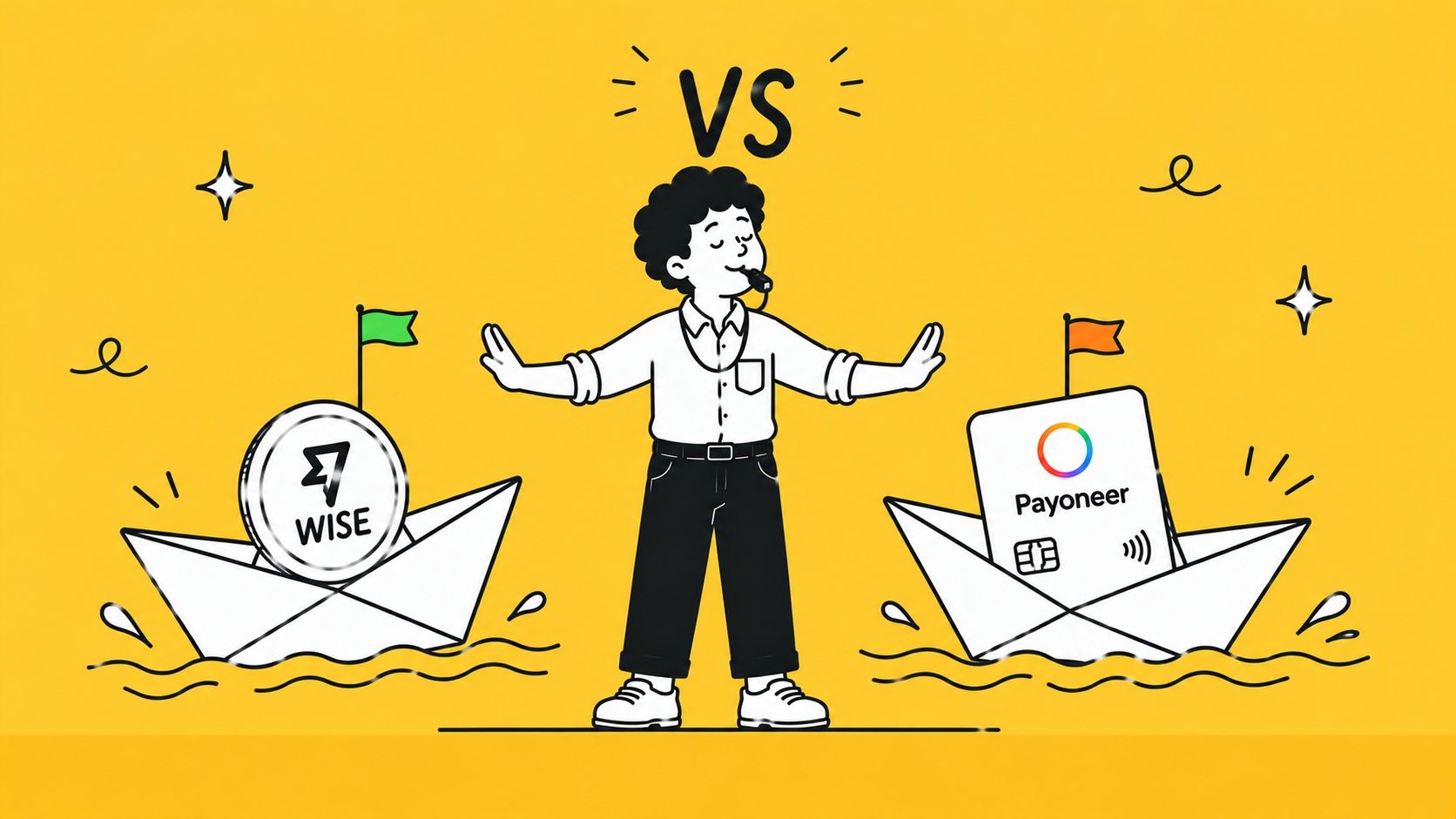
Tag: 2026 guide

  • Top 7 Stripe Alternatives for Non-US Businesses to Receive International Payments: LK Guide for 2026  

    Top 7 Stripe Alternatives for Non-US Businesses to Receive International Payments: LK Guide for 2026  

    Stripe isn’t officially available for Sri Lankan businesses, which leaves many freelancers and online sellers searching for a direct way to receive international payments without setting up a foreign company. The good news is there are several reliable alternatives, each suited to different types of businesses. 

    Freelancers invoicing clients directly need something different from an online store selling to local customers, and a SaaS business needs something different again. Picking the right one comes down to where your customers are based, whether you want to settle in LKR or hold foreign currency, and how much you’re willing to pay in fees.

    In this guide, we cover seven Stripe alternatives that Sri Lankan businesses can use today: Payoneer, Wise, PayPal, PayHere, WebXPay, Skrill, and 2Checkout (Verifone). For each, you’ll find what it does, who it’s best for, its fees, and how to actually receive payouts into a Sri Lankan bank account. 

    We’ll also compare them side by side, so you can quickly see which platform fits your business before reading the full breakdown. 

    Quick Comparison: Top 7 Stripe Alternatives at a Glance

    Here’s how the seven options stack up on fees, currency, payout speed, and who they suit best. Full details on each follow below.

    ProviderBest ForTypical FeesSettlement CurrencyPayout Speed
    PayoneerFreelancers on Upwork, Fiverr, marketplaces~3% card payments, 1% Payoneer-to-Payoneer, ~2% local bank withdrawalUSD, EUR, GBP (converts to LKR on withdrawal)1–3 business days
    WiseFreelancers and agencies invoicing clients directly0.35%–2% conversion fee, small fixed transfer feeUSD, EUR, GBP held, converts to LKRSame day to 2 business days
    PayPalFreelancers and small stores with global buyers~4.4% + fixed fee per transaction, 3–4% conversion markupLKR (via BOC, Commercial Bank, Sampath)Instant to PayPal, 3–5 days to bank
    PayHereLocal online stores selling mainly to Sri Lankan customers2.99%–3.3% per transaction, plans with monthly feeLKR2–3 business days
    WebXPayLocal online stores needing bank-backed checkout~3.5% per transaction, monthly fee on higher plansLKR2–3 business days
    SkrillFreelancers comfortable holding funds in a digital walletFree to receive via bank transfer, 1.45%–4.49% on card fundingEUR, USD, GBP wallet balance2–7 business days to bank
    2Checkout (Verifone)SaaS and digital product businesses needing subscription billing3.5%–6% + fixed fee depending on planUSD/EUR, paid out to bankTypically monthly

    Important Note: Fees and figures are current as of 2026 and can change. So, it is recommended to always confirm on the provider’s official pricing page before committing.

    Now that you have a quick side-by-side view, let’s break down each of these seven Stripe alternatives in detail, so you can see exactly which one fits your business. 

    1. Payoneer

    Payoneer is a global payment platform built for freelancers, marketplace sellers, and businesses receiving money from overseas clients. It’s widely used by Sri Lankans working on Upwork, Fiverr, and Amazon.

    Key features:

    • Receiving accounts with local bank details in the US, UK, EU, and other regions
    • Direct integration with major freelance marketplaces
    • Payoneer-to-Payoneer transfers between users
    • Prepaid Mastercard for spending funds directly

    Fees:

    • Free to receive from marketplaces 
    • 1% for Payoneer-to-Payoneer transfers
    • ~3% for card payments
    • ~2% currency conversion on withdrawal to local bank

    Pros and cons:

    ProsCons
    Trusted by major freelance platformsNot a website checkout gateway
    Fast local bank withdrawalCard payment fees add up for frequent transactions
    No monthly feesCustomer support can be slow

    Receiving payouts in Sri Lanka: Link a Payoneer account to your Sri Lankan bank. Withdrawals convert USD, EUR, or GBP into LKR and typically arrive within 1–3 business days, subject to Central Bank reporting requirements for foreign income. 

    2. Wise

    Wise (formerly TransferWise) is a global money platform that lets you hold and receive funds in multiple currencies using local bank details, at the real mid-market exchange rate. It’s a strong fit for freelancers and agencies invoicing international clients directly.

    Key features:

    • Multi-currency account with local bank details in USD, GBP, EUR, and more
    • Mid-market exchange rate with no hidden markup
    • Wise debit card for spending balances directly
    • Batch payments and invoicing tools for businesses

    Fees:

    • 0.35%–2% conversion fee depending on currency
    • Small fixed fee for receiving certain payment types
    • No fee for holding multiple currencies

    Pros and cons:

    ProsCons
    Transparent, low conversion feesNot a checkout gateway for websites
    True mid-market exchange rateSome payment methods carry small receiving fees
    Fast setup, no business registration requiredLarge or frequent transfers may trigger extra verification

    Receiving payouts in Sri Lanka: Clients pay into your Wise multi-currency account using local bank details, as if paying a local account in their own country. You then convert the balance to LKR and withdraw to your Sri Lankan bank, usually arriving within 1–2 business days. 

    3. PayPal

    PayPal is one of the most recognized payment platforms worldwide, popular with freelancers and small online stores that deal with international buyers. Since May 2026, it has become a more practical option for Sri Lankans thanks to new local bank partnerships.

    Key features:

    • Accepts payments in multiple currencies from customers globally
    • Now links directly to Bank of Ceylon, Commercial Bank, and Sampath Bank for LKR withdrawals
    • Buyer and seller protection on eligible transactions
    • Invoicing tools for freelancers and small businesses

    Fees:

    • ~4.4% + fixed fee per international transaction
    • 3%–4% currency conversion markup
    • Withdrawal fees may apply depending on partner bank

    Pros and cons:

    ProsCons
    Globally recognized and trusted by buyersHigher fees than Wise or Payoneer
    Now supports direct LKR withdrawalCurrency conversion markup is steep
    Easy to set up, no business registration neededAccount holds and disputes can delay access to funds

    Receiving payouts in Sri Lanka: Payments land in your PayPal balance instantly. From there, withdraw directly to the Bank of Ceylon, Commercial Bank, or Sampath Bank in LKR, with funds typically arriving within 3–5 business days. 

    4. PayHere

    PayHere is Sri Lanka’s leading local payment gateway, built for online stores and businesses that sell mainly to Sri Lankan customers but still want to accept cards from international buyers. It’s approved by the Central Bank of Sri Lanka.

    Key features:

    • Accepts Visa, Mastercard, Amex, and local mobile wallets
    • Supports recurring billing for subscription businesses
    • Customizable checkout pages for branding
    • Easy integration with Shopify, WooCommerce, and custom websites

    Fees:

    • PayHere Lite: free setup, ~3.30% per transaction
    • PayHere Plus/Premium: monthly fee (~Rs. 3,990), lower per-sale fee (~2.99%)

    Pros and cons:

    ProsCons
    Fully compliant with CBSL regulationsPrimarily built for LKR transactions
    No foreign business setup requiredLimited support for holding foreign currency
    Strong local support and fast integrationCard fees higher than some global alternatives

    Receiving payouts in Sri Lanka: Since PayHere is a local gateway, payments settle directly into your Sri Lankan bank account in LKR, with no extra conversion step needed. Settlement typically takes 2–3 business days after a transaction. 

    5. WebXPay

    WebXPay is a Sri Lankan payment gateway backed by local banking infrastructure, built for online stores and businesses that want a secure, bank-connected checkout without setting up a foreign entity.

    Key features:

    • Accepts Visa, Mastercard, and local payment methods
    • Direct integration with Sri Lankan commercial banks
    • Supports both one-time and recurring payments
    • Compatible with major e-commerce platforms

    Fees:

    • ~3.5% per transaction on standard plans
    • Monthly fee applies on higher-tier plans with lower per-sale rates

    Pros and cons:  

    ProsCons
    Backed by established local banksMainly designed for LKR transactions
    No foreign business registration neededLess suited for holding foreign currency
    Reliable settlement through local banking systemFewer international payment methods than global gateways

    Receiving payouts in Sri Lanka: As a local gateway, WebXPay settles payments directly into your Sri Lankan bank account in LKR, with funds typically available within 2–3 business days after a transaction. 

    6. Skrill

    Skrill is a digital wallet used worldwide for online payments, trading, and freelance income. It’s a common choice for Sri Lankans who need to receive money from clients or platforms that don’t support PayPal.

    Key features:

    • E-wallet for receiving, holding, and spending money in multiple currencies
    • Free transfers between Skrill accounts
    • Prepaid Mastercard for spending balances directly
    • Supports deposits via credit/debit card and bank transfer

    Fees:

    • Free to receive money via Skrill Money Transfer into your account
    • 1.45% fee on card-funded transactions (rises to 4.49% without a prior card deposit)
    • Currency conversion markup applies on exchange

    Pros and cons:  

    ProsCons
    Free to receive into your Skrill balanceWithdrawing to a Sri Lankan bank can be inconsistent
    Wide global acceptance for freelance and trading incomeCard funding fees are steep without qualifying deposits
    Fast account setup with passport or NICCustomer support response times can be slow

    Receiving payouts in Sri Lanka: Funds are received into your Skrill wallet in EUR, USD, or GBP. Withdrawal to a Sri Lankan bank account is possible but not always guaranteed, and typically takes 2–7 business days when available. 

    7. 2Checkout (Verifone)

    Overview: 2Checkout, now part of Verifone, is a global payment platform built for SaaS companies, digital product sellers, and online businesses. Of all the options here, it comes closest to a direct Stripe substitute, since it handles subscription billing, global tax compliance, and checkout as a merchant of record.

    Key features:

    • Acts as merchant of record, handling tax compliance across regions
    • Subscription lifecycle tools: recurring billing, renewals, dunning
    • Supports 45+ payment methods and multiple currencies
    • Built-in fraud protection

    Fees:

    • 2Sell: 3.5% + $0.35 per transaction
    • 2Subscribe: 4.5% + $0.45 per transaction (adds subscription management)
    • 2Monetize: 6% + $0.50 per transaction (adds localization, deeper compliance)

    Pros and cons:    

    ProsCons
    Closest match to Stripe’s subscription and API featuresHigher fees than most alternatives on this list
    No foreign business setup requiredApproval process can be strict, with some rejections reported
    Merchant-of-record model removes tax filing burdenPayouts are typically monthly, not instant

    Receiving payouts in Sri Lanka: 2Checkout pays out to a linked bank account in USD or EUR on a monthly cycle. From there, transfer the funds to your Sri Lankan bank using a service like Wise to reduce conversion costs. 

    Conclusion: Which Should You Pick?

    The right choice depends on how you sell and who you sell to.

    • If you’re a freelancer invoicing clients directly, Wise gives you the lowest fees and the real exchange rate, while Payoneer works best if you’re paid through marketplaces like Upwork or Fiverr. Skrill is a solid backup when a platform doesn’t support either.
    • If you run an online store selling mainly to Sri Lankan customers, PayHere or WebXPay make more sense. Both settle directly in LKR, require no foreign business setup, and are built around local banking compliance.
    • If your customers are international but you still want card checkout, PayPal is the easiest to set up, especially now that it settles directly to Bank of Ceylon, Commercial Bank, and Sampath Bank.
    • If you run a SaaS or subscription business, 2Checkout (Verifone) is the closest match to Stripe’s functionality, handling recurring billing and global tax compliance as a merchant of record, though at a higher cost.

    There’s no single best option for every business. Many Sri Lankan founders end up using two together, a local gateway for domestic sales and a global tool for international clients, rather than relying on just one. 

    Still Want the Full Stripe Setup Instead?

    Maybe none of the seven fit and Stripe itself is still the better long-term option. If your business would benefit from proper US banking, Stripe’s full feature set, or a stronger merchant of record setup, that’s still possible.

    At BR.lk, we help Sri Lankan founders register a US LLC or UK company to unlock exactly that. Once your company is formed, you get access to Stripe, PayPal, Wise, and international banking, without relocating or navigating US paperwork on your own. 

    Here’s why BR.lk is the trusted choice for Sri Lankan entrepreneurs: 

    • Fast Company Formation: Get your US LLC or UK company registered in 24–48 hours, with your EIN and registered agent handled for you.
    • Stripe & Banking Setup: Once your company is formed, we guide you through linking Stripe, Wise, or Mercury so you can start receiving international payments properly.
    • Local Language Support: Get guidance in Sinhala or Tamil at every step.

    Take the first step to get paid globally and grow your online business with confidence. 

    Key Takeaways 

    • Stripe is not officially available for Sri Lankan businesses, so direct sign-ups with a local address or bank account aren’t possible.
    • Freelancers, online stores, and SaaS businesses each need a different type of Stripe alternative depending on how they sell and who they sell to.
    • Wise offers the lowest fees and the real mid-market exchange rate, making it ideal for freelancers invoicing international clients directly.
    • Payoneer works best for freelancers paid through marketplaces like Upwork, Fiverr, and Amazon, with fast local bank withdrawals.
    • PayPal has become more practical for Sri Lankans since May 2026, now offering direct LKR withdrawals through Bank of Ceylon, Commercial Bank, and Sampath Bank.
    • PayHere and WebXPay are local gateways built for businesses selling mainly to Sri Lankan customers, settling payments directly in LKR with no foreign setup required.
    • Skrill is a useful backup wallet for receiving international payments, though withdrawing to a Sri Lankan bank account isn’t always guaranteed.
    • 2Checkout (Verifone) is the closest match to Stripe’s subscription billing and API features, making it the best fit for SaaS and digital product businesses.
    • None of these alternatives require registering a foreign business, unlike Stripe, which still needs a US or UK entity to access.
    • Many Sri Lankan businesses combine two platforms, a local gateway for domestic sales and a global tool for international payments, rather than relying on a single option. 

    FAQs 

    What are the best Stripe alternatives for non-US businesses in Sri Lanka?

    The top options are Payoneer, Wise, PayPal, PayHere, WebXPay, Skrill, and 2Checkout (Verifone). Each suits a different business type, freelancers, local stores, or SaaS companies, so the right pick depends on your customer base, settlement currency needs, and fee tolerance.

    Which alternative has the lowest fees compared to Stripe?

    Wise generally offers the lowest cost, with a 0.35%–2% conversion fee at the real mid-market exchange rate. Skrill can be free to receive via bank transfer, but card funding fees run higher. PayPal and 2Checkout carry the steepest fees on this list.

    Do I need a registered business to use these alternatives?

    No. Payoneer, Wise, PayPal, and Skrill can be used with just a passport or NIC. PayHere and WebXPay work with individual or business registration. Only 2Checkout leans toward formal business documentation, since it operates as a merchant of record.

    What is the best Stripe alternative for freelancers in Sri Lanka?

    Wise suits freelancers invoicing clients directly, thanks to low fees and the real exchange rate. Payoneer works best for freelancers paid through marketplaces like Upwork or Fiverr. Skrill is a reliable backup when a client or platform doesn’t support either option.

    Can I receive USD payments without a US bank account?

    Yes. Wise, Payoneer, and Skrill all let you receive USD, EUR, or GBP through virtual account details, without opening a US bank account. Funds can then be converted and withdrawn directly to a Sri Lankan bank account.

    Is there a direct Stripe-like checkout option for SaaS businesses in Sri Lanka?

    2Checkout (Verifone) is the closest match. It handles recurring billing, subscription management, and global tax compliance as a merchant of record, similar to Stripe’s core SaaS features, though its fees run higher than the other alternatives on this list. 

  • Stripe Fees & Pricing: A 2026 Guide for International Business Owners in Sri Lanka

    Stripe Fees & Pricing: A 2026 Guide for International Business Owners in Sri Lanka

    Stripe charges a base fee of 2.9% + $0.30 per transaction, but that’s rarely what Sri Lankan business owners actually pay. Since Stripe isn’t officially available in Sri Lanka, most sellers accept payments through a US LLC or UK company, and nearly every transaction involves an international card, a currency conversion, or both. These add-on charges stack on top of the base rate, often pushing the real cost above 5%.

    This guide breaks down exactly what Stripe charges at every stage, from the base processing fee to international surcharges, add-on products, and the payout costs involved in getting your money from Stripe into your Sri Lankan bank account. You’ll also find a free calculator to work out your exact fees, a real cost example, and practical ways to lower what you pay. 

    What are Stripe’s Fees & Pricing? 

    Stripe fees are the charges Stripe deducts every time a payment moves through your account. Instead of billing you separately, Stripe takes its cut directly from each transaction before the remaining amount reaches your bank account or payout provider. 

    Stripe Fees & Pricing at a glance (Summary Table) 

    Here’s a quick summary of the core Stripe fees most Sri Lankan business owners will run into when selling internationally.

    Fee TypeRate
    Online card payment (US account)2.9% + $0.30
    Online card payment (UK account)1.5% + £0.20
    In-person card payment (Terminal)2.7% + $0.05
    International card+1.5%
    Currency conversion+1%
    Manually entered card+0.5%
    ACH Direct Debit0.8% (capped at $5)
    Dispute (chargeback)$15 per dispute
    Digital wallets (Apple Pay, Google Pay, etc.)Same as standard card rate
    Stripe Billing0.7% of volume
    Stripe Invoicing0.4% per paid invoice (capped at $2)
    Stripe Tax0.5% per transaction

    [Source: https://stripe.com/pricing]

    These are Stripe’s standard published rates. Businesses processing high volumes may qualify for custom or interchange-plus pricing. The next sections explain how each of these fees actually works and which ones matter most for Sri Lankan sellers billing international customers. 

    How Stripe’s Standard Pricing Structure Works? 

    Stripe’s standard pricing follows a simple formula. You pay a percentage of the transaction amount, plus a small fixed fee. 

    • For a US-registered Stripe account, that’s 2.9% + $0.30 per successful online card payment. 
    • For a UK-registered account, the base rate is lower, at 1.5% + £0.20 for UK-issued cards.

    The percentage covers Stripe’s processing cost along with the interchange fee paid to the card-issuing bank. The fixed fee covers Stripe’s operational overhead for handling the transaction.

    Example math

    Let’s assume you make a $100 sale through a US Stripe account. Stripe takes $2.90 (2.9%) plus $0.30, for a total fee of $3.20. You’d receive $96.80. 

    There are no setup fees, no monthly charges, and no minimum volume requirements on Stripe’s standard plan. You only pay when a payment successfully goes through, and failed payments cost nothing.

    Important Note:

    This base rate is just the starting point, though. For Sri Lankan business owners, most transactions involve a customer paying with a card issued outside your account’s country, which brings in additional fees covered in the next section. 

    International Card and Currency Conversion Fees 

    This is where fees start adding up for most Sri Lankan business owners. Since your customers are almost always paying from outside your Stripe account’s registered country, two extra charges usually apply on top of the base rate.

    1. The first is the international card fee. When a customer’s card is issued outside your account’s country, Stripe adds 1.5% to your standard rate. 
    2. The second is currency conversion. If the customer pays in a currency different from your settlement currency, Stripe adds another 1%.

    These fees stack together. Let’s assume you run a US Stripe account and a customer in Europe pays you in euros. Your total fee would be 2.9% (base) + 1.5% (international) + 1% (conversion) + $0.30, which comes to 5.4% + $0.30 per transaction.

    For Sri Lankan sellers, this combination is the norm rather than the exception, since nearly every sale involves an international card, a currency conversion, or both. Selling in your account’s home currency to reduce conversion charges, or setting your settlement currency to match your most common customer base, can help lower this effective rate over time. 

    US LLC vs UK Company: Fee Impact 

    The entity you register your Stripe account under directly affects your processing rate. A US LLC gives you Stripe’s standard US rate of 2.9% + $0.30 per transaction. A UK company gives you a lower base rate of 1.5% + £0.20 for UK-issued cards, and 2.5% + £0.20 for cards issued elsewhere in the EU.

    For Sri Lankan business owners selling mainly to US customers, a US LLC usually makes more sense, since UK-issued cards won’t apply to most of your sales anyway. But if a large share of your customers are based in the UK or EU, a UK company can meaningfully lower your effective fee rate, especially at higher sales volumes.

    This decision also affects banking, tax filing, and compliance requirements, not just Stripe fees, so it’s worth weighing alongside those factors too.

    If you’re still deciding between the two, our detailed comparison of US LLC vs UK company registration breaks down the full picture beyond just processing rates. 

    Other Transaction Fees to Budget For 

    Beyond the base rate and international charges, a few other fees can show up depending on how you accept payments. They are as follows:

    1. Disputes and chargebacks. If a customer disputes a charge, Stripe charges $15 per dispute, regardless of the outcome. Even if you win the dispute, the fee isn’t refunded in most cases. Keeping clear product descriptions and responsive customer support helps avoid these.
    2. Manually entered cards. If you or your customer types in a card number instead of using a checkout form, Stripe adds a 0.5% fee. This covers the higher fraud risk tied to card-not-present transactions. It mainly affects phone orders or manual entries through the Stripe Dashboard, so most online sellers won’t run into it.
    3. ACH Direct Debit. For US bank transfers, Stripe charges 0.8%, capped at $5. This is significantly cheaper than card processing for large transactions, and worth offering if you invoice US-based clients directly for higher-value work.
    4. Failed payments. Stripe doesn’t charge anything for failed or declined payments, so you only pay when a transaction actually succeeds. 

    Stripe Add-On Product Costs

    Beyond payment processing, Stripe offers optional products that come with their own separate fees. Most Sri Lankan sellers will only use one or two of these, but it helps to know what each one costs.

    ProductFee
    Stripe Billing0.7% of volume (pay-as-you-go)
    Stripe Invoicing0.4% per paid invoice (capped at $2)
    Stripe Tax0.5% per transaction
    Stripe RadarFree on standard pricing
    Stripe SigmaFrom $15/month
    Stripe Managed Payments+3.5% per transaction

    Important points to consider:

    1. Stripe Billing is the one most sellers running subscriptions will encounter. It adds 0.7% on top of your base processing rate for every recurring charge.
    2. Stripe Invoicing is useful if you send one-off invoices to clients rather than using a checkout page. The fee is capped, so it stays cheap even on larger invoices.
    3. Stripe Tax automatically calculates and collects tax on transactions, useful if you’re selling to customers across multiple countries with different tax rules.
    4. Stripe Radar handles fraud detection and comes free with the standard plan, so no extra cost applies unless you need advanced fraud tools.

    Most Sri Lankan business owners selling internationally won’t need these add-ons right away, but they’re worth knowing about as your business scales. 

    Payout Costs: Getting Your Money to Sri Lanka

    Since Stripe isn’t officially available in Sri Lanka, your payout doesn’t land directly in an LKR bank account. It usually passes through a few stages, each with its own potential cost.

    Stage 1: Stripe Processing Fees

    Before any payout happens, Stripe deducts its standard fees from each transaction, covered in the earlier sections. What’s left after these fees is what gets sent to your payout account.

    Stage 2: Payout to Your Wise or Mercury Account

    Most Sri Lankan business owners link Stripe to a Wise or Mercury account tied to their US LLC or UK company. Stripe transfers your balance to this account, usually in USD or GBP, at no extra cost from Stripe itself.

    Stage 3: Currency Conversion to LKR

    This is the stage people often overlook. When you convert your USD or GBP balance to LKR, either through Wise or your local bank, a separate conversion fee applies. Wise typically charges a small percentage based on the mid-market rate, while local banks often use less favorable exchange rates with higher hidden margins.

    Stage 4: Local Bank Deposit

    If you’re withdrawing from Wise to a Sri Lankan bank account, some banks may apply their own incoming transfer charges, though this varies by bank. Delivery time also varies at this stage, Stripe payouts to Wise or Mercury typically take 2 to 7 business days, and the final transfer into your Sri Lankan bank account can take another 1 to 3 business days depending on the bank. 

    Because of this multi-stage process, your final payout is almost always less than what Stripe’s fee alone suggests. Comparing Wise’s conversion rates against your bank’s before withdrawing can meaningfully reduce this last-mile cost. 

    Calculate Your Exact Stripe Fees

    Working out your exact fees by hand gets tricky once international cards, currency conversion, and entity type all come into play. To make this easier, use our Stripe Fee Calculator to get an accurate breakdown for your specific transaction.

    The calculator works in two modes, depending on what you’re trying to figure out.

    Customer Pays, You Receive

    Enter the amount your customer is paying, choose your Stripe account country (US or UK), select where the customer’s card was issued, and note whether currency conversion applies. The calculator instantly shows your processing fee, fixed fee, total Stripe charges, effective fee rate, and the exact amount you’ll receive.

    Target Payout, What to Charge

    This mode works in reverse. If you need to receive a specific amount after fees, for example to cover costs or hit a pricing target, enter that target amount and the calculator works out exactly what to charge your customer to net that figure.

    Example Walkthrough

    Let’s assume you’re on a US Stripe account and want to receive exactly $500 after fees from an international customer paying in a different currency. Instead of guessing and underpricing, the reverse mode calculates the exact charge amount needed, factoring in the base rate, international card fee, and conversion fee together.

    This takes the guesswork out of pricing your products or services accurately from the start. 

    Real Cost Example: Total Effective Fee for a Sri Lankan Seller

    Let’s assume you’re a Sri Lankan freelancer running a US LLC, and a client in the UK pays you $1,000 for a project through Stripe.

    StageAmount
    Client payment$1,000.00
    Stripe base fee (2.9% + $0.30)-$29.30
    International card fee (1.5%)-$15.00
    Currency conversion (1%)-$10.00
    Amount sent to Wise/Mercury$945.70
    Wise conversion to LKR (approx. 0.5%–1%)-$4.73 to -$9.46
    Final amount received in LKR equivalent~$936 to $941

    Once you factor in Stripe’s fees and the payout-stage conversion, your effective fee lands somewhere between 5.9% and 6.4%, well above the advertised 2.9% base rate.

    This gap is exactly why the headline rate can be misleading for Sri Lankan sellers. Nearly every transaction involves an international card and at least one currency conversion, sometimes two, once you count the final LKR conversion. Running your own numbers through the fee calculator above will give you a more precise picture based on your actual client base and payout method. 

    How to Reduce Your Stripe Fees 

    You can’t negotiate Stripe’s standard rate unless you’re processing high volume, but a few practical changes can lower your effective fee.

    1. Choose your entity country based on your customer base: If most of your clients are in the UK or EU, registering under a UK company gives you a lower base rate than a US LLC. If most of your customers are in the US, a US LLC usually works out cheaper overall.
    2. Match your settlement currency to your main customer base: Every currency conversion costs 1%. If most of your revenue comes in USD, keeping your settlement currency in USD avoids unnecessary conversions until the final payout stage.
    3. Use ACH for large US invoices: For B2B work with US clients, ACH Direct Debit costs 0.8%, capped at $5. On a $2,000 invoice, that’s a significant saving compared to card processing.
    4. Reduce disputes: Each dispute costs $15 regardless of outcome. Clear contracts, defined deliverables, and responsive communication help avoid most disputes before they escalate.
    5. Compare payout conversion rates: Wise generally offers better conversion rates than most Sri Lankan banks. Comparing rates before withdrawing can meaningfully reduce your last-mile cost.
    6. Skip add-ons you don’t need: Only use Stripe Billing, Tax, or Invoicing if they solve a real problem for your business, since each one adds its own fee on top of processing. 

    Stripe Fees vs Other Options: A Cost Comparison 

    Here’s how Stripe’s fees compare to other payment options commonly used by Sri Lankan business owners.

    ProviderDomestic RateInternational RateExtra Charges
    Stripe2.9% + $0.30 (US)+1.5% international, +1% conversion$15 per dispute
    PayPal2.9% + fixed fee+1.5% cross-border feeCurrency conversion around 3%-4% above mid-market rate
    Payoneer1%-2% for direct client payments3% for marketplace withdrawalsAround 2% currency conversion markup
    WiseN/A (transfer service)0.4%-2% depending on currencyNo fixed per-transaction fee
    PayHere3.3% + LKR feeNot supported for international cardsLocal settlement only
    WebXPaySimilar to PayHereLimited international supportLocal settlement only

    For Sri Lankan business owners billing international clients, Stripe and PayPal end up in a similar range once international and conversion fees stack, usually landing between 5% and 6.5% effectively. Payoneer works out cheaper for direct client invoicing. But its rates climb for marketplace payouts, such as receiving payments from Upwork or Fiverr. 

    Local gateways like PayHere and WebXPay charge less per transaction, but they’re built for local payments and don’t handle international cards or foreign currency the same way.

    Wise stands out for currency conversion specifically, since it uses the mid-market rate with a smaller margin than PayPal or most local banks. Many Sri Lankan sellers use Stripe for processing and Wise only for the final currency conversion, since combining both often costs less than relying on one platform for everything. 

    Want to Start Receiving International Payments Without the Guesswork?

    At BR.lk, we help Sri Lankan freelancers and online sellers legally set up their business abroad so they can accept Stripe, PayPal, and Wise payments without the setup headaches or compliance risks. Whether it’s a US LLC or a UK company, we handle the complex parts so you can focus on getting paid.

    Here’s why BR.lk is the trusted choice for Sri Lankan entrepreneurs:

    • Expert Guidance & Compliance: Our team guides you through every step of company registration, ensuring full compliance with international and local regulations.
    • Seamless Payment Setup: We help link your new company to PayPal, Stripe, Wise, and other global payment platforms, so you can receive payments from clients worldwide.
    • Fast & Hassle-Free Process: Complete registration and account setup in just 24–48 hours, with minimal paperwork and clear instructions every step of the way.
    • Local Language Support: Get personalized support in Sinhala or Tamil, making the process simple to understand.

    Take the first step to get paid globally and grow your online business with confidence.

    Conclusion

    Stripe’s 2.9% + $0.30 base rate is just the starting point for Sri Lankan business owners. Once international card fees, currency conversion, and the final payout-stage conversion to LKR are factored in, the real cost typically lands between 5% and 6.5% per transaction, well above what the headline rate suggests.

    The good news is that most of this cost is manageable once you understand where it comes from. Choosing the right entity country, matching your settlement currency to your customer base, using ACH for large invoices, and comparing Wise’s conversion rates against your bank can all meaningfully reduce what you actually lose to fees.

    Since every business has a different mix of customers, currencies, and transaction sizes, the numbers in this guide are a starting point rather than your exact cost. Running your own transactions through the Stripe Fee Calculator will give you a clearer picture of what you’re really paying, and where you have room to save. 

    Key Takeaways

    • Stripe’s advertised rate of 2.9% + $0.30 rarely reflects what Sri Lankan business owners actually pay once additional fees are added.
    • International cards add 1.5% and currency conversion adds another 1%, and both apply to nearly every transaction a Sri Lankan seller processes.
    • A UK company gives you a lower base rate of 1.5% + £0.20 for UK-issued cards, while a US LLC keeps the standard 2.9% + $0.30 rate.
    • Getting paid in Sri Lanka involves multiple stages, including Stripe’s processing fee, a payout to Wise or Mercury, and a separate currency conversion to LKR.
    • The final currency conversion to LKR is a hidden cost that many sellers overlook, and it can add another 0.5% to 1% on top of Stripe’s fees.
    • On a real transaction, the total effective fee for a Sri Lankan seller often lands between 5.9% and 6.4%, well above the advertised base rate.
    • ACH Direct Debit costs just 0.8%, capped at $5, making it significantly cheaper than card processing for large US invoices.
    • Disputes cost $15 each regardless of the outcome, so avoiding them through clear contracts and communication directly protects your margin.
    • Stripe’s add-on products, such as Billing, Tax, and Invoicing, carry their own separate fees and are only worth using if they solve a specific business need.
    • Comparing Wise’s conversion rates against your local bank before withdrawing can meaningfully reduce the last-mile cost of getting paid. 

    FAQs 

    What is Stripe’s actual fee for a Sri Lankan business?

    Once international card and currency conversion fees are included, most Sri Lankan sellers pay an effective rate between 5% and 6.5% per transaction, not the advertised 2.9% base rate. The exact figure depends on your entity country, customer base, and payout method.

    Is a UK company cheaper than a US LLC for Stripe fees?

    For UK-issued cards, yes. A UK company gets a 1.5% + £0.20 base rate versus a US LLC’s 2.9% + $0.30. If most of your customers are in the US, though, a US LLC usually works out cheaper overall.

    Why is my Stripe payout smaller than expected?

    Beyond Stripe’s processing fee, international and currency conversion charges apply, and a separate conversion fee applies again when converting your balance to LKR through Wise or your bank. This multi-stage process means your final payout is always less than the original sale amount.

    Does Stripe charge extra for LKR conversion?

    No, Stripe doesn’t charge an LKR conversion fee directly, since it doesn’t settle in LKR at all. That conversion happens after payout, through Wise, Mercury, or your local bank, and typically costs an additional 0.5% to 1%, separate from Stripe’s own fees. 

    Is Stripe cheaper than PayPal or Wise for Sri Lankan sellers?

    Stripe is roughly on par with PayPal, not cheaper. Both land in a similar range once international and conversion fees stack. Wise is cheaper specifically for currency conversion, since it uses the mid-market rate, which is why many sellers pair Stripe for processing with Wise for conversion. 

  • Partnership Business Registration in Sri Lanka: A Guide for 2026

    Partnership Business Registration in Sri Lanka: A Guide for 2026

    Going into business with someone else changes more than just the workload. It changes how the business is owned, how profits are split, and importantly, how much personal risk each person is taking on. For many small business owners in Sri Lanka, from two friends opening a shop to family members starting a service business together, a partnership is the natural next step up from working solo.

    But a partnership isn’t just a sole proprietorship with more people attached. It comes with its own registration process, its own tax treatment, and a legal principle, joint and several liability, that every partner needs to understand before signing anything.

    In this guide, you’ll learn how to do your partnership business registration in Sri Lanka step by step, including the documents you need, how registration fees and taxes work, what a partnership agreement should cover, and what happens if a partner leaves, joins, or the business needs to be wound up. 

    So, read on to register your partnership the right way and go in with a clear picture of what you’re taking on. 

    What Is a Partnership Business in Sri Lanka?

    A partnership is a business owned and run by two or more people who agree to share the capital, work, and profits. It’s governed by the Partnership Ordinance No. 21 of 1866, one of the oldest pieces of business legislation still in force in Sri Lanka.

    Like a sole proprietorship, a partnership is not a separate legal entity. The business and the partners are legally the same thing. This means every partner carries personal liability for the partnership’s debts, not just up to their share of ownership, but potentially the full amount (more on this later).

    This structure suits people who want to go into business with someone else, pool resources, and split responsibilities, without the cost and paperwork of incorporating a Private Limited Company.  

    Requirements to Start a Partnership Business in Sri Lanka:

    • At least two partners: There’s no fixed legal maximum, but larger groups often outgrow the partnership structure and move toward incorporation.
    • All partners must be Sri Lankan citizens or permanent residents. Foreign nationals cannot register as partners.
    • A physical registered business address in the area covered by your local Divisional Secretariat.
    • A partnership agreement setting out how the business will run (not legally mandatory, but strongly recommended, covered next). 

    Partnership vs. Sole Proprietorship vs. Pvt Ltd: Where Does It Fit?

    If you’re still deciding on a structure, here’s how a partnership compares to the other two options.

    FactorPartnershipSole ProprietorshipPrivate Limited (Pvt Ltd)
    Legal identitySame as the partnersSame as the ownerSeparate legal entity
    LiabilityPersonal, joint and severalUnlimited personal liabilityLimited to company assets
    RegistrationIn person, Divisional SecretariatIn person, Divisional SecretariatOnline, eROC
    Taxation6% partnership tax, then allocated to partners’ personal incomeTaxed as personal incomeSeparate company tax
    Foreign ownershipNot allowedNot allowedUp to 100% in most sectors
    CredibilityModerateLowerHigher
    ContinuityDepends on the agreementEnds with the ownerContinues beyond ownership changes

    A partnership sits between the two other structures. It gives you more capacity than a sole proprietorship, since you can pool capital and split the workload with someone else, but it doesn’t offer the liability protection or formality of a Pvt Ltd company. Every partner remains personally on the hook for the business’s debts, regardless of their ownership share.

    In practice, a partnership makes the most sense when two or more people want to run a business together, are comfortable sharing that liability, and don’t yet need the cost or complexity of incorporating. It’s a step up from going solo, but a step below forming a company.

    Note:

    If you’re starting out alone, our Individual Business Registration guidecovers the sole proprietorship process in full.

    Or, if you’re looking to bring in outside investors, limit personal liability, or work with foreign shareholders, our Business Registration guide walks through incorporating a Pvt Ltd company instead. 

    Do I Need a Partnership Agreement (Deed)?

    Legally, no. Under the Partnership Ordinance, a partnership can be formed with nothing more than a verbal or implied agreement between the partners, and it’s still enforceable in law. There’s no requirement to submit a written agreement to register your business at the Divisional Secretariat.

    That said, going without one is one of the riskiest shortcuts a new partnership can take.

    Why Is It Recommended to Have a Partnership Agreement (Deed)?

    Without a written agreement, disputes between partners fall back on the default rules of the Partnership Ordinance, which may not reflect what any of you actually intended. A written agreement protects everyone by putting expectations on record before problems arise, not after.

    It also gives you a clear reference point if a partner wants to leave, a new partner wants to join, or the business needs to be wound up. Without one, these situations tend to become slower, more expensive, and more likely to end in dispute.

    Because of how much rests on it, it’s worth having a lawyer draft or review the agreement rather than using a generic template.

    A Solid Partnership Agreement Should Set Out:

    • Capital contribution: how much each partner is putting in, and in what form (cash, assets, property).
    • Profit and loss split: how earnings and losses are divided, which doesn’t have to match capital contribution.
    • Roles and responsibilities: who manages what day to day.
    • Decision-making: how major business decisions get approved.
    • Admission of new partners: the process and consent required to bring someone else in.
    • Exit of a partner: what happens if someone wants to leave, retire, or sell their share.
    • Dispute resolution: how disagreements between partners get settled.
    • Dissolution terms: what triggers winding up the partnership, and how remaining assets and debts are handled.

    A partnership agreement won’t stop disagreements from happening, but it decides how they get resolved before emotions are involved. Treat it as a founding document, not paperwork to get to later. The best time to agree on these terms is before there’s any money, property, or conflict on the table.   

    What Are the Documents You Need to Submit for Partnership Business Registration in Sri Lanka?

    Gathering everything before you visit the Divisional Secretariat will save you a return trip. Here’s what every partner needs to prepare.

    1. NIC or passport copies: Every partner must provide a clear copy of their National Identity Card. Since foreign nationals cannot register as partners, a passport is only relevant if a partner is a Sri Lankan citizen residing overseas.

    2. Grama Niladhari report: A certified report from the Grama Niladhari of the area where the business operates, confirming the business and its location. This must be countersigned by the Divisional Secretary.

    3. Proof of business premises: This depends on how the property is held:

    • A certified copy of the deed if the premises are owned by a partner
    • A rent or lease agreement if the premises are rented
    • A consent letter from the owner, plus their NIC copy, if the premises belong to a family member

    4. Trade permit: If required for your business type, obtain this from the relevant municipal or divisional council.

    5. Partnership agreement: While not legally mandatory, submitting your written agreement alongside the application helps establish the terms on record from day one.

    6. Affidavit and Declaration Statement: Each partner must sign a separate affidavit and declaration confirming the details in the application. These are signed individually, in each partner’s own name, not on behalf of the partnership.

    7. Sector-specific approvals: Certain regulated industries require additional clearance before the Divisional Secretariat will process your registration. For example:

    • Food-related businesses need approval from the Public Health Inspector
    • Pharmacies need certification from the Sri Lanka Medical Council
    • Guest houses and spas need reports from the local police division
    • Ayurvedic practices, nurseries, and vocational service providers each fall under their own sector-specific approving authority

    Check with your local Divisional Secretariat to confirm which, if any, apply to your partnership.

    Missing any one of these documents typically means resubmitting your application, so it’s worth double-checking the full list before your visit. 

    How to Do Your Partnership Business Registration: Step-by-Step Guide for 2026

    Registering a partnership is an in-person process, handled entirely through your local Divisional Secretariat. There’s no online option, unlike company registration through eROC. Here’s how it works, step by step.

    • Step 1: Get Form BNR-03. Visit the Divisional Secretariat covering your business location and request the application for registration of a business name of a partnership business. This is a different form from the BNR-01 used for sole proprietorships, so make sure you ask for the right one.
    • Step 2: Complete the form with all partners’ details. This includes each partner’s full name, date of birth, place of residence, contact details, and signature, along with the business name, principal place of business, date of commencement, and initial capital.
    • Step 3: Each partner signs a separate affidavit and declaration. These confirm the details in the application and must be signed individually by each partner, not collectively as the partnership.
    • Step 4: Gather your supporting documents. NIC copies, proof of premises, trade permit if required, and any sector-specific approvals. See the documents section above for the full list.
    • Step 5: Get your Grama Niladhari report. This certifies the business and premises details and must be countersigned by the Divisional Secretary.
    • Step 6: Submit everything and pay the registration fee at the Divisional Secretariat office.
    • Step 7: Receive your Certificate of Registration. Once approved, this must be displayed at your business premises, just as with a sole proprietorship.

    Important Note

    Your business name must be registered within 14 days of commencing operations, extendable to a ceiling of 30 days in some cases. Don’t wait until the business is already running to start this process.

    Once submitted with all documents in order, registration typically takes 7 to 14 working days.

    Do I Have to Pay Registration Fees for This Arrangement?

    Yes. There’s no fixed nationwide rate for partnership registration. The fee depends on your local Divisional Secretariat and the capital you declare on your application, so amounts can vary from one office to another. It’s best to call or visit your relevant office ahead of time to confirm the exact figure, so there are no surprises on the day you submit. 

    How Partnerships Are Taxed?

    Partnership income isn’t taxed quite like a sole proprietorship’s, and understanding this upfront helps you plan cash flow correctly from year one.

    A partnership pays a flat 6% tax on its income once that income exceeds Rs. 1 million. This is a tax on the partnership itself, calculated before profits are split between partners.

    Once that 6% is paid, the remaining profit is allocated to each partner according to their agreed ownership share. That share is then added to each partner’s other personal income, if any, and taxed at Sri Lanka’s prevailing personal income tax rates, which range from 6% to 36% depending on total income.

    To avoid double taxation, partners can claim a credit for the 6% partnership tax already paid, offsetting it against their personal income tax liability on that same share of profit.

    This is worth flagging because it differs from how a sole proprietorship is taxed. As a sole trader, your business income is treated entirely as personal income, and you’re entitled to an annual tax-free relief of Rs. 1.8 million before any tax applies. A partner doesn’t get that same flat individual relief on their share of partnership income in the same way, since the partnership-level tax applies first.

    Furthermore, VAT registration works the same way it does for other business structures. If your partnership’s turnover exceeds the current VAT threshold, you’re required to register and charge VAT on taxable sales.

    Given how the 6% partnership tax, personal tax credit, and VAT threshold interact, it’s worth speaking to a tax advisor early, particularly if partners have significant income from other sources, since that can affect how much benefit the tax credit actually delivers at an individual level. 

    What is Meant by Joint and Several in Partnership Business Aspect in Sri Lanka

    “Joint and several liability” is the legal principle behind how partnership debt works in Sri Lanka, and it’s the single biggest risk of this business structure. 

    Under the Partnership Ordinance, every partner is liable for the full debts of the partnership, not just a portion matching their ownership share. “Joint” liability means all partners can be held responsible together. “Several” liability means a creditor can also pursue any one partner individually for the entire outstanding amount, regardless of what that partner actually owns or how much of the debt they personally caused.

    Why Does This Matter for Partners?

    It removes the protection that ownership percentage might suggest you have. A 20% partner can end up personally covering 100% of a debt if the other partners can’t pay, and can only try to recover that money from them afterward, which is often difficult in practice.

    What Are the Practical Risks?

    The exposure goes beyond business decisions gone wrong. If one partner signs a bad contract, takes on debt without informing the others, or simply makes a poor call, every partner shares the liability. It also works the other way: if a partner has personal debts or a creditor comes after them individually, that creditor may be able to reach partnership assets to satisfy it, even if the rest of the partners had nothing to do with it.

    How Do You Protect Yourself Against This?

    This is exactly why a solid written partnership agreement matters so much. While it can’t override the legal principle of joint and several liability toward outside creditors, it can set clear terms for how partners resolve disputes and recover losses from each other internally.

    If your risk tolerance is low, or you’re going into business with people whose financial habits you can’t fully vouch for, this is often the point where a Private Limited Company becomes the safer structure instead. 

    What Happens If a Partner Leaves, Dies, or a New Partner Joins? 

    This section only applies if your partnership agreement includes a continuity clause. Without one, any of these events can dissolve the partnership entirely, covered in the next section.

    • If a Partner Leaves: A partner can retire or sell their share voluntarily. The remaining partners typically buy out the exiting partner’s stake or reallocate it among themselves, based on terms set in the agreement. The exiting partner isn’t automatically released from liability for debts incurred while they were still a partner.
    • If a Partner Dies: If the agreement provides for continuity, the surviving partners can carry on the business rather than winding it up. The deceased partner’s share usually passes to their estate, and the agreement should set out how that share is valued and settled with the heirs.
    • If You Want to Add a New Partner: Bringing in a new partner requires consent from the existing partners and an updated written agreement reflecting the new capital contribution, profit share, and role. The new partner should also sign their own affidavit and declaration.

    Important note:

    Whenever partner details change, whether someone joins, exits, or the business address changes, you need to notify your Divisional Secretariat and update your registration accordingly. Delaying this can create mismatches between your official records and who’s actually running the business. 

    How to Dissolve a Partnership Business in Sri Lanka

    There are a few general pathways that lead to a partnership being dissolved. They are as follows:

    1. Default dissolution: Without a continuity clause in the agreement, a partnership dissolves automatically the moment any single partner dies, withdraws, retires, or becomes bankrupt. This is the default position under the Partnership Ordinance. It applies to the entire partnership, not just the affected partner’s share.
    2. Voluntary dissolution: Partners can also choose to end the partnership by mutual agreement. This is typically done by following the notice period and process set out in the partnership agreement, giving everyone a clear, pre-agreed way to wind things down.
    3. Dissolution by the agreed term or purpose: Some partnerships are formed for a fixed period or a specific project rather than an open-ended business. In these cases, the partnership dissolves automatically once that term ends or the purpose is fulfilled. Partners can choose to continue the business, but doing so usually means renewing or updating the agreement.
    4. Court-ordered dissolution: In cases of serious dispute, misconduct, or a partner unable to fulfil their obligations, a court can order the partnership to be dissolved.

    Things You Have to Do When Winding Up Your Partnership Bussiness

    Once dissolution is triggered, you need to:

    • Settle outstanding debts before distributing any remaining assets. Creditors are paid first.
    • Distribute remaining assets among the partners according to their agreed shares in the partnership agreement.
    • Finalise accounts, including any outstanding tax filings for the partnership and its partners.
    • Deregister the business with your Divisional Secretariat once winding up is complete.
    • Notify relevant parties, including banks, landlords, and any regulatory bodies tied to sector-specific approvals your business held.

    This is a more informal process than closing a Pvt Ltd company, which involves formally striking off the company with the Registrar of Companies and settling any outstanding annual return obligations. 

    Common Mistakes to Avoid When You’re Partnering Up for a Business

    Even a simple structure like a partnership can run into trouble if a few basics get overlooked early on. Here’s what to watch out for.

    1. Operating without a written agreement: Verbal agreements are legally enforceable, but they leave far too much open to interpretation once real money and disagreements are involved. Put the terms in writing before you start operating, not after a dispute forces the issue.
    2. Not filing separate affidavits per partner: Each partner needs to sign their own affidavit and declaration individually. Submitting a single joint statement or missing one partner’s signature is a common reason applications get sent back.
    3. Missing the 14-day registration window: Many partners start operating before registering, assuming they can formalise things later. The Ordinance requires registration within 14 days of commencing business, extendable to a 30-day ceiling. Waiting longer than that puts you out of compliance from day one.
    4. Assuming profit share equals liability share: A partner who owns 20% of the business can still be personally liable for 100% of the partnership’s debts. Don’t mistake your ownership percentage for a cap on your financial exposure.
    5. Not planning for a partner’s exit or death upfront: Without a continuity clause in the agreement, one partner leaving or passing away can dissolve the entire partnership, even if the remaining partners want to keep going. Address this in the agreement from the start, not when it actually happens.
    6. Skipping sector-specific approvals: If your business falls under a regulated industry, registering the partnership name alone isn’t enough to operate legally. Confirm what additional approvals apply to you before you open your doors. 

    Can Foreigners Join a Partnership?

    No. Only Sri Lankan citizens and permanent residents can register as partners in a partnership business. This holds true even if a foreign national holds a valid visa or temporary residency in Sri Lanka.

    This is the same restriction that applies to sole proprietorships, since neither structure is a separate legal entity from its owners. A foreign national who wants to go into business in Sri Lanka, whether alone or with others, cannot do so through a partnership or sole proprietorship.

    If you’re a foreign investor looking to start a business with local or international partners, incorporating a Private Limited Company is the path available to you instead. A Pvt Ltd company allows up to 100% foreign ownership in most sectors, and is registered entirely online through the eROC portal rather than in person at a Divisional Secretariat. 

    Conclusion

    Registering a partnership in Sri Lanka is a straightforward, in-person process, but the real work happens before you ever visit the Divisional Secretariat. Getting the partnership agreement right, understanding how joint and several liability exposes every partner personally, and knowing how partnership income is taxed all matter far more than the paperwork itself.

    If you take one thing from this guide, let it be this: a written partnership agreement isn’t optional in practice, even if it’s optional in law. It’s what decides how disputes, exits, and even dissolution play out, long before any of those things actually happen.

    From there, the process is simple. Gather your documents, complete Form BNR-03, get each partner’s affidavit signed, and submit everything to your local Divisional Secretariat within 14 days of starting operations.

    Go in with the agreement settled, the liability understood, and the tax treatment planned for, and your partnership starts on solid ground instead of catching up to problems later. 

    Key Takeaways

    • A partnership business in Sri Lanka is governed by the Partnership Ordinance No. 21 of 1866 and is not a separate legal entity from its partners.
    • Every partner carries personal, joint and several liability for the partnership’s debts, regardless of their ownership share.
    • A written partnership agreement is not legally required, but it’s strongly recommended to protect all partners and prevent disputes.
    • Partnership registration is an in-person process handled through your local Divisional Secretariat, using Form BNR-03.
    • Each partner must sign a separate affidavit and declaration as part of the registration application, not one joint statement.
    • Your business name must be registered within 14 days of commencing operations, extendable to a 30-day ceiling.
    • Registration typically takes 7 to 14 working days once all documents are submitted correctly.
    • Partnerships pay a flat 6% tax on income above Rs. 1 million, after which remaining profit is allocated to partners and taxed at personal income tax rates.
    • Without a continuity clause in the agreement, a partner’s death, withdrawal, or bankruptcy can dissolve the entire partnership by default.
    • Only Sri Lankan citizens and permanent residents can register as partners, so foreign nationals must incorporate a Private Limited Company instead.  

    FAQs 

    Is a partnership agreement legally required?

    No. Under the Partnership Ordinance, a verbal or implied agreement is legally enforceable, and there’s no requirement to submit a written agreement to register. That said, a written agreement is strongly recommended to protect all partners and avoid disputes down the line.

    What happens if one partner wants out but others don’t?

    If the agreement includes a continuity clause, the remaining partners typically buy out the exiting partner’s share and continue operating. Without one, that partner’s exit can trigger dissolution of the entire partnership by default under the Ordinance.

    How is partnership income taxed differently from a sole proprietorship?

    A partnership pays a flat 6% tax on income above Rs. 1 million before profits are split. A sole proprietorship’s income is taxed entirely as personal income, with a Rs. 1.8 million tax-free relief that partners don’t receive the same way.

    Can a partnership convert to a Pvt Ltd company later?

    Yes. Many businesses start as a partnership and later incorporate as a Private Limited Company once they need limited liability, outside investment, or foreign shareholders. This involves registering a new company separately through the eROC portal.

    Are partners liable for debts incurred by another partner without their knowledge?

    Yes. Under joint and several liability, each partner can be held responsible for the partnership’s full debts, even ones they didn’t know about or approve. This is one of the biggest risks of the partnership structure.

    Does a partnership need its own TIN separate from the partners’ personal TINs?

    Yes. A partnership requires its own Taxpayer Identification Number for filing the partnership-level 6% tax, separate from each partner’s personal TIN used to declare their individual share of the profit. 

  • Digital Payments Landscape in Sri Lanka (2026)

    Digital Payments Landscape in Sri Lanka (2026)

    Digital payments are becoming a bigger part of everyday life in Sri Lanka. From scanning QR codes at local shops to paying bills through mobile banking apps, cashless transactions are now faster, easier, and more widely accepted than ever before. As banks, fintech companies, and government initiatives continue to improve digital payment services, consumers and businesses have more options than ever in 2026.

    In this guide, you’ll learn how the digital payments landscape in Sri Lanka has evolved, the most popular payment methods and apps, how LANKAQR and online payment gateways work, the benefits and challenges of going cashless, and what the future holds. Read on to discover everything you need to know about digital payments in Sri Lanka in 2026. 

    What Are Digital Payments?

    Digital payments are money transactions made electronically instead of using cash or cheques. This includes paying with a card, mobile app, QR code, or bank transfer. The money moves directly between accounts through a bank or payment network, without any physical currency changing hands.

    In Sri Lanka, digital payments now cover everyday activities like paying for groceries, sending money to family, settling utility bills, and shopping online. Banks, telecom companies, and fintech apps all offer ways to make these payments through a phone or computer.

    More Sri Lankans are choosing digital payments for several reasons:

    • Convenience: Payments can be made anytime, without visiting a bank or carrying cash
    • Speed: Transactions are completed in seconds
    • Wider access to smartphones: More people now own smartphones with internet access
    • Government support: Programs like GovPay and fee waivers make digital payments more attractive
    • Safer than carrying cash: Less risk of theft or loss
    • QR code payments: LANKAQR has made it easy for even small vendors to accept digital payments
    • Growing online shopping: More people buy goods and services online, which requires digital payment options

    These factors together are pushing Sri Lanka toward a more cashless economy in 2026.

    Digital Payments in Sri Lanka at a Glance (2026)

    Sri Lanka’s digital payment space has grown fast heading into 2026. More banks, telecom providers, and fintech companies now offer digital payment options, and usage keeps rising across both cities and smaller towns.

    Current payment trends:

    • QR code payments through LANKAQR are now accepted at over 400,000 merchants island-wide.
    • Mobile banking apps and digital wallets are becoming the preferred choice for daily transactions.
    • Cross-border QR payments now connect Sri Lanka with countries like Nepal, along with platforms such as Alipay+ and UPI, making it easier for tourists to pay digitally. [Source: Lankapay news]

    Growth of cashless payments:

    • Cash use is gradually declining as more people shift to cards, QR codes, and mobile apps.
    • E-commerce and online shopping continue to drive demand for digital checkout options.
    • Small businesses and street vendors are increasingly accepting digital payments alongside cash.

    Government and banking support:

    • The government aims for 100% digital government transactions by 2030.
    • QR payment fees are waived for transactions below Rs. 5,000.
    • GovPay allows citizens to pay for government services online.
    • Banks like Commercial Bank, BOC, and Sampath Bank are expanding partnerships with global platforms like PayPal to support freelancers and businesses.

    Together, these trends show Sri Lanka moving steadily toward a cash-lite economy. 

    Types of Digital Payment Methods Available in Sri Lanka

    Sri Lankans now have several ways to pay digitally, each suited to different needs. Some of them are as follows: 

    1. Debit Cards: Linked directly to a bank account, debit cards let users pay at shops, online stores, and ATMs. Money is deducted instantly from the account balance.
    2. Credit Cards: Credit cards allow purchases now and repayment later. They’re widely used for online shopping, subscriptions, and larger purchases, often with added rewards or instalment plans.
    3. Mobile Banking Apps: Apps like Combank Digital, Sampath Vishwa, HNB SOLO, and BOC SmartPay let customers check balances, transfer funds, and pay bills directly from their phones.
    4. Digital Wallets: Wallets like FriMi, iPay and Genie store card and account details in one app, letting users pay, top up, and transfer money without entering details each time.
    5. QR Code Payments (LANKAQR): Users scan a merchant’s QR code to pay instantly from their bank app or wallet. It’s fast, low-cost, and widely accepted, from supermarkets to small vendors.
    6. Internet Banking: Web-based banking lets customers pay bills, transfer funds, and manage accounts from a computer, without visiting a branch.
    7. Contactless (Tap-to-Pay) Payments: Cards or phones with NFC technology allow quick payments by simply tapping a POS terminal, no PIN needed for small amounts.
    8. Online Payment Gateways: Platforms like PayHere and WebXPay let businesses accept card and wallet payments on their websites, powering Sri Lanka’s growing e-commerce sector.

    Comparison: Bank Apps vs Digital Wallets vs QR Payments

    MethodHow It WorksBest ForFeesWhere Accepted
    Bank AppsLinked to your bank account for transfers and paymentsExisting bank customersUsually free or low-costMost merchants, bills, transfers
    Digital WalletsStore multiple cards/accounts in one appQuick, flexible everyday paymentsFree to low feesGrowing merchant network
    QR PaymentsScan and pay via LANKAQRSmall purchases, small vendorsFree below Rs. 5,000400,000+ merchants island-wide

    What is LANKAQR 

    Illustration of a customer paying a small Sri Lankan vendor by scanning a LANKAQR code with a mobile phone

    LANKAQR is Sri Lanka’s national QR code payment standard, developed by LankaPay under guidance from the Central Bank of Sri Lanka. It allows customers to pay by scanning a single QR code with their bank app or digital wallet, instead of using cash or cards. The system follows EMVCo specifications, meaning it works across many different banks and payment apps through one unified code, rather than requiring a separate QR for each provider.

    Currently, 22 financial institutions are connected to the LANKAQR network, and it’s accepted at more than 400,000 merchants across the country, from supermarkets to small roadside vendors.

    Benefits of LANKAQR

    For ConsumersFor Businesses
    No need to carry cash or cardsLow-cost way to accept digital payments
    Pay instantly by scanning a codeNo card machine needed
    Works across multiple banks and walletsFaster settlement of funds
    Fees waived on payments below Rs. 5,000Easy to set up, even for small vendors
    Reduces risk of theft or lost cashBuilds trust with digitally-minded customers

    Recent Updates in 2026

    LANKAQR has expanded beyond domestic use in 2026:

    • Nepal connectivity: Sri Lanka and Nepal launched cross-border QR payment connectivity in May 2026, letting Nepali travellers pay using their own mobile banking apps at LANKAQR merchants
    • Alipay+ partnership: A collaboration between LankaPay, the Sri Lanka Tourism Development Authority, and Alipay+ now allows tourists from over 40 countries to pay using wallets like Alipay, WeChat Pay, and UPI
    • Growing international network: These partnerships mark Sri Lanka’s move toward a more connected, tourist-friendly digital payment system, reducing the need for currency exchange

    These updates position LANKAQR as a key part of Sri Lanka’s push toward a cash-lite economy, both for locals and visitors. 

    What are the Most Popular Digital Payment Apps in Sri Lanka

    Several apps lead Sri Lanka’s digital payment space, each with its own strengths.

    1. FriMi (Nations Trust Bank–backed digital bank/wallet)

    FriMi is Sri Lanka’s first fully digital bank, powered by Nations Trust Bank. It offers a real savings account, mobile wallet, and payment features, all managed through the app without visiting a branch. Users can transfer funds, pay merchants via QR or NFC, and access a FriMi debit card at LankaPay ATMs island-wide.

    2. Genie (Dialog’s bank-agnostic financial super app)

    Genie, powered by Dialog Axiata, works as a financial super app rather than a traditional wallet. It lets users link multiple bank accounts, cards, and the eZ Cash wallet in one place. Unlike FriMi, Genie isn’t tied to a single bank, making it flexible for users across different banking providers. It also supports LANKAQR payments, bill payments, and even stock market investments.

    3. Commercial Bank Digital Banking

    Commercial Bank’s app allows customers to transfer funds, pay bills, and manage accounts, with strong support for QR payments and international transactions, including the newly launched PayPal partnership.

    4. Sampath Vishwa

    Sampath Bank’s digital banking platform supports fund transfers, bill payments, and account management, widely used by both individual and business customers.

    5. HNB SOLO

    HNB’s mobile app offers everyday banking features like transfers, bill payments, and card management, built for ease of use on smartphones.

    6. BOC SmartPay

    Bank of Ceylon’s payment app supports QR payments and digital transactions, extending BOC’s large customer base into the digital space.

    7. People’s Pay

    People’s Bank’s mobile app allows customers to make payments, transfer funds, and manage accounts digitally.

    8. Other Banking Apps

    Most other local banks, including DFCC and NDB, offer their own mobile banking apps with similar core features: transfers, bill payments, and QR-based transactions, reflecting how widespread digital banking has become across Sri Lanka. 

    What are the Online Payment Gateways Used by Sri Lankan Businesses

    Sri Lankan businesses selling online rely on payment gateways to accept card and wallet payments through their websites.

    PayHere

    PayHere is the most widely used gateway for Sri Lankan online stores. It integrates easily with WooCommerce and Shopify, and supports cards along with wallets like eZ Cash, mCash, FriMi, and Genie. The Lite plan is free to set up, with a card fee of around 3.30% and monthly limits of Rs. 200,000. Higher-volume sellers can move to Plus or Premium plans for lower fees and higher limits.

    WebXPay

    WebXPay is another local gateway offering card processing and recurring billing for businesses with higher transaction volumes. It’s often chosen by companies needing more advanced payment features or higher monthly caps than PayHere’s entry-level plan.

    Direct Bank Payment Gateways

    Banks like Commercial Bank and Sampath Bank offer their own payment gateway services (IPGs), letting businesses accept card payments directly through a banking relationship rather than a third-party provider. These typically involve higher setup or annual fees but suit larger, established businesses.

    International Payment Options

    For businesses earning from overseas clients:

    Choosing the right gateway depends on business size, sales volume, and whether payments come from local or international customers. For platform-based freelancers, Wise and Payoneer are also widely used for receiving foreign income. 

    Want to unlock Stripe from Sri Lanka?

    We handle your US LLC or UK company registration in 24 to 48 hours.

    How Businesses Accept Digital Payments

    Illustration of a Sri Lankan small business owner accepting digital payments with a POS terminal and QR code

    Businesses in Sri Lanka now have several ways to accept digital payments, whether they run a physical shop, an online store, or both.

    QR Code Payments

    Many businesses, from supermarkets to small roadside vendors, display a LANKAQR code at checkout. Customers simply scan it with their bank app or digital wallet to pay instantly. It’s low-cost, requires no extra hardware, and settles quickly, making it popular with small and medium businesses.

    Card Machines (POS)

    Point-of-sale terminals let businesses accept debit and credit card payments, including contactless tap-to-pay. These are common in retail stores, restaurants, and supermarkets, and are usually provided by banks along with a merchant account.

    Online Checkout

    E-commerce businesses integrate payment gateways like PayHere or WebXPay directly into their websites. This lets customers pay by card or wallet during checkout without leaving the site, which is essential for online stores and subscription services.

    Payment Links

    Some businesses, especially small sellers or freelancers, share a simple payment link through WhatsApp, social media, or email. Customers click the link and pay directly, no website or app needed. This is useful for businesses without a full online store.

    Mobile Payment Solutions

    Apps like Genie and FriMi allow businesses to accept payments directly through mobile devices, sometimes using tools like QR codes or NFC. Mastercard’s Soundbox and Softbots, introduced in 2026, also help small merchants accept and confirm digital payments affordably, without needing a traditional card machine. 

    What Can You Pay via Digital Payments in Sri Lanka

    Digital payments now cover almost every type of transaction, from daily personal expenses to business operations and government services.

    CategoryWhat You Can Pay For
    PersonalGroceries and retail shopping, restaurant bills, fuel, mobile and internet top-ups, streaming subscriptions, online shopping, food delivery, ride-hailing services, sending money to family and friends
    BusinessSupplier and vendor payments, employee salaries, office utilities, business loan repayments, POS transactions, invoice settlements, B2B transfers
    Government ServicesUtility bills (electricity, water), income tax and other taxes, vehicle registration and license renewals, government service fees, local council payments (via GovPay)

    Personal Payments

    Everyday spending, from buying groceries to paying for a taxi, can now be done through QR codes, mobile wallets, or bank apps. Subscription services like Netflix or Spotify, along with online shopping and food delivery, also rely heavily on digital payment methods.

    Business Payments

    Businesses use digital payments not just to receive money from customers, but also to pay suppliers, staff, and recurring expenses. This reduces the need for cash handling and makes record-keeping easier for accounting and tax purposes.

    Government Services

    Citizens can pay for a growing range of government services online through platforms like GovPay, including utility bills, tax payments, and license renewals. This is part of the government’s push toward 100% digital government transactions by 2030, with many local councils now offering digital payment options for services like tax and license issuance.  

    What are the Challenges Facing Digital Payments in Sri Lanka 

    Despite rapid growth, digital payments in Sri Lanka still face several hurdles.

    1. Cash still remains popular: Many people, especially in rural areas, continue to prefer cash for everyday transactions. Habit, trust, and familiarity keep cash in wide use, even as digital options grow.
    2. Internet and smartphone access: Reliable internet and smartphone ownership aren’t universal across the country. Areas with weak connectivity or limited device access struggle to adopt digital payment methods fully.
    3. Cybersecurity risks: As digital payments grow, so do risks like phishing, fraud, and scams. Building strong security awareness among users remains an ongoing challenge for banks and fintech providers.
    4. Digital literacy: Not everyone is comfortable using apps, QR codes, or online banking. Older users and those unfamiliar with smartphones often need extra support to shift away from cash.
    5. Merchant adoption: While QR payments are expanding, many small vendors and informal businesses haven’t yet adopted digital payment tools, whether due to cost, complexity, or simply preferring cash transactions.

    Addressing these challenges will be key to Sri Lanka’s move toward a truly cash-lite economy. 

    Things You Need to Keep in Mind When Using Digital Payments Safely

    As digital payments become part of daily life, staying safe online is just as important as using the technology itself.

    1. Protect your PIN and passwords: Never share your PIN, password, or OTP with anyone, even if they claim to be from your bank. Avoid writing them down or saving them in easily accessible places.
    2. Enable two-factor authentication: Turn on two-factor authentication (2FA) for banking apps and wallets whenever available. This adds an extra layer of security, making it harder for anyone to access your account even if they know your password.
    3. Avoid public Wi-Fi for banking: Public Wi-Fi networks are less secure and easier to intercept. Use mobile data or a trusted private network when making payments or checking your bank account.
    4. Watch out for scams: Be cautious of unexpected calls, messages, or emails asking for personal or banking details. Scammers often pose as bank representatives or offer fake prizes to trick users into sharing sensitive information.
    5. Check transaction alerts: Keep SMS or app notifications turned on for every transaction. Reviewing alerts regularly helps you spot unauthorized activity early and report it before further damage occurs.

    Following these simple habits can help you enjoy the convenience of digital payments while keeping your money and information secure.  

    Tips for Businesses Moving to Digital Payments 

    Shifting to digital payments can help businesses grow, but a smooth transition takes some planning.

    1. Choose the right payment method: Pick a payment solution that fits your business size and customer base. A small vendor might only need a LANKAQR code, while a larger business may benefit from a POS machine or online payment gateway.
    2. Accept multiple payment options: Don’t rely on just one method. Offering QR payments, cards, and mobile wallets gives customers flexibility and reduces the chance of losing a sale due to limited payment options.
    3. Display QR codes clearly: If using LANKAQR, place the code somewhere visible and easy to scan, near the checkout counter or at eye level. A clear, well-printed code reduces confusion and speeds up transactions.
    4. Train employees: Make sure staff know how to process digital payments, handle failed transactions, and assist customers who are new to paying digitally. Well-trained employees create a smoother checkout experience.
    5. Monitor payment reports: Regularly check transaction reports from your bank or payment provider. This helps track sales, spot errors early, and keep accurate records for accounting and tax purposes.

    Taking these steps helps businesses build customer trust while making the move to digital payments easier and more efficient. 

    Need help setting up global payments for your Sri Lankan business?

    Future of Digital Payments in Sri Lanka

    Illustration of the future of digital payments in Sri Lanka heading toward a cashless 2030

    Sri Lanka’s digital payment space is set to keep expanding in the coming years, backed by strong government and private sector support.

    1. Cash-lite economy: With the government targeting 100% digital government transactions by 2030, cash use is expected to keep declining. Fee waivers on small QR payments and continued digitalization of local government services will push more everyday transactions online.
    2. More QR code adoption: LANKAQR is likely to reach even more merchants, including small vendors and informal businesses, as awareness grows and setup becomes easier. Wider acceptance will make QR payments a default choice for everyday purchases.
    3. Growth of fintech: Open banking and API-driven collaboration between banks and fintech companies are expected to bring more personalized financial services, better remittance options, and new digital wallet features.
    4. Cross-border digital payments: Following partnerships with Nepal and Alipay+, more countries are likely to connect with Sri Lanka’s payment network. This will make it easier for tourists and expatriates to transact without currency exchange hassles.

    What to expect beyond 2026

    Expect deeper integration of digital payments into sectors like agriculture, tourism, and public transport, alongside continued investment in digital ID systems like SL-UDI. As infrastructure and digital literacy improve, digital payments will likely become the standard way Sri Lankans pay, not just an alternative to cash. 

    Conclusion

    Digital payments have become an essential part of everyday life in Sri Lanka, offering faster, safer, and more convenient ways for people and businesses to manage money. From LANKAQR and mobile banking apps to online payment gateways and digital wallets, the country has made significant progress toward a more cash-lite economy. Government initiatives, growing fintech innovation, and wider merchant acceptance are also helping accelerate this shift.

    While challenges such as digital literacy, cybersecurity, and cash dependence still remain, the overall outlook for 2026 and beyond is positive. As more Sri Lankans embrace digital payment solutions and new technologies continue to emerge, cashless transactions are expected to become even more common. Whether you’re a consumer, business owner, or freelancer, staying informed about Sri Lanka’s digital payment landscape will help you take full advantage of the opportunities ahead. 

    Key Takeaways

    • Digital payments in Sri Lanka include cards, mobile banking apps, digital wallets, QR code payments, and online bank transfers.
    • LANKAQR has become one of the country’s most widely accepted payment methods, making cashless transactions easier for consumers and businesses.
    • Mobile banking apps and digital wallets continue to grow in popularity because they offer fast, convenient, and secure payment options.
    • Online payment gateways such as PayHere and WebXPay help Sri Lankan businesses accept digital payments through their websites.
    • Digital payments are now commonly used for shopping, paying bills, sending money, business transactions, and government services.
    • Businesses can improve customer convenience by accepting multiple payment methods, including QR codes, cards, and mobile wallets.
    • Users should protect their accounts by using strong passwords, enabling two-factor authentication, and staying alert to online scams.
    • Challenges such as cash dependence, limited digital literacy, cybersecurity risks, and uneven internet access still affect digital payment adoption.
    • Government initiatives and partnerships with banks and fintech companies are helping expand Sri Lanka’s digital payment ecosystem.
    • Sri Lanka is moving steadily toward a cash-lite economy, with digital payments expected to become even more common beyond 2026. 

    FAQs 

    What is the most popular digital payment method in Sri Lanka?

    Mobile banking apps and QR code payments via LANKAQR are currently the most widely used, thanks to wide merchant acceptance and low or zero fees. Digital wallets like FriMi and Genie are also gaining popularity, especially among younger, smartphone-first users.

    Is LANKAQR free to use?

    Yes, for most everyday transactions. QR payment fees are waived for transactions below Rs. 5,000, making it essentially free for typical purchases like groceries or meals. Some higher-value transactions or specific bank policies may involve small charges.

    Are digital payments safe in Sri Lanka?

    Yes, when proper precautions are taken. Banks and fintech providers use encryption, two-factor authentication, and fraud monitoring. However, users should still protect their PINs, avoid public Wi-Fi for banking, and stay alert to scams to keep their accounts secure.

    Can tourists use digital payments in Sri Lanka?

    Yes. Through partnerships with Alipay+, tourists from over 40 countries can pay using wallets like Alipay, WeChat Pay, and UPI. Nepali travellers can also use their domestic apps via cross-border LANKAQR connectivity, reducing the need for currency exchange.

    Do I need a bank account to use digital payments in Sri Lanka?

    Not always. Bank-agnostic wallets like Genie let users link cards or accounts from multiple banks. However, apps like FriMi require an underlying bank account, since they function as a full digital banking service tied to Nations Trust Bank.

    What should I do if a digital payment fails?

    Check your transaction history or SMS alerts first, funds are often auto-reversed within a few hours. If the amount isn’t refunded, contact your bank or payment provider with the transaction reference number to report the issue and request assistance.

    How has CEFTS changed payments in Sri Lanka?

    CEFTS (Common Electronic Fund Transfer Switch) enables real-time, round-the-clock interbank transfers in Sri Lanka. It replaced slower settlement methods, letting users send money between different banks instantly through mobile or internet banking, rather than waiting for next-day processing.

    Which regulators oversee digital payments in Sri Lanka?

    The Central Bank of Sri Lanka (CBSL) regulates the country’s payment systems and e-money services. LankaClear, operating under CBSL guidance, manages national payment infrastructure like LANKAQR and CEFTS, ensuring security and interoperability across banks and payment providers.

    How do digital payments affect e-commerce growth in Sri Lanka?

    Digital payments make online shopping faster and more accessible, letting customers pay by card, wallet, or QR code at checkout. This has helped local businesses expand online, reduced reliance on cash-on-delivery, and supported the growth of Sri Lanka’s e-commerce sector. 

  • BOI Report Filing Guide for LLC Owners: A Guide for Sri Lankan Entrepreneurs for 2026

    BOI Report Filing Guide for LLC Owners: A Guide for Sri Lankan Entrepreneurs for 2026

    If you own a U.S. LLC as a Sri Lankan entrepreneur, keeping up with compliance requirements is essential to avoid unnecessary problems and penalties. One topic that has created a lot of confusion in recent years is BOI report filing, especially after major rule changes introduced in the United States. 

    In this guide we explain what BOI report filing is, who needs to file in 2026, whether Sri Lankan LLC owners are affected, and the steps to stay compliant. Read on to learn the latest requirements and find out what actions, if any, you need to take for your business. 

    What Is a BOI Report?

    Illustration explaining what a BOI beneficial ownership report is for US LLC owners

    A BOI report, short for Beneficial Ownership Information report, is a document that tells the US government who actually owns or controls a business. “Beneficial owner” means the real person behind the company, not just a name on a registration form.

    BOI report filing is required under the Corporate Transparency Act (CTA), a federal law passed by the US Congress in 2021. The law came into effect on January 1, 2024, and it applies to LLCs, corporations, and similar business entities.

    The report is filed directly with FinCEN, the Financial Crimes Enforcement Network, which operates under the US Department of the Treasury. FinCEN stores this information in a secure federal database. This database is not available to the public, but law enforcement agencies can access it when needed.

    Why Did the US Government Create This Requirement?

    For years, bad actors used anonymous shell companies to hide money, avoid taxes, and commit fraud. A company with no clear owner on record was nearly impossible to investigate. The Corporate Transparency Act was created to close that gap.

    By making BOI report filing mandatory, the US government can now see the real person behind every qualifying business, even if that person lives outside the United States. This directly targets money laundering, financial fraud, and the misuse of shell companies.

    What Does a BOI Report Contain?

    A BOI report includes:

    • The company’s legal name, address, formation state, and tax ID number
    • Each beneficial owner’s full name, date of birth, home address, and a copy of a government-issued ID such as a passport

    For Sri Lankan entrepreneurs running a US LLC, this means your personal details, including your Sri Lankan passport, are part of the filing. 

    The Big Rule Change in 2026: What Sri Lankan LLC Owners Must Know

    Timeline illustration of the March 2025 FinCEN BOI rule change exempting US-formed LLCs

    If you formed a US LLC as a Sri Lankan entrepreneur, the rules around BOI report filing have changed significantly. Missing this update could lead you to either file when you do not need to, or skip filing when you actually should not.

    How the Rules Looked in 2024 and Early 2025

    When the Corporate Transparency Act took effect on January 1, 2024, almost every LLC and corporation in the US had to complete BOI report filing with FinCEN. This included companies owned by foreign nationals, such as Sri Lankan entrepreneurs. The penalties for missing the deadline were serious, up to hundreds of dollars per day, which caused widespread urgency among small business owners.

    The March 2025 Rule Change

    On March 26, 2025, FinCEN issued an interim final rule that changed everything. The new rule removed the BOI report filing requirement for all companies formed inside the United States. This was a major shift from the original law.

    The key points of the new rule are:

    • All business entities formed under US state law, including LLCs registered in Delaware, Wyoming, or any other state, are now exempt from BOI report filing
    • Only companies formed under foreign law and registered to do business in the US still have to file
    • US persons are no longer required to report their information as beneficial owners

    What This Means for Sri Lankan LLC Owners

    If you registered your LLC directly in a US state, such as Delaware or Wyoming, your company is treated as a domestic entity. Under the current rule, you are exempt from BOI report filing, even if you are a Sri Lankan citizen living outside the US.

    However, if your company was originally formed in Sri Lanka or another foreign country and then registered to operate in the US, you are classified as a foreign reporting company. In that case, BOI report filing is still required.

    One Important Warning

    The March 2025 rule is an interim rule, not a permanent one. As of June 2026, FinCEN has not yet published a final rule. This means the requirements could change again. Sri Lankan entrepreneurs should keep checking FinCEN’s official website at fincen.gov/boi for the latest updates before making any compliance decisions. 

    Does Your LLC Need to File a BOI Report?

    This is the most important question before you start the BOI report filing process. The answer depends on one key factor: where your LLC was formed, not where you live or who owns it.

    The Two Types of Reporting Companies

    FinCEN divides companies into two categories when it comes to BOI report filing.

    1. Domestic reporting companies are LLCs, corporations, and similar entities formed by filing a document with a US state authority, such as the Secretary of State. Under the current 2026 rule, all domestic reporting companies are exempt from BOI report filing.
    2. Foreign reporting companies are entities formed under the law of a foreign country that have registered to do business in a US state. These companies are still required to complete BOI report filing with FinCEN.

    How to Figure Out Which Category Your LLC Falls Into

    Ask yourself this single question: In which country was my LLC legally formed?

    • If you filed your LLC formation documents with a US state office, such as Delaware, Wyoming, or Florida, your LLC is a domestic entity. You are currently exempt from BOI report filing.
    • If your company was created under Sri Lankan law or the law of any other foreign country, and you later registered it to operate in a US state, your company is a foreign reporting company. BOI report filing is required.

    The nationality of the owner does not determine this. A Sri Lankan entrepreneur who formed an LLC directly in Wyoming owns a domestic LLC and is exempt. The same entrepreneur who brought a Sri Lanka-registered company into the US market falls under the foreign reporting company rule.

    The 23 Exemption Categories

    Even among foreign reporting companies, there are 23 categories of entities that are exempt from BOI report filing. The most relevant ones for small business owners include:

    • Large operating companies with more than 20 full-time US employees, over $5 million in gross receipts, and a physical US office
    • Banks, credit unions, and insurance companies
    • Tax-exempt organizations registered under US law

    Most small foreign-owned LLCs run by Sri Lankan entrepreneurs will not qualify for these exemptions, so if your company is foreign-formed, BOI report filing most likely applies to you.

    Still Not Sure? Do This First

    If you are unsure about your company’s formation status, take these steps before assuming you are exempt:

    1. Check your original formation documents and identify which country’s authority issued them
    2. Visit fincen.gov/boi and review the latest guidance
    3. Speak with a US-based attorney or compliance professional, especially if your ownership structure is complex or involves multiple entities

    Getting this wrong in either direction carries risk. Filing when you do not need to is harmless, but failing to file when you are required to can result in serious civil and criminal penalties. 

    What Information You Need Before You File

    Before you start the BOI report filing process, gather everything listed below. Having these details ready will make the process faster and help you avoid errors.

    1. Company Details

    Collect your LLC’s legal name, any trade names or “doing business as” names, current address, Employer Identification Number (EIN), and the state or country where the LLC was formed.

    2. Beneficial Owner Details

    For each person who owns 25% or more of the company, or exercises substantial control over it, you will need: full legal name, date of birth, residential address and a copy of a valid government-issued ID.

    3. Accepted ID Documents

    FinCEN accepts the following forms of identification:

    • Passport, which is the most practical option for Sri Lankan entrepreneurs
    • US driver’s license
    • State-issued identification document

    Your Sri Lankan passport is a valid and accepted form of ID for BOI report filing.

    4. Company Applicant Details

    If your LLC was formed on or after January 1, 2024, you also need to provide details about the company applicant. This is the person who physically filed the formation documents with the state.

    Have all of this ready before you open the FinCEN portal. 

    How to File the BOI Report: Step by Step By Guide

    FinCEN BOI E-Filing System homepage

    Once you have confirmed that BOI report filing applies to your LLC, the process itself is straightforward. FinCEN’s online portal is free to use and most filers complete it in under 30 minutes with their documents ready.

    Step 1: Confirm You Are Required to File

    Before anything else, make sure your LLC actually needs to complete BOI report filing. As covered earlier, if your LLC was formed in a US state, you are currently exempt. If your company is foreign-formed and registered to operate in the US, you are required to file.

    Step 2: Gather All Required Documents and Information

    Collect your company details, beneficial owner details, and accepted ID documents as listed in the previous section. Do this before opening the portal to avoid interruptions mid-way through the form.

    Step 3: Go to the Official FinCEN BOI E-Filing Portal

    Open your browser and go to boiefiling.fincen.gov. This is the only official portal for BOI report filing. Do not use any third-party websites that claim to file on your behalf, especially those that charge a fee.

    Step 4: Choose Your Filing Method

    FinCEN gives you two options:

    • File online: Fill in the form directly on the website. This is the faster and recommended option.
    • PDF upload: Download the form, fill it out offline, and upload it to the portal.

    For most Sri Lankan entrepreneurs, the online filing method is quicker and easier to complete.

    Step 5: Fill in the Company and Beneficial Owner Information

    Follow the prompts on the form and enter all required details accurately. This includes your company information, each beneficial owner’s personal details, and a clear image of the accepted ID document, such as your Sri Lankan passport.

    Step 6: Review Everything Carefully Before Submitting

    Go through every field before you hit submit. Errors in your BOI report filing can lead to correction filings or penalties. Pay close attention to the spelling of names, ID numbers, and addresses, as these must match your official documents exactly.

    Step 7: Submit and Save Your Confirmation Number

    Once you submit, FinCEN will provide a confirmation with a unique filing number. Save this immediately. You will need it as proof of compliance and for any future updates or corrections to your report.

    A Note on Filing Costs

    BOI report filing through FinCEN is completely free. There are no government fees involved. If any service is asking you to pay to file your BOI report, that is a red flag. You are either being overcharged for a service you can do yourself, or you may be dealing with a scam. 

    BOI Report Filing Deadlines in 2026 

    Illustration of 2026 BOI report filing deadlines based on LLC registration date

    One of the most confusing parts of BOI report filing is the deadline. There is no single universal deadline that applies to every company. Your deadline depends on when your LLC was formed or registered in the US.

    If Your LLC Was Registered Before March 26, 2025

    For foreign reporting companies that were already registered to do business in the US before March 26, 2025, the BOI report filing deadline was April 25, 2025. If your company fell into this category and has not yet filed, you are already past the deadline and should act immediately to avoid penalties.

    If Your LLC Was Registered On or After March 26, 2025

    If your foreign-formed company registered to operate in the US on or after March 26, 2025, you have 30 calendar days from the date your registration becomes effective to complete your BOI report filing. This 30 day window begins the moment you receive confirmation that your registration is active, not the date you applied.

    When You Need to File an Updated BOI Report

    BOI report filing is not always a one-time task. You are required to submit an updated report within 30 days if any of the following changes occur:

    • A change in beneficial ownership, such as a new partner or a change in ownership percentage
    • A change in a beneficial owner’s legal name, residential address, or ID document
    • A change in the company’s legal name or principal address

    Keeping your BOI report up to date is just as important as the initial filing. Outdated information can still result in penalties.

    Why There Is No Single Universal Deadline

    The deadline for BOI report filing depends entirely on your company’s specific situation, including when it was formed, when it registered in the US, and whether any ownership changes have occurred. FinCEN does not send individual notices or reminders. The responsibility to know your deadline and file on time sits entirely with you as the business owner.

    If you are unsure about your specific deadline, visit fincen.gov/boi or speak with a US compliance professional before assuming you have more time. 

    What Happens if You Do Not Comply? 

    Illustration of daily civil penalties for missing the FinCEN BOI report filing deadline

    Missing your BOI report filing deadline is not a minor oversight. The penalties attached to non-compliance are serious, and they apply whether you missed the deadline intentionally or simply did not know about the requirement.

    Civil Penalties

    If you fail to complete your BOI report filing on time, or if you submit inaccurate information, FinCEN can impose civil penalties. These fines are calculated on a per-day basis for every day the violation continues. The amounts are significant enough to create real financial damage for a small business owner over a short period of time.

    Criminal Penalties

    Willful failure to file, or knowingly submitting false information in your BOI report filing, can result in criminal charges. This includes the possibility of fines and even imprisonment. The law treats deliberate non-compliance very seriously, particularly when it involves foreign-owned entities.

    Why “I Did Not Know” Is Not a Valid Defense?

    FinCEN does not send reminder notices or individual warnings. The responsibility to know your BOI report filing obligations rests entirely with you as the business owner. Claiming you were unaware of the requirement will not protect you from penalties if your company was required to file.

    The Risk Is Higher for Foreign Reporting Companies

    As a Sri Lankan entrepreneur with a foreign-formed company registered in the US, your BOI report filing obligations remain active in 2026. Domestic US companies currently have an exemption, but that exemption does not apply to you. This means enforcement actions are more likely to affect foreign reporting companies than domestic ones at this stage.

    What to Do if You Have Already Missed Your Deadline

    If you believe you have missed your BOI report filing deadline, do not wait any longer. Take these steps right away:

    • Visit fincen.gov/boi and review the current guidance
    • File your report as soon as possible, as prompt action may be considered during any enforcement review
    • Speak with a US-based attorney or compliance professional to assess your exposure and next steps

    The longer you wait after a missed deadline, the greater the risk to your business. 

    Common Mistakes Sri Lankan LLC Owners Make

    Even well-intentioned business owners get BOI report filing wrong. Here are the most common mistakes Sri Lankan entrepreneurs make, and how to avoid them.

    1. Assuming Your US-Formed LLC Is Exempt Without Checking: Most US-formed LLCs are currently exempt, but do not assume without verifying. Check your original formation documents and confirm the jurisdiction where your LLC was legally created before concluding that you do not need to file.
    2. Confusing BOI Report Filing With IRS Form 5472: These are two completely separate requirements. BOI report filing goes to FinCEN and covers ownership information. IRS Form 5472 goes to the Internal Revenue Service and covers financial transactions. As a Sri Lankan entrepreneur, you may be required to handle both.
    3. Paying a Third Party to File for Free: BOI report filing through FinCEN’s official portal costs nothing. Some third-party services charge fees to file on your behalf. For a straightforward single-owner LLC, this is an unnecessary cost you can easily avoid by filing directly at boiefiling.fincen.gov.
    4. Falling for Fake Compliance Letters: Scammers have been sending official-looking letters demanding payment for BOI compliance. FinCEN does not send payment requests by mail and there is no filing fee. If you receive such a letter, do not pay and do not click any links in it.
    5. Not Updating Your BOI Report After Changes: Any change in ownership, address, legal name, or ID document must be reported to FinCEN within 30 days. Failing to update your report carries the same penalties as failing to file in the first place. 

    BOI Report Filing vs. Other US Compliance Requirements

    BOI report filing is just one piece of the compliance puzzle for Sri Lankan entrepreneurs running a US LLC. There are several other federal and state requirements that run alongside it. Treating BOI report filing as your only obligation is one of the most common and costly mistakes foreign LLC owners make.

    Here is a clear breakdown of each requirement and how it differs from BOI report filing.

    BOI Report Filing vs. IRS Form 5472

    These two are frequently confused, but they serve completely different purposes and go to different government agencies.

    BOI Report FilingIRS Form 5472
    Filed withFinCENInternal Revenue Service (IRS)
    PurposeIdentifies who owns or controls the LLCReports financial transactions between the foreign owner and the LLC
    Who must fileForeign reporting companiesForeign-owned single-member LLCs
    Filing feeFreeNo fee, but a $25,000 penalty for missing it
    When to fileAt formation, then update when details changeAnnually, attached to a pro-forma Form 1120
    What triggers itCompany formation or registration in the USAny reportable transaction, including capital contributions

    Even a small transfer of personal funds into your LLC account can trigger the Form 5472 requirement. Sri Lankan entrepreneurs must treat these as two separate obligations and handle both on time.

    FBAR Requirements for Non-Resident LLC Owners

    FBAR stands for Foreign Bank Account Report. It is filed with FinCEN, separately from BOI report filing, and covers personal or business bank accounts held outside the United States.

    As a Sri Lankan entrepreneur, if the total value of your foreign financial accounts exceeds $10,000 at any point during the year, you are required to file an FBAR. This includes accounts held in Sri Lankan banks.

    BOI Report FilingFBAR
    Filed withFinCENFinCEN
    PurposeOwnership transparency for US businessesDisclosure of foreign bank accounts
    Who must fileForeign reporting companiesUS persons and certain non-residents with foreign accounts over $10,000
    Deadline30 days from formation or changeApril 15, with an automatic extension to October 15
    Penalty for non-complianceCivil and criminal penaltiesUp to $10,000 per violation for non-willful; higher for willful violations

    Annual State Reports vs. Federal BOI Filing

    On top of federal requirements, most US states require LLCs to file an annual or biennial report directly with the state authority where the LLC is registered. This is separate from BOI report filing and has nothing to do with FinCEN.

    BOI Report FilingAnnual State Report
    Filed withFinCEN (federal)Secretary of State (state level)
    PurposeBeneficial ownership transparencyKeeps your LLC in good standing with the state
    FrequencyOnce, then update when details changeAnnually or biennially depending on the state
    FeeFreeVaries by state, typically $50 to $300
    Consequence of missingCivil and criminal penaltiesLLC may be dissolved or lose good standing

    Why You Need to Handle All of These, Not Just One

    Each of these requirements operates independently. Completing your BOI report filing does not satisfy your Form 5472 obligation. Filing your annual state report does not cover your FBAR. Missing any single one of these can result in significant financial penalties, and in some cases, criminal liability.

    For Sri Lankan entrepreneurs managing a US LLC from abroad, staying on top of all four requirements is essential. If managing these separately feels overwhelming, working with a US-based accountant or compliance professional who has experience with foreign-owned LLCs is a practical and worthwhile investment. 

    Should You Hire Help or File on Your Own?

    BOI report filing through FinCEN is free and designed to be completed without professional help in straightforward cases. However, depending on your LLC structure, getting it wrong can be costly. Here is how to decide what makes sense for your situation.

    When DIY Filing Makes Sense

    You can likely handle BOI report filing on your own if:

    • Your LLC was formed directly in a US state with you as the sole owner
    • Your ownership structure is simple, with no holding companies or intermediary entities involved
    • Your personal details, such as your name, address, and passport information, are straightforward and up to date
    • You are comfortable navigating FinCEN’s online portal at boiefiling.fincen.gov

    For most Sri Lankan entrepreneurs who registered a single-member LLC in states like Delaware or Wyoming, the DIY route is perfectly manageable. The process takes under 30 minutes with the right documents in hand.

    When to Bring in a Professional

    Some situations genuinely call for expert guidance. Consider hiring a US-based attorney or compliance professional if:

    • Your company was formed under foreign law and registered to operate in the US, making you a foreign reporting company with active BOI report filing obligations
    • You have multiple beneficial owners with complex ownership percentages
    • Your LLC is owned through a holding company or layered entity structure
    • You are unsure whether your company qualifies for any of the 23 exemption categories
    • You have already missed a filing deadline and need to assess your legal exposure

    In these cases, the cost of professional help is far smaller than the cost of a penalty or a wrongly filed report.

    What to Look for in a Compliance Service

    If you decide to use a service, look for the following:

    • A clear explanation of what they will do and what you are paying for
    • Experience working with foreign-owned LLCs and non-resident entrepreneurs
    • Transparency about FinCEN’s free filing option, as a trustworthy service will acknowledge this upfront
    • Reviews or references from other international business owners
    • A professional who can also advise on related requirements such as IRS Form 5472 and FBAR, so you are not managing multiple providers for connected obligations

    Red Flags to Watch Out For

    Not every service offering to handle your BOI report filing has your best interests in mind. Watch out for these warning signs:

    • Services charging high flat fees for a government filing that costs nothing
    • Websites that look official but are not connected to fincen.gov
    • Providers who do not mention the free filing option at all
    • Unsolicited letters or emails claiming your LLC is out of compliance and demanding immediate payment
    • Anyone promising guaranteed exemptions without reviewing your actual company documents

    A legitimate compliance professional will always be upfront about what FinCEN charges, which is nothing, and will charge only for their time and expertise, not for access to a free government portal. 

    The Future of BOI Reporting: What to Expect Next?

    The current rules around BOI report filing are not set in stone. The March 2025 rule that exempted domestic US companies is an interim rule, meaning it has legal force today but is not yet permanent.

    A Final Rule Is Still Pending

    As of June 2026, FinCEN has not published a final rule. The public comment period closed in May 2025, and a final rule was originally expected before the end of 2025. That deadline was missed, partly due to a lapse in government appropriations. Sri Lankan entrepreneurs should not treat the current exemptions as permanent.

    Congress May Change Things Further

    Several bills are currently moving through the US Congress that could permanently eliminate BOI report filing requirements for most domestic companies. If any of these bills pass, the landscape will shift again, potentially in ways that also affect foreign reporting companies.

    What Sri Lankan Entrepreneurs Should Do

    Do not rely on news articles or second-hand information to track these changes. Go directly to fincen.gov/boi for the latest official guidance. If you are a foreign reporting company with active BOI report filing obligations, stay compliant under the current rules while monitoring for updates. The rules have changed before and they can change again.  

    Need Help With BOI Report Filing and US LLC Compliance?

    BOI report filing is just one part of staying compliant as a Sri Lankan entrepreneur with a US LLC. Between FinCEN deadlines, IRS Form 5472, annual state reports, and FBAR requirements, keeping track of everything from Sri Lanka is not easy, and missing even one obligation can cost you far more than the filing itself.

    At BR.lk, we help Sri Lankan entrepreneurs stay fully compliant after forming their US LLC. From BOI report filing and registered agent services to annual state reports and EIN setup, we handle the compliance side so you can focus on running your business.

    Here is why Sri Lankan LLC owners trust BR.lk:

    • Built for Sri Lankan founders: We know the exact compliance challenges non-resident owners from Sri Lanka face, and our services are designed around them
    • Full compliance coverage: BOI filings, registered agent maintenance, annual reports, and more, so nothing falls through the cracks
    • Fast and reliable: Most services are completed within 24 to 48 hours, with clear updates at every step
    • No confusing legal jargon: You get straightforward guidance in a way that actually makes sense
    • Trusted by hundreds of Sri Lankan entrepreneurs: From freelancers and agency owners to ecommerce sellers and service providers, founders across Sri Lanka rely on BR.lk to keep their US businesses in good standing

    Do not wait until a penalty notice arrives. Get your BOI report filing and ongoing compliance handled the right way from the start.

    Conclusion

    BOI report filing has gone through major changes, making it more important than ever for Sri Lankan entrepreneurs to understand their obligations before taking action. While many US-formed LLCs are currently exempt from BOI reporting requirements, foreign reporting companies may still need to file and keep their information updated with FinCEN. 

    The key is to determine your company’s status, follow the latest rules, and stay aware of future regulatory changes. 

    By taking a proactive approach to BOI report filing and other compliance requirements such as IRS Form 5472, annual state reports, and FBAR obligations, you can protect your business, avoid penalties, and continue growing your US LLC with confidence. 

    Key Takeaways

    • A BOI report is used to disclose the individuals who own or control a business to the US government.
    • BOI report filing was introduced under the Corporate Transparency Act to help prevent money laundering, fraud, and other financial crimes.
    • As of 2026, LLCs formed directly in a US state are generally exempt from BOI report filing requirements.
    • Companies formed under foreign law and registered to do business in the United States may still be required to complete BOI report filing.
    • The location where a company was formed determines its filing status, not the nationality or residence of the owner.
    • Foreign reporting companies must provide company information and beneficial owner details when completing a BOI report.
    • BOI report filing is completed through FinCEN’s official online portal and there is no government filing fee.
    • Companies that are required to file must also submit updates when ownership details or company information change.
    • Failure to comply with BOI reporting requirements can result in significant civil penalties and potential criminal consequences.
    • Sri Lankan entrepreneurs with US LLCs should regularly monitor FinCEN updates because BOI reporting rules may change again in the future.

    FAQs

    Do LLCs have to file BOI reports? 

    Not all LLCs. As of 2026, LLCs formed in a US state are exempt. Only companies formed under foreign law and registered to do business in the US are currently required to complete BOI report filing.

    What is the deadline for filing BOI report for LLC? 

    There is no single deadline. Foreign reporting companies registered before March 26, 2025 had until April 25, 2025. Companies registered after that date have 30 calendar days from the date their registration becomes effective.

    Who needs to be listed on the BOI report for an LLC?

    Any individual who owns 25% or more of the company, or exercises substantial control over it, must be listed. For LLCs formed on or after January 1, 2024, the company applicant must also be included.

    Are there exemptions to BOI reporting for LLCs? 

    Yes. There are 23 exemption categories. The most relevant for small business owners is the large operating company exemption, which requires more than 20 US employees, over $5 million in gross receipts, and a physical US office.

    Do I need a FinCEN ID for BOI report LLC?

    No. A FinCEN ID is optional. It is a unique number that can replace your personal details on future filings, reducing how often you share sensitive information. It is useful but not required to complete BOI report filing.

    Do foreign LLCs registered in the US need to file BOI reports?

    Yes. If your company was formed under foreign law, including Sri Lankan law, and is registered to operate in a US state, you are classified as a foreign reporting company and BOI report filing is required.

    Do Foreign Owners Need a US Social Security Number to File? 

    No. Foreign nationals do not need a US Social Security Number. You can use your Individual Taxpayer Identification Number (ITIN) for tax purposes, and your foreign passport is an accepted form of ID for BOI report filing.

    Can One Person Own and Manage the LLC? 

    Yes. A single-member LLC is a common and fully valid structure. If you are the sole owner and exercise substantial control, you will be listed as the only beneficial owner on the BOI report filing.

    Is BOI Reporting Required Every Year? 

    No. BOI report filing is not an annual requirement. You file once at formation and only need to update your report within 30 days when ownership details, addresses, or other reported information changes. 

  • How to Register a UK Company from Sri Lanka: A Step By Step Guide For 2026

    How to Register a UK Company from Sri Lanka: A Step By Step Guide For 2026

    If you are a Sri Lankan entrepreneur, freelancer, startup founder, or online business owner looking to expand internationally, registering a UK company could be one of the smartest business moves you make in 2026. A UK company can help you access global payment gateways, open international business bank accounts, build trust with overseas clients, and operate under one of the world’s most respected business systems, all without leaving Sri Lanka.

    The good news is that the entire process can now be completed online from Sri Lanka, often within just a few days. However, there are important rules, costs, tax obligations, and compliance requirements you need to understand before getting started, especially with the new identity verification rules introduced by Companies House.

    In this guide, you will learn exactly how to register a UK company from Sri Lanka step by step, what documents you need, how much it costs, how to open a UK business bank account remotely, and the common mistakes you should avoid along the way. 

    Can a Sri Lankan Resident Register a UK Company?

    Yes, any Sri Lankan resident can legally register a UK company. The UK Companies Act 2006 places no restrictions on nationality or residency, meaning you do not need UK citizenship, a UK visa, or to travel to the UK at any point. 

    The entire registration process is completed online from Sri Lanka. You only need to be at least 16 years old and hold a valid government-issued ID. A Sri Lankan passport is recommended over the NIC, as it makes the mandatory identity verification step with Companies House smoother and faster.  

    Why Register a UK Company from Sri Lanka?

    Registering a UK company from Sri Lanka is not just a legal formality. It opens doors that a locally registered business simply cannot. 

    Here is why more Sri Lankan entrepreneurs are making this move:

    • Access to International Payment Gateways: One of the biggest challenges for Sri Lankan business owners is getting approved for global payment processors. A UK-registered company gives you access to Stripe, Paddle, Shopify Payments, GoCardless, and more platforms that do not support Sri Lanka-based businesses directly.
    • Open a UK Business Bank Account Remotely: With a UK company, you can open a business bank account without setting foot in the UK. This gives you a professional GBP account to receive payments from UK and international clients, pay suppliers, and manage your business finances cleanly.
    • Gain Credibility with Global Clients and Investors: A UK Ltd company carries instant credibility. Clients, platforms, and investors across Europe, the US, and beyond are far more comfortable working with a UK-registered entity than an overseas business they are unfamiliar with.
    • Access the UK Startup Ecosystem and Funding: A UK company makes you eligible to apply for UK-based grants, startup accelerators, and investor funding that are not available to foreign-registered businesses. It puts you on the map as a legitimate UK business.
    • Operate in One of the World’s Easiest Business Environments: The UK consistently ranks among the top countries in the world for ease of doing business. The registration process is fast, the legal framework is clear, and the ongoing compliance requirements are straightforward, even when managed from Sri Lanka. 

    Best UK Company Type for Sri Lankans

    Before you register a UK company from Sri Lanka, you need to pick the right structure. The wrong choice can cause problems with banking, liability, and compliance down the line. Here are the three main options available to Sri Lankan residents:

    1. Private Limited Company (Ltd): A separate legal entity that protects your personal assets. Only one director and shareholder needed. Both can be the same person. The most accepted structure by UK banks, payment processors, and investors.
    2. Limited Liability Partnership (LLP): Requires at least two designated partners, making it unsuitable for solo founders. More financial information is disclosed publicly. Best suited for professional services firms, not individual entrepreneurs.
    3. UK Branch of an Existing Sri Lankan Company: An option if you already have a registered company in Sri Lanka and want a UK presence. The parent company remains fully liable for the branch’s activities. It is not a separate legal entity. 

    Quick Comparison: Which Structure Is Right for You?

    Private Limited Company (Ltd)Limited Liability Partnership (LLP)UK Branch
    Best forSolo founders, freelancers, startupsProfessional services firms (2+ partners)Existing Sri Lankan companies expanding to the UK
    Minimum people required1 director + 1 shareholder2 designated partners1 (parent company)
    Personal liability protectionYesYesNo (parent company is liable)
    Can be sole ownerYesNoYes
    PrivacyHighLower (more public disclosure)Medium
    Stripe / Payment gatewaysFully supportedSupportedSupported
    UK bank account accessEasyPossiblePossible
    Recommended for Sri LankansYesNot usuallyOnly if already incorporated in Sri Lanka

    For most Sri Lankans, opting for a Private Limited Company (Ltd) is the right choice. It is the simplest to set up, offers the strongest personal liability protection, and is the most accepted structure by UK banks and international platforms. 

    Not sure whether a UK company is right for you? 

    See how it compares in our UK vs USA company guide for Sri Lankan entrepreneurs. 

    What You Need to Register a UK Company from Sri Lanka

    The registration process is open to any Sri Lankan resident aged 16 or over with a valid government-issued ID and proof of address. Once you meet those basic conditions, here is what you need to have in place before you apply.

    Key Things to Arrange

    • A UK registered office address: This is a legal requirement. A virtual office address is fully accepted and keeps your personal address off the public register
    • A director service address: This is where official correspondence from Companies House and HMRC will be sent
    • A company name: Check that your preferred name is available using the Companies House name search tool before you apply
    • An SIC code: This is a Standard Industrial Classification code that describes your business activity. You can find the full list on the Companies House website

    Documents You Will Need to Submit

    • Valid Sri Lankan passport or NIC (passport preferred)
    • Proof of address, a recent utility bill or bank statement
    • Memorandum of Association
    • Articles of Association
    • Details of all directors and shareholders  

    Step-by-Step: How to Register a UK Company from Sri Lanka

    Once you have everything ready, the actual registration process is straightforward. Here is how it works from start to finish:

    Step 1: Check and Reserve Your Company Name

    Companies House company name availability checker search result

    Start by checking if your preferred company name is available on the Companies House name search tool. Your name must be unique and cannot be too similar to an existing registered company. Once confirmed, you can reserve it before submitting your full application. 

    Step 2: Complete Mandatory Identity Verification

    From 18 November 2025, all directors and Persons with Significant Control (PSC) must verify their identity with Companies House before a company can be registered. You can complete this online via GOV.UK One Login or through an Authorised Corporate Service Provider (ACSP). 

    Once approved, you will receive a personal Companies House verification code, keep this safe as you will need it for future filings. 

    Step 3: Get a UK Registered Office Address

    Every UK company must have a physical UK registered office address. This is a legal requirement. As a Sri Lankan resident, you can use a virtual office address, which is fully accepted by Companies House. This address will appear on the public register and is where all official mail from Companies House and HMRC will be delivered. 

    Step 4: Prepare Your Documents

    You will need two key documents to incorporate your company:

    • Memorandum of Association, confirms that the director and shareholders agree to form the company
    • Articles of Association, sets out how the company will be run

    Standard templates for both documents are available through Companies House or a formation agent, so you do not need a solicitor to prepare them from scratch. 

    Step 5: File Your Application with Companies House

    GOV.UK company registration service used to file with Companies House

    Submit your application online through the Companies House web incorporation service or via a formation agent. You will need to provide your company name, registered office address, director details, shareholder information, SIC code, and your completed documents. 

    Step 6: Receive Your Certificate of Incorporation

    Once Companies House processes your application, you will receive a Certificate of Incorporation by email. This confirms your company number and the official formation date. Standard processing takes around 24 hours. From this point, your UK company legally exists and you can open bank accounts, sign contracts, and issue invoices. 

    Step 7: Register for Corporation Tax with HMRC

    After incorporation, you must register your company for Corporation Tax with HMRC within 3 months of starting to trade. Failing to do this on time results in penalties. You can register online at gov.uk/register-for-corporation-tax using your company registration number from your Certificate of Incorporation. 

    That is all it takes. From choosing your company name to receiving your Certificate of Incorporation, the entire process can be completed online from Sri Lanka, often within 24 hours. The key is to have your documents ready and your identity verification completed before you apply, so there are no delays once you submit. 

    How Much Does It Cost to Register a UK Company in 2026?

    Breakdown of costs to register and run a UK company from Sri Lanka in 2026

    Registering a UK company from Sri Lanka is relatively affordable. Here is a clear breakdown of what you can expect to pay.

    • Companies House Registration Fee: The official fee to incorporate a Private Limited Company online directly through Companies House is £100. If you need same-day incorporation, this goes up to £156. Paper-based registration costs £124, but as a Sri Lankan resident, online is the practical route.
    • Formation Agent Fee: Many Sri Lankan founders prefer to use a UK formation agent, as they handle the paperwork, provide a registered address, and guide you through the identity verification process. Formation agents typically charge between £149 and £549, depending on the package and services included.
    • UK Registered Office Address: A UK registered office address is a legal requirement and typically costs between £50 and £150 per year, depending on the provider. This is an ongoing annual cost you need to budget for.

    Ongoing Annual Costs 

    Once your company is registered, you will have recurring compliance costs to keep in mind:

    • Annual Confirmation Statement: £50 filed online (due once every 12 months)
    • Annual Accounts preparation: Varies depending on whether you use an accountant or accounting software
    • Corporation Tax return (CT600): accountant fees typically range from £150 to £500+ per year depending on your business activity

    Quick Cost Summary

    ItemCost
    Online incorporation (Companies House)£100
    Same-day incorporation£156
    Formation agent package£149 – £549
    UK registered office address (annual)£50 – £150/year
    Annual Confirmation Statement£50/year

    [Source: https://www.gov.uk/government/publications/companies-house-fees]

    How to Open a UK Business Bank Account from Sri Lanka

    Wise Business account landing page for UK business banking

    Once you receive your Certificate of Incorporation, one of the first things you will want to do is open a UK business bank account. As mentioned in the steps above, your company is legally registered at this point. But without a bank account, you cannot receive payments, pay suppliers, or manage your business finances properly. 

    Here is what you need to know as a Sri Lankan resident:

    1. Traditional Banks (HSBC, Barclays)  

    Most traditional UK high street banks require you to be a UK resident to open a business account. Banks like HSBC and Barclays have strict onboarding rules for overseas applicants, and in most cases, they will ask for proof of UK residency, an in-person visit, or both.

    This makes them an impractical option for Sri Lankan founders who are managing everything remotely. Even if you do apply, the process can take anywhere from four to eight weeks, and there is no guarantee of approval. 

    2. Fintech Options (Wise, Revolut, Tide) 

    Fintech business accounts have largely solved the banking problem for non-residents. Platforms like Wise Business, Revolut Business, and Tide are fully remote, meaning you can complete the entire application and KYC (Know Your Customer) verification from Sri Lanka without visiting the UK.

    Here is a quick look at each option:

    BankBest ForSetup TimeKey Benefit
    Wise BusinessFreelancers, small businesses1 – 3 daysMulti-currency account; low transfer fees to Sri Lanka
    Revolut BusinessGrowing businesses1 – 5 daysExpense management tools; supports multiple currencies
    TideStartups, sole directors1 – 3 daysSimple interface; integrates with accounting software

    All three accept overseas directors, do not require a UK residential address, and support GBP transactions, making them the most practical choice for Sri Lankan founders. 

    Tips for a Smooth Bank Account Application

    • Apply as soon as your company is registered. You will need your Certificate of Incorporation before you start the application, so have it ready.
    • Make sure all your details match. The name, address, and company number on your bank application must match exactly what is on your Companies House record.
    • Use your passport for ID verification. As mentioned earlier, a Sri Lankan passport is smoother for remote KYC than a NIC.
    • Have your SIC code and business description ready. Fintech banks will ask what your business does, so prepare a clear one or two sentence answer before you apply.
    • Start with Wise or Tide if you are unsure. Both have straightforward onboarding processes and are well suited for non-residents opening their first UK business account. 

    Tax Obligations for Your UK Company

    Registering a UK company from Sri Lanka comes with tax responsibilities you need to be aware of from day one. Here is what applies to your company once it is up and running. 

    Corporation Tax

    Corporation Tax is the main tax your UK company will pay on its profits. The current rates are:

    • 19% on profits up to £50,000 (small profits rate)
    • 25% on profits above £250,000
    • A tapered rate applies for profits that fall between £50,000 and £250,000

    You must register your company for Corporation Tax with HMRC within 3 months of starting to trade. Missing this deadline results in penalties, starting at £100. Once registered, your annual Corporation Tax return (Form CT600) is due 12 months after the end of your company’s financial year, with the tax payment itself due 9 months and one day after the year-end.

    [Source: https://www.gov.uk/corporation-tax

    VAT Registration

    VAT registration is not an immediate requirement for every new UK company. You are only required to register if your annual taxable turnover exceeds £90,000. Once registered, you must charge VAT on your sales, file regular VAT returns, and pay any VAT owed to HMRC.

    A few key points to note:

    • Making Tax Digital (MTD) for VAT is now mandatory for all VAT-registered businesses. This means you must keep digital records and submit VAT returns using MTD-compatible software.
    • You can register for VAT voluntarily before hitting the £90,000 threshold. This can be useful if your clients are VAT-registered businesses, as it allows you to reclaim VAT on your business expenses.

    [Source: https://www.gov.uk/vat-registration

    Does Sri Lanka Tax Your UK Company Income?

    It depends on how your company is managed and where your income is considered to be earned.

    Sri Lanka and the UK have a double tax treaty in place, which is designed to prevent the same income from being taxed in both countries. In most cases, profits earned through your UK company and kept within the UK structure will be subject to UK Corporation Tax only. However, if you pay yourself a salary or dividends from the company, that income may be taxable in Sri Lanka under local rules.

    Cross-border tax situations can be complex and vary depending on your personal circumstances. It is strongly recommended that you speak with a Sri Lanka-based tax advisor alongside a UK accountant to make sure you are managing your income correctly and not paying more tax than you need to. 

    Ongoing Compliance and the 2025–2026 Rules You Must Know

    Registering your UK company is just the start. Once your company is active, you have ongoing legal obligations to meet every year. Missing these deadlines can result in fines or your company being struck off the register. 

    Your Annual Compliance Checklist

    • Annual Confirmation Statement: You must file a Confirmation Statement with Companies House once every 12 months. This confirms that the details on the public register, including your directors, registered address, and shareholders, are still correct. The filing fee is £50 online.
    • Annual Accounts: Your company must submit Annual Accounts to Companies House each year, regardless of whether it has traded or not. Even dormant companies are required to file. The deadline is 9 months after your company’s financial year-end for private limited companies.
    • PSC Register: You are legally required to keep your register of Persons with Significant Control up to date at all times. A PSC is anyone who owns more than 25% of shares, holds more than 25% of voting rights, or has significant influence or control over the company.
    • Reporting Changes: Any changes to your directors, registered office address, or shareholders must be reported to Companies House promptly. Most changes must be filed within 14 days of the change taking place. 

    New Rule from 18 November 2025: Mandatory Identity Verification

    Under the Economic Crime and Corporate Transparency Act 2023, all directors and Persons with Significant Control must now verify their identity with Companies House. This applies to all new company registrations from 18 November 2025 onwards.

    You can complete the verification in one of two ways. 

    1. The first is online through GOV.UK One Login, which is the quickest route for most applicants. 
    2. The second is through a registered Authorised Corporate Service Provider (ACSP), such as a UK formation agent or accountant.

    Once your verification is approved, you will receive a personal Companies House verification code. Keep this safe, as you will need it for future filings including your annual Confirmation Statement. Failure to complete identity verification will block your company registration entirely. 

    Common Mistakes to Avoid

    These are the most common errors Sri Lankan founders make when registering and running a UK company. Most of them are easy to avoid once you know about them.

    1. Using a Sri Lanka address as the UK registered office: Your UK company must have a physical UK address as its registered office. A Sri Lankan address is not accepted by Companies House under any circumstances. If you do not have a UK address, use a virtual office service, which is fully legal and widely used by non-residents.
    2. Missing the Corporation Tax registration deadline: You must register for Corporation Tax with HMRC within 3 months of starting to trade. Many new company owners assume this happens automatically after incorporation. It does not. Missing this window leads to penalties from HMRC.
    3. Skipping identity verification for directors: Since 18 November 2025, identity verification is a mandatory step for all directors and PSCs. Some founders try to rush through the registration process and skip this step. Your application will be blocked until verification is completed, so do this early.
    4. Choosing the wrong SIC code: Your SIC code tells Companies House and HMRC what type of business you run. Choosing the wrong one can cause issues with VAT registration, banking, and compliance checks. Take time to find the code that most accurately matches your business activity before you apply.
    5. Not keeping up with annual filings: Annual Accounts and Confirmation Statements have fixed deadlines. Missing them results in automatic fines and, if left long enough, Companies House can strike your company off the register. Set reminders well in advance of your filing deadlines every year. 

    Ready to Register Your UK Company from Sri Lanka?

    At BR.lk, we help Sri Lankan freelancers, online sellers, and entrepreneurs set up their UK company the right way, so you can start accepting international payments, open a UK business bank account, and grow your business globally without the stress of figuring it out alone.

    Here is what we handle for you:

    • Full UK Company Registration: We manage the entire Companies House registration process, including mandatory identity verification, so your company is set up correctly from day one.
    • UK Registered Office Address: Every package includes a legitimate UK business address, which is a legal requirement for all UK companies.
    • Payment Gateway Setup: We help you connect your new UK company to Stripe, Wise, PayPal, and other global payment platforms so you can start getting paid internationally.
    • Fast Turnaround: Your UK company can be registered and ready within 24 to 48 hours, with clear guidance at every step.
    • Local Language Support: Our team is available in Sinhala and Tamil, making the entire process simple and easy to follow from Sri Lanka.

    Here is what one of our customers had to say:

    “Absolutely fantastic experience with BR.LK! They made setting up my US LLC from Sri Lanka feel like a breeze. From day one, their team was super responsive and walked me through every single step — company registration, getting a US address and phone number, bank account setup, even helping with Stripe. If you’re in Sri Lanka looking to register a company, BR.LK is the way to go.” — Malinda Alahakoon (Check his Full Google Review)

    Take the first step toward building a global business from Sri Lanka.

    Final Thoughts

    Registering a UK company from Sri Lanka in 2026 is more accessible than ever. Whether you are a freelancer, ecommerce seller, startup founder, or service-based business owner, a UK company can help you expand internationally, access global payment platforms, open multi-currency business accounts, and build stronger credibility with overseas clients. Best of all, the entire process can be completed online without travelling to the UK.

    However, setting up the company is only the first step. You also need to understand your ongoing responsibilities, including identity verification, Corporation Tax registration, annual filings, and keeping your company records up to date. Taking the time to choose the right company structure, prepare your documents properly, and stay compliant with Companies House and HMRC rules will save you from unnecessary delays, penalties, and banking issues later on.

    For most Sri Lankan entrepreneurs, a Private Limited Company (Ltd) remains the simplest and most practical option. With the right setup and proper compliance, your UK company can become a strong foundation for growing your business globally from Sri Lanka. 

    Key Takeaways

    • Any Sri Lankan resident aged 16 or over can legally register a UK company without travelling to the UK.
    • A UK Private Limited Company (Ltd) is the most recommended structure for Sri Lankan freelancers, startups, and online businesses.
    • Registering a UK company can help Sri Lankan entrepreneurs access Stripe, Shopify Payments, Paddle, and other international payment gateways.
    • A UK registered company allows you to open fintech business bank accounts like Wise, Revolut, and Tide remotely from Sri Lanka.
    • Every UK company must have a valid UK registered office address, which can be a virtual office service.
    • From 18 November 2025, all directors and Persons with Significant Control must complete mandatory identity verification with Companies House.
    • The online incorporation fee through Companies House is £100, with additional annual compliance and accounting costs to consider.
    • UK companies must register for Corporation Tax with HMRC within 3 months of starting to trade to avoid penalties.
    • Annual Accounts, Confirmation Statements, and PSC records must be kept up to date to stay compliant with UK company laws.
    • Choosing the correct SIC code, meeting filing deadlines, and maintaining accurate company records can help avoid fines and compliance problems. 

    FAQs 

    Can I be the sole director and shareholder of my UK company from Sri Lanka? 

    Yes. A UK Private Limited Company only requires one director and one shareholder, and both roles can be held by the same person. There is no requirement for a UK resident director. As a Sri Lankan resident, you can be the sole owner and director of your UK company from day one. 

    Can I use Stripe and Payoneer for my UK company from Sri Lanka? 

    Yes. A UK-registered company gives you access to Stripe, which does not support Sri Lanka-based businesses directly. Payoneer also works with UK companies and allows you to receive international payments. Both platforms will ask for your Certificate of Incorporation and UK business bank account details during the setup process. 

    Do I need a UK visa to own a UK company? 

    No. Owning or directing a UK company does not require a UK visa, residency, or citizenship. You can register, own, and manage a UK company entirely from Sri Lanka. A visa is only required if you plan to physically live or work in the UK. 

    Do I need a UK business bank account before I incorporate? 

    No. You do not need a bank account to incorporate your company with Companies House. However, you will need one once you start trading to receive payments and manage finances. Most Sri Lankan founders open a fintech account such as Wise or Tide shortly after receiving their Certificate of Incorporation. 

    Will my Sri Lanka residency affect my UK tax obligations? 

    Your Sri Lanka residency does not remove your UK tax obligations. Your UK company must still register for Corporation Tax and file annual returns with HMRC. If you pay yourself a salary or dividends, that personal income may also be taxable in Sri Lanka. The Sri Lanka-UK double tax treaty helps avoid being taxed twice, but consulting a tax advisor is recommended. 

    Can I use a formation agent to register my UK company? 

    Yes, and for most Sri Lankan founders it is the recommended route. A UK formation agent handles the registration paperwork, provides a registered office address, and guides you through the identity verification process. Fees typically range from £149 to £549 depending on the package, which is often more practical than navigating the process alone for the first time. 

    Do I need to register for VAT or PAYE after incorporation? 

    VAT registration is only required if your annual taxable turnover exceeds £90,000, though you can register voluntarily before that. PAYE registration is only needed if you employ staff and pay them through a UK payroll. Corporation Tax registration, however, is mandatory and must be completed within 3 months of starting to trade.