Tag: PayPal in Sri Lanka

  • How to Receive International Payments in Sri Lanka (2026) 

    How to Receive International Payments in Sri Lanka (2026) 

    Receiving money from overseas is now a common need in Sri Lanka, whether you are a freelancer, online seller, remote worker, or running a small business. But the process is not always as simple as it looks, and choosing the wrong method can lead to delays, high fees, or even failed transactions. 

    In this guide, you’ll learn the most reliable ways to receive international payments in Sri Lanka in 2026, how each method works, and what you should know before getting started so you can receive your money safely and without unnecessary costs. 

    What You Need Before Starting to Receive International Payments in Sri Lanka
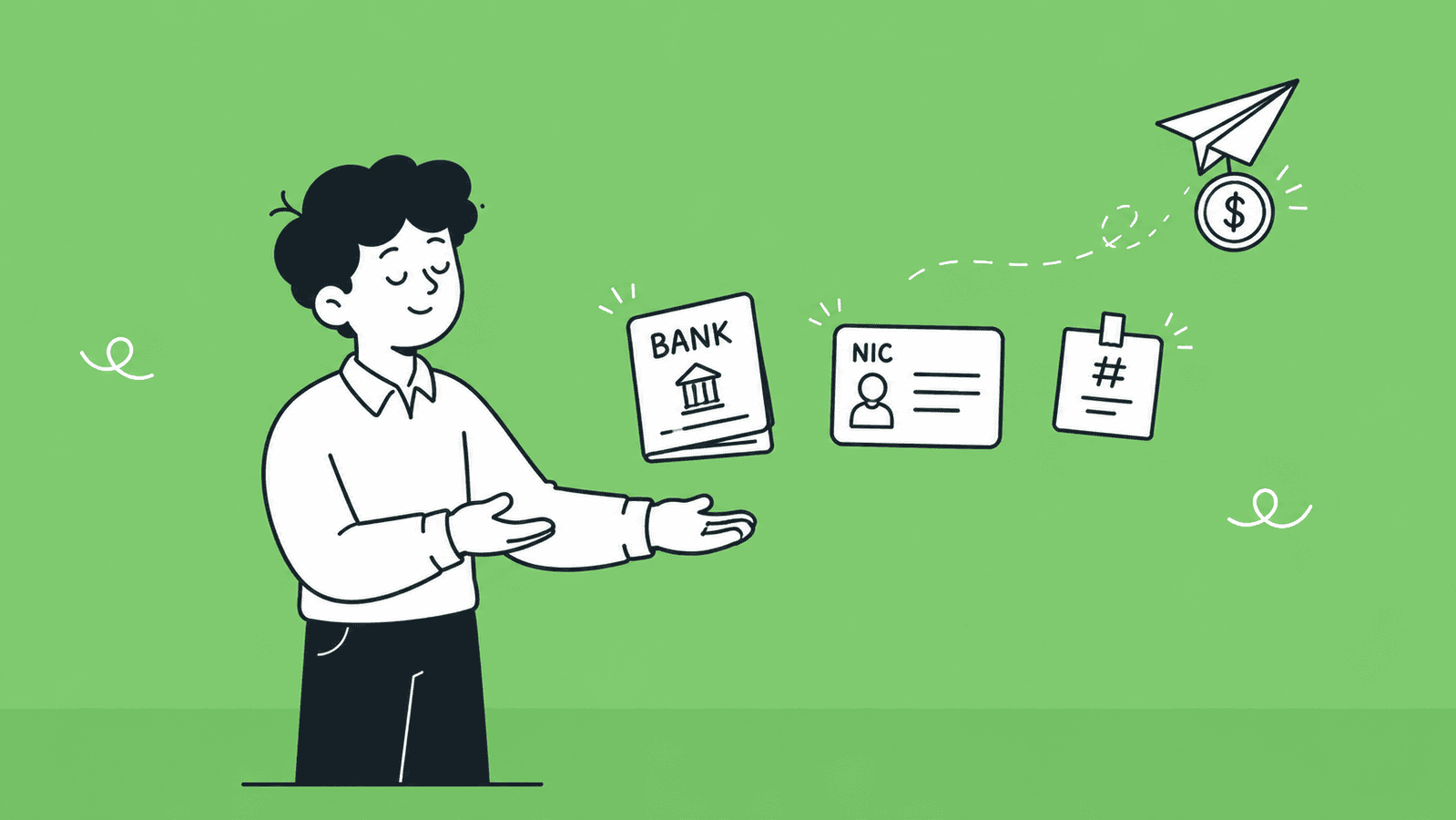
    Before you start receiving money from overseas, you need to have a few basic things ready. This will help you avoid delays, failed transactions, and verification issues.

    A Verified Bank Account in Sri Lanka

    You need a local bank account that can accept international transfers. Most major Sri Lankan banks support inward foreign payments, but your account must be active and properly set up.

    Make sure:

    • Your account is in your correct legal name
    • It is enabled to receive foreign currency (if needed)
    • Your bank has provided you with a SWIFT code

    Having a verified bank account ensures that funds sent from abroad can be received without issues.

    A Valid National ID for KYC Verification

    All banks and payment platforms require identity verification. This is part of KYC (Know Your Customer) rules.

    You will usually need:

    • National Identity Card (NIC) or passport
    • Proof of address (utility bill or bank statement in some cases)

    Without completing verification, you may not be able to receive or withdraw international payments.

    Basic Details Your Client Will Need From You

    To receive a payment, you must share the correct details with your client. Even a small mistake can delay the transfer.

    The most common details include:

    • Your full name (as per your bank account)
    • Bank account number
    • Bank name and branch
    • SWIFT/BIC code
    • Bank address (sometimes required)

    If you are using a payment platform like Payoneer or Wise, you may need to share platform-specific details instead.

    Getting these basics right from the start will make the whole payment process smooth and reliable. Now that you know what you need, let’s explore the different methods available to receive international payments in Sri Lanka. 

    What Are the Methods Available to Receive International Payments in Sri Lanka?

    There are five main ways to receive international payments in Sri Lanka. Each one works differently, costs differently, and suits a different type of person. Read through all of them before deciding which one fits your situation. 

    Method 1: Direct Bank Transfer (SWIFT Transfer)

    A SWIFT transfer is the most traditional way to receive international payments in Sri Lanka. It uses the SWIFT network, which connects banks worldwide to securely send money between accounts.

    Here’s how it works:

    1. Your client goes to their bank and requests an international transfer
    2. They provide your bank details (name, account number, SWIFT code, etc.)
    3. The money is sent through one or more intermediary banks
    4. Your Sri Lankan bank receives the funds and credits your account

    This method is widely used for business payments, salaries, and large transactions.

    Which Sri Lankan Banks Support International Transfers

    Most major banks in Sri Lanka can receive SWIFT payments. Some of the most commonly used ones include:

    • Bank of Ceylon
    • Sampath Bank
    • Seylan Bank
    • People’s Bank
    • Commercial Bank of Ceylon

    These banks provide SWIFT codes and support inward foreign currency transfers.

    Fees and Transfer Time

    SWIFT transfers are reliable, but they can come with higher costs.

    Fees to expect:

    • Sending bank charges (paid by the sender)
    • Intermediary bank fees (sometimes deducted in between)
    • Receiving bank charges in Sri Lanka

    Transfer time:

    • Usually takes 2 to 5 business days
    • Can take longer if there are intermediary banks involved

    When to Use It (Best for Large Payments)

    SWIFT transfers are best used when:

    • You are receiving large payments
    • You are dealing with business clients or contracts
    • You want a secure and widely accepted method

    For smaller payments, the fees can be relatively high, so other methods like Payoneer or Wise may be more cost-effective. 

    Method 2: PayPal

    PayPal is one of the most popular online payment platforms in the world. It allows individuals and businesses to send and receive money internationally, making it a common choice for freelancers, online sellers, and remote workers.

    Is PayPal Available in Sri Lanka?

    As of 2026, you can create a PayPal account in Sri Lanka, but you cannot receive payments and withdraw them to your local bank account.

    Sri Lanka is listed as a PayPal-supported country, but local users are limited to:

    • Sending payments
    • Making online purchases

    The option to receive money and withdraw to a Sri Lankan bank account is still not fully enabled. [Source: Fact Crescendo] 

    There have been ongoing discussions between PayPal and Sri Lankan authorities for many years. Some reports suggest these discussions are in the final stages, but no official rollout has been announced yet. [Source: The Morning ]

    So, while there is hope for full PayPal support in the future, it is still not available for receiving payments in Sri Lanka right now.

    Workaround Approaches You Can Use (Legit Methods)

    Since direct PayPal receiving is not available, some freelancers use these legitimate alternatives:

    Option 1: Request Payment Through an Alternative Platform

    Instead of PayPal, ask your clients to pay you via platforms like Payoneer or Wise, which fully support Sri Lanka.

    Option 2: Register a Business in Another Country

    Some freelancers legally register a business in countries like the UK or USA.

    This allows them to:

    • Open a foreign bank account
    • Create a PayPal account linked to that country
    • Receive payments via PayPal 
    • Or use Stripe as a more powerful alternative for online businesses 

    With this approach, they can withdraw funds to the foreign bank account, then transfer money to their Sri Lankan bank account when needed.

    This method requires proper legal setup and compliance, but it is commonly used by advanced freelancers and business owners. 

    Need Help in Registering Your Business in USA or UK from Sri Lanka? 

    At BR.lk, we help Sri Lankan freelancers and online sellers unlock global payment opportunities by legally setting up their business abroad. Whether it’s a US LLC or a UK company, we handle the complex processes so you can focus on getting paid internationally.

    Here’s why BR.lk is the trusted choice for Sri Lankan entrepreneurs:

    • Expert Guidance & Compliance: Our team guides you through every step of company registration, ensuring full compliance with international and local regulations.
    • Seamless Payment Setup: We help link your new company to PayPal, Stripe, Wise, and other global payment platforms, enabling you to receive payments from clients worldwide.
    • Fast & Hassle-Free Process: Complete registration and account setup in just 24–48 hours, with minimal paperwork and clear instructions every step of the way.
    • Local Language Support: Receive personalized support in Sinhala or Tamil, making the process simple and easy to understand.

    Here’s what our trusted customers say about our efforts:

    “Absolutely fantastic experience with BR.LK! They made setting up my US LLC from Sri Lanka feel like a breeze. From day one, their team was super responsive and walked me through every single step — company registration, getting a US address and phone number, bank account setup, even helping with Stripe. If you’re in Sri Lanka looking to register a US company, BR.LK is the way to go.”Malinda Alahakoon (Check his Full Google review)

    Take the first step to get paid globally and grow your online business with confidence. 

    Method 3: Payoneer

    Payoneer has been the go-to payment solution for Sri Lankan freelancers for years. It lets you get a virtual bank account with a US, UK, or EU account number, which means your international clients can pay you as if you were a local in their country, without expensive SWIFT fees on their end.

    It integrates directly with platforms like Upwork, Fiverr, Amazon, Wish, and Toptal, making it very convenient if you work through these marketplaces.

    How to Set Up a Payoneer Account in Sri Lanka

    There are two ways to sign up:

    1. Through a marketplace (Recommended): Go to your payment settings on Fiverr, Upwork, eBay, or Amazon, select Payoneer as your payout method, and register from there. If you see the Payoneer option on your marketplace’s payment methods page, you can follow the instructions provided to register a new account directly through that platform. This is the smoothest route for Sri Lankan users. 
    2. Directly at Payoneer.com: Click Sign Up, select Individual, fill in your personal details and NIC number, add your local bank account, upload your NIC or passport for verification, and wait 1 – 3 business days for approval. If you hit any friction during direct signup, switch to the marketplace route instead.

    Important Note: Some users report encountering friction during direct signup with a Sri Lankan address. If you face any issues with Option 2, simply use Option 1 through your marketplace platform instead. It is the more reliable route either way.

    How to Withdraw to a Local Bank Account

    Once your Payoneer account is verified and you have funds sitting in it, withdrawing to your Sri Lankan bank is straightforward:

    1. Log in to your Payoneer account (web or app)
    2. Go to Withdraw → To Bank Account
    3. If you haven’t added your bank yet, click Add Bank Account and enter your account number, bank name, and branch
    4. Enter the amount you want to withdraw
    5. Review the exchange rate and fee shown
    6. Confirm the transfer

    The money is converted from USD, EUR, or GBP into LKR and deposited into your account. Transfer time is typically 2 – 5 business days.

    You can also pair your Payoneer account with eZ Cash (Dialog’s mobile wallet), which is an officially listed Payoneer partner in Sri Lanka, useful if you want quicker access to smaller amounts without waiting for a full bank transfer. 

    Fees to Expect

    Payoneer is not free, but the fees are manageable if you receive regular payments. Here’s what to expect:

    Fee TypeAmount
    Receiving from Fiverr, Upwork, or other integrated platformsUsually free
    Receiving via local bank transfer (ACH/SEPA)Free or up to 1%
    Receiving via credit card from a clientUp to 3.99%
    Withdrawing to local Sri Lankan bankFixed fee + currency conversion markup
    Currency conversion0.5% – 3.5% depending on method
    Annual account fee$29.95  

    The annual fee is worth paying attention to. The $29.95 annual account fee is waived if you receive $2,000 or more in payments during the year. If you are receiving regular client income, you will almost certainly cross this threshold and pay nothing in annual fees.  

    Platforms That Work With Payoneer

    One of Payoneer’s biggest advantages is how widely it is integrated across global platforms. Payoneer connects with over 2,000 marketplaces, platforms, and networks, giving you a global reach and making it easy to get paid and withdraw locally. 

    The most commonly used ones by Sri Lankan freelancers and sellers are:

    • Upwork: Most Sri Lankan freelancers use this as their primary withdrawal route
    • Fiverr: To get a direct payout to your Payoneer balance after the clearance period
    • Amazon, for sellers in the Amazon marketplace
    • eBay, for e-commerce sellers
    • Wish, Rakuten, Taboola, 99Designs, iStockPhoto, and hundreds more

    If the platform you work on is integrated with Payoneer, you don’t need to chase clients for transfers or share bank details. The platform sends your earnings directly to your Payoneer account on a set schedule, and you withdraw from there to your local bank.  

    Method 4: Wise (formerly TransferWise) 

    Wise is currently one of the best options available for Sri Lankans who receive regular payments from international clients. Unlike PayPal’s restrictions or Payoneer’s new registration complications, Wise is fully accessible to new users in Sri Lanka with no restrictions on account creation or receiving payments. 

    When you open a Wise account, you get a multi-currency virtual account with local bank details in major currencies, such as USD, GBP, EUR, AUD, and more. Your client pays you as if sending a local transfer in their country, and Wise handles the rest. 

    Multi-Currency Account and Mid-Market Exchange Rates

    One of Wise’s biggest advantages is that it uses the real mid-market exchange rate, the same rate you see on Google, with no hidden markup. This is different from most banks and PayPal, which add 2 – 4% on top of the exchange rate.

    With a Wise account, you can:

    • Hold balances in 40+ currencies at the same time
    • Receive payments in USD, GBP, EUR, AUD, CAD, and more using local account details
    • Convert currencies only when you choose to, not automatically
    • Wait for a better exchange rate before converting to LKR 

    How to Withdraw Funds to a Sri Lankan Bank Account

    Once you have funds in your Wise account, withdrawing to your local bank is straightforward:

    1. Open the Wise app or website and go to Send Money
    2. Select your currency balance (e.g., USD)
    3. Choose Sri Lanka and enter your Sri Lankan bank account details
    4. Wise converts the amount to LKR using the mid-market rate + a small fee
    5. The money arrives in your bank account, usually within the same business day to 1 – 2 days 

    Fees and Transfer Speed

    Wise charges a small, transparent fee, typically 0.4% – 1% of the transfer amount, depending on the currency pair. There are no monthly fees and no minimum balance requirements.

    Fee TypeAmount
    Receiving via local bank details (ACH, SEPA)Free
    Receiving via SWIFTSmall fixed fee
    Converting to LKR and withdrawing~0.4% – 1% of the amount
    Monthly account feeNone

    Transfer speed to a Sri Lankan bank: same day to 2 business days in most cases. 

    Use our Wise calculator to estimate exactly what you’ll receive. 

    Limitations (No LKR Local Account)

    There is one important limitation to be aware of with Wise: you cannot currently send money from LKR using Wise. This means Wise does not give you a Sri Lankan Rupee local account number. You can receive in foreign currencies and convert to LKR, but you cannot receive LKR directly through Wise.  

    This is generally not a problem since your international clients will always be paying in USD, EUR, GBP, or another foreign currency anyway. 

    Method 5: Money Transfer Services (Western Union, Remitly, Xoom)

    Money transfer services are platforms specifically designed to send money from one country to another. They are different from platforms like Payoneer or Wise in one key way: they are mainly used by the person sending the money, not the person receiving it.

    Your client or employer in another country signs up on a platform like Western Union, Remitly, or Xoom, enters your details, pays in their local currency, and you receive the money in Sri Lanka. You don’t need to create an account on these platforms yourself in most cases. 

    Cash Pickup vs. Bank Deposit Options

    These services give the recipient in Sri Lanka two main ways to receive the money:

    • Bank Deposit: The money is sent directly to your Sri Lankan bank account. This is the most common option for freelancers and professionals. You can receive deposits to almost any bank in Sri Lanka, including Sampath Bank and Commercial Bank.  
    • Cash Pickup: The sender deposits cash at a partner location abroad and you can collect it in cash at a Commercial Bank branch or partner location in Sri Lanka. This is more common for personal remittances, for example, a family member sending money home.  

    You can also receive funds directly to mobile wallets like eZ Cash and mCash through some of these services.  

    Best Use Cases

    ServiceBest For
    Western UnionQuick cash pickup, family remittances, wide agent network
    RemitlyBank deposits, fast transfers, good for regular payments
    Xoom (by PayPal)Clients who already use PayPal, bank deposits, mobile wallet top-ups

    These services work best when:

    • A family member or employer abroad needs to send money quickly
    • Your client does not have a bank account or does not use platforms like Wise
    • You need the money as a cash pickup without waiting for a bank deposit
    • You are receiving a one-time or irregular payment, not regular client invoices

    They are generally not the best choice for regular freelance or business income due to the fees and lack of professional invoicing features. 

    Fees and Transfer Speed

    ServiceTypical FeeTransfer Speed
    Western UnionVaries by method; card payments cost moreMinutes (cash pickup) to 1 – 3 days (bank deposit)
    RemitlyLow for bank deposits; higher for expressMinutes to 3 – 5 business days
    XoomVaries; free first transfer sometimes offeredMinutes (cash/wallet) to 1 – 3 days (bank)

    Watch out for exchange rate markups. These services tend to offer exchange rates that are slightly below the real mid-market rate. Always check the actual amount your recipient will receive before confirming a transfer, not just the advertised fee. 

    Each of these five methods works for Sri Lanka, but they are not equal. The best one for you depends on how much you receive, how often, who your clients are, and whether you are a freelancer, a business, or someone receiving personal remittances. The next section will help you compare them side by side. 

    Side-by-Side Comparison: Which Method is Right for You?

    With five methods available, the right choice depends on who you are and how you get paid. Here is a quick comparison to help you decide. 

    Comparison Table

    MethodFeesTransfer SpeedBest ForAvailable in Sri Lanka
    SWIFT Bank Transfer1,000 – 1,500 LKR + intermediary fees1 – 3 business daysLarge business paymentsYes
    PayPal2 – 3% + 3 – 4% FX markup1 – 3 business daysRegistered businesses (LLC, Ltd)Send only, receiving restricted
    PayoneerFree from platforms; 0.5 – 3.5% conversion2 – 5 business daysFreelancers, e-commerce sellersYes (sign up via marketplace)
    Wise0.4 – 1% (mid-market rate)Same day – 2 daysFreelancers, direct client paymentsYes
    Western Union / RemitlyVaries; FX markup appliesMinutes – 3 daysPersonal remittances, quick transfersYes

    Fees and Exchange Rates: What to Watch Out For

    Most people only look at the transfer fee when comparing payment methods. But the bigger cost is usually something far less visible, which is the exchange rate markup. 

    Transfer Fees vs. Exchange Rate Markups

    • A transfer fee is the charge a platform shows you upfront, easy to spot and compare.
    • An exchange rate markup is hidden inside the conversion itself. When a platform converts your USD or EUR into LKR, they use a rate slightly worse than the real mid-market rate and quietly keep the difference.

    Here’s what that looks like in practice:

    • Real rate: 1 USD = 310 LKR 
    • Bank applies a 3% markup: 1 USD = 300.7 LKR 
    • On a $1,000 payment, you silently lose around 9,300 LKR (~$30)

    This is why a “zero fee” platform like PayPal or a local bank can actually cost you more than Wise, which charges a small visible fee but uses the real mid-market rate. 

    How to Stop Losing Money on Conversion

    • Always check the mid-market rate on Google first (e.g., “1 USD to LKR”) and compare it to what your platform is offering. The gap is your real cost.
    • Use Wise for conversions. It uses the mid-market rate with no markup, saving you 2 – 4% compared to banks.
    • Hold your balance before converting. Payoneer and Wise both let you hold USD, EUR, or GBP. Convert in one larger batch instead of every time a payment arrives.
    • Ask clients to pay in USD, EUR, or GBP to avoid double conversions.
    • For SWIFT transfers, ask your client to select the “OUR” payment option. This makes them cover all intermediary bank fees, so the full amount reaches you. 

    Timing Your Transfers

    You can’t predict exchange rates, but you can be smart about them. Avoid converting on Mondays or after long weekends when market spreads tend to be wider. Keep an eye on major economic news from the US Federal Reserve or Sri Lanka’s Central Bank, as these can shift rates quickly. Wise shows live rates in the app, so you can monitor and convert when the rate moves in your favour.

    That said, don’t hold foreign currency for weeks waiting for the perfect rate, it can move either way. Convert when the rate is acceptable to you. 

    The key habit: Always calculate the total cost, including fees as exchange-rate losses, not just the fee alone. Two minutes of comparison can save you thousands of rupees per payment. 

    Final Thoughts

    Receiving international payments in Sri Lanka is much easier today than it used to be, but the right method still depends on your situation. Whether you are a freelancer, online seller, or business owner, each option has its own strengths when it comes to speed, cost, and convenience.

    Traditional methods like SWIFT bank transfers are still reliable for large payments, while platforms like Payoneer and Wise have become the preferred choice for most freelancers because of lower fees and faster processing. On the other hand, services like Western Union or Remitly are useful for quick personal transfers, but they are not ideal for regular business income.

    It is also important to remember that the real cost of receiving money is not just the transfer fee, but also the hidden exchange rate markups. Small differences in rates can add up over time, so choosing the right platform and timing your conversions can make a big impact on how much you actually receive.

    In the end, there is no single “best” method for everyone. The smartest approach is to choose a combination of services that fits your income type, frequency of payments, and client base. By understanding how each method works, you can receive international payments in Sri Lanka more safely, efficiently, and with fewer losses in 2026 and beyond. 

    Key Takeaways

    • Receiving international payments in Sri Lanka requires a verified bank account, valid ID, and correct banking details like SWIFT codes.
    • SWIFT bank transfers are a reliable method but are best suited for large payments due to higher fees and slower processing times.
    • PayPal can be used in Sri Lanka, but it still does not support receiving and withdrawing funds to local bank accounts in 2026.
    • Payoneer is one of the most popular options for Sri Lankan freelancers because it supports global platforms and allows easy withdrawals to local banks.
    • Wise is a strong alternative because it offers real mid-market exchange rates and low transparent fees for international transfers.
    • Money transfer services like Western Union, Remitly, and Xoom are best for personal or urgent payments rather than regular freelance income.
    • Fees vary across platforms and may include hidden exchange rate markups, not just visible transfer charges.
    • Exchange rate differences can significantly affect how much money you receive, especially for larger transactions.
    • Choosing the right payment method depends on your income type, payment frequency, and whether you work with clients or platforms.
    • Using the right combination of payment methods can help you reduce costs, receive money faster, and avoid unnecessary losses.

    FAQs

    Is Payoneer available in Sri Lanka? 

    Yes. The most reliable way to sign up is through a marketplace like Fiverr or Upwork, go to the payment settings on your platform and register from there. Direct signup at Payoneer.com may work too, but some Sri Lankan users report friction with that route. 

    How long does it take to receive international payments in Sri Lanka? 

    It depends on the method. Wise is fastest at same day to 2 days. SWIFT bank transfers take 2 – 5 business days. Payoneer withdrawals take 2 – 5 business days. Western Union cash pickup can arrive within minutes. 

    What is the cheapest payment method?

    Wise is generally the cheapest, charging 0.4% – 1% with no exchange rate markup. Payoneer is comparable if you receive payments through integrated platforms. SWIFT transfers are cost-effective only for large amounts where the flat fee becomes a smaller percentage. 

    Do I need to pay tax on international payments in Sri Lanka? 

    Yes. Foreign income is taxable in Sri Lanka if it exceeds the personal exemption threshold. You are required to declare it to the Inland Revenue Department. It is advisable to consult a local tax professional to ensure you are compliant with current regulations. 

    Can PayPal receive money in Sri Lanka in 2026? 

    No. As of 2026, Sri Lankan PayPal accounts are restricted to sending payments and online purchases only. Withdrawing received funds to a local bank account is still not supported. Discussions between PayPal and Sri Lankan authorities are ongoing but no official launch date has been confirmed. 

    Which Sri Lankan banks accept wire transfers? 

    Most major banks accept inward SWIFT transfers, including Bank of Ceylon, Commercial Bank of Ceylon, Sampath Bank, Seylan Bank, People’s Bank, and Hatton National Bank. Confirm your SWIFT code directly with your branch before sharing it with a client. 

    Is there a limit on how much I can receive internationally? 

    Individual platform limits vary. Wise allows up to 4.98 million LKR per transfer. Banks generally have no hard cap on inward transfers, but large amounts may trigger additional compliance checks from your bank or the Central Bank of Sri Lanka. 

    Can I receive payments if I don’t have a bank account? 

    Yes, through cash pickup services like Western Union or Remitly. You can collect transfers in cash at partner locations across Sri Lanka without needing a bank account. However, for regular income, opening a bank account is strongly recommended for security and convenience. 

    Which payment method has the best exchange rate? 

    Wise consistently offers the best rate because it uses the real mid-market exchange rate with no hidden markup. Banks and services like Western Union typically apply a 2 – 4% markup on top of the market rate, which silently reduces how much you receive. 

    What happens if there’s a problem with my transfer? 

    First check your transaction history on the platform you used. Common causes include incorrect account details, failed KYC verification, or transfer limits being exceeded. Contact your platform’s support with your transaction ID. For SWIFT transfers, your bank can trace the payment through the SWIFT network. 
  • Best 7 Payment Methods for Freelancers in Sri Lanka (2026) 

    Best 7 Payment Methods for Freelancers in Sri Lanka (2026) 

    Getting paid should be the easiest part of freelancing. But if you are based in Sri Lanka, you already know it is anything but. PayPal still does not let you withdraw money. Stripe is not available locally. And if you ask five different freelancers which payment method they use, you will get five different answers. The truth is, there is no single perfect solution for everyone. The right method depends on how you work, who your clients are, and how much you are willing to pay in fees.

    In this guide, we break down every practical option available to Sri Lankan freelancers in 2026, what each one actually costs, and which one makes the most sense for your situation. 

    What to Look for in a Freelancer Payment Method (Before You Pick One)

    Choosing the right payment method is not just about receiving money. It directly affects how much you actually keep, how fast you get paid, and how easy your workflow becomes. Here are the key things every freelancer in Sri Lanka should check before picking a payment option:

    1. Transaction Fees and Exchange Rates

    This is where most freelancers lose money without realizing it. Every platform charges something, either a fixed fee, a percentage, or both. On top of that, the exchange rate they offer can be lower than the real market rate.

    Even a small difference in exchange rates can cost you thousands of rupees over time, especially if you get paid regularly in USD or EUR. Always check:

    • Receiving fees
    • Withdrawal fees
    • Currency conversion margins

    A platform with “low fees” but poor exchange rates can actually cost you more. 

    2. Withdrawal Speed to a Sri Lankan Bank Account

    Getting paid is one thing, accessing your money is another. Some services process withdrawals within a few hours, while others can take 2–5 business days.

    If you depend on freelancing as your main income, faster withdrawals can help with cash flow and day-to-day expenses. Look for:

    • Average withdrawal time
    • Weekend or holiday delays
    • Bank processing times in Sri Lanka 

    3. Platform Compatibility (Fiverr, Upwork, Freelancer.com, etc.)

    Not all payment methods work with every freelancing platform. For example, some platforms directly support certain payment providers, making withdrawals much easier.

    Before choosing a method, make sure it works smoothly with platforms like:

    • Fiverr
    • Upwork
    • Freelancer.com

    Using a supported method avoids extra steps, delays, and unnecessary fees. 

    4. KYC Requirements and Documentation

    Most payment platforms require identity verification (KYC – Know Your Customer). This is normal, but the process can vary.

    You may need to provide:

    • National ID or passport
    • Proof of address (utility bill or bank statement)
    • Sometimes income proof or invoices

    Some platforms approve accounts quickly, while others may take a few days. Choosing a service with a smooth verification process can save time and frustration. 

    5. Currency Support (USD, EUR, GBP, LKR)

    Freelancers usually get paid in foreign currencies like USD, EUR, or GBP. A good payment method should support holding and converting these currencies easily.

    Key things to check:

    • Can you receive payments in multiple currencies?
    • Can you hold money without converting immediately?
    • How easily can you convert to LKR when needed?

    Having multi-currency support gives you more control, especially when exchange rates fluctuate. 

    If you choose a payment method carefully based on these factors, you can avoid hidden costs, reduce delays, and keep more of what you earn. 

    The 7 Best Payment Methods for Freelancers in Sri Lanka

    Below are the 7 best payment methods freelancers in Sri Lanka can use in 2026, based on reliability, cost, and ease of use. 

    1. Payoneer: Best Overall for Sri Lankan Freelancers

    Payoneer is a global payment platform that gives you a multi-currency account with virtual receiving numbers in USD, EUR, and GBP. Your overseas client pays you like they are paying a local bank in their country, no foreign bank account needed on your end. It is the most widely used and reliable way to receive international payments in Sri Lanka right now, with direct integrations into almost every major freelance platform. 

    To sign up, you will need your NIC or passport, a Sri Lankan bank account, and basic proof of freelance work. 

    How to Withdraw to a Sri Lankan Bank

    To withdraw your Payoneer balance to a local bank, log in to your account and go to Withdraw, then select To Bank Account. From there, add your Sri Lankan bank details, including your account number and SWIFT code, enter the amount, and confirm the transfer. 

    Here, the money usually arrives within 2 to 5 business days. Keep your client invoices handy, as some Sri Lankan banks may ask for documentation on larger incoming transfers as part of their standard compliance process. 

    Fees Breakdown

    Fee TypeAmount
    Receiving from Upwork, Fiverr & platformsFree
    Receiving from another Payoneer userFree
    Requesting payment via client’s credit card3.2% + $0.49
    Withdrawing under $400Fixed $4 fee
    Withdrawing above $400 to local bank$1.50 flat fee
    Currency conversion (USD → LKR)Up to 2% above market rate
    Inactivity fee (if under $2,000/year received)$29.95/year

    Tip: Withdraw in larger amounts less frequently to avoid paying the $4 flat fee on small transfers. 

    Platforms That Support Payoneer

    Upwork, Fiverr, Freelancer.com, Toptal, 99designs, Amazon, and Airbnb, plus direct client invoicing. 

    Pros and Cons

    ProsCons
    Works with almost every freelance platformUp to 2% conversion fee on LKR withdrawals
    Free to receive from marketplace payouts$29.95 inactivity fee if you earn under $2,000/year
    Withdraws directly to Sri Lankan banks$4 flat fee on small withdrawals
    Supports USD, EUR, GBP and moreAccount freezes reported during verification

    2. Wise (formerly TransferWise): Best for Direct Client Payments

    Wise (formerly TransferWise) is a UK-based payment platform that lets you receive money from international clients using local account details in USD, EUR, GBP, AUD, and more, without needing a foreign bank account. What makes Wise stand out from the rest is its use of the real mid-market exchange rate with no hidden markup. 

    This means you keep more of what your client pays you compared to most other methods. It is best suited for freelancers who work directly with clients rather than through platforms like Upwork or Fiverr. 

    How to Receive Payments from International Clients

    Once you sign up and verify your identity, Wise gives you local account details in multiple currencies. You share these details with your client like a regular bank account number, and they pay you as if they are making a local transfer in their country. Your client does not need a Wise account to send you money. You can also send invoices directly through Wise, making it a clean end-to-end solution for freelancers with direct client relationships. 

    Fees and Exchange Rate Advantage

    Fee TypeAmount
    Receiving via local bank transfer (ACH/SEPA)Free
    Receiving via USD wire transfer$6.11 fixed fee
    Receiving via GBP wire transfer$2.16 fixed fee
    Receiving via EUR wire transfer$2.39 fixed fee
    Currency conversion fee0.33% (expected to rise to 0.5–0.75% by mid-2026)
    Monthly or inactivity feeNone

    Wise uses the mid-market forex rate with no hidden charges, which is the same rate you see on Google. This is a significant advantage over banks and most other payment platforms that quietly add a margin to the exchange rate before converting your money. 

    How to Transfer to a Sri Lankan Bank

    To move your Wise balance to a local bank account, log in and go to Send, select your Sri Lankan bank as the destination, enter the amount, and confirm. Once Wise receives and converts your money, it usually arrives in your recipient’s bank account on the same working day, though conversion can take up to 2 working days. As with any inward remittance, have your invoices ready in case your bank requests documentation.  

    Pros and Cons

    ProsCons
    Real mid-market exchange rate, no hidden markupNo direct integration with Upwork or Fiverr
    No monthly or inactivity feesUSD wire receiving fee of $6.11 per transfer
    Fast transfers, often same working dayCannot send money from an LKR account
    Clean invoicing tool for direct clientsConversion fee expected to increase in mid-2026
    Supports 40+ currencies in one accountNot ideal for platform-based freelancers

    3. Skrill: Good Backup Option for Freelancers

    Skrill is a UK-based digital wallet that supports multiple currencies and is technically available in Sri Lanka. 

    However, Sri Lankan freelancers face some real practical limitations that are worth knowing before you sign up. Visa card deposits are restricted locally, meaning you cannot simply top up your account with a Sri Lankan bank card. 

    To fund a Skrill account, most local users source a Skrill balance from existing Skrill holders, which adds an extra step that Payoneer and Wise do not require. That said, it is still useful if a specific client or platform only supports Skrill. 

    How to Receive and Withdraw in Sri Lanka

    Receiving money into your Skrill account from a client is straightforward and free. The problem starts when you try to withdraw. Not all Sri Lankan banks accept transfers from Skrill, so check with your bank before committing to it. Withdrawals that do go through generally take 2 to 7 working days, though you can withdraw to eZ Cash instantly.  

    Fees to Watch Out For

    Skrill’s fees are noticeably higher than both Payoneer and Wise, especially on currency conversion.

    Fee TypeAmount
    Receiving money into SkrillFree
    Sending to another Skrill user1.45% (capped at €10)
    Withdrawing to a bank account€5.50 fixed fee
    Withdrawing to a credit card7.5%
    Currency conversion fee3.99% above base exchange rate
    International transfer markupUp to 4.99% on exchange rate
    Inactivity fee (no login or transaction in 12 months)$5/month deducted from balance

    The biggest cost to watch is the currency conversion. Skrill’s exchange rate markup can be as high as 4.99% per transaction, meaning you lose money not just on the fee but also on the rate itself. If you are converting USD to LKR regularly, this adds up quickly. 

    Pros and Cons

    ProsCons
    Free to receive payments3.99% currency conversion fee
    Instant withdrawal to eZ CashUp to 4.99% exchange rate markup
    Useful when clients only support Skrill€5.50 fixed fee per bank withdrawal
    Available and functional in Sri LankaNot all Sri Lankan banks accept Skrill transfers
    Supports 40+ currenciesNo direct integration with Upwork or Fiverr
    No monthly fee if account stays active$5/month inactivity fee after 12 months
    Visa card deposits restricted in Sri Lanka 
    Need to source Skrill balance from existing holders locall 

    4. Direct Bank Wire Transfer: Old but Reliable

    A direct bank wire transfer is the most traditional way to receive international payments in Sri Lanka. Your overseas client sends money from their bank directly to your Sri Lankan bank account using your account number and SWIFT code. It is slower and sometimes more expensive than Payoneer or Wise, but it sits fully within the formal banking system, making it the most compliant option for larger, one-off payments. 

    How It Works in Sri Lanka

    Your client initiates a SWIFT transfer by entering your full name, bank name, branch, account number, and SWIFT/BIC code. Transfers can take several business days, and those initiated outside business hours or on weekends may take longer. Keep your client invoices ready, as your bank will likely ask for documentation to process the inward remittance. 

    PFCA and BFCA Accounts Explained Simply

    When foreign currency arrives, your bank will ask if you want to hold it in foreign currency or convert to LKR. 

    1. A PFCA (Personal Foreign Currency Account) lets you hold USD, GBP, or EUR inside a Sri Lankan bank without converting immediately, useful when exchange rates are unfavorable. Any Sri Lankan resident can open a PFCA through any inward remittance received via banking channels, no regular foreign income required. 
    2. A BFCA (Business Foreign Currency Account) works the same way but is designed for registered businesses. 

    Most major banks support inward remittances, Commercial Bank, People’s Bank, BOC, Sampath, Seylan, and HNB. DFCC Bank is the most freelancer-friendly, with a dedicated account that accepts payments from Payoneer, Skrill, and direct wire transfers. 

    Fees and Processing Time

    Fee TypeAmount
    Sender’s bank wire fee (client’s side)$15 – $50
    Intermediary/correspondent bank fee$10 – $25 (deducted in transit)
    Exchange rate markup (USD → LKR)Up to 2–3% above market rate
    Processing time1 to 5 business days

    Pros and Cons

    ProsCons
    Fully within the formal banking systemSlow, 1 to 5 business days
    PFCA lets you hold USD without convertingClient’s bank charges high sending fees
    Best for large, one-off paymentsCorrespondent fees deducted in transit
    No third-party platform neededNot practical for small frequent payments

    5. PayPal: What Sri Lankan Freelancers Need to Know

    PayPal is the most recognized payment platform in the world, and almost every international client knows how to use it. Unfortunately, for Sri Lankan freelancers, it remains largely off-limits as a way to receive and withdraw money, and this has been the case for years. 

    The Current Reality of PayPal in Sri Lanka

    Despite a surge of social media posts claiming otherwise, Sri Lankan PayPal accounts are still heavily restricted. While you can link a local credit or debit card to send money or pay for online services, the gateway for receiving incoming funds remains firmly closed.

    Although Sri Lanka appears among PayPal-enabled countries, the country is only provided with two options: Buy and Send. It is still not possible to withdraw money to a bank card or bank account, and the Central Bank of Sri Lanka has confirmed they cannot yet officially declare PayPal fully operational.

    The core issue is regulatory. While the CBSL has approved the receipt of funds via PayPal, it continues to block outgoing payments. Until that is resolved at a policy level, receiving freelance payments through PayPal in Sri Lanka remains blocked. 

    What You Can and Cannot Do

    FeatureAvailable in Sri Lanka?
    Create a PayPal accountYes
    Link a local Visa or MastercardYes
    Pay for software and subscriptionsYes
    Shop on international sites (eBay, Amazon)Yes
    Send money to overseas freelancersYes
    Receive payments from clientsNo
    Withdraw funds to a Sri Lankan bank accountNo

    When It Might Still Be Useful

    Even without receiving ability, a Sri Lankan PayPal account is worth having for paying tools like Adobe Creative Cloud, SEMrush, or Ahrefs, funding ad campaigns, or paying international freelancers if you ever subcontract work. 

    Pros and Cons

    ProsCons
    Universally recognized by clients worldwideCannot receive or withdraw payments in Sri Lanka
    Useful for paying tools and subscriptionsNo bank withdrawal option available
    Free to create an accountUseless as a freelancer income method for now
    May fully open in Sri Lanka in the near futureRegulatory resolution timeline is unclear

    6. Western Union: A Reliable Option for One-Off Payments

    Western Union is one of the oldest and most widely recognized money transfer services in the world. While it is not built specifically for freelancers, it works well when a client prefers a traditional, non-digital method to send payment, especially for larger, one-time projects. Your client does not need a bank account to send money, and you do not need any third-party platform account to receive it. 

    How It Works for Freelancers in Sri Lanka

    Your client visits a Western Union agent location or uses the Western Union app or website to initiate a transfer. They enter your name and either your Sri Lankan bank account details for a direct deposit, or send it as a cash pickup using a reference number. Money can be collected from over 260 Commercial Bank branches island-wide, and transfers between clients and recipients across more than 200 countries and territories are supported. 

    For bank deposits, funds usually arrive within 1 to 2 business days. For cash pickup, it can be near-instant.  

    Fees and Exchange Rates to Expect

    Fees vary depending on the sending country, the amount, and whether the client sends online or through an agent location.

    Fee TypeAmount
    Online transfer fee (client side)Typically low, around 0.4% of the amount sent
    In-person agent transfer feeHigher, varies by location and country
    Exchange rate markup (USD → LKR)1–3% above mid-market rate
    Receiving fee (your side)Free
    Processing timeMinutes (cash pickup) to 1–2 days (bank deposit)

    Note: Sending money from physical agent locations with Western Union is usually much more expensive than using their online service, so encourage your client to use the app or website rather than walking into an agent. 

    When It Makes Sense to Use Western Union

    Western Union works best when your client is not tech-savvy, does not have a Payoneer or Wise account, and simply wants to send money the traditional way. It also suits larger one-time project payments rather than frequent small transfers, where the exchange rate margin would eat into your earnings. 

    Pros and Cons

    ProsCons
    No platform account needed for either partyExchange rate markup of 1–3%
    Cash pickup available island-wideIn-person agent fees can be high
    Trusted and familiar to older or non-tech clientsNot practical for frequent small payments
    Fast, cash pickup can be near-instantClient needs to manually initiate each transfer
    Accepted at major Sri Lankan banksNo direct integration with freelance platforms

    7. Stripe: Can Sri Lankan Freelancers Use It?

    Stripe is one of the most popular payment processors in the world, widely used by SaaS businesses, digital product sellers, and agencies to accept card payments from clients. 

    However, Sri Lanka is not listed among the countries where Stripe currently operates, meaning businesses based in Sri Lanka cannot use Stripe’s payment processing services directly. That said, some freelancers and digital entrepreneurs have found legal ways to access it, though it requires extra effort and cost.  

    The Current Availability of Stripe in Sri Lanka

    Stripe is not natively available in Sri Lanka. You cannot sign up with a Sri Lankan address and start accepting payments. This restriction is not unique to Sri Lanka, it affects dozens of countries where Stripe has not yet established local banking partnerships or regulatory agreements. There is no confirmed timeline for when Stripe will officially launch in Sri Lanka. 

    Workarounds Some Freelancers Use

    Two common workarounds exist, both involving registering a business entity in a supported country:

    • Option 1 — Register a US LLC: You can open a Stripe account by forming an LLC in the United States, obtaining an Employer Identification Number (EIN), and linking a US-based bank account such as Wise or Mercury to receive Stripe payouts. 
    • Option 2 — Register a UK Limited Company: You can incorporate a UK company as a non-resident, open a UK business bank account, and link it to a Stripe account from Sri Lanka.

    Both options are legal, but they come with real costs, like company registration fees, annual compliance costs, and the administrative overhead of running a foreign entity. This is not a practical path for a beginner freelancer. 

    Who This Might Suit

    Stripe makes the most sense for freelancers who have built a digital product, SaaS tool, or agency that needs to embed a payment form directly on a website and charge clients via card. If you simply invoice clients on Upwork or Fiverr, Payoneer already covers everything Stripe would do for you at a fraction of the setup cost. 

    Pros and Cons

    ProsCons
    Best-in-class payment experience for clientsNot natively available in Sri Lanka
    Supports card payments, subscriptions, and invoicingRequires registering a foreign company to access
    Ideal for digital products and SaaS businessesCompany registration and compliance costs
    Widely trusted by international clientsToo complex for beginner freelancers
    Payouts via Wise are possible once set upAccount can be frozen if Stripe detects misuse

    Want to Access Stripe, PayPal, and Global Payments from Sri Lanka?

    If registering a US LLC or UK company sounds like the right move for your freelance business, BR.lk makes the entire process simple from Sri Lanka.

    • Legal company registration in the US or UK, completed in 24–48 hours
    • Full setup with Stripe, PayPal, Wise, and other global payment platforms
    • Step-by-step support in Sinhala or Tamil

    Side-by-Side Comparison of All 7 Methods

    Not sure which method fits your situation? Here is a quick breakdown of all seven options across the factors that matter most to Sri Lankan freelancers.

    PayoneerWiseSkrillBank WirePayPalWestern UnionStripe
    Receiving FeeFree (platforms)Free (local transfer)FreeFreeBlockedFreeNot available locally
    Withdrawal Fee$1.50 – $4 flat$2–$6 per transfer€5.50 flat$10–$25 (intermediary)N/AFree (receiver side)Varies
    Currency ConversionUp to 2%0.33–0.75%3.99%2–3% markupN/A1–3% markup~2%
    Speed2–5 business daysSame day – 2 days2–7 business days1–5 business daysN/AMinutes – 2 days2–7 business days
    Platform SupportUpwork, Fiverr, Freelancer.com & moreDirect clients onlyLimited platformsDirect clients onlyCannot receiveDirect clients onlyRequires foreign company
    Ease of Setup⭐⭐⭐⭐⭐ Easy⭐⭐⭐⭐ Easy⭐⭐⭐ Moderate⭐⭐⭐ Moderate⭐⭐ Send only⭐⭐⭐⭐ Easy⭐ Complex
    Best ForPlatform-based freelancersDirect client invoicingBackup option onlyLarge one-off paymentsPaying tools onlyNon-tech-savvy clientsDigital product businesses

    How to Pick the Right Payment Method for You

    With seven options on the table, the right choice comes down to one simple question: how do your clients pay you? Here is how to narrow it down fast. 

    1. If you work on Upwork, Fiverr, or Freelancer.com, Payoneer is the obvious starting point. It integrates directly with all major freelance platforms, withdrawals go straight to your Sri Lankan bank account, and almost every local bank already knows how to handle incoming Payoneer transfers. Set it up first before anything else.
    2. If you work with direct clients abroad, meaning you send invoices yourself rather than through a platform, Wise gives you the fairest exchange rate and the cleanest invoicing experience. Your client pays you like a local bank transfer in their country, and you receive it in Sri Lanka without the hidden markup that most other methods charge.
    3. If your client only supports one specific method, do not fight it, follow the client. A client who only uses Western Union or insists on a direct bank wire is not going to change their process for one freelancer. In those cases, set up whatever method they need, keep your invoices ready for your bank, and factor the fees into your rate.
    4. If you want a dedicated local bank solution that keeps your freelance income organized and separate from your personal account, look into the DFCC Freelancer Account. It is one of the few banking products in Sri Lanka built specifically for gig workers. It supports PFCA and BFCA accounts, accepts inward remittances directly, and works alongside Payoneer and Skrill. Other major banks like Commercial Bank, People’s Bank, and Sampath also support inward remittances, but DFCC is currently the most freelancer-friendly in terms of dedicated features. 

    The simplest rule:

    Start with Payoneer if you are on a platform. Start with Wise if you are not. Add the others only when a specific client or situation requires it.

    Additionally, you can use our Wise calculator to estimate what you’ll receive after fees. 

    How to Withdraw Foreign Earnings to Your Sri Lankan Bank Account

    Once money arrives in your Payoneer or Wise account, getting it into your local bank is straightforward. But doing it cleanly from the start saves you headaches later. 

    Payoneer → Sri Lankan Bank

    Log in to your Payoneer account and go to Withdraw, then select To Bank Account. Enter your Sri Lankan bank name, branch, account number, and SWIFT code. Choose the amount and confirm. The transfer arrives in 2 to 5 business days. Your bank converts the USD to LKR at their prevailing rate on the day it lands. 

    Wise → Sri Lankan Bank

    Log in to Wise and go to Send. Select your Sri Lankan bank as the destination, enter your account details and the amount, then confirm. Wise converts your balance at the mid-market rate before sending. Funds typically arrive the same working day, though conversion can occasionally take up to 2 working days.  

    Documents You May Need

    Your bank may ask for supporting documents when processing inward remittances, especially for larger amounts. Keep these ready:

    • Client invoices showing the amount, currency, and nature of the work.
    • Service contracts or agreements, especially for large or recurring payments.
    • Form A, a Central Bank document some banks require for inward remittances above certain thresholds.
    • Platform screenshots, Upwork or Fiverr payment history as supplementary proof if needed.

    Tips to Avoid Delays and Compliance Issues

    Always make sure the name on your Payoneer or Wise account matches exactly with your bank account name, a mismatch is one of the most common reasons for delays. Keep a folder of invoices for every payment you receive, even small ones. If your bank contacts you about an incoming transfer, respond promptly with documentation rather than leaving it unresolved. 

    For large transfers, consider calling your bank branch in advance to let them know it is coming. 

    Taxes and Compliance for Sri Lankan Freelancers

    Tax is the part most freelancers ignore until it becomes a problem. Here is what you need to know. 

    Do You Need to Declare Foreign Freelance Income?

    Yes. Effective from April 1, 2025, foreign-sourced income earned in foreign currency and remitted to Sri Lanka through a licensed bank is taxed at a flat rate of 15%. This applies directly to freelancers, remote workers, and digital service providers who receive foreign payments into a Sri Lankan bank account. 

    The good news is that the tax-free threshold for individuals has increased to Rs. 1,800,000 per year from the 2025/2026 assessment year, meaning if your annual freelance income after expenses stays below that, you will not owe income tax. 

    Above that threshold, the first Rs. 1 million is taxed at 6%, with higher income taxed up to a maximum of 15%.  

    Self-Employment Income and the IRD

    Freelancers must pay quarterly self-assessment taxes and are eligible to deduct legitimate business expenses such as software subscriptions, internet costs, and payment gateway fees, unlike regular employees who cannot claim deductions. You need a Taxpayer Identification Number (TIN) to file. 

    All individuals over 18 are required to obtain a TIN, and those with taxable income must register for income tax. You can register and file through the IRD’s e-Services portal at ird.gov.lk.  

    Why Keeping Records and Invoices Matters

    The IRD operates on a self-assessment system, meaning the responsibility to calculate and report your income accurately falls entirely on you. The department has implemented information collection mechanisms to detect non-compliance, and the IRD now has authority to examine bank transactions where necessary. 

    Every invoice you raise, every payment you receive, and every business expense you plan to deduct needs a paper trail. Good bookkeeping from day one makes this far less stressful. A simple spreadsheet tracking your monthly income and expenses, paired with saved invoices, is enough to keep you compliant and protected if your records are ever questioned. 

    Final Thoughts

    Getting paid as a freelancer in Sri Lanka is not as simple as it should be, but it is far from impossible. The key is knowing which tool fits which situation rather than searching for one perfect solution that works for everything.

    For most Sri Lankan freelancers, the answer is straightforward. If you work on Upwork or Fiverr, start with Payoneer. If you invoice clients directly, use Wise. Everything else on this list (Skrill, Bank Wire, Western Union, PayPal, and Stripe) has its place, but only in specific situations that your main method cannot cover.

    A few things worth remembering as you set up your payment workflow:

    Always match the name on your payment platform with your bank account to avoid transfer delays. Keep every invoice, even for small payments, your bank and the IRD may ask for them. Withdraw in larger amounts less frequently to reduce fees. And if your annual freelance income is growing past Rs. 1,800,000, speak to a tax professional sooner rather than later.

    The payment landscape in Sri Lanka is also slowly changing. PayPal receiving may eventually open up. Stripe could follow. But until official announcements come from the Central Bank, build your workflow around what reliably works today, not what might work tomorrow.

    If this guide helped you figure out your next step, share it with another Sri Lankan freelancer who is still figuring out how to get paid. It is a question almost everyone in this space runs into sooner or later. 

    Need Help Registering Your Business in the USA or UK from Sri Lanka?

    If you are ready to unlock Stripe, PayPal, and other global payment platforms, BR.lk helps Sri Lankan freelancers and online sellers set up their business abroad legally and quickly, so you can focus on getting paid.

    • Expert Guidance & Compliance: Full support through every step of company registration, in line with international and local regulations
    • Seamless Payment Setup: Get linked to Stripe, PayPal, Wise, and more, all from Sri Lanka
    • Fast & Hassle-Free: Registration and account setup completed in just 24–48 hours
    • Local Language Support: Personalized assistance available in Sinhala or Tamil

    Take the first step to get paid globally and grow your online business with confidence.

    Key Takeaways  

    1. Payoneer is the best starting point for most Sri Lankan freelancers, especially if you work on Upwork, Fiverr, or Freelancer.com, as it integrates directly with major platforms and withdraws straight to your local bank.
    2. Wise is the smarter choice for direct client invoicing, as it uses the real mid-market exchange rate with no hidden markup, meaning you keep more of every payment.
    3. PayPal still does not allow Sri Lankans to receive or withdraw money in 2026. It is only worth having for paying tools and subscriptions.
    4. Stripe is not natively available in Sri Lanka and requires registering a foreign company to access, making it impractical for most freelancers.
    5. Skrill works for receiving payments in Sri Lanka, but Visa deposits are restricted locally, not all banks accept withdrawals, and the conversion fees are the highest on this list.
    6. Direct bank wire transfers are the most compliant option for large one-off payments, and a PFCA account lets you hold foreign currency without converting it immediately.
    7. Western Union suits clients who prefer traditional transfer methods but is too costly for regular, smaller payments due to exchange rate markups.
    8. From April 1, 2025, foreign freelance income remitted through a licensed bank is taxed at up to 15%, though the Rs. 1,800,000 annual tax-free threshold means lower earners may owe nothing.
    9. Always keep client invoices, contracts, and payment receipts, your bank and the IRD can request documentation on any inward remittance at any time.
    10. There is no single perfect payment method for every situation. The right choice always depends on how your clients pay, which platforms you use, and how much you are willing to lose in fees. 

    FAQs 

    Which payment method has the lowest fees for Sri Lanka? 

    Wise has the lowest overall cost thanks to its mid-market exchange rate and minimal conversion fee of 0.33%. Payoneer is a close second for platform-based freelancers, with free receiving from major platforms and a flat $1.50 withdrawal fee for transfers above $400. 

    Do I need a special bank account to receive freelance payments? 

    No, any standard Sri Lankan bank account can receive inward remittances. However, opening a PFCA (Personal Foreign Currency Account) is worth considering, as it lets you hold USD, EUR, or GBP without immediately converting to LKR, giving you more control over when you convert. 

    How do freelancers avoid high conversion charges? 

    Use Wise for direct client payments since it applies the real mid-market rate. For Payoneer withdrawals, batch your transfers into larger, less frequent amounts to reduce flat fees. Avoid converting currencies multiple times across platforms, as each conversion adds a margin that quietly reduces your earnings.

  • PayPal in Sri Lanka (2026): How to Create, Send & Receive Money

    PayPal in Sri Lanka (2026): How to Create, Send & Receive Money

    If you’re a freelancer, online seller, or just someone looking to make international payments, you might be wondering how PayPal works in Sri Lanka in 2026. With new updates and ongoing restrictions, it’s important to know what you can and cannot do, how to create an account, send money, and explore workarounds to receive payments. 

    In this article, we’ll guide you step by step, explain fees, security, and alternatives, so you can confidently use PayPal and other global payment options. Keep reading to get the full picture and make the most of your international transactions. 

    Does PayPal Work in Sri Lanka in 2026?

    Yes, PayPal is available in Sri Lanka, but with limits. PayPal does work in Sri Lanka in 2026, but it is not fully supported like in many other countries. Sri Lankan users can create accounts and use PayPal for payments, but there are key restrictions that affect how money moves in and out of the country.

    The main limitation is that local users cannot receive payments directly into their PayPal accounts. Because of this, PayPal in Sri Lanka is often described as a “send only” system.

    What is Meant by Send Only Account Restriction?

    In Sri Lanka, PayPal accounts are limited to sending money only. This means you can use your linked card to make payments, but you cannot hold or receive funds in your PayPal balance.

    For example, if someone tries to send you money through PayPal, the transaction will not go through because your account is not enabled to accept incoming payments.

    This restriction is the main reason why freelancers and online sellers in Sri Lanka cannot rely on PayPal alone to get paid. 

    What You Can and Cannot Do with PayPal as a Sri Lankan

    You Can DoYou Cannot Do
    Send money to other PayPal users worldwideReceive money from abroad into your PayPal account
    Shop on international websites like eBay and AmazonAccept PayPal payments for freelance or business work
    Pay for subscriptions (Netflix, Adobe, SEMrush, etc.)Withdraw PayPal balance to a Sri Lankan bank account
    Link a Visa or Mastercard (debit or credit)Hold a balance in your PayPal account
    Use PayPal as a secure way to pay without sharing card detailsUse PayPal as a primary payment gateway for a local business

    Why Can’t Sri Lankans Receive Money via PayPal?

    Sri Lankan users cannot receive money through PayPal mainly due to local financial regulations, banking restrictions, and PayPal’s internal policies. While sending money is allowed, receiving payments requires full approval and integration with the country’s financial system, which is still in progress. 

    The main reasons behind the restriction includes following:

    1. Central Bank Regulations (CBSL): Sri Lanka has strict controls over how foreign money enters the country. The Central Bank of Sri Lanka (CBSL) regulates all inward remittances to ensure proper monitoring and compliance. Because of these rules, PayPal must go through multiple approval layers before enabling receiving features, which has delayed full access for users. 
    2. Foreign Exchange Control Rules: Receiving money through PayPal involves cross-border transactions, which fall under Sri Lanka’s foreign exchange laws. These laws require incoming funds to be tracked, converted through approved channels, and properly reported. Since PayPal is not yet fully integrated into this regulated system, users are unable to receive money directly. 
    3. PayPal’s Risk and Fraud Concerns: PayPal has previously classified Sri Lanka as a higher-risk market due to concerns around fraud and disputes. As a result, the platform applies stricter limitations on accounts from the country. Until risk levels are considered lower, PayPal continues to restrict key features like receiving payments. 
    4. Lack of Full Banking Integration: For PayPal to support receiving money, it must work closely with local banks and financial networks. At present, there is no complete system that allows users to receive funds into PayPal and withdraw them to Sri Lankan bank accounts. This lack of integration is a major reason for the limitation. 
    5. Market and Industry Factors: In the past, Sri Lanka had a relatively smaller freelance and eCommerce market compared to other countries. This reduced the demand for full PayPal functionality, slowing down its expansion. However, with the growth of online work and digital services, this situation is now changing.

    Current Status (As of 2026)

    Sri Lanka is now reported to be in the final phase of enabling PayPal inward remittances. Regulatory approvals are being finalized, and systems are being prepared to support freelancers and businesses.

    This means full PayPal features, including receiving money, may become available soon. 

    Paypal Personal Account vs Business Account: Which One Do You Need?

    Choosing between a Personal and Business PayPal account depends on how you plan to use it. Both account types are available in Sri Lanka, but due to local restrictions, their usage is slightly limited. 

    Personal vs Business Account: Comparison 

    Personal Account is Good ForBusiness Account is Good For
    Sending money to friends and familyRunning an online business or service
    Shopping on international websitesAccepting payments from customers (in fully supported countries)
    Paying for subscriptions (Netflix, tools, etc.)Creating invoices and payment links
    Basic PayPal use with minimal setupManaging brand name instead of personal name
    Individuals with no business activityFreelancers, agencies, and online sellers

    Which One Should You Choose in Sri Lanka?

    If you are in Sri Lanka, the choice depends on your purpose. But you also need to consider current PayPal limitations.

    • For general users: A Personal account is enough if you only want to send money, shop online, or pay for subscriptions.
    • For freelancers and online sellers: A Business account is usually the better choice because it gives access to features like invoicing, business name display, and better account management.

    However, keep in mind that even with a Business account, you still cannot receive payments in Sri Lanka as of 2026. 

    Simple Recommendation:

    • Go with a Personal account if you only need PayPal for payments.
    • Go with a Business account if you plan to work online, even if you will use alternative methods to receive money.

    This way, your account is ready for future updates when PayPal fully enables receiving payments in Sri Lanka. 

    What You Need Before Creating a PayPal Account in Sri Lanka

    Before signing up for PayPal, it’s important to have a few essentials ready. These items ensure a smooth account setup and help avoid verification issues later. 

    1. Valid NIC or Passport: You need a valid National Identity Card (NIC) or passport to open a PayPal account. PayPal may request identity verification, especially when your account activity increases or for security checks. Make sure your name and details match exactly with your official documents to prevent delays or account limitations. 
    2. Active Email Address: An active email address is required because it serves as your main login and communication method. PayPal will use this email to send notifications, confirm transactions, and allow you to reset your password if needed. Using an email you check regularly ensures you won’t miss any important updates or alerts. 
    3. A Local Visa or Mastercard (Debit or Credit): To use PayPal in Sri Lanka, you must link a Visa or Mastercard, either debit or credit. This card allows you to send money, make online purchases, and verify your PayPal account. Ensure that the card supports international transactions and that the details you enter on PayPal match exactly with your card information. 
    4. A Sri Lankan Bank Account (For Future Use): Even though withdrawing money from PayPal is not currently possible in Sri Lanka, having a local bank account ready is important for future use. When PayPal fully enables withdrawals, you can link your account directly to access your funds. Additionally, a bank account helps in verifying your identity and managing other online payment methods if needed.

    Having these ready before you start will help you set up your PayPal account quickly and avoid delays during verification. 

    How to Create a PayPal Account in Sri Lanka (Step by Step)

    Creating a PayPal account in Sri Lanka is straightforward if you have all the required items ready. Follow these steps carefully to ensure a smooth setup:  

    1. Go to PayPal.com and Click “Sign Up”: Start by visiting “paypal.com” and clicking the “Sign Up” button. Make sure you are on the official website to avoid scams or phishing attempts.
    2. Choose Personal or Business Account: Select the account type based on your needs. Choose a Personal Account if you want to send money, shop online, and pay subscriptions. Or select a Business Account if you are a freelancer, online seller, or anyone who needs invoicing and business tools. 
    3. Enter Your Email and Create a Password: Provide an active email address and choose a strong password. This email will serve as your login and communication channel for all PayPal activities. 
    4. Fill in Your Personal Details: Enter your full name, address, and phone number accurately. Ensure these match your official documents (NIC or passport) to avoid verification problems later. 
    5. Verify Your Account: PayPal will ask you to verify your email address by sending a confirmation link. In some cases, they may also ask for phone verification. Completing this step is essential to activate your account. 
    6. Link Your Debit or Credit Card: Add a local Visa or Mastercard to your account. This card will be used for sending money and making payments online. Ensure that the card supports international transactions. 
    7. Enable Two-Factor Authentication (2FA): For added security, turn on Two-Factor Authentication (2FA). This adds a second layer of protection, requiring a code from your phone or authentication app each time you log in. 
    8. Additional Verifications for Higher Transactions: Once your account reaches certain outgoing transaction limits, PayPal may ask for additional verification. This could include uploading your NIC, passport, or proof of address. These checks help prevent fraud and secure your account. 

    Following these steps carefully will set up your PayPal account correctly and prepare it for future use, including potential updates when receiving money in Sri Lanka becomes fully supported. 

    How to Send Money with PayPal from Sri Lanka

    Even with the current limitations in Sri Lanka, sending money through PayPal works smoothly. You can pay friends, shop online, and pay for subscriptions or services. Here’s how to do it step by step, depending on your requirement: 

    1. How to Send Money to Another PayPal User

    1. Log in to your PayPal account.
    2. Click “Send & Request” at the top of the page.
    3. Enter the recipient’s email address or mobile number linked to their PayPal account.
    4. Enter the amount and select the currency.
    5. Choose the payment type: “Friends and Family” or “Goods and Services.”
    6. Review the payment and click “Send Money.”

    This allows you to transfer money instantly to another PayPal user anywhere in the world. 

    2. How to Pay for International Subscriptions and Services

    You can use PayPal to pay for online subscriptions like Adobe, SEMrush, Netflix, and other global services.

    Steps:

    1. On the service’s website, select PayPal as the payment method.
    2. Log in to your PayPal account when prompted.
    3. Confirm the payment and complete the transaction.

    PayPal also handles currency conversion automatically, so you can pay in USD or other currencies. 

    3. How to Shop on Global Platforms

    PayPal can be used to shop on platforms like eBay, Amazon, and other international stores:

    1. At checkout, select PayPal as your payment option.
    2. Log in to PayPal and choose your linked card for payment.
    3. Confirm the payment to complete your order.

    This makes shopping online safer because you don’t have to share your card details with multiple merchants. 

    4. How to Pay Freelancers on Fiverr and Upwork

    Even though receiving payments in Sri Lanka is limited, you can still pay freelancers internationally:

    1. Select PayPal as your payment method on Fiverr or Upwork.
    2. Enter your PayPal login credentials.
    3. Confirm the payment.

    This is useful for businesses or individuals in Sri Lanka who hire freelancers abroad. 

    With these options, PayPal acts as a reliable payment method for sending money and paying online, even though receiving funds is still restricted in Sri Lanka. [For more info: https://www.paypal.com/lk/webapps/mpp/send-money-online]

    How to Receive Money with PayPal in Sri Lanka (Current Reality)

    As of 2026, Sri Lankan PayPal accounts cannot receive money directly. This limitation is due to a combination of Central Bank regulations, foreign exchange rules, and PayPal’s risk policies, as discussed earlier.

    • Standard Sri Lankan PayPal accounts are “send-only”, meaning you can pay for services and shop online but cannot accept payments.
    • Features like “request money” or invoicing are inactive for local accounts.
    • If someone tries to send money to a Sri Lankan PayPal account, the payment will not go through.

    This makes it challenging for freelancers, online sellers, or anyone offering services abroad to receive payments directly in Sri Lanka. 

    Workarounds Used by Freelancers and Online Sellers in Sri Lanka to Receive Payments from Clients Who only Use Paypal Payment Method

    Even though direct receiving is blocked, freelancers and online sellers have found legitimate ways to get paid internationally using alternative setups:

    Scenario:

    1. Register a business abroad – For example, you can register a business in the USA or register a business in the UK.
    2. Open a supported bank account (US bank account or UK bank account) – You need a bank account in the country where your business is registered. This account will be used for payments.
    3. Set up an international payment account – Create a PayPal, Stripe, or other global payment account using your foreign business and bank details.
    4. Receive payments easily – Clients can send money to your foreign PayPal or Stripe account, and you can withdraw it through the foreign bank account.

    This setup allows freelancers and online sellers to receive international payments safely and efficiently, bypassing the current Sri Lankan restrictions.

    Need Help in Registering Your Business in USA or UK from Sri Lanka? 

    At BR.lk, we help Sri Lankan freelancers and online sellers unlock global payment opportunities by legally setting up their business abroad. Whether it’s a US LLC or a UK company, we handle the complex processes so you can focus on getting paid internationally.

    Here’s why BR.lk is the trusted choice for Sri Lankan entrepreneurs:

    • Expert Guidance & Compliance: Our team guides you through every step of company registration, ensuring full compliance with international and local regulations.
    • Seamless Payment Setup: We help link your new company to PayPal, Stripe, Wise, and other global payment platforms, enabling you to receive payments from clients worldwide.
    • Fast & Hassle-Free Process: Complete registration and account setup in just 24–48 hours, with minimal paperwork and clear instructions every step of the way.
    • Local Language Support: Receive personalized support in Sinhala or Tamil, making the process simple and easy to understand.

    Here’s what our trusted customers say about our efforts:

    “Absolutely fantastic experience with BR.LK! They made setting up my US LLC from Sri Lanka feel like a breeze. From day one, their team was super responsive and walked me through every single step — company registration, getting a US address and phone number, bank account setup, even helping with Stripe. If you’re in Sri Lanka looking to register a US company, BR.LK is the way to go.” Malinda Alahakoon (Check his Full Google review)

    Take the first step to get paid globally and grow your online business with confidence. 

    PayPal Fees in Sri Lanka

    While PayPal is convenient for sending money and shopping internationally, users in Sri Lanka should be aware of certain fees and limitations. Here’s a breakdown:

    Fee TypeDetails for Sri Lankan Users
    Buying / PurchasingFree to use for local and international purchases if no currency conversion is involved.
    International TransactionsFees can be high. Usually, a 5% commission applies on payments using credit/debit cards, plus an additional fixed fee depending on the transaction.
    Currency ConversionPayPal charges a markup on exchange rates, which can make payments more expensive when converting LKR to USD or other currencies.
    Transaction ExamplesUsers report that sending money internationally can sometimes incur high fees, depending on the amount and payment method.
    Receiving MoneyCurrently restricted in Sri Lanka. Standard accounts cannot receive payments, so no fees are charged for receiving locally, but full access may be available in the future.

    Important Note: Fees and limits may change, so it’s recommended to check the official PayPal Sri Lanka website for the latest information. 

    [Source: https://www.paypal.com/lk/digital-wallet/paypal-consumer-fees

    Common Problems Associated with Paypal in Sri Lanka and How to Fix Them

    Even though PayPal works well for sending money and making purchases, Sri Lankan users often face some common issues. Here’s a breakdown with solutions:

    1. Email Verification Not Arriving

    If you don’t receive the confirmation email from PayPal, the first step is to check your spam or junk folder, as it may have been filtered there. Make sure your email provider is not blocking messages from PayPal, and if the email still hasn’t arrived, go back to your account settings and resend the verification email. This usually resolves the issue and allows you to complete your account setup smoothly. 

    2. Card Declined or Not Accepted

    If your Visa or Mastercard is declined or not accepted by PayPal, check that your card is enabled for international transactions and has sufficient funds. Sometimes banks restrict online or international payments, so contacting your bank to confirm your card’s settings can resolve the problem and allow you to link it successfully. 

    3. Bank Account Linking Not Working

    Linking a Sri Lankan bank account to PayPal may fail because local withdrawals are currently not supported. Once restrictions are lifted, ensure your bank account is active, verified, and supports SWIFT transactions, and that all KYC documents are up-to-date to successfully link your account. 

    4. Account Getting Limited or Flagged

    PayPal may limit or flag your account temporarily if it detects unusual activity or requires verification. To resolve this, promptly submit any requested documents, such as proof of identity, card statements, or proof of address, and carefully follow PayPal’s instructions to restore full account access. 

    5. Number Verification Not Coming

    If PayPal’s verification code doesn’t arrive on your mobile phone, double-check that your number is correct and can receive international SMS messages. If the problem persists, try using a different number or contact PayPal support for assistance to complete the verification process. 

    6. Additional Issues

    • Currency conversion charges or high international fees.
    • Transactions failing due to restrictions for Sri Lankan accounts.
    • Some services may block payments from send-only PayPal accounts.

    Tip: Always keep your account updated, follow PayPal’s security guidelines, and contact PayPal support promptly for unresolved issues. 

    Is PayPal Safe to Use in Sri Lanka?

    PayPal is generally considered safe for Sri Lankan users, thanks to robust security features and protections for both buyers and sellers.

    • Security Features: PayPal uses advanced encryption and fraud detection systems to protect your account and financial information. Features like two-factor authentication (2FA) add an extra layer of security, making it difficult for unauthorized users to access your account.
    • Buyer and Seller Protection: PayPal offers protections for eligible transactions, helping users recover funds if products are not received or services are not delivered as promised. This makes online shopping and payments more secure.
    • Tips to Keep Your Account Safe: Always use a strong, unique password, enable 2FA, avoid sharing your account login with anyone, and regularly monitor your account activity for suspicious transactions. Avoid using public Wi-Fi for logging in, and be cautious of phishing emails pretending to be PayPal.

    By following these precautions, Sri Lankan users can safely use PayPal to send money, pay for subscriptions, and shop internationally. 

    [Source: http://paypal.com/us/security/protect-your-account]

    Best Alternatives to Receive Money in Sri Lanka (Until PayPal Is Fully Open)

    While Sri Lankans currently cannot receive money directly through PayPal, there are reliable alternatives for freelancers, online sellers, and businesses:

    • Payoneer: Ideal for freelancers on platforms like Fiverr and Upwork. Payoneer allows you to receive payments from global marketplaces and withdraw funds to your local bank. It’s widely used, reliable, and supports multiple currencies.
    • Wise (formerly TransferWise): Best for receiving direct client payments with low foreign exchange fees. Wise offers real exchange rates with minimal markup, making it perfect for freelancers and small businesses that work with international clients.
    • SWIFT / Bank Wire Transfer: Suitable for large B2B payments or corporate transactions. While fees may be higher, SWIFT transfers are secure and can handle large sums efficiently.

    Payoneer vs Wise: Quick Comparison

    FeaturePayoneerWise
    Best ForFreelancers on Fiverr, Upwork, marketplacesDirect payments from international clients
    Currency Conversion FeesModerateLow, real exchange rate
    Withdrawal to Local BankSupportedSupported
    Setup SpeedFastFast
    PopularityVery popular among online freelancersGrowing rapidly for direct client payments

    By choosing the right alternative, Sri Lankan freelancers and online sellers can continue to receive international payments safely and efficiently, even before PayPal enables full inward remittances. 

    Conclusion

    PayPal in Sri Lanka in 2026 is a useful tool for sending money, shopping online, and paying for international services, but it still comes with notable restrictions, especially when it comes to receiving payments. Freelancers, online sellers, and businesses need to understand these limitations and explore legitimate workarounds, such as registering a business abroad and using global payment platforms like PayPal, Stripe, or Wise, to get paid efficiently. 

    While fees, currency conversions, and verification issues may pose occasional challenges, careful account setup and security practices can make transactions safe and smooth. 

    Until PayPal fully enables receiving funds locally, alternatives like Payoneer, Wise, and SWIFT transfers remain essential for Sri Lankans who work with international clients. With the right preparation and guidance, you (as a Sri Lankan entrepreneur) can unlock global payment opportunities, expand your business, and stay ready for the future when PayPal’s full functionality becomes available. 

    Key Takeaways

    • PayPal in Sri Lanka is available in 2026, but it is currently a “send-only” platform, meaning you cannot receive payments locally.
    • Sri Lankan users can safely use PayPal to send money, pay for subscriptions, and shop on international platforms like Amazon and eBay.
    • Personal accounts are sufficient for general payments and online shopping, while Business accounts are better for freelancers and online sellers.
    • Setting up a PayPal account requires a valid NIC or passport, an active email, a local Visa or Mastercard, and a Sri Lankan bank account for future use.
    • International transactions through PayPal may incur high fees, including a 5% commission and currency conversion charges.
    • Common issues include email verification delays, card declines, bank linking problems, and account limitations, all of which can be resolved with proper steps.
    • PayPal is generally safe in Sri Lanka, thanks to strong encryption, two-factor authentication, and buyer/seller protection features.
    • Until PayPal fully enables receiving money, alternatives like Payoneer, Wise, and SWIFT transfers are recommended for freelancers and online sellers.
    • Freelancers and online sellers can legally receive payments by registering a business in the USA or UK and linking it to international payment accounts.
    • Services like BR.lk simplify the process of setting up a foreign business, linking payment platforms, and ensuring compliance with international regulations, helping Sri Lankans get paid globally. 

    FAQs  

    Is it true that PayPal is now officially available in Sri Lanka?

    No, this is not fully true. In early 2026, social media posts went viral claiming PayPal was now fully available in Sri Lanka. However, fact-checkers and independent tests confirmed that Sri Lankan accounts are still restricted to “send only.” You can send money and make payments, but receiving money and withdrawing funds to a local bank account is still not possible. The Central Bank and the Ministry of Digital Economy have confirmed that the process is in its final phase, but no official launch has been announced yet. 

    Can I withdraw money from PayPal in Sri Lanka?

    No, not yet. As of 2026, withdrawing PayPal funds to a Sri Lankan bank account is still not supported. While the option to add a bank account may appear in your PayPal dashboard, it remains inactive for Sri Lankan users. Once the Central Bank of Sri Lanka completes the regulatory process and PayPal officially enables full services, withdrawals to local bank accounts will become possible. 

    Which banks support PayPal in Sri Lanka?

    Currently, no Sri Lankan bank has a fully active integration with PayPal for receiving or withdrawing funds. However, most major banks such as Commercial Bank, Sampath Bank, HNB, and Seylan Bank support linking a local Visa or Mastercard debit or credit card to your PayPal account for sending money and making payments. Once PayPal enables full inward remittances, these banks are expected to be among the first to offer withdrawal support, as several private banks are already in discussions with PayPal as part of the ongoing regulatory process. 

    Can I use PayPal for freelancing in Sri Lanka?

    Partially, yes. You can use a Sri Lankan PayPal account to pay other freelancers or purchase tools and services for your work. However, you cannot receive client payments directly into a Sri Lankan PayPal account. To get paid through PayPal as a freelancer in Sri Lanka, the most practical legal solution is to register a business in the USA or UK and link it to an international PayPal account. Alternatively, platforms like Payoneer and Wise are widely used by Sri Lankan freelancers to receive payments from international clients. 

    Is using a VPN or a foreign account legal?

    No, it is not legal and it is risky. Some Sri Lankans use VPNs to access PayPal features not available locally, or create foreign PayPal accounts using a friend’s or relative’s details. Both practices violate PayPal’s Terms of Service and can result in your account being permanently banned. Using someone else’s identity for financial accounts also goes against Sri Lankan financial laws. If PayPal detects unusual activity or a mismatch in your location and account details, your account and funds can be frozen without warning. The safe and legal route is to register a proper business abroad through a registered service like BR.lk. 

    When will PayPal be fully available in Sri Lanka?

    There is no confirmed date yet. As of early 2026, the Sri Lankan Ministry of Digital Economy stated that enabling PayPal inward remittances is in its “final phase,” with ongoing discussions between the Central Bank, private banks, and PayPal. The main hurdle remains Sri Lanka’s foreign exchange control rules and the need for a two-way payment system. Once the regulatory framework is finalized and officially announced, full PayPal features including receiving money and withdrawing to local banks should become available. It is recommended to follow updates from the Central Bank of Sri Lanka and official PayPal announcements.