If you are a Sri Lankan entrepreneur, freelancer, startup founder, or If you are a Sri Lankan entrepreneur, freelancer, startup founder, or online business owner planning to expand internationally in 2026, choosing between registering a UK company or a USA company can feel confusing. Both options offer different benefits, costs, tax rules, banking opportunities, and business credibility.
In this guide, we’ll compare UK vs USA company registration from Sri Lanka in simple terms so you can understand which option may suit your business goals, budget, and long-term plans. Read on to discover the key differences, advantages, disadvantages, and important factors before making your decision.
Why Register a Company Outside Sri Lanka?

Sri Lanka has a straightforward company registration process. But if you are running a business that sells to international clients, collects online payments, or wants to attract foreign investors, a local company often creates more problems than it solves.
Here is why many Sri Lankan entrepreneurs are choosing to register abroad.
- Payment gateways have limited support for Sri Lankan companies: Stripe and most global payment platforms still do not support Sri Lanka directly. While PayPal is now fully available locally since May 2026, Stripe still requires a foreign company setup. A UK or US company gives you direct access to Stripe and the full range of global payment platforms without any friction.
- Foreign clients want to pay a trusted entity: Sending an invoice from a Sri Lankan company to a client in the UK, US, or Europe can raise questions. A registered UK Ltd or US LLC instantly builds credibility and removes hesitation from potential clients.
- Sri Lankan banks limit foreign transactions: Receiving large USD or GBP payments through a Sri Lankan bank account comes with conversion fees, delays, and Central Bank regulations. Through a foreign company registration, you can gain proper access to business bank accounts in their currency.
- Investors prefer companies registered in familiar jurisdictions: If you ever plan to raise funding, most venture capitalists and angel investors prefer to invest in a US C-Corp or UK Ltd rather than a Sri Lankan private limited company.
Registering abroad is not about avoiding Sri Lanka. It is about removing the barriers that stop your business from growing globally.
UK Company Registration for Sri Lankan Entrepreneurs: Overview for 2026
The UK is one of the most accessible countries for non-residents to register a company. As a Sri Lankan entrepreneur, you can set up a UK Limited company fully online, without traveling to the UK. The process is straightforward, the costs are low, and once registered, you get access to UK business banking, international payment gateways, and a credible business identity.
Business Structure Options
The UK Limited company (Ltd) is the go-to structure for most Sri Lankan entrepreneurs. It is a separate legal entity, meaning the company’s debts are not your personal debts. It is also simple to manage, tax-efficient, and widely recognised by international clients and banks.
Other structures like LLPs (Limited Liability Partnerships) or sole trader setups exist, but they are not practical for non-UK residents. The Ltd structure is what you should focus on.
How It Works for Non-UK Residents
You do not need to be a UK citizen or resident to own or direct a UK Ltd company. Sri Lankan nationals can be the sole director and sole shareholder. There are no restrictions on foreign ownership, and you can manage everything remotely from Sri Lanka.
Requirements to Register a UK Company from Sri Lanka
The requirements are minimal compared to most countries:
- Proof of ID: A valid passport is recommended. Some providers also accept a National Identity Card (NIC), but a passport avoids complications.
- Proof of Address: A utility bill or bank statement from Sri Lanka showing your current address.
- A UK Registered Office Address: Every UK company must have a physical UK address on record. This is where official government mail (from Companies House and HMRC) gets delivered. You do not need to physically be there, most formation agents provide this as part of their package.
- No Physical Presence Required: You never need to visit the UK. The entire registration can be completed online from Sri Lanka.
Step-by-Step Registration Process
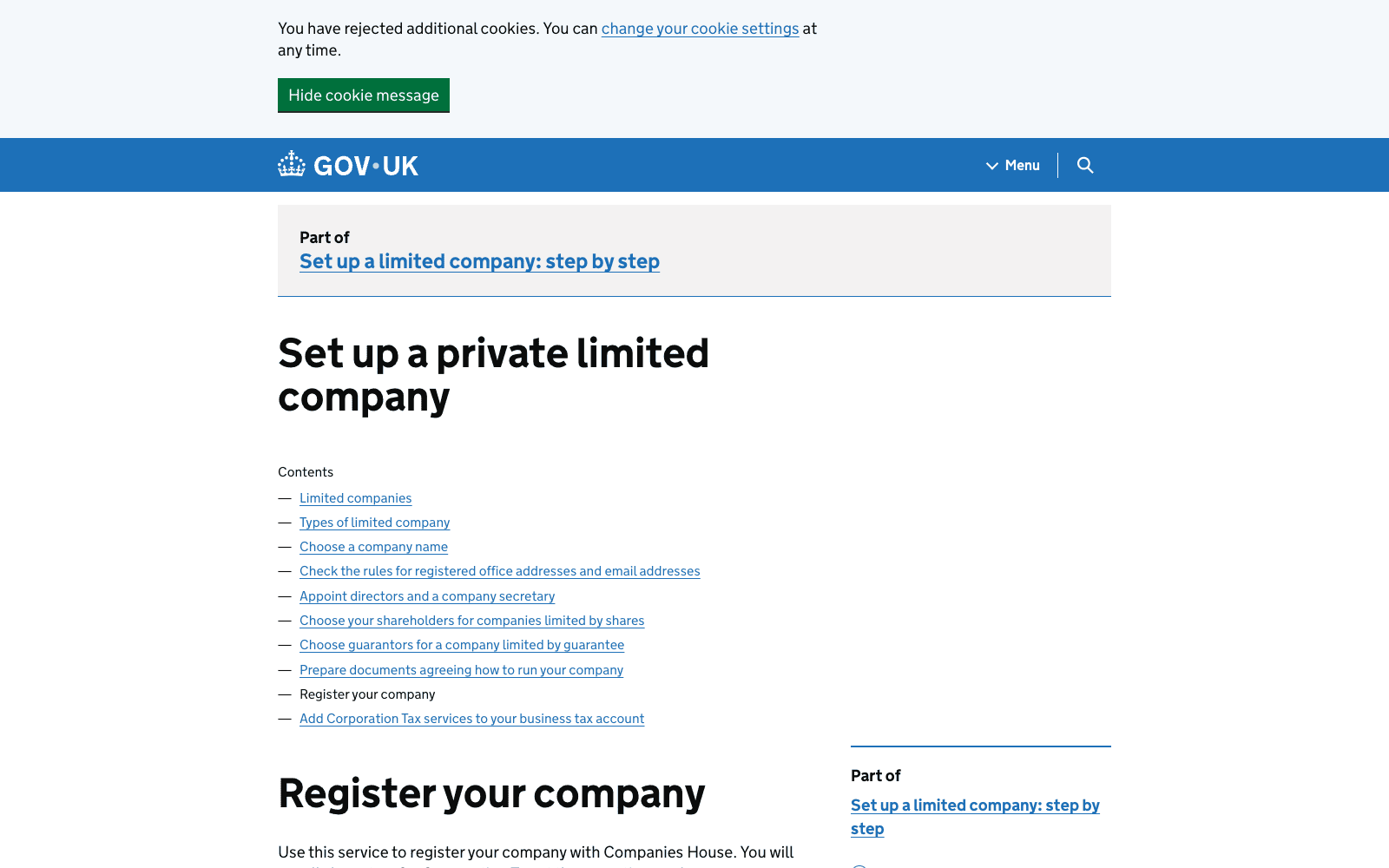
- Step 1: Choose a Company Name. Your company name must be unique and not already registered at Companies House. Use the Companies House name checker tool to confirm availability before applying.
- Step 2: Appoint a Director. You need at least one director. As a Sri Lankan resident, you can appoint yourself. The director must be at least 16 years old and provide valid ID.
- Step 3: File with Companies House. Submit your incorporation documents to Companies House, which is the UK’s official company registrar. This includes your company name, registered office address, director details, and shareholder information. Most formation agents handle this on your behalf.
- Step 4: Get a Registered Office Address. Once incorporated, you need an active UK registered office address for ongoing mail handling. Formation agents typically offer this as an annual service.
- Step 5: Open a UK Business Bank Account. After incorporation, you can apply for a UK business bank account. Traditional UK banks like Barclays or HSBC can be difficult for non-residents. Most Sri Lankan entrepreneurs use fintech options like Wise Business, Airwallex, or Revolut Business, which are easier to open remotely.
Cost of UK Company Registration
| Cost Item | Estimated Cost |
| Companies House filing fee | £50 (one-time) |
| Formation agent fee | £50 – £150 (one-time) |
| UK registered office address | £50 – £150 per year |
| Annual confirmation statement (Companies House) | £34 per year |
| Annual accounts preparation (accountant) | £150 – £500 per year |
| Estimated first-year total | £300 – £900 |
These costs are significantly lower compared to USA registration, especially when you factor in ongoing compliance. Prices vary depending on the formation agent or accountant you use.
Looking for a simpler option?
AtBR.lk, UK company registration starts from $150, covering full company formation, Stripe and bank account setup guidance, and lifetime compliance alerts. No juggling multiple providers.
USA Company Registration for Sri Lankan Entrepreneurs: Overview for 2026
The United States is one of the most respected business jurisdictions in the world. As a Sri Lankan entrepreneur, you can register a US company without visiting the country or holding a US visa. The process involves more decisions than the UK, mainly around structure and state selection. But the payoff is access to the world’s largest market, top-tier payment platforms, and a strong investor network.
Business Structure Options
- LLC (Limited Liability Company): The LLC is the most popular structure for Sri Lankan freelancers, consultants, and small business owners. It offers liability protection, flexible management, and simpler compliance compared to a corporation. However, foreign-owned LLCs do not benefit from pass-through taxation the same way US residents do, so tax planning is important from day one.
- C-Corporation: The C-Corp is the preferred structure if you plan to raise venture capital or bring in outside investors. Most US investors, accelerators, and platforms like Y Combinator require a Delaware C-Corp. It has a more formal structure with shareholders, a board of directors, and stricter reporting. But it opens doors that an LLC cannot.
- S-Corporation: The S-Corp is generally not available to non-US residents. Sri Lankan entrepreneurs should avoid this structure as it requires all shareholders to be US citizens or permanent residents.
Key Differences: LLC vs C-Corporation
| Factor | LLC | C-Corporation |
| Best for | Freelancers, small businesses | Startups seeking investment |
| Taxation | Taxed as corporation (for foreign owners) | 21% flat federal corporate tax |
| Ownership flexibility | Flexible | Shares-based, investor-friendly |
| Investor appeal | Low | High |
| Setup complexity | Simple | More complex |
| Annual compliance | Lower | Higher |
| Ideal state | Wyoming, Delaware | Delaware |
Best States to Register In

There are two states that are particularly popular for non-residents, favouring llc registration over others:
- Delaware: Delaware is the most business-friendly state in the US. Over 60% of Fortune 500 companies are incorporated here. It has no state sales tax, a well-established corporate law system, and courts that handle business disputes efficiently. If you plan to raise funding or work with US investors, Delaware is the standard choice.
- Wyoming: Wyoming has minimal fees, no state income tax, and strong privacy laws — meaning your personal details are not publicly listed. It is ideal for solo entrepreneurs, freelancers, and small business owners who want a cost-effective US presence without the complexity of Delaware’s franchise tax system.
Why State Selection Matters for Non-Residents
Each US state has its own registration fees, annual report requirements, and tax rules. As a non-resident, you are not required to register in the state where you physically operate, because you are operating from Sri Lanka. This means you can freely choose the state that best suits your business model and budget.
Requirements to Register a US Company from Sri Lanka
- Valid Passport: Required for identity verification during registration and bank account opening
- Proof of Address in Sri Lanka: A utility bill or bank statement showing your current address
- A Registered Agent in the US: Every US company must have a registered agent with a physical US address to receive legal documents on your behalf. This is mandatory.
- EIN (Employer Identification Number): Issued by the IRS, this is your company’s tax identification number. It is required to open a bank account and file taxes.
- No US Visa or Residency Required: Sri Lankan nationals can own 100% of a US LLC or C-Corp without any US immigration status.
Step-by-Step Registration Process
- Step 1: Choose Your State and Business Structure. Decide between Delaware or Wyoming, and between an LLC or C-Corp based on your business goals. If you are unsure, an LLC in Wyoming is the lowest-cost starting point. A Delaware C-Corp is the right move if investors are part of your plan.
- Step 2: Appoint a Registered Agent. Before filing any documents, you need to appoint a registered agent service in your chosen state. Companies like Northwest Registered Agent, Registered Agents Inc., or Incfile offer this service starting from around $50 per year.
- Step 3: File Articles of Organization or Incorporation. For an LLC, file the Articles of Organization with the state. For a C-Corp, file the Articles of Incorporation. This can be done online through the state’s Secretary of State website or via a formation agent.
- Step 4: Apply for an EIN. After your company is formed, apply for an EIN from the IRS. Non-US residents cannot apply online, you must apply by fax or mail using Form SS-4, or use a formation agent who can handle this on your behalf. This step can take 4–8 weeks if done independently.
- Step 5: Open a US Business Bank Account. This is the most challenging step for Sri Lankan entrepreneurs. Traditional US banks like Chase or Bank of America typically require in-person visits. Instead, use fintech platforms like Wise Business, Mercury, Relay, or Airwallex, which support non-resident business account opening fully online.
Cost of USA Company Registration
| Cost Item | Delaware LLC / C-Corp | Wyoming LLC |
| State filing fee | $90 – $110 (one-time) | $100 (one-time) |
| Registered agent fee | $50 – $300 per year | $50 – $150 per year |
| Annual report / Franchise tax | $300+ per year (C-Corp) / $50 (LLC) | $60 per year |
| EIN application (via agent) | $50 – $100 (one-time) | $50 – $100 (one-time) |
| Accountant / tax filing | $500 – $2,000 per year | $300 – $1,000 per year |
| Estimated first-year total | $1,000 – $2,500+ | $560 – $1,400 |
US registration costs more to maintain annually than a UK company, especially with a Delaware C-Corp. Budget for professional tax help from the start, US tax filing for foreign-owned companies is not something to handle alone.
Want to skip the complexity?
AtBR.lk, US LLC formation starts from $70, including registered agent service, a US physical address, and all incorporation documents. Need EIN, BOI filing, and Stripe setup too? The Growth package covers all of that for $150.
UK vs USA: Direct Comparison for Sri Lankan Entrepreneurs
Now that you know how each registration works, here is a direct breakdown across the factors that matter most to Sri Lankan entrepreneurs.
1. Registration Process
UK (One System, Less Confusion
The UK has a single national registrar, Companies House. The process is the same regardless of what type of business you run or where in the UK your address is. Most formations complete within 24–48 hours. Formation agents handle everything online, and the steps are straightforward from start to finish.
USA (More Decisions, More Variables)
In the US, company registration happens at the state level. Each state has its own rules, fees, timelines, and compliance requirements. Before you even start, you need to decide on a state and a business structure. For first-time founders, this adds friction and increases the chance of making a costly choice early on.
Verdict: UK wins on simplicity and speed for non-residents.
2. Tax Comparison
UK Corporation Tax
The UK charges 19% corporation tax on profits up to £50,000 and 25% on profits above £250,000. There is marginal relief for profits that fall between these two thresholds. There is no state-level tax in the UK, what you see is what you pay.
USA Federal and State Tax
The US charges a flat 21% federal corporate tax. On top of that, most states add their own corporate income tax, ranging from 0% (Wyoming, Delaware for companies not operating there) to over 11%. This means your effective tax rate in the US can be higher than it appears on paper.
How This Affects a Sri Lankan-Owned Company
As a Sri Lankan resident running a foreign company, you are generally taxed on profits the company earns, not on your personal income directly. However, you must also check your obligations under Sri Lanka’s Inland Revenue rules for foreign-sourced income. In both cases, working with a tax professional from the start saves you from unexpected bills later.
Verdict: UK offers a cleaner, more predictable tax structure. USA is manageable but requires more planning.
3. Banking Access
UK (Remote-Friendly)
UK business banking has become significantly easier for non-residents in recent years. Fintech banks like Wise Business, Revolut Business, and Airwallex allow Sri Lankan entrepreneurs to open a business account remotely without visiting the UK. Even some traditional banks like Tide and Starling work well for foreign-owned UK companies.
USA (More Friction)
US banking remains the biggest pain point for non-residents. Traditional banks like Chase, Bank of America, and Wells Fargo typically require in-person visits to open a business account. Fintech alternatives like Mercury and Relay have made this easier, but they still require more documentation than UK equivalents, and approval is not guaranteed.
Verdict: UK is significantly easier for Sri Lankan entrepreneurs to access banking remotely.
4. Payment Gateways
UK Companies
A registered UK Ltd gives you direct access to Stripe, PayPal, GoCardless, Paddle, and Shopify Payments. Stripe in particular is fully supported for UK companies owned by non-residents. This alone is one of the biggest reasons Sri Lankan freelancers and SaaS founders choose the UK route.
USA Companies
US companies also get full access to Stripe, PayPal, and most major payment platforms. The range of supported platforms is slightly broader in the US, especially for platforms built for the American market.
Which Is Easier to Activate for Sri Lankan Founders?
Both work well once the company and bank account are set up. However, since UK banking is easier to access remotely, Sri Lankan founders can activate payment gateways faster with a UK company. With a US company, delays in EIN processing and bank account opening can slow down the payment gateway setup.
Verdict: Both are solid, but the UK gets you live faster.
5. Investor and Funding Access
USA (The Clear Leader for Venture Capital)
If raising money from investors is part of your plan, the US (specifically a Delaware C-Corp) is the standard. Most US venture capitalists, angel networks, and accelerators like Y Combinator will only invest in a Delaware C-Corp. The US also has the world’s largest startup funding ecosystem.
UK (Strong Tax Incentives for Early-Stage Investment)
The UK offers investor incentive schemes that are genuinely attractive for early-stage businesses. SEIS (Seed Enterprise Investment Scheme) allows investors to claim up to 50% income tax relief on investments up to £200,000. EIS (Enterprise Investment Scheme) offers 30% tax relief on larger investments. These schemes make UK startups more attractive to UK-based angels and seed investors.
Verdict: USA is better if you are targeting venture capital. UK is better for early-stage angel investment with tax incentives.
6. Ongoing Compliance and Annual Requirements
UK (Predictable and Manageable)
Every UK Ltd company must file an annual confirmation statement (£34) and annual accounts with Companies House. If your company earns profit, you also file a corporation tax return with HMRC. The requirements are the same for every company, and a good accountant can handle all of this for a fixed annual fee.
USA (More Layers, More Cost)
US companies must comply at both the federal and state level. This includes annual reports to the state, federal tax returns (which can be complex for foreign-owned companies), and potential franchise tax obligations. Foreign-owned LLCs and C-Corps also have specific IRS reporting forms, such as Form 5472 for LLCs, that carry heavy penalties if missed.
Verdict: UK compliance is simpler and cheaper to manage annually.
Cost Comparison: UK vs USA at a Glance
| Factor | UK Ltd | US LLC / C-Corp |
| Registration cost | Low (£300–£900 first year) | Low to Medium ($560–$2,500+) |
| Annual compliance | Predictable and fixed | Varies by state and structure |
| Tax rate | 19–25% (no state tax) | 21% federal + state taxes |
| Banking ease | Easier remotely | Harder for non-residents |
| Payment gateway access | Fast and straightforward | Slightly slower to activate |
| Investor access | Moderate (SEIS/EIS schemes) | High (VC and angel networks) |
| Best for | Freelancers, agencies, SaaS | Startups seeking VC funding |
Common Mistakes Sri Lankan Entrepreneurs Make
Registering a foreign company is not complicated, but these four mistakes can cost you money, time, and legal trouble. Here is what to avoid from the start.
1. Picking a Structure Without Tax Advice
Most Sri Lankan entrepreneurs choose an LLC or UK Ltd based on what they read online, without talking to a tax professional first. The wrong structure can mean paying more tax than necessary, or creating reporting obligations you were not prepared for. A one-hour consultation with a tax advisor before you register saves far more than it costs. And keeping clean bookkeeping records from day one makes compliance much easier.
2. Not Reporting the Foreign Company to Sri Lanka’s Inland Revenue
Owning a foreign company does not mean you are invisible to Sri Lanka’s tax authorities. If you are a Sri Lankan tax resident earning income through a UK or US company, you may have reporting obligations under the Inland Revenue Act. Many entrepreneurs skip this step completely and face problems later when transferring money back to Sri Lanka or applying for loans.
3. Choosing the Wrong US State
Registering in California because it sounds familiar, or in Delaware without understanding the franchise tax, is a common and expensive mistake. Each state has different costs and compliance requirements. Wyoming suits most small business owners. Delaware makes sense only if you are actively pursuing investors.
See our full Wyoming vs Delaware comparison for non-residents.
4. Ignoring Annual Compliance Deadlines
Both UK and US companies have annual filing deadlines. Missing a UK confirmation statement or a US annual report results in penalties and, in serious cases, your company being struck off the register. Set reminders the moment your company is registered. Do not rely on memory.
Do You Need to Inform Sri Lanka’s Tax Authorities?

Yes, and this is the step most Sri Lankan entrepreneurs skip entirely. Registering a UK or US company does not put you outside Sri Lanka’s tax system. If you live in Sri Lanka, you are still a Sri Lankan tax resident, and that comes with obligations.
Read our guide on business registration in Sri Lanka if you are also considering a local entity.
Foreign Income and Company Ownership Reporting Obligations
Sri Lanka taxes its residents on worldwide income. This means income earned through your UK Ltd or US LLC is not automatically invisible to the Inland Revenue Department (IRD).
From April 1, 2025, Sri Lanka introduced a significant change under the Inland Revenue (Amendment) Act, 2025:
- All foreign service income remitted to Sri Lanka will be taxed at a flat 15%, which acts as a final tax rate for such earnings.
- If foreign income is not remitted through a Sri Lankan bank, it will be taxed at regular progressive rates, which can go up to 36% for individuals and 30% for businesses.
In simple terms, if you bring your UK or US company earnings into your Sri Lankan bank account, you pay 15%. If you keep it offshore and never bring it in, the IRD may still expect you to declare it and tax it at the standard rate. [Source: IRD Sri Lanka]
Previously, income from services rendered to foreign clients was fully tax-exempt if remitted to Sri Lanka. That exemption has now been removed.
How to Stay Compliant on Both Ends
Here are some tips to stay complain on both ends:
- Register with Sri Lanka’s IRD: If you are earning income through a foreign company, you need a Tax Identification Number (TIN) with the Sri Lanka IRD. Most entrepreneurs already have one, but if you do not, register before you start transferring money.
- Remit Income Through a Sri Lankan Bank: To qualify for the 15% tax cap, foreign income must be remitted through a Sri Lankan bank. Earnings kept offshore and not transferred to Sri Lanka may be taxed under standard tax rates. Always move funds through the banking system, not informal transfers.
- Claim Foreign Tax Credits: If your UK or US company has already paid tax in that country, you are not automatically taxed twice. If you have already paid taxes in the foreign country where you earned the income, you can claim a Foreign Tax Credit (FTC) in Sri Lanka, reducing your tax liability, even if there is no Double Taxation Agreement between Sri Lanka and that country.
- Work With a Local Tax Advisor: The rules around foreign-owned companies and Sri Lankan tax residency are not straightforward. A local tax advisor or chartered accountant who understands cross-border income will save you from costly errors, especially now that the 2025 amendments have changed the rules significantly.
Final Verdict: Which Type of Business Should Choose UK vs USA?
There is no single right answer for every Sri Lankan entrepreneur. The best choice depends on what your business does and where you want to take it. Use the table below to find the option that fits your situation:
| Business Type | Best Choice | Why |
| Freelancers, consultants, and remote service providers | UK Ltd | Cheaper to set up, easier to maintain, and gives immediate access to Stripe and Wise. PayPal is now also available locally in Sri Lanka without a foreign company. |
| SaaS and tech startups seeking VC funding | USA, Delaware C-Corp | Most US investors and accelerators will not invest in anything other than a Delaware C-Corp |
| E-commerce and digital product sellers | Both work, but UK is easier | UK setup is faster, cheaper, and simpler to activate with payment platforms |
| Agencies working with European clients | UK Ltd | A UK registered company carries stronger credibility with EU and UK-based clients than a US LLC |
| Founders who want low ongoing costs | UK Ltd | Annual compliance is predictable and affordable. US filings are more complex and more expensive |
When to Consider Getting Professional Help
If you are unsure which structure suits your business, unfamiliar with annual compliance requirements, or about to connect payment gateways and open a business bank account for the first time, get help before you register, not after. A single mistake in the setup stage, such as the wrong structure or missing a compliance deadline, can cost far more to fix than the fee for getting it right from the start.
Need Help Registering Your Business in the UK or USA from Sri Lanka?
At BR.lk, we help Sri Lankan freelancers, online sellers, and entrepreneurs set up their UK or US company the right way, so you can start accepting international payments, open a business bank account, and grow your business globally without the stress of figuring it out alone.
Here is what we handle for you:
- Full UK & US Company Registration: We manage the entire registration process, including Companies House filing for UK companies and state-level incorporation for US LLCs, along with mandatory identity verification, so your company is set up correctly from day one.
- UK Registered Office Address & US Registered Agent: Every package includes a legitimate business address, which is a legal requirement in both the UK and the USA.
- EIN & Compliance Support: For US companies, we handle your EIN application and keep you on track with BOI reporting and annual compliance requirements.
- Payment Gateway Setup: We help you connect your new company to Stripe, Wise, PayPal, and other global payment platforms so you can start getting paid internationally.
- Fast Turnaround: Your company can be registered and ready within 24 to 48 hours, with clear guidance at every step.
- Local Language Support: Our team is available in Sinhala and Tamil, making the entire process simple and easy to follow from Sri Lanka.
Here is what one of our customers had to say:
“Absolutely fantastic experience with BR.LK! They made setting up my US LLC from Sri Lanka feel like a breeze. From day one, their team was super responsive and walked me through every single step — company registration, getting a US address and phone number, bank account setup, even helping with Stripe. If you’re in Sri Lanka looking to register a company, BR.LK is the way to go.” — Malinda Alahakoon (Check his Full Google Review)
Take the first step toward building a global business from Sri Lanka.
Key Takeaways
- Registering a UK or USA company from Sri Lanka can help entrepreneurs access global payment gateways, foreign clients, and international banking services.
- A UK Ltd company is generally easier and cheaper for Sri Lankan entrepreneurs to register and manage compared to a US company.
- Sri Lankan residents can fully own and manage both UK companies and US LLCs or C-Corps without visiting those countries.
- UK company registration offers faster setup, simpler compliance, and easier remote banking access for non-residents.
- A US LLC is suitable for freelancers and small online businesses, while a Delaware C-Corp is better for startups seeking venture capital funding.
- Both UK and US companies provide access to Stripe and global payment platforms. PayPal is now also available directly in Sri Lanka since May 2026, so a foreign company is no longer required just for PayPal access.
- Choosing the right US state is important because annual fees, taxes, and compliance requirements vary by state.
- Sri Lankan entrepreneurs must still report foreign company income to Sri Lanka’s Inland Revenue Department and comply with local tax laws.
- UK companies usually have lower annual maintenance costs and simpler reporting requirements than US companies.
- The best option depends on your business goals, with the UK being ideal for freelancers and agencies, while the USA is better for startups planning to raise investment.
FAQs
For a UK company, you do not need a local director, but you must have a UK registered office address, which is a service most formation agents provide. For a US company, you must appoint a registered agent in the state of formation. Neither requires you to hire a local person as a director or shareholder.
A UK Ltd can be registered within 24 to 48 hours once your documents are submitted. A US LLC typically takes 5 to 10 business days for state approval, but obtaining an EIN separately can add another 4 to 8 weeks if done by mail. Using a formation agent speeds up both processes significantly.
No. Neither the UK nor the USA requires a minimum paid-up capital to register a company. A UK Ltd can be incorporated with as little as £1 in share capital. US LLCs have no capital requirement at all. This makes both options accessible for early-stage entrepreneurs and solo founders starting with limited funds.
Yes. There is no rule preventing you from owning both a UK Ltd and a US LLC simultaneously. Some entrepreneurs register both to serve different markets — using the UK company for European and global clients while keeping a US entity for American clients or investor conversations. Running both does mean managing two sets of compliance obligations.