Tag: US LLC

  • ITIN Application for Non-Resident LLC Owners: (A LK Guide for 2026)  

    ITIN Application for Non-Resident LLC Owners: (A LK Guide for 2026)  

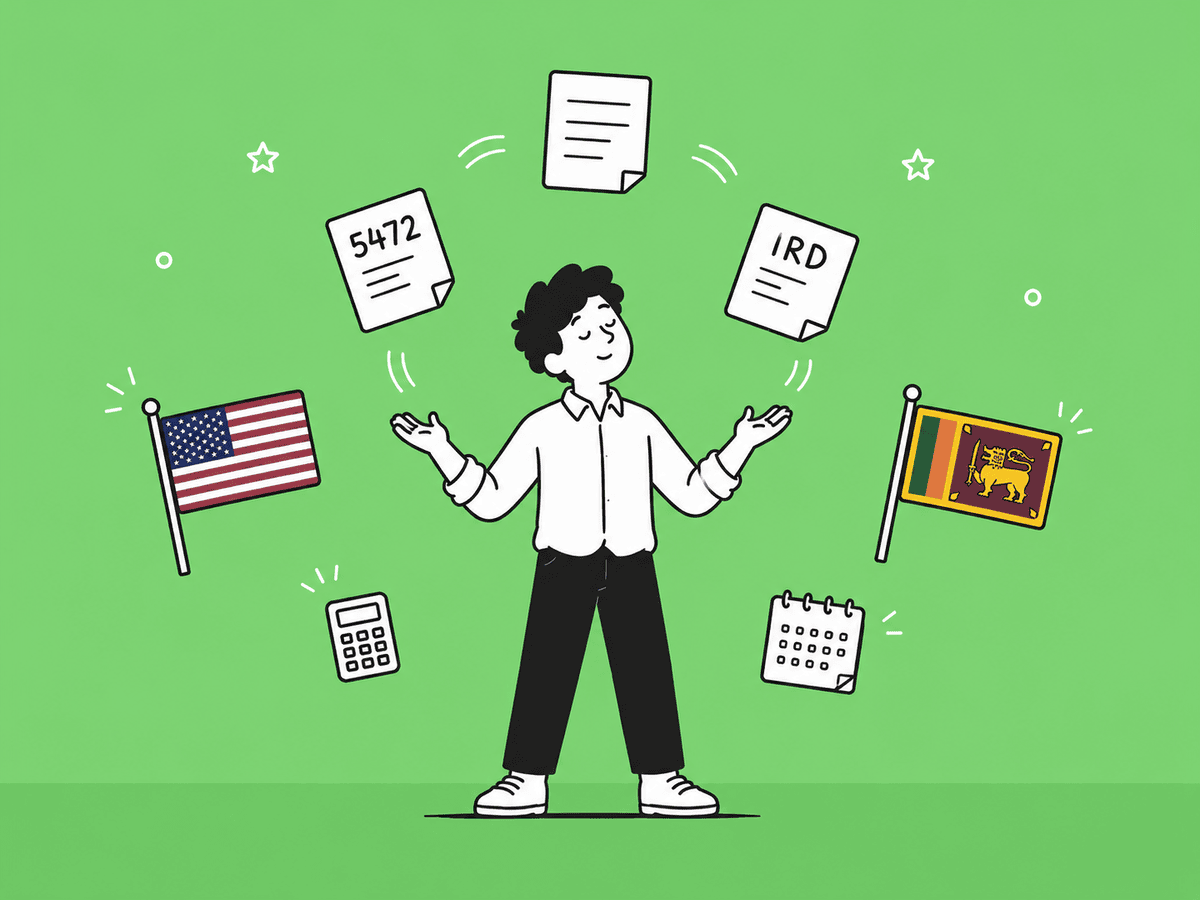
    If you’re a Sri Lankan non-resident who owns or plans to own a US LLC, an ITIN is the personal tax ID that lets you meet US filing obligations your LLC’s EIN alone can’t cover. It becomes necessary once your business crosses from entity-level paperwork into personal tax territory, whether that’s filing Form 1040-NR, claiming a benefit under the US-Sri Lanka tax treaty, or verifying your identity with a payment platform.

    Getting there without delays means understanding which situations actually require an ITIN, what documents the IRS expects, and where most applications go wrong. This guide walks you through all of it, from checking whether you need one to applying correctly the first time, so you can avoid the rejections and mailing delays that catch most non-resident LLC owners off guard. 

    What Is an ITIN

    An ITIN, or Individual Taxpayer Identification Number, is a tax processing number issued by the IRS. It allows people who don’t qualify for a Social Security Number to meet US tax filing requirements.

    The IRS created the ITIN specifically for tax purposes. It does not depend on immigration status, so both resident and non-resident individuals can apply for one, including foreign owners of US LLCs.

    • An ITIN follows the same format as a Social Security Number: nine digits arranged as XXX-XX-XXXX. The number always starts with a 9, which is how it’s distinguished from an SSN.
    • It’s important to know what an ITIN does not do.
    • It doesn’t authorize you to work in the United States.
    • It doesn’t grant any immigration benefit or legal status.
    • It doesn’t make you eligible for Social Security benefits or the Earned Income Tax Credit.

    Only, it’s function is to let the IRS track tax filings and payments tied to your identity.

    For a Sri Lankan LLC owner, this number becomes the personal counterpart to your business’s EIN. The EIN identifies your LLC to the IRS; the ITIN identifies you. 

    Why Sri Lankan LLC Owners Need an ITIN 

    The need for an ITIN comes down to how the IRS treats LLC income, not the LLC’s existence itself.

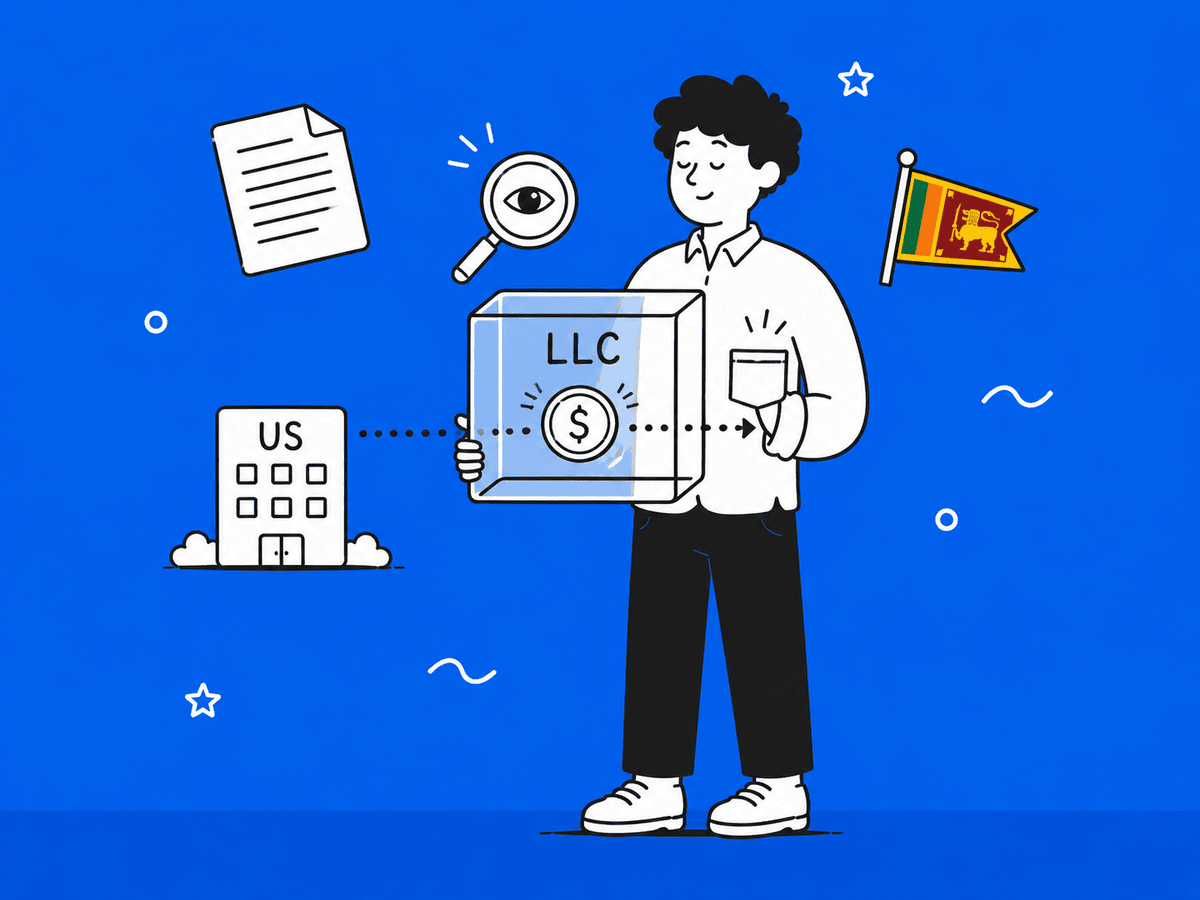
    A single-member LLC is a disregarded entity by default. The IRS doesn’t tax the LLC directly, it treats the income as belonging to you personally. That’s the core reason ITIN requirements attach to the owner, not the business. Simply it means, once income “passes through,” it becomes a personal tax matter.

    This connects to a few underlying triggers:

    • Personal filing obligation. If pass-through income creates a US tax return requirement, that return needs a personal tax ID, and non-residents aren’t eligible for an SSN.
    • Treaty relationship. The US and Sri Lanka have an active income tax treaty. Claiming reduced withholding or double-taxation relief under it requires the IRS to identify you individually, which an ITIN does.
    • Withholding recovery. Certain transactions, like the sale of US property, involve withholding at the transaction level. Recovering excess withholding requires filing a personal return tied to an ITIN.
    • Identity verification. Some financial platforms separate entity identity (EIN) from beneficial owner identity (personal ID), and an ITIN can serve that second role.

    In short, the LLC’s EIN handles the business side of your US presence. The ITIN exists because the IRS also needs a way to track you whenever your personal tax exposure goes beyond simply owning the company. 

    Not sure whether your LLC is taxed as a partnership or disregarded entity?

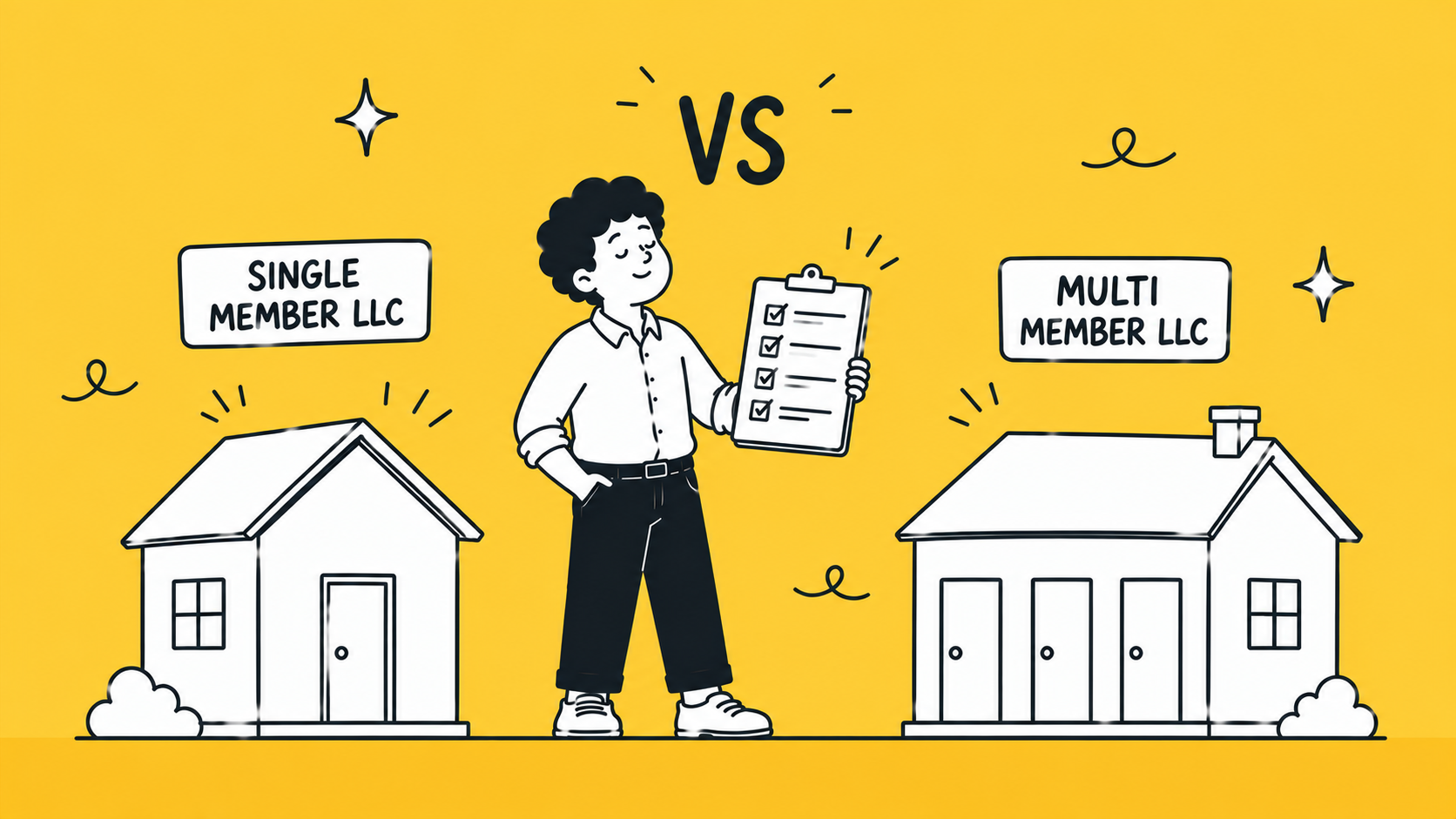
    Read our single member vs multi member LLC comparison guide.

    ITIN vs EIN vs SSN: Is there a Difference?

    Yes, and mixing these up is one of the most common mistakes among non-resident LLC owners. Each number serves a different purpose and is issued to a different party.

    1. EIN (Employer Identification Number) is assigned to your LLC, not to you personally. The IRS uses it to identify your business for tax filing, banking, and payroll purposes. You can get an EIN without having an SSN or ITIN.
    2. ITIN (Individual Taxpayer Identification Number) is assigned to you as an individual. It’s what the IRS uses to track your personal tax obligations, including income that passes through from your LLC.
    3. SSN (Social Security Number) is issued only to US citizens, permanent residents, and certain visa holders authorized to work in the US. As a non-resident Sri Lankan founder, you’re not eligible for one. The ITIN exists specifically to fill this gap for tax purposes.

    Here’s a quick side-by-side comparison:

    FeatureEINITINSSN
    Issued toBusiness entityIndividualIndividual
    PurposeEntity tax filing, bankingPersonal tax filingTax, employment, benefits
    EligibilityAny LLC, regardless of owner’s statusNon-residents without SSN eligibilityCitizens, residents, authorized workers
    Work authorizationN/ANoYes
    FormatXX-XXXXXXX9XX-XX-XXXXXXX-XX-XXXX

    In short: your LLC needs an EIN, and you, as its owner, may separately need an ITIN. The two aren’t interchangeable, and having one doesn’t remove the need for the other.

    Do You Actually Need an ITIN? 

    Owning an LLC and needing an ITIN are two different things. The real question is whether your situation has crossed from entity-level obligations into personal ones.

    EIN alone is enough if:

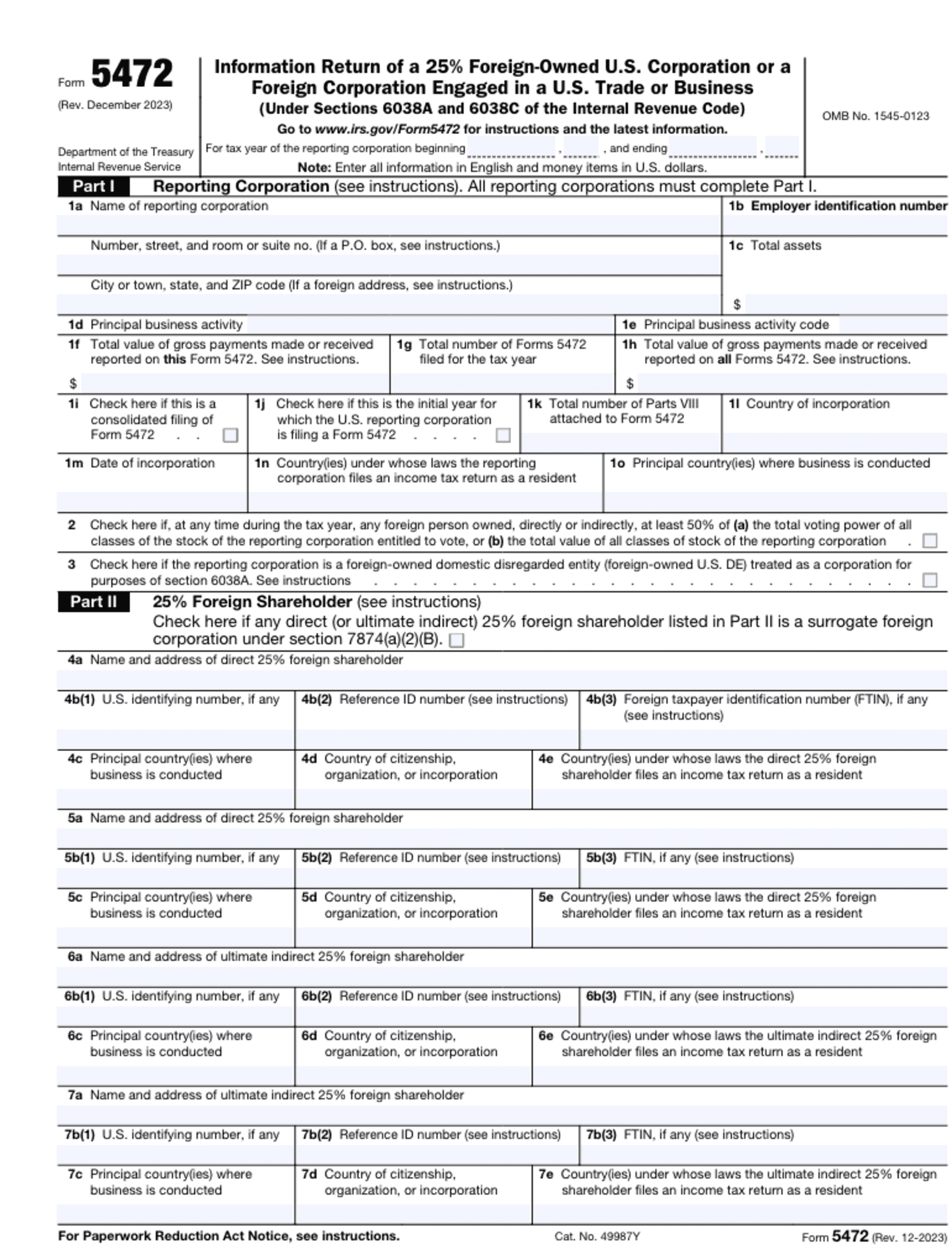
    • Your only requirement is filing Form 5472 alongside a pro forma Form 1120 to report transactions between the LLC and its foreign owner
    • You’re holding a US business bank account without any personal US income
    • You’re using Mercury, Wise Business, or a similar platform that accepts a passport instead of a personal tax ID
    • Your LLC hasn’t generated any income yet, or all income is exempt under the tax treaty

    You’ve likely crossed into ITIN territory if:

    • A personal filing requirement or treaty claim has now attached to your situation, not just the LLC’s entity-level paperwork
    • You’re being asked for a personal tax ID by a bank, processor, or the IRS itself, separate from the LLC’s EIN

    “Wait and see” applies if:

    • You don’t yet have a qualifying reason under the W-7 checkbox list
    • Applying now would likely result in rejection, since the IRS only issues ITINs against a recognized tax purpose

    Use this filter to check where you stand:

    Your situationWhat you need
    Only filing Form 5472 + pro forma 1120EIN only
    No US-source income yetEIN only, ITIN not yet
    Personal filing or treaty claim now appliesITIN required
    Bank/platform asks for your personal tax IDITIN likely required
    No qualifying reason on the W-7 checklistWait until one applies

    If you’re still unsure after this check, confirming with a tax professional before applying saves you from a rejected W-7 and a lost filing cycle. 

    Worried about Form 5472 penalties while you figure out your ITIN status?

    Read our Form 5472 penalty guide for Sri Lankan LLC owners. 

    Documents Required for ITIN Application

    Every ITIN application needs proof of identity and foreign status. Here’s what you’ll typically need:

    • Valid passport. The only stand-alone document the IRS accepts for both identity and foreign status. This is the simplest route for most Sri Lankan applicants.
    • Alternative documents, if you don’t use a passport. A combination of two, such as a national ID card, birth certificate, or foreign voter registration card, since none of these alone satisfy both requirements.
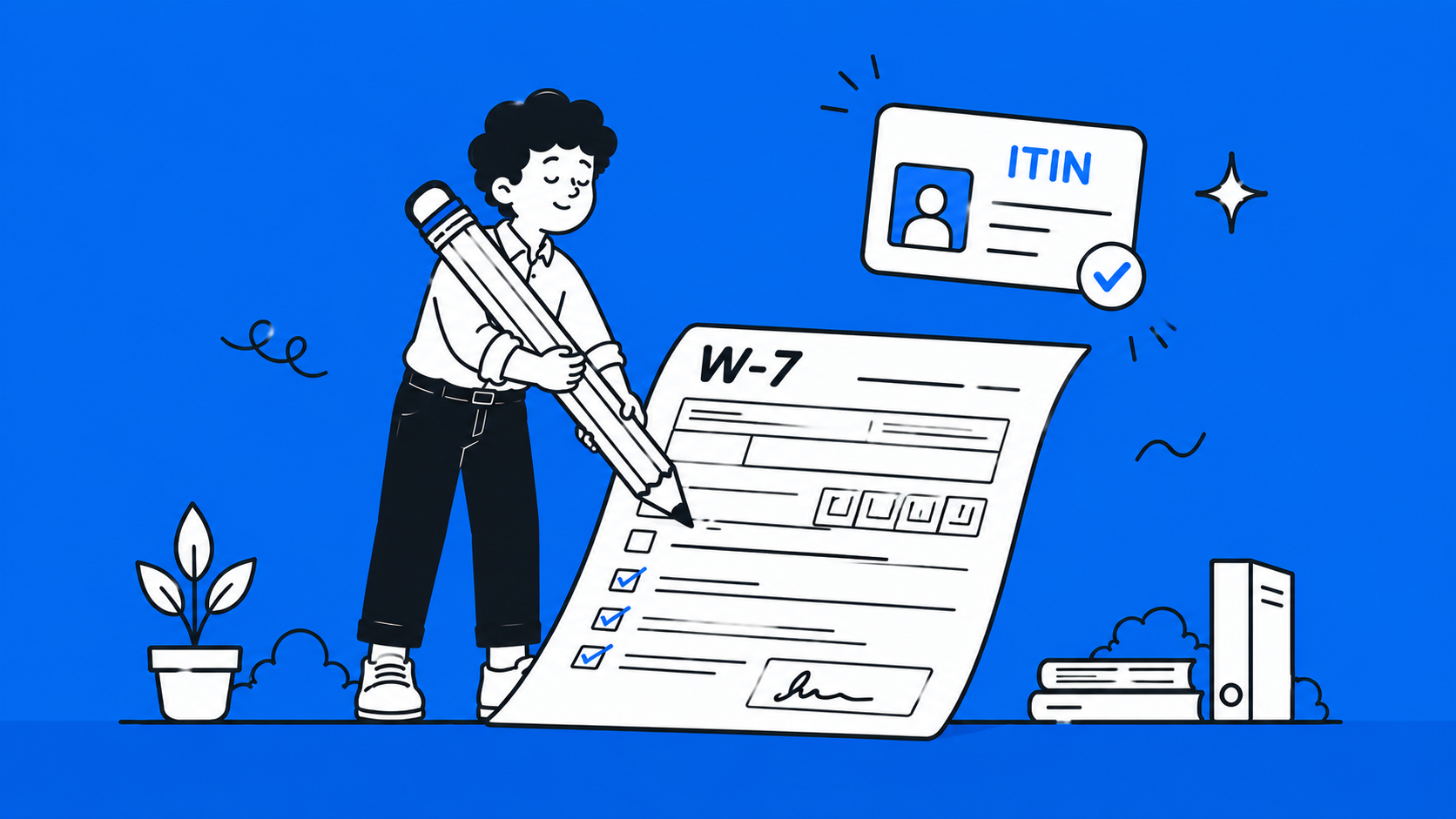
    • Completed Form W-7, with the correct reason code checked.
    • US federal tax return, usually Form 1040-NR, attached unless you qualify for an exception.
    • Supporting documents for your reason code, for example treaty documentation for reason (a), or FIRPTA-related paperwork for reason (h).
    • LLC formation documents. Not always required, but useful if your ITIN reason ties directly to LLC income.

    Certified or notarized copies are required; originals are not mailed unless requested. 

    How to Apply for an ITIN: Step by Step

    Once you’ve confirmed you have a qualifying reason and gathered the right documents, the application itself follows a fixed sequence. Here’s how it works, step by step.

    • Step 1: Confirm your qualifying reason. Check the Form W-7 reason codes and identify which one applies to you, usually (a) for treaty benefits or (b) for filing Form 1040-NR.
    • Step 2: Gather your documents. Prepare your passport or an accepted combination of alternative documents, along with any paperwork tied to your specific reason code.
    • Step 3: Complete Form W-7. Fill in your full legal name as it appears on your passport, your foreign address, date of birth, country of citizenship, and any foreign tax ID your country has issued you. Leave visa fields blank if you’ve never entered the US.
    • Step 4: Prepare your tax return. Attach Form 1040-NR to your W-7 unless you qualify for an exception that allows submission without a return.
    • Step 5: Certify your documents. Use a Certified Acceptance Agent (CAA) to certify copies of your passport, or apply through a US embassy or consulate in Sri Lanka that offers this service. Notarized copies are generally not accepted.
    • Step 6: Submit your application. Mail the complete package to the IRS ITIN processing center, or submit it through your CAA if you’re using one.
    • Step 7: Wait for processing. Standard processing takes several weeks, longer during peak tax season or when mailing internationally. Track your application by phone once the standard window has passed.

    A CAA is worth considering for Sri Lankan applicants, since it avoids mailing your original passport to the IRS and reduces the chance of document-related rejection. 

    Processing Time and How to Track Your Application

    Once submitted, standard ITIN processing takes about 7 weeks. This stretches to 9 to 11 weeks or longer during peak tax season, from January through April, when the IRS receives the highest volume of applications.

    If you’re mailing your application from Sri Lanka rather than submitting through a CAA, add another 2 to 4 weeks in each direction for international postal delivery. That means a straightforward application could take close to three months from the day you send it to the day you receive your ITIN, and longer if anything is filed during peak season.

    You can check the status of your application by calling the IRS at 267-941-1000 from outside the US. It’s best to wait until at least 7 weeks have passed before calling, since the IRS won’t have updated records before then.

    A few things that affect your timeline:

    • Applying through a Certified Acceptance Agent generally avoids delays caused by lost or returned original documents
    • Incomplete forms or missing supporting documents restart the clock, since the IRS will reject and return the application
    • Applying outside peak season, if your filing deadline allows it, can shorten your wait significantly

    If your ITIN is tied to a tax return with a deadline, apply as early as possible. Rejected applications and international mailing delays can push your ITIN past the date you actually need it, especially when applying from Sri Lanka. 

    Common Mistakes That Cause Rejection

    Most ITIN rejections come down to a handful of avoidable errors. Watch for these when preparing your application:

    • Wrong reason code. Selecting a W-7 reason that doesn’t match your actual tax situation is one of the most common issues.
    • Notarized instead of certified copies. The IRS generally requires certified copies from the issuing agency or a CAA, not a notary.
    • Incomplete tax return attachment. Submitting a W-7 without the required Form 1040-NR, when no exception applies, results in rejection.
    • Mismatched details. Your name, address, or date of birth on the W-7 must match your passport exactly.
    • Missing supporting documents. Treaty claims or FIRPTA-related reasons need specific documentation beyond the passport.
    • Expired identification. Documents past their validity date won’t be accepted, even if everything else is correct.

    Each rejection resets your processing timeline, so it’s worth double-checking every field and document before submitting, especially when applying from Sri Lanka where delays are already longer. 

    Things You Need to Know After Receiving Your ITIN

    Getting your ITIN isn’t the end of the process. A few things determine whether it stays useful going forward.

    • Use it consistently. Include your ITIN on every US tax return, treaty claim, or form that requires a personal tax ID going forward. Using an inconsistent or incorrect number can delay processing on future filings.
    • Know the expiration rules. An ITIN expires if it isn’t used on a federal tax return for three consecutive years. It can also expire based on specific IRS deactivation schedules tied to when it was issued.
    • Renew before it lapses. If your ITIN has expired or is about to, you’ll need to submit a renewal application using Form W-7 again, following largely the same document requirements as your original application.
    • Keep your documents on file. Retain copies of your W-7, certified documents, and IRS confirmation notice, since you may need them again for renewal or if a filing is questioned later.

    It doesn’t change your status. An ITIN doesn’t grant work authorization, immigration status, or Social Security eligibility. It remains strictly a tax processing number, even after it’s active and in use. 

    For a full checklist of every annual obligation your US LLC carries, read our US LLC annual compliance guide for Sri Lankans. 

    Need Help to Get Your ITIN Without the Guesswork?

    Applying for an ITIN from Sri Lanka comes with extra friction that the standard IRS instructions don’t fully prepare you for. Choosing the right reason code, avoiding the wrong document type, and dealing with mailing delays that stretch an already long process even further.

    BR.LK‘s ITIN service handles this as a Certified Acceptance Agent, so you’re not mailing your original passport to the IRS and risking it in transit. We confirm whether you actually need an ITIN before you apply, prepare your Form W-7 with the correct reason code, certify your documents, and manage submission from start to finish, in English, Sinhala, or Tamil.

    If you’re not sure whether your LLC’s current situation calls for an ITIN or an EIN alone is still enough, that’s exactly the kind of question worth getting answered before you file, not after a rejection. 

    Conclusion

    An ITIN isn’t something every Sri Lankan LLC owner needs on day one, but once your business creates a personal filing obligation, a treaty claim, or a platform verification requirement, it becomes unavoidable. Knowing where that line sits, and preparing your application correctly the first time, saves you weeks of avoidable delay.

    The process itself is straightforward once you understand it. Confirm your qualifying reason, gather the right documents, complete Form W-7 accurately, and choose a certification method that doesn’t require mailing your original passport. Most rejections come from small, preventable errors rather than genuinely complicated situations.

    If you’re still working out whether your LLC’s current activity requires an ITIN or whether your EIN already covers you, that question is worth answering before you submit anything. Getting it right from the start keeps your US tax filings on track and your business moving without unnecessary setbacks. 

    Key Takeaways

    • An ITIN is a personal tax processing number issued by the IRS for individuals who don’t qualify for a Social Security Number.
    • Owning a US LLC doesn’t automatically require an ITIN, since the trigger is a personal tax obligation, not the LLC’s existence.
    • Single-member LLCs are disregarded entities by default, so business income passes through and becomes a personal tax matter for the owner.
    • An EIN identifies your LLC to the IRS, while an ITIN identifies you personally, and the two aren’t interchangeable.
    • You’ll likely need an ITIN if you must file Form 1040-NR, claim a benefit under the US-Sri Lanka tax treaty, or recover FIRPTA withholding.
    • If your only requirement is filing Form 5472 with a pro forma Form 1120, an EIN alone is usually enough.
    • A valid passport is the simplest supporting document for a W-7 application, since it covers both identity and foreign status on its own.
    • Choosing the correct W-7 reason code matters, since a mismatch between your reason and your documents is a common cause of rejection.
    • Processing typically takes 7 weeks or longer, and applying from Sri Lanka adds extra time for international mailing in both directions.
    • Working with a Certified Acceptance Agent avoids mailing your original passport to the IRS and lowers the risk of document-related rejection. 

    FAQs 

    Can I apply for an ITIN from outside the United States?

    Yes. You can apply by mail from Sri Lanka, through a Certified Acceptance Agent, or at a US embassy or consulate that offers ITIN certification services. You don’t need to visit the US to complete the process.

    What if my ITIN application is rejected?

    The IRS sends a notice explaining the rejection reason. You’ll need to correct the issue, whether it’s a wrong reason code, missing documents, or a mismatch, and resubmit a new Form W-7. Rejected applications restart the processing timeline.

    How can I get my ITIN faster?

    There’s no official expedited option. The fastest path is submitting a complete, error-free application through a Certified Acceptance Agent and applying outside peak tax season, since incomplete applications and peak-season volume are the main causes of delay.

    How much does an ITIN cost?

    The IRS doesn’t charge a fee to process Form W-7 itself. Costs come from optional services, like document certification through a CAA, notarization, courier fees, or professional assistance with preparing your application correctly.

    Can I apply for an ITIN online?

    No. The IRS doesn’t offer an online or electronic ITIN application. Form W-7 must be submitted by mail, through a Certified Acceptance Agent, or in person at an IRS Taxpayer Assistance Center or participating embassy.

    What is the $600 rule?

    This refers to IRS reporting thresholds for platforms like PayPal and Stripe, requiring them to report payments over $600 to the IRS. It’s separate from ITIN requirements, though it can indirectly trigger a personal filing obligation.

    Can I open a US bank account with an ITIN?

    Some traditional banks accept an ITIN for account opening, though most require in-person visits. Neobanks like Mercury and Wise Business typically accept a passport instead, making them more practical options for non-resident LLC owners.

    Do I have to mail my original passport to the IRS?

    Not necessarily. Applying through a Certified Acceptance Agent lets you avoid mailing your original passport, since the CAA certifies copies instead. Without a CAA, the IRS generally requires original documents or certified copies from the issuing agency.

    How do I check the status of my ITIN application?

    Call the IRS at 267-941-1000 from outside the US after at least 7 weeks have passed. Have your application details ready, since the IRS won’t have updated records before that window. 

  • What Are the Penalties for Form 5472? A Sri Lankan Guide

    What Are the Penalties for Form 5472? A Sri Lankan Guide

    Form 5472 penalties start at $25,000 per form, applied automatically the moment a filing is missed, late, or incomplete, regardless of whether your LLC owes any tax or had any income. For Sri Lankan owners of US LLCs, this penalty can multiply per related party, grow further if the IRS notice goes unanswered, and stem from mistakes as simple as using the wrong mailing address or leaving out a related-party detail.

    This guide breaks down every type of Form 5472 penalty you could face as a Sri Lankan LLC owner, what triggers each one, and how to avoid it. If you’re looking for the filing steps themselves, our complete Form 5472 guide covers who must file, reportable transactions, and the process end to end. 

    Here, we’re focused entirely on the penalties, so you know exactly what’s at stake and how to stay clear of it.  

    1. Base Penalty for Failure to File

    Missing the Form 5472 deadline triggers an automatic $25,000 penalty. There’s no grace period, no warning notice before it applies, and no minimum transaction size that needs to be met. A single small transaction, like funding your LLC’s bank account from Sri Lanka, is enough to create the filing obligation, and missing the deadline for it is enough to trigger the full penalty.

    This penalty applies regardless of your LLC’s size, revenue, or activity level. An LLC that generated no income and had a single $50 transfer from its owner faces the same $25,000 exposure as a business with millions in transactions. The IRS doesn’t scale the penalty to the size of the business or the transaction. It’s a flat, fixed amount tied purely to the act of filing, or not filing, on time.

    Since foreign-owned disregarded entities can’t e-file, and mail from Sri Lanka to the US can take time, the effective deadline for a Sri Lankan owner is really whenever the package needs to leave for the IRS to receive it by April 15 (or your extended deadline).

    How to Avoid It: 

    File by April 15, or request an automatic six-month extension using Form 7004 before the original deadline. Since filing must go by mail or fax, don’t wait until the last week. Build in time for international postal delays and confirm delivery if possible. 

    2. Penalty for Filing an Incomplete or Incorrect Form 5472

    The IRS treats a substantially incomplete Form 5472 the same way it treats a missing one, so filing late paperwork with gaps doesn’t protect you from the $25,000 penalty. Common issues that trigger this include leaving out related-party details, entering incorrect or estimated transaction amounts instead of actual figures, and omitting required identifying information such as the EIN or ownership details.

    This catches out many first-time filers who assume that submitting something, even if imperfect, is enough to avoid the penalty. It isn’t. If the IRS reviews your form and finds it materially incomplete, it’s processed as if nothing was filed at all, and the full penalty applies just as it would for a missed deadline.

    Because Form 5472 covers six separate parts, each with its own required fields, small oversights are easy to make, especially when filing without professional guidance for the first time.

    How to Avoid It: 

    Go through Parts I through VI line by line before mailing, confirming every required field is filled in with accurate figures, not placeholders. Use a checklist, or have a tax professional review the completed form before you submit it to catch errors while there’s still time to fix them. 

    3. Penalty for Missing the Pro Forma Form 1120 Attachment

    Form 5472 can’t be filed on its own. Because your Sri Lankan-owned LLC is treated as a disregarded entity for income tax purposes, the IRS requires a pro forma Form 1120 to serve as a cover return, purely so Form 5472 has something to attach to. Sending Form 5472 by itself, without this attachment, is processed as an incomplete filing, even if the Form 5472 itself is filled out correctly.

    This is an easy mistake for first-time filers to make, since the pro forma 1120 doesn’t calculate any tax and can look unnecessary if you don’t realize it’s a mandatory structural requirement rather than an optional cover sheet. Skipping it, or forgetting to physically attach it to the Form 5472, exposes your LLC to the same $25,000 penalty as not filing anything at all.

    How to Avoid It: 

    Always prepare the pro forma Form 1120 alongside Form 5472, filling in only the LLC’s name, address, and EIN, with “Foreign-Owned U.S. DE” written clearly across the top. Physically attach it to Form 5472 before mailing, so the two are submitted together as a single package. 

    4. Penalty Multiplying Per Related Party

    Many Sri Lankan LLC owners assume the $25,000 penalty is a single, fixed cap per year. It isn’t. The penalty applies per Form 5472, and you need a separate Form 5472 for each related party your LLC transacted with. If your LLC dealt with two related parties, say, you personally and a Sri Lankan company you control, and you miss the filing for both, you’re looking at $50,000 in penalties, not $25,000.

    This adds up quickly for owners with a slightly more complex structure. Related parties include not just the LLC owner, but also family members like a spouse or children, entities the owner controls, and anyone holding 25% or more ownership, directly or indirectly. Missing even one related party’s form, while filing correctly for another, still triggers the full penalty for the one that was missed or filed incompletely.

    How to Avoid It: 

    Before filing season, map out every related party your LLC transacted with during the year, including family members and controlled entities. Prepare a separate, complete Form 5472 for each one, rather than assuming a single form covers all related-party activity. 

    If your LLC has more than one owner, your filing obligations change significantly. See how in our multi member LLC tax guide. 

    5. Continued Failure Penalty (Additional $25,000 per 30 Days)

    The base $25,000 penalty isn’t the end of your exposure if the filing failure continues. Once the IRS sends a notice about a missing or incomplete Form 5472, you have 90 days to respond and correct the filing. If you still haven’t resolved it after those 90 days, an additional $25,000 penalty applies, and it keeps applying for every further 30-day period the failure continues.

    There’s no cap on this penalty. It accumulates for as long as the issue remains unresolved, which means a filing failure that’s ignored for several months can turn a single $25,000 penalty into well over $100,000. For a Sri Lankan owner dealing with mail delays or simply unaware a notice has arrived, this window can close faster than expected.

    How to Avoid It: 

    Treat any IRS notice as urgent and respond well before the 90-day deadline. Keep your LLC’s registered agent and mailing details current so notices reach you promptly, and if you’re unsure how to respond, get professional help immediately rather than letting the window lapse. 

    6. Penalty for Using the Wrong Filing Method/Address

    Foreign-owned disregarded entities can’t e-file Form 5472. It has to be mailed or faxed, and it has to go to a specific IRS address set aside for these filings, not the standard address used for regular corporate returns. Sending your forms to the wrong address, or attempting to file through a method the IRS doesn’t accept for this entity type, can result in the filing never being properly processed.

    When this happens, the IRS treats it the same as an incomplete or missing filing, even though you technically submitted the paperwork on time. This is a common trap for Sri Lankan owners who assume any correct-looking IRS address will work, or who try to follow generic filing instructions meant for standard corporations rather than foreign-owned disregarded entities specifically.

    How to Avoid It: 

    Mail or fax your completed Form 5472 and pro forma Form 1120 to the Internal Revenue Service, 1973 Rulon White Blvd, M/S 6112, Attn: PIN Unit, Ogden, UT 84201, or fax to 855-887-7737. Don’t substitute this with a general IRS address found elsewhere. 

    7. Indirect/Knock-On Consequences of Non-Compliance

    Beyond the direct dollar penalties, unresolved Form 5472 non-compliance can create problems that ripple into other parts of running your LLC. Unpaid penalties can move into IRS collections, which adds interest and puts your LLC’s standing with the IRS at risk. This can complicate matters tied to your EIN and overall compliance status, making future filings or IRS interactions more difficult.

    It can also create friction outside the IRS itself. US banks and payment platforms sometimes ask for confirmation that an LLC is in good standing or current on its federal filings, and unresolved penalties can surface during account reviews or renewals. Registered agent services and other compliance-related renewals may also require you to address outstanding issues before proceeding smoothly.

    For a Sri Lankan owner managing a US LLC remotely, these knock-on effects are often harder to untangle than the original filing itself, since they involve multiple parties and systems.

    How to Avoid It: 

    Treat Form 5472 as a recurring annual compliance task built into your yearly calendar, not a one-time filing to forget about once submitted. 

    Worried About Facing a Form 5472 Penalty?

    Whether you’re trying to avoid missing this year’s deadline or you’ve realized a past filing was late, incomplete, or never submitted, the cost of getting Form 5472 wrong starts at $25,000 and climbs fast. Fixing it after the fact, or making sure it never becomes an issue, is far cheaper than the penalty itself.

    At BR.LK, we help Sri Lankan founders stay ahead of US LLC compliance, from tracking related-party transactions to making sure Form 5472 and the pro forma Form 1120 are filed correctly and on time, every year. If you’ve already missed a filing, we can also help you prepare a catch-up filing with the documentation needed to support a reasonable cause request.

    Prefer to chat first?

    Message us on WhatsApp at +94 77 789 5327. 

    Conclusion 

    Form 5472 penalties are steep, but every one of them is avoidable with the right preparation. Whether it’s the base $25,000 penalty for missing the deadline, the continued failure penalty that accumulates every 30 days, or the smaller procedural mistakes like a missing attachment or wrong mailing address, each penalty type traces back to something within your control.

    If you’ve already missed a filing, the most important thing is to act before the IRS contacts you. Filing voluntarily, with accurate records and a clear explanation, puts you in a far better position than waiting for a notice to arrive. And if you’re filing for the first time this year, building Form 5472 into your annual compliance routine now is the simplest way to make sure you never have to think about these penalties again.

    Getting this right doesn’t require becoming a tax expert. It just requires knowing what triggers each penalty and staying ahead of the deadlines, records, and paperwork that Form 5472 demands every year. 

    Key Takeaways

    • Form 5472 penalties start at $25,000 per form, and this applies automatically the moment a filing is missed, late, or incomplete, regardless of your LLC’s income or activity level.
    • There is no minimum transaction size that triggers the penalty, so even a single small transfer, like funding your LLC’s bank account, is enough to create the filing obligation.
    • Filing an incomplete or incorrect Form 5472, such as one missing related-party details or accurate transaction amounts, is treated exactly the same as not filing at all.
    • Form 5472 must be attached to a pro forma Form 1120, and submitting it without this attachment counts as an incomplete filing, even if the Form 5472 itself is correct.
    • The $25,000 penalty applies per related party, not per LLC, so missing filings for multiple related parties can multiply your total exposure well beyond $25,000.
    • If an IRS notice goes unanswered for 90 days, an additional $25,000 penalty applies for every further 30-day period the failure continues, with no cap on how high it can climb.
    • Foreign-owned disregarded entities cannot e-file Form 5472, and sending it to the wrong address or through the wrong method can cause it to be treated as improperly filed.
    • Unresolved penalties can create knock-on issues beyond the IRS itself, including complications with your LLC’s compliance standing, EIN, or renewals tied to US banking and registered agent services.
    • Filing voluntarily and proactively, before the IRS sends a notice, generally puts you in a stronger position than waiting to be contacted about a missed filing.
    • Treating Form 5472 as a recurring annual compliance task, rather than a one-time filing, is the most reliable way to avoid every penalty covered in this guide. 

    FAQs

    What if I genuinely can’t pay the $25,000 penalty?

    The IRS may allow a payment plan for penalties you can’t pay in full, similar to other tax debts. This doesn’t remove the penalty itself, but it prevents immediate collections action. A tax professional can help you request an installment agreement if you’re facing this situation.

    Is the penalty per year, per form, or per transaction?

    It’s per Form 5472, not per year or per transaction. A single form covers all transactions with one related party for the year. Multiple missed forms, whether across years or related parties, each carry their own separate $25,000 penalty.

    Does filing late but voluntarily reduce the penalty?

    Filing before the IRS sends a notice doesn’t automatically remove the penalty, but it significantly strengthens a reasonable cause request. Voluntary compliance shows good faith, which the IRS considers when deciding whether to grant relief.

    Can reasonable cause get the penalty waived, and how do I request it?

    Yes, submitting a written statement explaining the late or incomplete filing can lead to penalty relief. Acceptable reasons include genuine unawareness of the requirement or reliance on incorrect professional advice. Attach this statement to your late filing or send it in response to an IRS notice.

    Does First-Time Penalty Abatement apply to Form 5472?

    Generally, no. First-Time Penalty Abatement typically applies to certain other IRS penalties, not Form 5472. Relief for Form 5472 penalties comes through a reasonable cause request instead, which requires a specific, documented explanation rather than a first-time pass.

    Does the US-Sri Lanka tax treaty reduce this penalty?

    No. Form 5472 penalties are tied to a reporting requirement, not to tax owed, so tax treaties don’t apply. Even if a treaty reduces your US tax liability, it has no effect on the disclosure penalty for a missed or incomplete filing.

    Does the penalty still apply if the LLC is later dissolved?

    Yes. Dissolving the LLC doesn’t erase a penalty tied to a filing obligation from a year the LLC was active. The IRS can still pursue penalties for prior-year non-compliance even after the entity no longer exists.

    Is there a separate state-level penalty in addition to the IRS one?

    Form 5472 itself is a federal requirement, so the $25,000 penalty comes from the IRS. However, separate state-level compliance failures, like missed annual reports, can carry their own state penalties independent of this one.

    What happens if I ignore a Form 5472 penalty notice?

    Ignoring the notice allows the continued failure penalty to start accumulating after 90 days, adding $25,000 for every additional 30-day period. It can also lead to IRS collections action and complications with your LLC’s broader compliance standing.

    Is there a statute of limitations on Form 5472 penalties?

    Generally, the statute of limitations on assessing tax doesn’t begin until a substantially complete Form 5472 is filed. Practically, this means unfiled or incomplete forms can leave your LLC exposed to penalties indefinitely, with no automatic expiration. 

  • Single Member vs Multi Member LLC: Complete Comparison Sri Lankan Guide For 2026

    Single Member vs Multi Member LLC: Complete Comparison Sri Lankan Guide For 2026

    A Single Member LLC gives one owner full control with simple taxes and less paperwork. A Multi Member LLC splits ownership between two or more people, offering shared responsibility, easier fundraising, and slightly stronger liability protection, but with more compliance to manage.

    More Sri Lankan entrepreneurs are registering US LLCs in 2026 to unlock Stripe, PayPal, Wise, and international banking that isn’t easily available locally. But before you file, one decision shapes everything that follows: 

    • Will you form a Single Member LLC or a Multi Member LLC?  

    Choosing the right one from the start saves you the cost and hassle of converting later. In this guide, we’ll break down both structures side by side, covering ownership, taxes, liability, funding, and banking, so you can decide which one fits your business before you file. 

    What Is a Single Member LLC

    A Single Member LLC (SMLLC) is a US business structure owned by just one person. That person is called the “member,” and they hold 100% of the company. No partners, no shared decisions, no split profits.

    For Sri Lankan entrepreneurs, this is the most common starting point. If you’re a freelancer, a consultant, a dropshipper, or building a small SaaS product on your own, a Single Member LLC gives you a legal US business without needing anyone else on the paperwork.

    You still get the core benefit of an LLC. Your personal assets, like your house, car, and savings, stay separate from business debts and lawsuits. But unlike a corporation, you skip most of the formal structure. There are no board meetings, no shareholders, and no complex bylaws to manage.

    By default, the IRS treats a Single Member LLC as a “disregarded entity.” This means the business itself doesn’t file a separate tax return. Instead, profits and losses pass through to your personal tax filing.

    Since you’re operating remotely from Sri Lanka, this structure also keeps things simple when opening a bank account, applying for an EIN, or setting up Stripe, since there’s only one owner to verify, not multiple. 

    What Is a Multi Member LLC

    A Multi Member LLC (MMLLC) is a US business structure owned by two or more people. Each person is called a “member,” and they share ownership based on percentages set out in an operating agreement. This could be 50/50, 60/40, or any split the members agree on.

    There’s no cap on how many members a Multi Member LLC can have. Owners can be individuals, other LLCs, or even corporations.

    Management works in one of two ways. In a member-managed LLC, every owner has a say in daily decisions. In a manager-managed LLC, one or more chosen members (or an outside manager) run operations while the rest stay more hands off.

    For Sri Lankan entrepreneurs, this structure fits business partners, co-founders, or even spouses who want to build something together and share the responsibility, capital, and workload.

    By default, the IRS treats a Multi Member LLC as a partnership. The business files an informational return, Form 1065, and each member gets a Schedule K-1 showing their share of profit or loss to report on their own tax filing.

    Because more than one person is involved, a solid operating agreement becomes essential from day one, not optional. 

    Single Member LLC vs Multi Member LLC: Key Differences 

    Before diving into each aspect in detail, here’s a side-by-side snapshot of how the two structures compare. 

    AspectSingle Member LLCMulti Member LLC
    OwnershipOne ownerTwo or more owners
    ControlFull control, no consultation neededShared, based on operating agreement
    TaxationDisregarded entity, Schedule CPartnership, Form 1065 and K-1s
    EIN RequirementOptional in most casesMandatory
    Liability ProtectionStandard, but weaker in some statesStandard, generally stronger in practice
    Formation CostLower, fewer documentsSlightly higher, requires operating agreement
    ComplianceLight, simple bookkeepingMore involved, tracks each member’s share
    Funding and CredibilityHarder to raise outside capitalEasier to attract banks and investors
    Audit RiskHigher, tied to Schedule CLower, spread across K-1s
    DisputesNone, single decision makerPossible, needs clear exit terms
    Banking and Payment SetupFaster, one owner to verifySlower, needs documents from every member
    Best forSolo freelancers and consultantsCo-founders, partners, and spouses

    Quick Summary.  If you’re running the business alone and want speed and simplicity, a Single Member LLC fits. If you’re building with a partner or planning to raise investment, a Multi Member LLC fits better despite the extra paperwork.

    Now that you know the basics, let’s compare these a bit deeper. 

    1. Ownership and Management

    Who’s in charge often shapes how fast a business moves and how much control you keep. Here’s how each structure handles it.

    Single Member LLC

    You own 100% of the business and make every decision alone. There’s no need to consult anyone before signing a contract, changing direction, or spending company money. This makes the LLC fast to run, but every mistake and every responsibility falls on you.

    Multi Member LLC

    Ownership is split between two or more members, and management follows what the operating agreement says. In a member-managed setup, all owners weigh in on decisions. In a manager-managed setup, one or more members handle daily operations while others stay less involved. Decisions often need a vote or majority agreement, which slows things down but adds accountability.

    Who Wins

    It depends on what you’re building. If you want full control and quick decisions, a Single Member LLC wins. If you’re bringing in a co-founder or partner and want shared responsibility, a Multi Member LLC wins. Neither is better on its own. 

    The right choice matches your business goals and how many people are involved in running it. 

    2. Taxation

    Tax treatment is where the two structures separate the most, and it directly affects how you file, what forms you need, and how the IRS sees your business.

    Single Member LLC

    By default, the IRS treats a Single Member LLC as a “disregarded entity.” The business itself doesn’t file a separate tax return. Instead, all profits and losses pass through to your personal tax filing, reported on Schedule C. 

    This keeps things simple, especially for a Sri Lankan owner who isn’t a US tax resident. You’ll still need an EIN to open a US bank account or set up Stripe, even though you may not need one for tax filing alone.

    Want to understand exactly what a Single Member LLC files with the IRS each year?

    Read our single member LLC tax guide for non-resident owners. 

    Multi Member LLC

    By default, the IRS treats a Multi Member LLC as a partnership. The business files an informational return, Form 1065, and each member receives a Schedule K-1 showing their share of profit or loss. Every member then reports that K-1 on their own tax filing. An EIN is mandatory here, since the IRS needs one to process the partnership return and issue K-1s to multiple owners.

    For Sri Lankan founders, neither structure automatically creates US tax residency or a US tax bill on its own. What matters more is where the income is earned and whether you have a genuine US tax obligation, which depends on your specific business activity. An ITIN may also be needed if a member doesn’t qualify for a Social Security Number but needs to file personally.

    Who Wins

    Single Member LLCs win on simplicity. Multi Member LLCs win when shared ownership needs clear, documented profit splits. The better structure depends on how many owners you have and how complex your income reporting needs to be. 

    3. Liability Protection

    Both structures exist to keep your personal assets separate from business debts and lawsuits, but the strength of that protection isn’t always identical.

    Single Member LLC

    You get the same liability shield as any LLC. Your house, car, and savings stay protected if the business is sued or can’t pay its debts. That said, courts in some states have been more willing to “pierce the corporate veil” for Single Member LLCs, especially if personal and business finances aren’t kept clearly separate. With only one owner, it can be harder to prove the business is truly a separate entity.

    Multi Member LLC

    The liability protection works the same way, but courts have historically been less likely to challenge it. With multiple owners, formal records, and a documented operating agreement, a Multi Member LLC often looks more like a genuine independent business, which strengthens the separation between personal and business liability.

    Who Wins

    Multi Member LLCs generally offer slightly stronger protection in practice. But for either structure, the real safeguard is the same. Keep your finances separate, follow formalities, and don’t blend personal and business funds. 

    4. Formation Requirements and Cost

    Filing an LLC follows the same basic process regardless of how many owners you have, but a few extra steps come in once you add more members.

    Single Member LLC

    You file Articles of Organization with your chosen state, listing yourself as the sole member. You’ll also need a registered agent, since Sri Lanka isn’t a valid US address for legal correspondence. An EIN isn’t always required if you don’t plan to hire employees, though most Sri Lankan owners get one anyway to open a bank account or set up Stripe. 

    Keep in mind that state filing fees are the main cost. And they stay the same whether you have one member or several.

    Multi Member LLC

    The filing process is nearly identical, but the Articles of Organization list every member, and an EIN becomes mandatory since the IRS needs it to process the partnership return. A detailed operating agreement is essential here too, covering ownership percentages, voting rights, and profit splits. 

    This adds legal drafting time and sometimes legal fees, especially if members want a lawyer to review the agreement before signing.

    Who Wins

    Single Member LLCs win on speed and simplicity. Multi Member LLCs take a bit longer to set up properly, but that extra step protects every owner once the business is running. 

    5. Compliance and Ongoing Requirements 

    Filing the LLC is just the start. Both structures come with ongoing duties to stay in good standing, but the workload isn’t equal.

    Single Member LLC

    Ongoing compliance is light. You’ll typically file an annual report and pay a state fee to keep the LLC active. Bookkeeping is straightforward since there’s only one owner’s income and expenses to track. Some states also require a franchise tax or minimum fee regardless of profit, so it’s worth checking your chosen state’s rules before filing.

    Multi Member LLC

    The same annual report and state fee requirements apply, but there’s more to manage day to day. You’ll need to track each member’s capital contributions, distributions, and ownership percentage accurately, since this feeds directly into the partnership tax return and each member’s K-1. 

    Any changes, like a member leaving or joining, or ownership percentages shifting, should be documented and often require updating the operating agreement.

    Who Wins

    Single Member LLCs win on ease of upkeep. There’s simply less to track and fewer people whose records need to stay accurate. Multi Member LLCs require more consistent bookkeeping and communication between owners, but that discipline pays off as the business grows. 

    For a full breakdown of every annual filing obligation, read our US LLC annual compliance guide for Sri Lankans. 

    6. Funding and Credibility with Banks/Investors

    How a bank or investor views your LLC can affect how easily you access capital, open accounts, or bring in outside money down the line.

    Single Member LLC

    Banks and investors sometimes see a Single Member LLC as a smaller, one-person operation, which can make it harder to raise outside capital. Since there’s only one owner, investors have less reason to buy in unless they’re offered a share of the business, which changes the structure entirely. 

    For Sri Lankan founders running a lean, self-funded business, this usually isn’t a problem. But if the goal is outside investment down the line, this structure can feel limiting.

    Multi Member LLC

    With more than one owner already on board, a Multi Member LLC often looks more established and easier to trust for banks, lenders, and investors. Bringing in a new investor as an additional member is also more natural, since the operating agreement already accounts for shared ownership and profit splits. 

    This structure tends to scale more easily when the business needs outside funding to grow.

    Who Wins

    Multi Member LLCs win when funding and credibility matter early on. Single Member LLCs work fine for self-funded businesses that don’t plan to bring in partners or investors soon. 

    7. Audit Risk

    The IRS pays closer attention to certain tax forms than others, and that attention isn’t spread evenly across LLC structures.

    Single Member LLC

    Since a Single Member LLC reports income on Schedule C, attached to your personal Form 1040, it sits on a form the IRS flags more often for audits. Schedule C filers, especially those reporting losses or high deductions relative to income, tend to draw more scrutiny than partnership returns. 

    This doesn’t mean an audit is likely, but the risk is statistically higher compared to a Multi Member LLC.

    Multi Member LLC

    A Multi Member LLC files Form 1065, a separate informational return, before income passes to each member’s individual K-1. This extra layer of reporting, split across multiple owners, tends to draw less individual audit attention than a Schedule C filing. 

    The structure itself creates a clearer paper trail, since profits and losses are already broken down by member before reaching personal returns.

    Who Wins

    Multi Member LLCs win on lower audit risk. Single Member LLCs aren’t inherently risky, but the combination of Schedule C and full ownership under one name makes it a more visible filing to the IRS. 

    8. Disputes and Exit Planning

    When more than one person owns a business, disagreements are a matter of when, not if. How each structure handles that moment makes a real difference.

    Single Member LLC

    There’s no one to disagree with. You make the calls, and if you decide to close the business or sell it, the process is simple since there’s only one owner to sign off. The tradeoff is that you also carry every decision alone, with no partner to share the workload or the risk when things get difficult.

    Multi Member LLC

    Disputes are a real possibility once ownership is shared. Disagreements over money, direction, or workload can slow the business down or damage the partnership entirely. 

    This is exactly why a strong operating agreement matters from day one. It should spell out how disputes get resolved, what happens if a member wants to leave, and how a buyout is valued and paid. Without this in place, exits can turn messy and expensive.

    Who Wins

    Single Member LLCs win on simplicity since there’s no one to negotiate an exit with. Multi Member LLCs carry more risk of conflict, but a clear operating agreement written early protects every member if the partnership ever needs to end. 

    9. Banking and Payment Setup (Stripe, Wise, PayPal) for Sri Lankan Owners

    Getting paid is often the real reason Sri Lankan founders register a US LLC in the first place. Both structures can access US banking and payment tools, but the setup process looks slightly different.

    Single Member LLC

    With one owner, opening a US bank account, Stripe account, or Wise account is more straightforward. There’s only one person’s identity documents, EIN, and business details to verify. Providers typically process single member applications faster since the ownership structure is simple to confirm.

    Multi Member LLC

    The same accounts and payment tools are available, but banks and payment processors may ask for identity verification and documents from every member, not just one. Ownership percentages and each member’s role usually need to be disclosed too. This adds a few extra steps to onboarding, though it doesn’t block approval once everything is submitted correctly.

    Who Wins

    Single Member LLCs win on setup speed, since there’s less verification involved. Multi Member LLCs take a bit longer to onboard but work just as well once approved, especially with proper documentation prepared in advance. 

    10. Converting Between Structures

    Your ownership needs today don’t have to be permanent. Many Sri Lankan founders start with one structure and switch as the business grows.

    Adding a Member (Single to Multi)

    If you bring on a co-founder, partner, or investor, your Single Member LLC becomes a Multi Member LLC the moment a second owner is added. This usually means drafting a full operating agreement if you didn’t already have one, updating your state filing to reflect the new member, and applying for an EIN if you didn’t need one before.

    Removing a Member (Multi to Single)

    If a member leaves, sells their stake, or is bought out, a Multi Member LLC can become a Single Member LLC. This requires updating the operating agreement, documenting the buyout terms, and filing any required paperwork with your state to reflect the ownership change.

    What Changes Along the Way

    Your EIN generally stays the same in both directions, but your tax filing status changes. A Single Member LLC becoming multi member switches from Schedule C to partnership taxation, and vice versa. Bank accounts and Stripe or Wise accounts may need updated ownership documentation to stay compliant, since providers verify who owns the business.

    Switching structures is common and manageable, but it’s worth planning for rather than doing last minute, since tax treatment changes with it.

    Not sure whether a US LLC or a UK company suits your business better?

    Read our UK vs USA company registration comparison for Sri Lankan entrepreneurs. 

    Common Mistakes Sri Lankan Founders Make

    Getting the structure right on paper is only half the job. Most problems show up later, when the paperwork wasn’t backed by the right habits.

    • Choosing based on ease, not growth plans. Picking a Single Member LLC just because it’s simpler, then scrambling to convert once a partner or investor comes along.
    • Skipping the operating agreement. Even solo owners need one. It protects your liability shield and proves the LLC is a genuine separate entity, not just a formality on file.
    • Mixing personal and business finances. Using one bank account for both personal and business money is one of the fastest ways to weaken your liability protection, regardless of structure.
    • Not applying for an EIN early. Delaying this holds up your US bank account, Stripe, and Wise setup, all of which usually need it upfront.
    • Assuming both structures are taxed the same. Filing personal taxes without understanding whether you’re on Schedule C or a K-1 leads to mistakes at tax time.

    Most of these mistakes aren’t about which structure you pick. They come from treating the LLC as a formality instead of an actual business to run properly. 

    Which One Should You Choose from Single Member vs Multi Member LLC?

    The right structure comes down to one question. Are you building this alone, or with someone else?

    • If you’re a solo freelancer, consultant, or founder who wants full control and a simple setup, a Single Member LLC fits. It’s faster to file, easier to manage, and works well if you’re self-funded and not planning to bring in partners soon.
    • If you’re starting the business with a co-founder, partner, or spouse, or you expect to raise outside investment down the line, a Multi Member LLC fits better. It’s built to handle shared ownership, and it tends to look more credible to banks and investors from day one.

    Neither structure is permanent. You can convert later if your ownership situation changes, so the goal isn’t to pick perfectly today. It’s to pick what matches your business right now.

    Decision Checklist

    Your SituationBetter Fit
    Working alone, no plans for partnersSingle Member LLC
    Starting with a co-founder or partnerMulti Member LLC
    Want the fastest, simplest setupSingle Member LLC
    Planning to raise investment soonMulti Member LLC
    Self-funded, small scale operationSingle Member LLC
    Want shared responsibility and skillsMulti Member LLC
    Prioritizing lower audit riskMulti Member LLC
    Want full control over every decisionSingle Member LLC

    Ready to Register Your US LLC from Sri Lanka?

    Whether you’re going solo with a Single Member LLC or bringing in a partner with a Multi Member LLC, BR.LK handles the entire process from Sri Lanka. We take care of your Articles of Organization, registered agent service, EIN application, and BOI report, so you’re not left figuring out US paperwork on your own.

    Once your LLC is formed, we also help set up your USA bank account, Stripe, and Wise so you can start receiving payments right away. And if you ever need to bring on a partner later, we’ll help you convert your structure without the guesswork.

    Conclusion

    Choosing between a Single Member LLC and a Multi Member LLC comes down to how many owners you have and how you want to run the business. Single Member LLCs offer speed, simplicity, and full control. Multi Member LLCs offer shared responsibility, easier fundraising, and slightly stronger liability protection, with more compliance to manage.

    Neither choice is permanent, and both give Sri Lankan entrepreneurs a legal path into the US market. What matters most is picking the structure that fits your business today, then setting it up properly from the start. 

    Key Takeaways

    • A Single Member LLC has one owner with full control, while a Multi Member LLC has two or more owners who share ownership and decisions.
    • Single Member LLCs are taxed as disregarded entities using Schedule C, while Multi Member LLCs are taxed as partnerships using Form 1065 and K-1s.
    • Both structures protect your personal assets, but Multi Member LLCs generally offer slightly stronger liability protection in practice.
    • An EIN is optional for many Single Member LLCs but mandatory for every Multi Member LLC.
    • Single Member LLCs are faster and cheaper to form, while Multi Member LLCs require a more detailed operating agreement.
    • Multi Member LLCs tend to look more credible to banks and investors, making funding easier to secure.
    • Single Member LLCs face a statistically higher audit risk since Schedule C draws more IRS attention than partnership returns.
    • Multi Member LLCs carry more risk of member disputes, so a strong operating agreement is essential from the start.
    • You can convert between structures later, but doing so changes your tax filing status and may require updated documentation.
    • The right structure depends on whether you’re building the business alone or with partners, not on which one is objectively better. 

    FAQs 

    Can a Sri Lankan register a single member LLC alone?

    Yes. Sri Lankan citizens can register a Single Member LLC without a US visa, Social Security Number, or local partner. You’ll need a registered agent, a US address for filing, and eventually an EIN to open a bank account or set up Stripe.

    Do I need an EIN as a non-US resident?

    Most Sri Lankan owners need an EIN even without US residency, mainly to open a US bank account or set up Stripe and Wise. Single Member LLCs without employees can sometimes skip it, but Multi Member LLCs always require one to process partnership tax filings.

    Is a multi member LLC more expensive to maintain?

    Slightly. State filing fees stay the same, but Multi Member LLCs often need more bookkeeping, a detailed operating agreement, and sometimes legal help to draft it. Ongoing accounting costs can also run higher since income must be tracked separately for each member.

    Can spouses or business partners in Sri Lanka co-own an LLC?

    Yes. Spouses, friends, or business partners can co-own a Multi Member LLC together. Spouses in US community property states may sometimes file as a single member for tax purposes, but this generally doesn’t apply to Sri Lankan owners filing from abroad.

    Which structure is better for Stripe approval?

    Both structures can get approved for Stripe. Single Member LLCs tend to onboard faster since there’s only one owner’s documents to verify. Multi Member LLCs work just as well but may require identity verification and ownership details from every member first.

    What are the disadvantages of a single member LLC?

    Single Member LLCs face slightly higher audit risk, weaker liability protection in some states, and less appeal to investors since there’s only one owner. Every decision and responsibility also falls on you alone, with no partner to share the workload or risk.

    Does a single member LLC need an operating agreement?

    Yes, even with one owner. It isn’t always legally required, but it strengthens your liability protection by proving the LLC operates as a genuine separate entity. It also makes future changes, like adding a member later, easier to document properly.

  • Multi Member LLC Tax: Form 1065 for Non-Residents (A Sri Lankan Guide for 2026)

    Multi Member LLC Tax: Form 1065 for Non-Residents (A Sri Lankan Guide for 2026)

    Running a US LLC with a co-founder from Sri Lanka changes how the IRS treats your business at tax time. The moment your LLC has two or more members, it’s automatically classified as a partnership, not a disregarded entity. This means you’ll file Form 1065 every year, issue a Schedule K-1 to each member, and navigate a few extra requirements that apply specifically to non-resident owners, from withholding on effectively connected income to naming a US-based Partnership Representative.

    If you’re a Sri Lankan founder trying to figure out what Form 1065 actually requires, what your K-1 means for your personal tax obligations, and which additional forms apply to you, this guide walks through it step by step. By the end, you’ll know exactly what your LLC needs to file, when it’s due, and where non-residents commonly run into trouble. 

    What Is a Multi Member LLC Tax?

    Multi Member LLC tax refers to how the IRS taxes a US Limited Liability Company that has two or more owners. By default, the IRS does not treat this type of LLC as a single business entity for tax purposes. Instead, it classifies the company as a partnership. This means the LLC itself does not pay federal income tax. Profits and losses pass through to each member, who reports their share on a personal tax return. 

    For a Sri Lankan LLC co-founder, this classification applies automatically the moment a second member joins the LLC, regardless of where the members live.

    Multi Member LLC vs Single Member LLC: Key Tax Differences

    FactorSingle Member LLCMulti Member LLC
    Default tax statusDisregarded entityPartnership
    Main IRS formForm 1120 + Form 5472Form 1065
    Individual reportingOwner’s personal returnSchedule K-1 per member
    S-corp election (non-residents)Not availableNot available
    Foreign owner reportingForm 5472 requiredForm 1065 + K-1, no Form 5472

    If your LLC has only one owner, the rules work differently. Read our single member LLC tax guide for Sri Lankan owners to understand how the two structures compare. 

    How Multi Member LLC Tax Works for Non-Residents

    When a Sri Lankan resident co-owns a US Multi Member LLC, the tax process follows a clear sequence.

    First, the IRS treats the LLC as a partnership by default. The company itself never pays federal income tax. Instead, it acts as a pass-through, meaning the business simply reports its financial activity to the IRS without settling a tax bill at the entity level.

    Next, the LLC calculates its total income, expenses, and profit for the year. This total is then divided among the members based on their ownership percentage. If you own 50% of an LLC that earned $80,000, your allocated share is $40,000, whether or not that cash was actually paid out to you.

    From there, the tax outcome depends entirely on how that income is classified. The IRS separates income into two categories for non-residents: 

    1. Effectively connected income (ECI): ECI is income tied to a US trade or business, such as services performed by US-based staff or a physical US presence. This type of income is generally taxable in the US.
    2. Foreign-source income: Foreign-source income, such as work performed entirely from Sri Lanka for a US client, usually falls outside US tax obligations. 

    Finally, your share of income appears on a Schedule K-1, which becomes the basis for any personal filing you may need to complete, such as Form 1040-NR. The classification of your income at this stage determines what you actually owe, not just what the K-1 reports.

    LLC Tax Classification: Partnership vs C Corporation 

    Every Multi Member LLC starts out taxed as a partnership. This happens automatically, and you don’t need to file anything to get this status. But the IRS does allow you to change it, and understanding when that makes sense matters for Sri Lankan owners planning their US business long term.

    Can a Multi Member LLC Elect Corporation Tax Status?

    Yes. By filing Form 8832, an LLC can choose to be taxed as a C corporation instead of a partnership. Once this election is made, the LLC files Form 1120 instead of Form 1065, and the company pays tax at the entity level. 

    This route can suit certain business models, such as e-commerce companies reinvesting profits rather than distributing them to owners. However, once elected, the LLC must generally wait five years before changing its classification again.

    Why S Corporation Status Is Not Available to Non-Residents

    Some owners also ask about S corporation status, since it avoids the double taxation that comes with a C corp. But S corporation shareholders must be US citizens or US residents. Since Sri Lankan members are non-resident aliens, this election is not available, regardless of ownership percentage.

    Why Most Sri Lankan Owners Stick With the Partnership Default

    For most Sri Lankan founders, the partnership default remains the simplest and most tax efficient path. It avoids entity level tax, requires no additional election filing, and keeps compliance limited to Form 1065 and Schedule K-1 each year. 

    Filing Requirements for Multi Member LLC Tax

    Once your Multi Member LLC is confirmed as a partnership for tax purposes, a set of specific filing obligations follows each year. These requirements cover the LLC’s own return, what each partner receives individually, extra forms triggered by non-resident status, who represents the LLC to the IRS, and when everything is due.

    The sections below walk through each requirement in order, starting with the form every Multi Member LLC must file regardless of income or activity. 

    1. Form 1065: The Core Filing Requirement

    Form 1065, officially the US Return of Partnership Income, is the annual return every Multi Member LLC must file with the IRS. It reports the LLC’s total income, deductions, and expenses for the year. The form itself does not calculate tax owed, since the LLC does not pay tax at the entity level.

    Every Multi Member LLC must file Form 1065, even if it earned no income during the year. This includes LLCs formed late in the year with no business activity yet. Skipping the filing because there was no revenue still counts as a missed deadline.

    To complete Form 1065, you need the LLC’s gross receipts, cost of goods sold, operating expenses, and details of each member’s ownership share. This information also feeds into each partner’s Schedule K-1.

    2. Schedule K-1: Your Share as a Sri Lankan Partner

    Schedule K-1 is the document your LLC issues to you personally, reporting your share of the partnership’s income, deductions, and credits for the year. While Form 1065 covers the whole company, K-1 breaks that total down by member.

    Your share is based on ownership percentage, not on cash actually withdrawn. If the LLC earned $80,000 and you own 50%, your K-1 shows $40,000, even if that amount stayed in the business bank account.

    K-1 also states the character of your income, such as ordinary business income, rental income, or capital gains. This matters because different income types are taxed differently for non-residents.

    The IRS receives a copy of your K-1 directly from the partnership. You use your copy to determine what, if anything, you owe on your personal US tax return. 

    3. Additional Forms Sri Lankan Non-Resident Partners May Need

    Beyond Form 1065 and Schedule K-1, non-resident partners often have further filing obligations, depending on the LLC’s income.

    1. Form 1040-NR: Required if you have US-source income that must be reported on a personal return, using the figures from your K-1.
    2. Form 8804 and Form 8805: If the LLC has effectively connected income, it must withhold tax on your share and report it using these forms. Form 8804 summarizes total withholding; Form 8805 shows your individual portion.
    3. Schedules K-2 and K-3: Extensions of Form 1065 and K-1 that report items of international tax relevance, such as foreign income or foreign partners.
    4. Beneficial Ownership Information (BOI) Report: Filed with FinCEN, disclosing the individuals who own or control the LLC.

    Which of these apply depends on your LLC’s specific income and activity.

    4. Partnership Representative Requirement

    Every Multi Member LLC filing Form 1065 must name a Partnership Representative on Schedule B. This is the person the IRS contacts if it has questions about the return or needs to conduct an audit.

    The Partnership Representative must have a US address or otherwise meet US residency requirements. This creates a challenge for LLCs where all members, including Sri Lankan partners, live outside the US and don’t meet this requirement themselves.

    In this situation, the LLC can appoint an eligible third party to serve as Partnership Representative, such as a US-based accountant or registered agent service. This person doesn’t need to be an owner of the LLC, but they take on legal responsibility for representing the partnership in IRS matters.

    Leaving this field blank or naming someone who doesn’t qualify can delay processing or create compliance issues. 

    5. Filing Deadlines and Penalties for 2026

    For calendar-year LLCs, Form 1065 and all Schedule K-1s are due by March 16, 2026. This is a month earlier than personal tax returns, giving partners time to receive their K-1s before filing their own returns.

    If you need more time, you can file Form 7004 to request a six-month extension, moving the deadline to September 15, 2026. This extends the time to file, not the time to pay any tax owed.

    Missing the deadline triggers penalties calculated per partner, per month. For a two-member LLC, a short delay can add up quickly, since the IRS charges each late month separately for every partner on the return.

    Filing Form 1065 late, or not filing at all, also delays your K-1, which can push back your personal filing deadline for Form 1040-NR and create further compliance issues down the line. 

    Common Mistakes Sri Lankan LLC Owners Make

    Filing for a Multi Member LLC gets complicated quickly, and a few mistakes come up repeatedly among Sri Lankan owners.

    1. Skipping Form 1065 in a No-Income Year

    A common assumption is that no revenue means no filing obligation. This is incorrect. Every Multi Member LLC must file Form 1065 every year it exists, even with zero income and no business activity. Skipping the filing still counts as a missed deadline and can trigger penalties, regardless of how much money the LLC actually made.

    2. Missing Section 1446 Withholding

    When an LLC has effectively connected income allocated to foreign partners, it must withhold tax on that income under Section 1446, reported through Forms 8804 and 8805. 

    Many owners overlook this requirement entirely, assuming that filing Form 1065 and issuing K-1s covers everything. Missing this withholding can result in the IRS holding the partnership itself liable for the unpaid tax, along with penalties and interest.

    3. Confusing Filing Extension With Payment Extension

    Form 7004 extends the deadline to file Form 1065, not the deadline to pay any tax owed. Since a Multi Member LLC doesn’t pay tax at the entity level, this mostly affects withholding obligations tied to foreign partners. Assuming an extension covers everything, including withholding payments, can lead to interest charges even when the return itself is filed on time. 

    Each of these mistakes is avoidable with a clear understanding of the filing rules and deadlines covered earlier in this guide. 

    Missing Form 5472 is the most costly mistake for single-member LLC owners. Read our complete Form 5472 guide for Sri Lankan LLC owners to make sure you are covered. 

    Step-by-Step: Filing Form 1065 as a Sri Lankan Non-Resident

    Filing Form 1065 as a Sri Lankan partner follows a set sequence, from gathering records to distributing final documents.

    Step 1: Gather LLC Financial Records

    Start by collecting the LLC’s full financial records for the year, including gross receipts, cost of goods sold, operating expenses, and bank statements. You’ll also need each member’s ownership percentage, since this determines how income and deductions are allocated on Schedule K-1.

    Step 2: Determine ECI vs Non-ECI Income

    Review the LLC’s income to identify what qualifies as effectively connected income (ECI) and what counts as foreign-source income. This classification affects whether withholding under Section 1446 applies and what non-resident partners ultimately owe.

    Step 3: Complete Form 1065 and Schedule K-1s

    Using the gathered records, complete Form 1065 to report the LLC’s total income, deductions, and expenses. Prepare a Schedule K-1 for each member, showing their individual share and the character of that income.

    Step 4: File Withholding Forms if Applicable

    If the LLC has ECI allocated to foreign partners, file Form 8804 and Form 8805 to report and remit the required withholding. This step applies specifically when non-resident members have income connected to a US trade or business.

    Step 5: Distribute K-1s to Members and File Personal Returns

    Send each member their Schedule K-1 in time for their personal filing. As a Sri Lankan non-resident partner, use your K-1 figures to complete Form 1040-NR if you have US-source income requiring a personal return.

    Following this sequence in order helps avoid the common mistakes covered earlier, particularly around missed withholding and late K-1 distribution. 

    Should You Hire a US Tax Professional? 

    For most Sri Lankan owners of a Multi Member LLC, yes, it’s worth hiring a professional, at least for the first filing.

    The core issue isn’t Form 1065 itself. It’s the layer that comes with non-resident status: determining ECI versus foreign-source income, calculating Section 1446 withholding correctly, and knowing whether Forms 8804, 8805, K-2, or K-3 apply to your specific situation. These aren’t judgment calls a template or generic software handles well, and getting them wrong creates IRS exposure that costs far more than a preparer’s fee.

    That said, DIY filing isn’t unreasonable in every case. If the LLC has no income, no US-based operations, and a simple two-member structure, some owners file Form 1065 themselves using tax software or IRS instructions directly, particularly in years with no withholding obligations.

    Where a professional becomes genuinely necessary is when the LLC has real US-source income, multiple members with different tax situations, or any withholding requirement. At that point, the cost of a preparer is small compared to the penalties and interest that follow a missed withholding filing or misclassified income.

    For a broader look at what your US LLC owes each year, read our full US LLC tax guide for Sri Lankans. 

    Let BR.LK Handle Your Multi Member LLC Tax Filing

    Filing Form 1065 correctly as a non-resident involves more than just the form itself. Between classifying ECI, calculating Section 1446 withholding, and meeting the Partnership Representative requirement, one missed detail can trigger IRS penalties.

    BR.LK helps Sri Lankan LLC owners handle this end to end, from filing Form 1065 and preparing K-1s to acting as your Registered Agent so you meet the US-based representative requirement without needing a US address of your own.

    Conclusion

    Multi Member LLC tax comes down to a few core facts. Your LLC is automatically taxed as a partnership the moment it has two or more owners, and this status stays in place unless you actively elect otherwise through Form 8832. Every year, the LLC files Form 1065, issues a Schedule K-1 to each member, and, if you have effectively connected income, meets its Section 1446 withholding obligations through Forms 8804 and 8805.

    For Sri Lankan owners specifically, three details make the biggest difference: knowing whether your income qualifies as ECI or foreign-source, naming a Partnership Representative who meets US residency requirements, and hitting the March 16 deadline before penalties start accumulating per partner, per month.

    None of these requirements are optional based on income level. A dormant LLC still files. A foreign partner still needs a K-1. And missing any single form in this chain can delay the rest, from your K-1 to your personal Form 1040-NR filing.

    Getting the classification and filing sequence right the first time saves far more than it costs, both in avoided penalties and in time spent correcting mistakes later. If any part of this process feels uncertain for your specific LLC structure, working with a professional familiar with non-resident filings is a reasonable next step, not an unnecessary expense. 

    Key Takeaways

    • A Multi Member LLC is automatically taxed as a partnership by the IRS the moment it has two or more owners, regardless of where those owners live.
    • The LLC itself never pays federal income tax; instead, profits and losses pass through to each member based on their ownership percentage.
    • Every Multi Member LLC must file Form 1065 annually, even in years with zero income or business activity.
    • Each member receives a Schedule K-1 showing their individual share of income, deductions, and credits for the year.
    • Non-resident partners are taxed only on effectively connected income (ECI), while most foreign-source income falls outside US tax obligations.
    • LLCs with foreign partners earning ECI must withhold tax under Section 1446 and report it using Forms 8804 and 8805.
    • S corporation status is not available to non-resident aliens, though electing C corporation status via Form 8832 remains an option.
    • Every Multi Member LLC must name a Partnership Representative who meets US residency requirements, even if all members live abroad.
    • Form 1065 is due by March 16, 2026 for calendar-year LLCs, with penalties calculated per partner, per month for late filing.
    • Filing extensions through Form 7004 extend the deadline to file, not the deadline to pay any tax or withholding owed. 

    FAQs

    Does a Multi Member LLC pay tax in Sri Lanka too?

    Possibly. The US taxes your ECI share regardless of residency, but Sri Lanka taxes residents on worldwide income too. Whether you owe tax in both countries depends on Sri Lanka’s domestic rules and any applicable double taxation relief. Consult a local tax advisor to confirm your specific obligations.

    Do I need an ITIN as a Sri Lankan partner?

    Yes, if you’re required to file Form 1040-NR or receive a Schedule K-1 reporting US-source income. An Individual Taxpayer Identification Number (ITIN) is necessary since non-residents can’t obtain a Social Security Number, and the IRS needs it to process your personal filing correctly.

    Can a Sri Lankan and a US citizen co-own a Multi Member LLC?

    Yes. Ownership isn’t restricted by nationality or residency for partnership-taxed LLCs. The IRS still classifies the LLC as a partnership regardless of the mix of US and non-US members, though the US citizen member’s tax treatment differs from the non-resident partner’s.

    Is Form 5472 required for a Multi Member LLC?

    No. Form 5472 applies to single-member LLCs treated as disregarded entities with foreign owners. A Multi Member LLC files Form 1065 and Schedule K-1s instead, since it’s automatically classified as a partnership once it has two or more members.

    How do multiple owners of an LLC get paid?

    Members typically take distributions from LLC profits rather than a fixed salary. These distributions aren’t separately taxed; your K-1 already reflects your allocated income, whether or not cash was distributed. Some LLCs also use guaranteed payments for services rendered to the business.

    Is it better to have a single-member LLC or multiple?

    It depends on ownership structure and goals, not tax efficiency alone. Single-member LLCs suit solo founders and file Form 5472. Multi-member LLCs suit partnerships and file Form 1065. Neither structure is inherently better; the right choice follows how many owners the business actually has.

    How to avoid double taxation with an LLC?

    Multi Member LLCs already avoid double taxation by default, since the partnership structure passes income directly to members without entity-level tax. Double taxation typically only arises if the LLC elects C corporation status, where the company pays tax and owners pay tax again on distributions.

    Do owners have to have a salary in a multi-member LLC?

    No. Partners don’t receive a traditional salary. Instead, they report their allocated share of profit from the K-1 as self-employment or business income, and may take distributions or guaranteed payments throughout the year based on the LLC’s operating agreement.

    Can I just withdraw money from my LLC?

    Generally yes, up to your basis in the company, without triggering additional tax beyond what’s already reported on your K-1. Withdrawals beyond your basis can create taxable gain. Keeping track of your basis over time helps determine what you can withdraw tax-free. 

  • Mercury Bank Alternatives for Non-Residents: A Guide for Sri Lankan LLC Owners in 2026

    Mercury Bank Alternatives for Non-Residents: A Guide for Sri Lankan LLC Owners in 2026

    If you’re a Sri Lankan founder running a US LLC, you’ve probably felt the frustration of Mercury tightening its approval process. Registered agent addresses that used to work no longer pass verification, and account closures are becoming more common, even for founders who did everything right. This has left many Sri Lankan business owners searching for a reliable Mercury Bank alternative that won’t leave their business without banking access overnight.

    The good news is that you have real options in 2026, from multi currency accounts like Wise and Airwallex, to marketplace-friendly platforms like Payoneer, to newer entrants like Slash that skip the US LLC requirement altogether. This guide walks through what’s changed with Mercury, what you’ll need before applying anywhere, and which alternatives make the most sense depending on how your business actually operates. 

    Why Mercury Bank Is Getting Harder for Sri Lankan LLC Owners

    If you’ve tried applying to Mercury recently, you’ve probably noticed the process feels a lot tighter than it used to. It’s not just you. Mercury has raised its compliance bar for everyone, and non-resident founders, including those from Sri Lanka, are feeling it the most.

    A few years ago, a registered agent address and basic LLC paperwork were often enough to get approved. That’s no longer the case. Mercury now leans toward applicants who can show a genuine US connection, and a registered agent address alone often isn’t accepted anymore.

    There’s also the issue of banking access itself. Mercury works best for LLCs formed and run with strong US ties. If your business is managed entirely from Sri Lanka, with no US operations, US based team members, or US clients, your application is more likely to get flagged or rejected outright.

    Account closures have become common too. Some Sri Lankan founders report accounts getting frozen months after approval, with little explanation beyond a generic compliance review notice.

    None of this means Mercury is impossible. But it does mean Sri Lankan LLC owners need a backup plan, and often, a stronger application than before. 

    What Sri Lankan LLC Owners Need Before Applying to Any Bank

    Before you even open an application form, it helps to have your documents and business proof in order. Most rejections happen because something is missing or doesn’t match, not because the founder is Sri Lankan.

    Here’s what you’ll typically need:

    1. A registered US LLC with Articles of Organization and an active status in your formation state
    2. An EIN (Employer Identification Number) issued by the IRS
    3. A valid Sri Lankan passport as your primary ID document
    4. Proof of address in Sri Lanka, such as a utility bill or bank statement
    5. A US mailing address, ideally more than just a registered agent address, since some banks now ask for this
    6. Proof of business activity, like a website, signed contracts, invoices, or a business plan

    It also helps to have a clear, simple explanation ready for what your business does and who your customers are. Banks want to see a real operating business, not just a shell LLC sitting unused.

    Getting these pieces ready in advance saves time later. Instead of scrambling mid application, you can apply to multiple providers at once with consistent, complete documentation. 

    Best Mercury Bank Alternatives for Non-Residents in 2026

    Here’s a closer look at the six strongest options for Sri Lankan LLC owners. 

    1. Wise Business

    Wise Business is a multi currency account built for founders who send and receive money across borders. It’s not a bank but an Electronic Money Institution, and it’s known for being one of the easier accounts for non-resident LLC owners to get approved for, with acceptance rates far higher than traditional banks.

    Key Features

    • Hold and convert 40+ currencies at the mid-market rate
    • Local account details (US routing number, UK sort code, EU IBAN)
    • Batch payments for up to 1,000 recipients
    • Debit cards with spending controls, plus Xero and QuickBooks integration

    Pros and Cons

    ProsCons
    Lenient approval criteria for non-residentsNot FDIC insured directly
    Transparent, pay-as-you-go pricingCard delivery can take 2 to 3 weeks
    No monthly subscriptionNot a full replacement for a US operating account

    Pricing

    No monthly fee. International transfers typically cost between 0.41% and 2.85% depending on currency pair. A one-time setup fee may apply depending on your region.

    Good for: 

    Sri Lankan founders who already have a US LLC and EIN but need a reliable way to receive USD, GBP, or EUR from clients and convert it without losing money to bank markups. Local Sri Lankan banks often apply FX margins of 3% to 5% on incoming transfers. Routing payments through Wise first, then withdrawing to your Sri Lankan bank account, avoids most of that markup. 

    Over a year of regular client invoicing, that difference adds up to real savings. 

    Practical tip:

    Wise works best as a second account alongside a US operating bank like Mercury or Relay, not as your only account. Use it to receive and convert international payments, then move funds to your primary US account for day to day operations.

    This combination also gives you a backup if your main account ever gets frozen or flagged for review. 

    2. Payoneer

    Payoneer is a global payment platform built for freelancers and marketplace sellers who invoice international clients. It’s widely used by Sri Lankan founders working with Upwork, Fiverr, and Amazon, since it doesn’t require a US LLC to get started.

    Key Features

    • Receiving accounts in 10+ currencies
    • Works with major marketplaces and freelance platforms
    • Mastercard-powered business card available
    • Withdraw directly to a local Sri Lankan bank account

    Pros and Cons

    ProsCons
    Easy signup, no SSN neededLayered fees on receiving, withdrawals, and conversion add up
    Marketplace friendly (Upwork, Fiverr, Amazon)Verification can take weeks
    Withdraw to local Sri Lankan bankFunds are not FDIC insured

    Pricing

    Annual fee of $29.95 (waived above a minimum yearly volume). Receiving fees range from 1% to 3.99% depending on payment source. Withdrawals cost around $1.50 to $3.15, plus conversion fees up to 3.5%.

    Good for: 

    Sri Lankan freelancers and small business owners who don’t have a US LLC yet, or who work primarily through marketplaces rather than direct client invoicing. If most of your income comes from Upwork, Fiverr, or Amazon payouts, Payoneer often gets you paid faster than waiting on a US LLC and bank account to get approved.

    Practical tip:

    Payoneer’s fees are easy to underestimate because they show up in small pieces across receiving, withdrawal, and conversion, rather than one clear line item. I

    f you’re pulling $2,000 a month through client payments and marketplace payouts, those layered fees can quietly cost you $50 to $80 a month. It’s worth comparing that total against what Wise would charge for the same volume before committing to Payoneer as your main account. 

    3. Airwallex

    Airwallex is a global financial platform for businesses that move money across countries regularly. It combines multi currency accounts, local receiving details, and card issuing in one dashboard, making it a strong fit for founders billing clients in several currencies.

    Key Features

    • Local account details in 20+ currencies
    • Free local transfers to 120+ countries
    • Corporate cards with spend controls
    • FX markups from around 0.5% on major currencies

    Pros and Cons

    ProsCons
    Competitive FX rates versus banksEligibility depends on registered business location
    Useful for multi currency invoicingNot a traditional bank
    Strong accounting integrationsSupport quality varies by plan

    Pricing

    Free entry level plan in the US with no monthly fee. Other regions may require a minimum balance or charge a small monthly fee. Card processing runs from around 1.65% to 3.40% plus a small fixed fee.

    Good for: 

    Sri Lankan founders who bill clients across multiple regions, such as the US, UK, and EU, and want to hold and manage several currencies in one place rather than juggling separate accounts. It’s also a solid pick if your business pays contractors or suppliers in different countries, since local transfers to 120+ destinations are free.

    Practical tip:

    Airwallex’s biggest advantage over a traditional bank is the exchange rate, not the account itself. A $10,000 conversion that might cost $250 to $350 at a bank typically costs around $50 with Airwallex.

    If your Sri Lankan LLC regularly converts USD earnings into EUR for supplier payments, or moves money the other way, that savings adds up fast. It’s often reason enough to keep Airwallex alongside your main US account, even if you don’t use it for everyday banking. 

    4. Globalfy

    Globalfy is a US formation and banking bundle built specifically for non-resident founders, with strong support for Spanish and Portuguese speaking markets. Instead of just offering an account, it packages LLC formation, EIN, and a bank account setup together.

    Key Features

    • Online account opening without a US visit
    • No minimum deposit required
    • Debit card with no usage fees
    • Bundled with formation, registered agent, and business address services

    Pros and Cons

    ProsCons
    Fast approval processPricing isn’t fully published upfront
    Beginner friendly, all-in-one setupBanking is tied to their formation package
    One provider for formation and bankingLess useful if you already have a US LLC elsewhere

    Pricing

    Subscription plans start from around $588 per year, covering formation and banking related services. Full pricing is confirmed during application.

    Good for: 

    Sri Lankan founders who haven’t formed a US LLC yet and want one provider to handle formation, EIN, and banking together, rather than piecing it together across multiple services. It’s a reasonable starting point if you’d rather avoid comparing separate formation agents and banks on your own.

    Practical tip:

    Because banking is bundled into the subscription rather than sold as a separate product, it’s worth asking upfront exactly what happens to your account if you ever cancel the subscription or move to another formation provider.

    Get this in writing before you commit, since losing banking access along with your formation service could disrupt payments at an inconvenient time. 

    5. Slash

    Slash is a US business finance platform built for founders who want USD access with modern tools like stablecoin support. Its Global USD Account is notable because it doesn’t require a US LLC at all, which makes it worth considering even before you incorporate.

    Key Features

    • Global USD Account without US incorporation
    • Native USDC and USDT support
    • Unlimited virtual cards with cashback
    • FDIC coverage through partner banks, up to $150M pooled

    Pros and Cons

    ProsCons
    No US entity required for Global USD optionMulti currency support beyond USD is limited
    No monthly feesNewer platform with a shorter track record
    Useful for crypto-adjacent businessesFewer local receiving currencies than Wise or Airwallex

    Pricing

    No monthly account fees. Costs mainly come from optional services like expedited transfers or financing products.

    Good for: 

    Sri Lankan founders testing a business idea who want to hold and receive USD before spending money on LLC formation. It’s also a useful pick if your business already touches crypto or stablecoins, since USDC and USDT support is built directly into the dashboard rather than bolted on.

    Practical tip:

    Because the Global USD Account skips the US LLC requirement entirely, it can work as a low commitment way to start receiving USD payments while you decide whether forming a US entity is worth it for your business.

    Once you do form an LLC, you can move to Slash’s standard business account or pair it with a more established option like Mercury or Relay for day to day operations, while keeping Slash for its stablecoin features. 

    6. Relay Bank

    Relay is an FDIC-insured business banking platform popular among non-resident LLC owners, though its requirements have tightened recently. It’s best suited for founders who can meet its current US address rules.

    Key Features

    • Up to 20 checking accounts and 2 savings accounts
    • Debit and credit cards with cashback
    • Free ACH transfers, no monthly fees
    • Strong QuickBooks and Xero integration

    Pros and Cons

    ProsCons
    FDIC insured up to $3M through Thread BankNo longer accepts registered agent addresses for some applicants
    No monthly feesApproval has become more selective in 2026
    Good for organizing funds by projectRequires a genuine US address in most cases

    Pricing

    Free to open. No monthly fees or minimum balance requirements. Standard ACH transfers are free, with fees applying to wires and certain expedited services.

    Good for: 

    Sri Lankan founders who can secure a genuine US mailing address, such as through a virtual mailbox service or a US-based business partner, and want the sub-account structure to separate funds for taxes, payroll, or different projects. It’s a strong fit if you’re already comfortable with US banking requirements and want more account organization than a basic checking account offers.

    Practical tip:

    Since Relay has moved away from accepting registered agent addresses for many applicants, confirm your specific eligibility before investing time in the application. A quick way to check is to look at recent founder reports from your country on forums like OffshoreCorpTalk or Reddit, since approval patterns can shift by nationality and change faster than official documentation reflects.

    If Relay doesn’t work out, keep it as a backup application to revisit every few months, since approval criteria have fluctuated throughout 2026. 

    Mercury Vs Alternatives: Comparison Table at a Glance 

    ProviderApproval for Non-ResidentsFeesCurrency SupportFDIC InsuranceBest For
    MercuryStricter in 2026, often needs a US addressNo monthly feeUSD onlyUp to $5M via partner banksUS-focused LLCs with a genuine US presence
    Wise BusinessLenient, high approval rateNo monthly fee, 0.41%–2.85% on transfers40+ currenciesNot FDIC insured (safeguarded funds)Receiving and converting international payments
    PayoneerEasy, no SSN needed$29.95/yr, 1%–3.99% receiving fees10+ currenciesNot FDIC insuredFreelancers and marketplace sellers
    AirwallexDepends on business locationFree entry plan, 0.5%–1% FX markup20+ currenciesNot FDIC insured (safeguarded funds)Multi-currency invoicing and payments
    GlobalfyFast, built for non-residentsFrom $588/yr (bundled)Limited, US-focusedThrough partner bankFounders who need formation and banking together
    SlashNo US LLC required for Global USDNo monthly feeUSD-focused, stablecoin supportUp to $150M via partner banksEarly-stage founders and crypto-adjacent businesses
    Relay BankMore selective in 2026, needs a US addressNo monthly feeUSD onlyUp to $3M via Thread BankOrganizing funds across sub-accounts

    Which Option Is Best for Sri Lankan Founders?

    The right choice depends less on which provider is “best” overall and more on what your business actually needs.

    • If you invoice international clients directly: Wise Business is usually the strongest fit. It’s easier to get approved for, converts currencies at fair rates, and gives you local account details clients recognize.
    • If you work through marketplaces: Payoneer fits naturally, since Upwork, Fiverr, and Amazon already integrate with it. Just factor in the layered fees when pricing your services.
    • If you bill clients across multiple regions: Airwallex is worth adding, especially if you regularly convert between currencies like USD and EUR.
    • If you haven’t formed a US LLC yet: Slash’s Global USD Account or Globalfy’s bundled setup both let you get moving without a long formation process first.
    • If you already have Mercury or Relay and want a backup: Wise or Airwallex work well alongside them, so a single account freeze or rejection doesn’t stall your entire business.

    Most Sri Lankan founders end up running two accounts rather than relying on one, since no single provider covers every scenario perfectly. 

    Common Mistakes Sri Lankan LLC Owners Make When Applying

    Most rejections aren’t about being Sri Lankan. They come down to small, avoidable errors in the application itself.

    • Using a residential address that doesn’t match documents. If your passport, utility bill, and LLC formation paperwork show different addresses, it raises a flag during verification. Keep every document consistent before you apply.
    • Applying to only one provider. Betting everything on Mercury or one alternative wastes time if you get rejected. Apply to two or three providers at once so a single decline doesn’t stall your business.
    • Missing business activity proof. Banks want to see a real, operating business, not just a registered LLC. A basic website, a few invoices, or signed contracts go a long way toward approval.
    • Not checking currency or country restrictions. Some providers limit which countries they accept, or which currencies they support for receiving payments. Confirm this before applying, not after, since a rejection based on country eligibility can sometimes affect future applications too.

    Getting these basics right before you apply saves weeks of back and forth, and improves your odds across every provider on this list.  

    Ready to Set Up US Banking for Your Sri Lankan LLC?

    Finding the right Mercury alternative is only one part of the puzzle. Getting your documents, business proof, and application strategy right from the start makes the difference between fast approval and weeks of back and forth.

    At BR.lk, we help Sri Lankan founders form US LLCs, get their EIN sorted, and prepare bank-ready documentation that works across Mercury, Wise, Relay, and every other provider on this list. Whether you’re just starting out or looking to add a backup account to your existing setup, our team can guide you through the process step by step.

    Get in touch with us today to start your US LLC and banking setup the right way.

    Conclusion

    Mercury is still a solid option for many non-resident founders, but it’s no longer the only path, and for some Sri Lankan LLC owners, it’s not the easiest one anymore. The good news is that you have real alternatives in 2026, each built for a different kind of business.

    • If you’re invoicing clients directly, Wise gives you fair rates and easy approval.
    • If you’re working through marketplaces, Payoneer keeps things simple.
    • If you’re managing multiple currencies, Airwallex earns its place. And if you’re not ready to form a US LLC yet, Slash and Globalfy let you get started without that step.

    The businesses that struggle most aren’t the ones picking the “wrong” provider. They’re the ones applying with mismatched documents, no proof of activity, or a single application and no backup plan. Get your paperwork consistent, apply to more than one provider, and treat banking as something you build in layers rather than something you solve once and forget.

    With the right setup, banking as a Sri Lankan founder doesn’t have to be the hardest part of running your US LLC. 

    Key Takeaways

    • Mercury has tightened its compliance requirements in 2026, and registered agent addresses that used to work are often no longer accepted for non-resident applicants.
    • Sri Lankan LLC owners don’t need to abandon Mercury entirely, but they should have a backup banking option ready in case of rejection or account closure.
    • Before applying to any provider, founders need a registered US LLC, an EIN, valid identification, proof of address, and evidence of real business activity.
    • Wise Business offers one of the highest approval rates for non-residents and works well for receiving and converting international payments at fair rates.
    • Payoneer is best suited for freelancers and marketplace sellers who don’t yet have a US LLC, though its layered fees can add up quickly at higher volumes.
    • Airwallex is worth considering for founders who regularly convert between multiple currencies, since its FX rates are significantly cheaper than traditional banks.
    • Globalfy bundles US LLC formation with banking access, making it a convenient starting point for founders who haven’t incorporated yet.
    • Slash’s Global USD Account is unique in that it doesn’t require a US LLC at all, making it useful for testing a business idea before committing to formation.
    • Relay Bank still offers strong FDIC coverage and account organization tools, but its approval process has become more selective and often requires a genuine US address.
    • Most successful Sri Lankan founders run two banking accounts rather than relying on one, so a single rejection or freeze doesn’t put their entire business at risk. 

    FAQs

    Do I need an SSN to open a Mercury alternative as a non-resident?

    No. Wise, Payoneer, Airwallex, and Slash don’t require an SSN or ITIN. You’ll typically need a passport, proof of address, and either an EIN or business activity proof, depending on which provider you choose.

    Which Mercury alternative approves Sri Lankan applicants fastest?

    Wise Business and Payoneer generally have the fastest, most lenient approval processes for non-residents. Globalfy also moves quickly since it bundles formation and banking together, though full approval still depends on your documentation.

    Are Mercury alternatives FDIC insured for non-residents?

    It varies. Relay and Slash offer FDIC coverage through partner banks. Wise, Payoneer, and Airwallex are not banks and instead safeguard funds separately, which offers protection but isn’t the same as FDIC insurance.

    Which alternative works best for marketplace sellers on Amazon or Shopify?

    Payoneer is the strongest fit, since it integrates directly with major marketplaces and freelance platforms. It’s especially useful if you don’t have a US LLC yet, though its layered fees are worth comparing against your expected payout volume.

    Do Mercury alternatives support founders who haven’t formed a US LLC yet?

    Yes. Slash’s Global USD Account and Globalfy’s bundled formation and banking package both let you start receiving USD before incorporating, making them useful for testing a business idea before committing to LLC formation. 

  • Form 5472: Complete Sri Lankan Guide for Foreign-Owned LLC Owners 

    Form 5472: Complete Sri Lankan Guide for Foreign-Owned LLC Owners 

    If you are a Sri Lankan entrepreneur who owns a US LLC, Form 5472 is one of the most important IRS filing requirements you need to know about. Unfortunately, many foreign-owned LLC owners are unaware of this obligation until they face costly penalties that can start at $25,000 per missed filing. 

    Whether you run an online business, work as a freelancer, sell through e-commerce platforms, or operate a US company from Sri Lanka, understanding Form 5472 is essential for staying compliant with IRS rules. In this guide, you’ll learn who must file, what transactions need to be reported, key deadlines, common mistakes to avoid, and the steps required to file correctly. 

    So, read on to protect your LLC from unnecessary penalties and keep your business fully compliant. 

    What Is Form 5472?

    Form 5472 is an information return filed with the IRS. It reports transactions between a US company and its foreign owner or other related parties. Unlike most tax forms, it doesn’t calculate how much tax you owe. It simply gives the IRS visibility into money and property moving between your US LLC and parties connected to it abroad, including you as the owner. 

    If you’re a Sri Lankan citizen who owns a US LLC, this form applies to you the moment your company has any reportable transaction with you or a related party, even something as small as funding the LLC’s bank account or paying an annual state fee from your personal account in Sri Lanka.

    Why the IRS Requires Form 5472

    The IRS uses Form 5472 to enforce sections 6038A and 6038C of the Internal Revenue Code. These sections exist to stop foreign owners from shifting profits out of the US without a paper trail. By requiring detailed disclosure of related-party transactions, the IRS can spot underpriced sales, disguised loans, or other methods used to avoid US tax.

    Form 5472 vs a Regular Tax Return: Is There a Difference?

    Yes, Form 5472 is a disclosure form, not a tax calculation. It doesn’t determine what you owe; it simply reports your transactions to the IRS. A regular tax return, on the other hand, calculates and reports your actual tax liability.

    FeatureForm 5472Regular Tax Return
    PurposeReports related-party transactionsCalculates and reports tax owed
    Creates tax liabilityNoYes
    Filed aloneNo, attached to Form 1120Yes, standalone
    Required even with no incomeYesDepends on income

    [Source: https://www.irs.gov/forms-pubs/about-form-5472]

    Who Must File Form 5472

    Form 5472 applies to a specific set of US business structures with foreign ownership. You fall into this requirement if your business matches any of the categories below.

    1. 25% foreign-owned US corporations: If a foreign person owns, directly or indirectly, at least 25% of the voting power or value of a US corporation’s stock, that corporation must file Form 5472.
    2. Foreign-owned single-member LLCs (disregarded entities): Since 2017, any single-member LLC owned 100% by a foreign person must file Form 5472, even though the LLC is otherwise treated as disregarded for income tax purposes.
    3. Multi-member LLCs taxed as corporations: If your LLC has multiple members but elected corporate tax treatment, and foreign ownership reaches 25% or more, the filing requirement applies.
    4. Foreign corporations doing business in the US: A non-US corporation with a US trade or business, such as a branch or office, must also file to report its dealings with related parties.

    Does Form 5472 Apply to Sri Lankan LLC Owners?

    Yes, if you’re a Sri Lankan citizen or resident who owns a US LLC, either directly or indirectly. Direct ownership means you personally hold 100% of the LLC. Indirect ownership means you own it through another entity, such as a Sri Lankan company that in turn owns the US LLC.

    Either way, once a reportable transaction occurs, such as funding the LLC or paying yourself, the filing requirement is triggered regardless of how the ownership is structured. 

    What Are the Reportable Transactions Under Form 5472?

    A reportable transaction is any exchange of money, property, or services between your US LLC and a foreign related party, including you as the owner. The IRS requires disclosure of these transactions regardless of the amount involved. Common examples include:

    1. Sales and purchases: Buying or selling tangible goods or intangible property, such as inventory, equipment, or intellectual property, between the LLC and a related party.
    2. Loans: Any money lent to or borrowed from a related party, including interest-free loans between you and your LLC.
    3. Capital contributions and distributions: Funding your LLC from a personal account in Sri Lanka, or withdrawing money from the LLC, both count as reportable transactions.
    4. Rent: Payments made for the use of property, whether office space, equipment, or storage.
    5. Services: Any service performed by or for a related party, such as consulting, management, or marketing work.
    6. Commissions: Payments made for facilitating a sale or transaction.
    7. Non-monetary transactions: Even transfers without cash changing hands, like the use of property free of charge, must be reported.

    There’s no minimum threshold. A single small transaction, such as paying your LLC’s annual state fee from your personal account, is enough to trigger the filing requirement.  

    Who Counts as a Related Party Under Form 5472? 

    A related party is anyone connected to your US LLC closely enough that a transaction between you and the LLC could be used to shift profits or avoid US tax. For Sri Lankan LLC owners, this typically includes:

    1. The foreign owner: You, as the person who owns the LLC, are automatically considered a related party.
    2. Family members: Your spouse, parents, siblings, and children are treated as related parties under IRS attribution rules, even if they have no direct ownership in the LLC.
    3. Other entities you control: Any company, trust, or partnership you own or control, whether in Sri Lanka or elsewhere, counts as a related party if it transacts with your LLC.
    4. Entities under common control: If another business is owned or controlled by the same person or group that owns your LLC, it’s also considered related.
    5. 25% shareholders: Anyone who owns 25% or more of your LLC, directly or indirectly, falls into this category.

    These attribution rules exist so owners can’t avoid reporting by routing transactions through a spouse or a separate company. If a transaction happens between your LLC and any of these parties, it must be disclosed on Form 5472, regardless of the amount. 

    Why Do You Need to File a Pro Forma Form 1120 With Form 5472? 

    Form 5472 can’t be filed on its own. Since your Sri Lankan-owned LLC is treated as a disregarded entity for income tax purposes, it doesn’t have its own regular corporate tax return. But the IRS still requires Form 5472 to be attached to a corporate return, so foreign-owned disregarded entities file a simplified version of Form 1120 known as a “pro forma” return, purely to serve as a cover sheet.

    What Goes on the Pro Forma Form 1120

    Unlike a standard Form 1120, this version doesn’t require detailed financial reporting. You only need to complete:

    • The LLC’s name and address
    • Item B (employer identification number)
    • Item E (date incorporated or organized)
    • “Foreign-Owned U.S. DE” written clearly across the top of the form

    Most lines on the pro forma return stay blank or show zero, since it doesn’t calculate any tax owed.

    Does the Pro Forma Form 1120 Create a Tax Liability? 

    No. The pro forma Form 1120 doesn’t create any corporate tax liability on its own. It exists solely so Form 5472 has a return to attach to, satisfying the IRS filing structure.

    What Happens If You Skip It

    Filing Form 5472 without the pro forma Form 1120 attached is treated as an incomplete filing. This can trigger the same $25,000 penalty as not filing at all. So both forms must be submitted together, even though the pro forma return itself carries no tax consequence. 

    How to File Form 5472 (Step-by-Step)

    Follow these steps to file Form 5472 correctly as a Sri Lankan owner of a US LLC.

    Step 1: Get an EIN

    Apply for an Employer Identification Number(EIN) for your LLC before filing. Since you don’t have a US Social Security Number, submit Form SS-4 by mail or fax, or work with a third-party designee or CPA who can apply on your behalf. The EIN is mandatory; you can’t file Form 5472 without one.

    Step 2: Complete Parts I Through VI of Form 5472

    Fill out each section of the form:

    • Part I: Identify the reporting corporation (your LLC)
    • Part II: List the 25% foreign shareholder (you)
    • Part III: Provide details on any related party involved in transactions
    • Part IV: Report monetary transactions with the related party
    • Part V: Disclose non-monetary transactions, such as free use of property
    • Part VI: Include additional information on cost-sharing arrangements, if applicable

    Step 3: Prepare the Pro Forma Form 1120

    Fill in only the LLC’s name, address, and EIN. Write “Foreign-Owned U.S. DE” across the top. Leave the remaining lines blank or at zero.

    Step 4: Attach Form 5472 to the Pro Forma Form 1120

    Physically attach the completed Form 5472 to the pro forma return before submission. Don’t file them separately.

    Step 5: Mail or Fax the Forms

    Send the package by mail or fax; e-filing isn’t available for foreign-owned disregarded entities. 

    Use this address:

    Internal Revenue Service
    1973 Rulon White Blvd, M/S 6112
    Attn: PIN Unit
    Ogden, UT 84201

    Or fax to: 855-887-7737

    Step 6: Keep a Copy for Your Records

    Retain a copy of both forms along with supporting documentation for every reported transaction, in case the IRS requests verification later. 

    When Is the Form 5472 Deadline?

    The Form 5472 deadline depends on how your LLC is classified, but for most Sri Lankan owners of foreign-owned single-member LLCs, it falls on April 15 each year, matching the deadline for the pro forma Form 1120 it’s attached to. If your LLC uses a fiscal year instead of a calendar year, the deadline shifts to the 15th day of the fourth month after your tax year ends.

    What If the Deadline Falls on a Weekend or Holiday

    If April 15 lands on a Saturday, Sunday, or federal holiday, the deadline moves to the next business day.

    Can You Request an Extension

    Yes. File Form 7004 to request an automatic six-month extension, pushing your deadline to mid-October. A few important points to keep in mind:

    • File Form 7004 by the original due date, not after it
    • Write “Foreign-Owned U.S. DE” across the top of Form 7004
    • Enter the code for Form 1120 in Part I, line 1
    • Mail or fax Form 7004 using the special address for foreign-owned disregarded entities; the standard Form 7004 address doesn’t apply

    Why the Deadline Matters

    Missing this deadline, even by a day, exposes your LLC to the $25,000 penalty discussed later in this guide. Since foreign-owned disregarded entities can’t e-file, mailing early gives you a buffer against postal delays, which matters more when sending documents internationally from Sri Lanka.  

    What Are the Penalties for Late or Incomplete Form 5472 Filing? 

    The IRS enforces Form 5472 compliance with steep, automatic penalties that apply regardless of your LLC’s size, income, or activity level.

    The Base Penalty

    Failing to file Form 5472 by the deadline, or filing it incomplete or incorrect, triggers an automatic $25,000 penalty per form. If your LLC has transactions with two different related parties, you’d need two separate Forms 5472, meaning a missed filing could result in $50,000 in penalties, not $25,000.

    Continued Failure Penalties

    If you still haven’t filed 90 days after the IRS sends a notice, an additional $25,000 penalty applies for every 30-day period the failure continues. These penalties have no maximum cap, so they can accumulate well beyond the initial amount the longer non-compliance continues.

    What Counts as an Incomplete Filing

    A substantially incomplete Form 5472 is treated the same as not filing at all. Common issues that trigger this include missing related-party details, incomplete transaction amounts, or leaving out required identifying information.

    Are There Exceptions

    No automatic waivers exist for first-time filers or good-faith mistakes. However, you may be able to reduce or eliminate a penalty by submitting a reasonable cause statement explaining why the filing was late or incorrect, particularly if you file voluntarily before the IRS contacts you.

    Given how quickly these penalties add up, accuracy and timeliness matter more with Form 5472 than with most other IRS filings.   

    Common Form 5472 Filing Mistakes Sri Lankan Owners Make

    Even careful business owners run into avoidable errors with Form 5472. Here are the mistakes that show up most often among Sri Lankan LLC owners.

    1. Assuming “Disregarded Entity” Means No Filing Is Needed: This is the most common misconception. Being disregarded for income tax purposes doesn’t exempt your LLC from Form 5472. The IRS treats it as a separate reporting entity for this specific requirement.
    2. Missing Non-Monetary Transactions: Many owners only report cash transfers and overlook non-monetary ones, such as using company property for free or receiving an interest-free loan from the LLC. These still count as reportable transactions.
    3. Using the Wrong Filing Address or Method: Foreign-owned disregarded entities can’t e-file. Sending Form 5472 to the standard IRS address instead of the special PIN Unit address in Ogden, Utah, can delay processing or cause the filing to be treated as incomplete.
    4. Forgetting the “Foreign-Owned U.S. DE” Label: Leaving this label off the top of the pro forma Form 1120 or Form 7004 is a small detail that can cause processing issues.
    5. Not Keeping Transaction Records: Some owners file the form but don’t retain supporting documentation, leaving them unprepared if the IRS requests verification later.
    6. Underestimating Complexity: Given the $25,000 penalty per form, treating Form 5472 as a minor formality rather than a serious compliance requirement is a costly mistake. 

    What Records Do You Need to Keep for Form 5472?

    Filing Form 5472 isn’t the end of your compliance responsibility. The IRS requires you to maintain records that support every transaction reported on the form, in case they’re requested later.

    What to Keep:

    1. Bank statements showing transfers between you and your LLC.
    2. Receipts and invoices for any goods, services, or property exchanged with related parties.
    3. Loan agreements, including terms for any interest-free loans.
    4. Contribution and distribution records, documenting money or property moved in or out of the LLC.
    5. Contracts or agreements with related parties, such as service or rental arrangements.
    6. Ownership documentation, proving your percentage of ownership and any related-party relationships.

    How Long to Keep Records

    Retain these records for as long as they may be relevant to the IRS, generally at least three years after filing, though many advisors recommend keeping them for up to seven years given the size of potential penalties and the possibility of an extended review period.

    Why This Matters

    If the IRS ever questions a transaction on your Form 5472, having organized documentation ready can be the difference between a quick resolution and a drawn-out dispute. Since Form 5472 filings for foreign-owned disregarded entities aren’t submitted electronically, keeping a complete paper trail alongside your filed forms is especially important for verifying what was submitted and when. 

    What’s the Difference Between Form 5472 and Form 5471? 

    Though the names look similar, Form 5472 and Form 5471 serve different purposes and apply to different ownership situations.

    • Form 5472 reports transactions between a US company and its foreign owner or related parties. It applies when a foreign person owns 25% or more of a US corporation, or 100% of a foreign-owned single-member LLC.
    • Form 5471 applies in the opposite direction. It’s filed by a US person who owns a stake in a foreign corporation, reporting that ownership and the foreign company’s financial activity to the IRS.

    Quick Comparison

    FeatureForm 5472Form 5471
    Who filesUS entity with foreign ownershipUS person owning a foreign corporation
    DirectionForeign owner → US companyUS owner → foreign company
    Applies to Sri Lankan ownersYes, if you own a US LLCOnly if you’re a US person owning a Sri Lankan company
    Attached toPro forma Form 1120Filer’s own tax return

    Which One Applies to You

    As a Sri Lankan citizen who owns a US LLC, Form 5472 is almost certainly the form that applies to you. Form 5471 only becomes relevant if you’re a US citizen, green card holder, or US tax resident who separately owns a company back in Sri Lanka. Most Sri Lankan LLC owners will never need to file Form 5471 unless their circumstances involve US residency or citizenship alongside foreign business ownership. 

    How Do You Catch Up on Missed Form 5472 Filings? 

    If you’ve discovered you missed filing Form 5472 for a previous year, acting quickly can reduce your penalty exposure and bring your LLC back into compliance.

    Step 1: File the Missing Forms Immediately

    Prepare and submit Form 5472 along with the pro forma Form 1120 for each missed year, rather than waiting for the IRS to contact you first. Filing voluntarily, before receiving an IRS notice, generally improves your chances of penalty relief.

    Step 2: Include a Reasonable Cause Statement

    Attach a written explanation describing why the filing was late. Acceptable reasons often include not being aware of the requirement, relying on incorrect advice from a professional, or an administrative error during formation. The IRS reviews these statements case by case, so be specific and honest about what happened.

    Step 3: Gather Supporting Documentation

    Collect bank statements, contribution records, and any other documentation for the transactions you’re reporting. Strong records make your reasonable cause statement more credible and help resolve any follow-up questions faster.

    Step 4: Maintain Records Going Forward

    Once you’ve caught up, keep all transaction records for at least three years after filing to avoid repeating the same gap in documentation.

    Should You Get Professional Help

    Absolutely if possible. Given the $25,000 penalty per form and the technical nature of reasonable cause statements, working with a tax professional experienced in foreign-owned LLC filings can improve your odds of a favorable outcome, especially when multiple years are involved. 

    Need Help with Form 5472 and Your US LLC Bookkeeping?

    Tracking every contribution, distribution, and related-party transaction across Wise, Stripe, PayPal, and Mercury is hard to do accurately from memory, especially when Form 5472 penalties start at $25,000 per form with no cap for continued non-compliance. Reconstructing a year of transactions right before the deadline is exactly how errors and missed filings happen.

    At BR.LK, our online bookkeeping service helps Sri Lankan founders keep their US LLC books organized and tax-ready year-round, so you (or your accountant) have everything needed to file Form 5472 correctly and on time. From reconciling multi-platform transactions to maintaining audit-ready records, we handle the details so you’re never caught off guard at filing time.

    Prefer to chat first?

    Message us on WhatsApp at +94 77 789 5327. 

    Final Thoughts

    Form 5472 is not a tax return, but it is one of the most important IRS compliance requirements for Sri Lankan owners of US LLCs. Even a simple transaction such as funding your LLC, paying a business expense from your personal account, or withdrawing money from the company can trigger a filing obligation. 

    Because penalties start at $25,000 per form and can increase significantly over time, it is essential to understand the rules, maintain accurate records, and file on time every year.

    The good news is that once you know what transactions must be reported and how Form 5472 works alongside the pro forma Form 1120, staying compliant becomes much easier. By keeping organized bookkeeping records, tracking related-party transactions throughout the year, and addressing any missed filings promptly, you can avoid costly penalties and focus on growing your business. 

    If you are unsure about your filing requirements, seeking professional advice can be a worthwhile investment compared to the potential cost of non-compliance. 

    Additional Resources

    Key Takeaways

    1. Form 5472 is an IRS information return used to report transactions between a US company and its foreign owner or related parties.
    2. Most Sri Lankan entrepreneurs who own a foreign-owned single-member US LLC must file Form 5472 when reportable transactions occur.
    3. Form 5472 does not calculate tax liability, but failing to file it can result in significant IRS penalties.
    4. Common reportable transactions include capital contributions, owner withdrawals, loans, service payments, and other related-party dealings.
    5. Form 5472 must be filed together with a pro forma Form 1120, even if the LLC has no taxable income.
    6. A foreign-owned US LLC may have a Form 5472 filing requirement even when the business generates little or no revenue.
    7. The standard filing deadline is generally April 15, although extensions may be available through Form 7004.
    8. Late, incomplete, or incorrect filings can trigger penalties starting at $25,000 per form.
    9. Maintaining accurate records of transactions, bank transfers, and ownership details is essential for compliance.
    10. Sri Lankan LLC owners who discover missed filings should act quickly to correct them and reduce potential penalty exposure. 

    FAQs

    Do I need to file Form 5472 if my LLC has no income?

    Yes. Form 5472 is an information return, not a tax calculation, so it’s required regardless of income. Even a zero-activity LLC must file if a reportable transaction occurred, such as funding the LLC or paying a state fee from a personal account in Sri Lanka.

    Can Form 5472 be filed online from Sri Lanka?

    No. Foreign-owned disregarded entities can’t e-file Form 5472. You must mail or fax the completed form along with the pro forma Form 1120 to the IRS’s designated address in Ogden, Utah, regardless of where you’re filing from.

    Does Form 5472 apply if a Sri Lankan company owns the US LLC instead of an individual?

    Yes. This is indirect ownership, and the filing requirement follows the LLC regardless of whether a Sri Lankan citizen or a Sri Lankan company holds it. Reportable transactions between the LLC and either party must still be disclosed.

    Does the US-Sri Lanka tax treaty remove the Form 5472 filing requirement?

    No. Form 5472 is a reporting requirement, not a tax on income, so tax treaties don’t override it. Even if a treaty reduces or eliminates US tax liability, the disclosure obligation for related-party transactions remains unaffected. 

  • Mercury Bank Guide for Non-US Residents: What You Need to Know As a Sri Lankan in 2026

    Mercury Bank Guide for Non-US Residents: What You Need to Know As a Sri Lankan in 2026

    If you’re a Sri Lankan entrepreneur running a U.S. LLC, working with international clients, or planning to expand your business globally, having access to a reliable U.S. business bank account can make managing payments much easier. Mercury has become one of the most popular banking platforms for non-US residents because it allows eligible business owners to open and manage a U.S. business account online. 

    However, the application process, eligibility requirements, and account features can be confusing if you’re applying for the first time.

    In this guide, you’ll learn how Mercury works, who can apply, what documents you’ll need, the fees involved, and whether it’s the right banking solution for your business in 2026. Read on to discover everything you need to know before opening a Mercury account as a Sri Lankan entrepreneur. 

    What Is Mercury Bank?

    Mercury is not a traditional bank. It is a financial technology (fintech) company built entirely online, which means there are no physical branches, no in-person appointments, and no paperwork to mail in. Banking services are provided through its partner banks, Choice Financial Group and Column N.A., both of which are FDIC members. 

    This means your money is insured up to $5 million through Mercury’s multi-bank sweep network, which is far higher than the standard $250,000 you get at most regular banks.

    Mercury was built specifically for startups, remote founders, and online businesses. If you run a SaaS product, a digital agency, an e-commerce store, or any kind of location-independent business, Mercury was designed with you in mind.

    When it comes to pricing, most Sri Lankan founders will never need to pay anything. The free plan covers everything you need to get started and run day-to-day operations.

    FeatureFree PlanPaid Plans
    Monthly fee$0From $29.9/month
    Checking & savings accountsIncludedIncluded
    Free wire transfers (USD)IncludedIncluded
    Virtual & physical debit cardsIncludedIncluded
    Invoicing & expense managementNot includedIncluded
    Team controls & permissionsBasicAdvanced

    For most non-US founders, the free plan is more than enough. 

    Can Sri Lankans Open a Mercury Account? 

    Yes, Sri Lankans can open a Mercury account. Sri Lanka is not on Mercury’s restricted country list, which means you are eligible to apply from Sri Lanka without any country-level restrictions.

    However, there is one rule you need to know before you get excited. Mercury does not open accounts for individuals. You must own a business that is legally registered in the United States, either as an LLC or a C-Corporation. Your Sri Lankan business alone will not qualify.

    There is also an important shift that happened in 2025 and carries into 2026. Mercury has become noticeably stricter with non-resident applications. A few years ago, getting approved was relatively straightforward. Today, Mercury looks more closely at your business address, your business description, and whether your company has a genuine connection to the US market. Applications that look rushed or incomplete get rejected.

    The good news is that if you build your foundation properly, the process is still very doable for Sri Lankans. The next few sections will walk you through exactly what you need to have in place before you apply. 

    What You Need Before You Apply For a Mercury Bank Account as a Non-US Resident

    Illustration of the five requirements Sri Lankans need before applying for a Mercury bank account

    Before you even visit Mercury’s website, you need to have five things in place. Applying without these is the fastest way to get rejected.

    • A US-registered business entity: Mercury only accepts LLCs or C-Corporations registered in the United States. Your Sri Lankan business does not count.
    • An EIN (Employer Identification Number): This is a 9-digit tax ID issued by the IRS. Mercury requires this before they will review your application.
    • A real US business address: Registered agent addresses, PO boxes, and mailbox services will get your application rejected. You need a genuine address that reflects real or planned US operations.
    • A business website: Mercury checks whether your business looks legitimate. A working website that clearly explains what your business does significantly improves your approval chances.
    • A US phone number: You will need this for two-factor authentication during the application and after approval.

    Think of these five items as your checklist. Once all five are ready, you are in a strong position to apply. The following sections break down each one in detail so you know exactly what to prepare.  

    Documents You Need to Apply

    Having your documents ready before you start the application saves time and reduces the chance of delays. Here is what Mercury will ask for.

    • Sri Lankan passport: Your passport must be valid. This is the primary form of identity verification for non-US residents. Make sure the name on your passport matches exactly with your LLC or C-Corp formation documents.
    • Formation documents: For an LLC, this is your Articles of Organization. For a C-Corp, this is your Articles of Incorporation. These prove your business is legally registered in the US.
    • EIN confirmation letter: This is the CP-575 letter issued by the IRS when you registered for your Employer Identification Number. If you have lost it, request a 147C letter from the IRS as a replacement.
    • Business address details: The physical address where your business operates or plans to operate in the US. This must be a real, verifiable address.
    • Ownership information: Details of anyone who owns 25% or more of the business, including their name, date of birth, and passport.
    • Business description: A clear, specific explanation of what your business does, who your customers are, and how you make money.
    • Supporting business documents: Invoices, contracts, or any evidence of existing business activity that shows Mercury your business is real and operational. 

    How to Apply for Mercury: Step by Step

    Once you have everything in place, the actual application process is straightforward. Follow these steps in order. Skipping ahead is the most common reason applications run into problems.

    • Step 1: Register Your US Company. Form an LLC or C-Corporation in a US state. Most Sri Lankan founders go with a Wyoming LLC due to its low costs and simple compliance requirements. You can do this fully online without visiting the US.
    • Step 2: Get Your EIN. Apply for an Employer Identification Number from the IRS. Have your CP-575 or 147C confirmation letter ready before you move to the next step.
    • Step 3: Prepare Your Documents. Gather everything covered in the previous section. Double-check that your name is consistent across your passport, company documents, and any online profiles like LinkedIn.
    • Step 4: Start the Application. Go to Mercury’s website and begin the online application. The form takes around 10 minutes to complete.
    • Step 5: Enter Your Business and Ownership Details. Fill in your company information, business description, US address, and details of anyone who owns 25% or more of the business. Be specific and honest. Vague answers trigger manual review.
    • Step 6: Upload Your Documents. Submit your formation documents, EIN letter, passport, and any supporting business documents.
    • Step 7: Complete Identity Verification. Mercury uses a live identity verification system. Have your passport ready and make sure you are in good lighting.
    • Step 8: Wait for Approval. Most applications are reviewed within 1 to 2 business days. Some with complex ownership structures may take longer. If Mercury asks for additional information, respond within a day or two with clear and complete answers.

    Important Tip: 

    Do not use a VPN during the application. Mercury logs your IP address and a VPN that does not match your stated country is one of the easiest ways to trigger an extended review or rejection. 

    What Mercury Offers Once You’re Approved

    Once your account is live, here is what you get access to.

    1. Free Checking and Savings Accounts: Mercury gives you both a checking and savings account at no cost. There are no monthly fees and no minimum balance requirements, which makes it practical for founders who are just getting started.
    2. Physical and Virtual Visa Debit Cards: You get both a physical Visa debit card, shipped to your address in Sri Lanka, and virtual cards for online transactions. You can create up to 50 virtual cards, which is useful for managing subscriptions and separating expenses.
    3. Free Wire Transfers: Mercury does not charge for domestic or international USD wire transfers. This is a significant advantage over traditional banks, which typically charge between $15 and $45 per wire.
    4. FDIC Coverage Up to $5 Million: Your deposits are protected through Mercury’s multi-bank sweep network. Mercury spreads your funds across multiple partner banks, giving you up to $5 million in FDIC coverage compared to the standard $250,000 at most banks.
    5. Mercury IO Credit Card: This is one of the most useful features for Sri Lankans. Getting a US credit card normally requires a Social Security Number and a US credit history. Mercury’s IO card bypasses both requirements. It is based on your Mercury account balance, not your personal credit score, making it accessible to non-residents.
    6. Mercury Treasury: If your account balance exceeds $250,000, Mercury Treasury lets you put that idle cash to work. Funds are invested through J.P. Morgan and Morgan Stanley, currently earning up to 3.67% APY while keeping your money accessible.

    [Source: https://mercury.com/pricing]

    What Mercury Doesn’t Do Well

    Mercury is a strong option for Sri Lankan founders, but it has some real limitations you should know about before you commit.

    1. No Cash Deposits: Mercury is an online-only platform. There are no branches and no way to deposit physical cash. If your business handles cash regularly, you will need a separate solution for that.
    2. 1% Currency Conversion Fee: Every time you receive or send money in a currency other than USD, Mercury charges a 1% conversion fee. For small transactions this is manageable, but for larger international payments it adds up quickly. A common workaround is to use Wise for receiving payments in foreign currencies and then transfer USD into your Mercury account.
    3. No International ACH: Mercury does not support international ACH transfers. If your clients are based outside the US, they cannot pay you through ACH. They will need to send an international wire instead, which may cost them a fee on their end.
    4. No Personal Accounts for Non-Residents: Mercury launched a personal banking product in late 2025, but it is only available to US residents. As a Sri Lankan, you can only hold a business account.
    5. Compliance Holds: Mercury may freeze your account temporarily if your transaction activity does not match what you described in your application. This is not common, but it does happen. The best way to avoid it is to keep your business activity consistent with your original application and to avoid sudden large transactions early on.  

    Mercury Fees and Costs in 2026

    One of Mercury’s biggest advantages is its fee structure. Here is a full breakdown of what you will and will not be charged.

    Fee TypeCost
    Account opening fee$0
    Monthly maintenance fee$0
    Minimum balance requirement$0
    Domestic ACH transfers$0
    Domestic wire transfers$0
    Incoming international wire transfers$0
    Outgoing international wire transfers$0
    Physical debit card$0
    Virtual debit cards$0
    Currency conversion fee1% per transaction
    Mercury IO credit card$0
    Mercury Plus plan$35 per month
    Mercury Pro plan$350 per month

    The only recurring cost most Sri Lankan founders will encounter is the 1% currency conversion fee when dealing with non-USD transactions. Everything else on the core account is free.

    The paid plans, Mercury Plus and Mercury Pro, are designed for larger teams that need advanced invoicing, expense management, and team permission controls. For the majority of Sri Lankan founders running lean online businesses, the free plan covers everything you need. 

    Tax and Compliance Responsibilities for Sri Lankans

    Illustration of US and Sri Lankan tax compliance responsibilities for Mercury account holders

    Opening a Mercury account comes with tax and compliance obligations on both the US and Sri Lankan sides. Ignoring these can lead to serious legal and financial consequences, so it is worth getting this right from the start.

    US Tax Obligations

    If you own a US LLC as a non-resident, you are required to file two forms with the IRS every year.

    • Form 5472: Required for foreign-owned US LLCs. It reports transactions between your LLC and any foreign related parties, including yourself as the owner.
    • Form 1120: The annual US corporation income tax return. Even if your LLC made no profit, you are still required to file.

    Missing these filings can result in penalties starting at $25,000 per form, so these are not optional.

    Read our full guide on US LLC tax for Sri Lankans to understand all your obligations. 

    Sri Lanka Inland Revenue Department (IRD) Reporting

    Any income you earn through your Mercury account must also be reported to the Sri Lanka Inland Revenue Department. Money flowing from your US LLC into your personal accounts in Sri Lanka is considered foreign income and needs to be declared accordingly.

    FATCA Compliance

    The Foreign Account Tax Compliance Act requires foreign financial institutions and US account holders to report certain financial information to the IRS. As a Sri Lankan holding a US business account, your account activity may be shared between US and Sri Lankan financial authorities under this agreement.

    Get a Tax Advisor

    The overlap between US and Sri Lankan tax law is not something you want to navigate alone. A tax advisor who is familiar with both systems can help you file correctly, avoid penalties, and make sure you are not paying more tax than you need to. 

    Common Reasons Mercury Rejects Applications (and How to Avoid Them)

    Illustration of common reasons Mercury rejects non-US resident applications and how to avoid them

    Mercury does not approve every application. Most rejections are avoidable if you know what to watch out for. Here are the most common reasons Sri Lankan applicants get rejected and what you can do about each one.

    1. Registered Agent or PO Box Used as a Business Address: Mercury explicitly rejects applications that use a registered agent address, PO box, or mailbox service as the business address. You need a real, verifiable address that reflects genuine or planned US operations. A co-working space address or a fulfillment partner’s address works well here.
    2. Vague or Generic Business Description: Writing something like “I provide consulting services” is not enough. Mercury wants to know exactly what you do, who your customers are, and how money moves through your business. A specific description like “I provide SEO services to small e-commerce businesses in the US, billed monthly through Stripe” is far more likely to get approved.
    3. Website That Looks Like a Placeholder: If your website is a template with no real content, Mercury will notice. Your website should clearly describe what your business does, who it serves, and how to contact you. A basic but genuine website is enough. An empty or AI-generated filler site is not.
    4. Name Mismatch Between Documents: Your name must be consistent across your passport, LLC formation documents, and any online profiles like LinkedIn. Even small differences in spelling or formatting can flag your application for additional review.
    5. Using a VPN During the Application: Mercury logs your IP address when you apply. If your IP does not match your stated country of residence, it raises a red flag. Turn off any VPN before you start the application and keep it off until you are done.
    6. No Clear US Business Connection: Mercury wants to see that your business has a genuine reason to operate in the US. This could be US-based customers, a US supplier, or a product aimed at the US market. A blank slate with no revenue and no story is the profile Mercury now rejects most often. 

    What to Do If Mercury Rejects You

    A rejection from Mercury is not the end of the road. Here is what to do next.

    1. Wait 30 Days Before Reapplying

    Mercury enforces a 30-day waiting period before you can reapply. Use that time to fix whatever caused the rejection. Go through the common reasons listed in the previous section and address each one before you submit again.

    2. Responding to a Request for Additional Documents

    Sometimes Mercury does not outright reject you. Instead, they ask for more information. If this happens, respond within one to two days. Read their request carefully, provide exactly what they ask for, and add any context that helps clarify your business. Slow or vague responses are what turn a short review into a full rejection.

    3. Alternatives Worth Trying

    If Mercury continues to be a problem, these three platforms are the most practical alternatives for Sri Lankan founders.

    • Relay: Similar profile to Mercury and sometimes approves applicants that Mercury does not. A solid first alternative to try.
    • Wise Business: Easier to get approved than Mercury and works well for receiving international payments in multiple currencies. Not a full bank account, but very useful for cross-border payments.
    • Airwallex: A strong option if your business deals with multiple currencies regularly. Airwallex supports local bank details in over 20 currencies, which Mercury does not. 

    Mercury vs the Alternatives: A Quick Comparison for Sri Lankans

    FeatureMercuryRelayWise BusinessAirwallex
    Monthly fee$0$0$0$0
    FDIC insuredYesYesNoNo
    Multi-currency supportLimitedLimitedStrongVery strong
    Non-resident friendlyYes, with US LLCYes, with US LLCYesYes
    Free wire transfersYesYesFees applyFees apply
    Currency conversion fee1%1%Low interbank rateLow interbank rate
    Credit card for non-residentsYes, IO cardNoNoNo
    Cash depositsNoNoNoNo

    When to Use Mercury and Wise Together

    The most practical setup for Sri Lankan founders is to use Mercury as your primary US business account and pair it with Wise Business for receiving international payments in foreign currencies. 

    1. Mercury handles your USD operations, free wires, and US-facing transactions. 
    2. Wise handles payments from clients who pay in EUR, GBP, AUD, or other currencies, converting them at a much lower rate than Mercury’s 1% fee. 

    Together, they cover most of what a Sri Lankan online business needs. 

    Ready to Open Your Mercury Account?

    Before Mercury approves you, you need a properly registered US LLC, an EIN, and a real US business address. For most Sri Lankan founders, setting all of this up correctly is the part that takes the most time and causes the most rejections.

    At BR.lk, we help Sri Lankan freelancers and online business owners register a US LLC or a UK company remotely, so you can walk into your Mercury application with everything in order.

    Here is what you get when you work with BR.lk:

    • Full registration support: We handle your US LLC or UK company setup from start to finish, making sure every detail meets Mercury’s requirements.
    • Payment platform setup: We help you connect your new company to Mercury, Stripe, Wise, PayPal, and other platforms so you can start receiving payments right away.
    • Fast turnaround: Most registrations are completed within 24 to 48 hours, with clear guidance at every step.
    • Support in Sinhala and Tamil: Our team is here to help you in your own language, so nothing gets lost in translation.

    Stop losing clients because you don’t have the right banking setup. Get your US company registered and your Mercury account ready the right way.

    Conclusion

    Mercury remains one of the best banking options available to Sri Lankan entrepreneurs with a US LLC in 2026. Its online application process, no monthly fees, free USD transfers, and support for non-US founders make it an attractive choice for freelancers, e-commerce sellers, SaaS founders, and other online business owners. 

    However, getting approved is no longer as simple as it once was. Mercury now expects applicants to have a properly structured business, a genuine US business presence, and clear supporting documentation.

    Before applying, make sure your US company, EIN, business website, and business address are fully prepared. Taking the time to build a strong application can significantly improve your chances of approval and help you avoid unnecessary delays or rejections. For many Sri Lankan founders, combining Mercury with tools like Wise can create a powerful banking setup for managing international payments and growing a global business. 

    With the right preparation, Mercury can be an important step toward building a successful international company from Sri Lanka. 

    Key Takeaways

    • Mercury allows Sri Lankan entrepreneurs to open a US business bank account remotely if they own a US LLC or C-Corporation.
    • A valid EIN, US-registered company, real US business address, and supporting documents are required before applying.
    • Mercury does not accept applications from individuals and only supports business accounts for non-US residents.
    • Having a professional website and a clear business description can improve your chances of approval.
    • Most Mercury applications are reviewed within one to two business days when all documents are submitted correctly.
    • Mercury offers free checking and savings accounts with no monthly fees or minimum balance requirements.
    • Free USD wire transfers and access to virtual debit cards make Mercury attractive for online businesses.
    • Mercury charges a 1% fee for currency conversions, which can increase costs for international transactions.
    • US LLC owners must meet annual US tax filing requirements and report relevant income to Sri Lankan tax authorities.
    • Using Mercury together with Wise can provide a cost-effective solution for managing global business payments. 

    FAQs 

    Can I Open a Mercury Account Without Visiting the US?

    Yes. Mercury’s entire application process is online. You do not need to travel to the US at any point. As long as your US company is properly registered and your documents are in order, you can complete everything from Sri Lanka.

    Can I Open a Mercury Account Without an SSN?

    Yes. Mercury does not require a Social Security Number. Non-US residents can apply using their passport as the primary form of identification. The Mercury IO credit card also works without an SSN, as it is based on your account balance instead.

    Can I Use Mercury for Amazon FBA or E-commerce?

    Yes. Mercury works well for e-commerce businesses including Amazon FBA sellers. You can receive payments, pay suppliers, and manage expenses through your Mercury account. Just make sure your business description clearly mentions e-commerce when you apply.

    How Long Does Mercury Approval Take?

    Most applications are reviewed within one to two business days. Applications with complex ownership structures or incomplete documents may take longer. If Mercury requests additional information, responding quickly keeps the process moving.

    Can Mercury Close My Account?

    Yes. Mercury can close or freeze your account if your transaction activity does not match your original application, if compliance issues arise, or if your business falls outside their accepted categories. Keeping your activity consistent with what you declared during signup is the best way to avoid this.

    Can Mercury Send International Payments?

    Mercury can send payments to over 40 countries in local currencies. However, international wire access depends on your account details and company setup. All outgoing international transfers must be in USD or converted at Mercury’s standard 1% conversion rate.

  • 7 US LLC Costs & Annual Fees for non residents: A Checklist for Sri Lankans (2026)

    7 US LLC Costs & Annual Fees for non residents: A Checklist for Sri Lankans (2026)

    Starting a US LLC from Sri Lanka can be an excellent way to access global markets, receive international payments, and build a business with a strong international presence. However, many entrepreneurs focus only on the formation fee and overlook the ongoing costs that come with maintaining an LLC. From state filing fees and registered agent charges to annual compliance and tax filing expenses, understanding the full cost of ownership is essential before getting started. 

    In this guide, we break down the 7 key US LLC costs and annual fees that non-residents need to budget for in 2026. Read on to learn what expenses to expect, how much they typically cost, and how to avoid unexpected fees that could affect your business. 

    1. Initial Formation Costs

    The first cost you’ll pay is the state filing fee for your Articles of Organization. This is what legally creates your LLC, and every state charges a different amount. Fees range from $35 (Montana) to $500 (Massachusetts), with most states sitting between $50 and $150. Wyoming charges $100, Delaware around $110-$140, and New Mexico just $50.

    Before filing, you’ll also need to check if your chosen LLC name is available. This is free and takes a few minutes on the Secretary of State’s website for your chosen state.

    As a Sri Lankan, you can file the Articles of Organization yourself directly on the state website, or use a formation service that handles the paperwork for you. Filing yourself saves money but means you handle the documents, payment, and any follow-up directly with the state. A formation service charges an extra fee, usually $0–$300 on top of the state fee, but takes care of the filing for you and often bundles in a registered agent for the first year.

    For most Sri Lankans starting an online business, the total initial formation cost (state fee plus a basic formation service) lands between $100 and $400, depending on the state you pick. This is a one-time payment. It does not cover what you’ll pay every year after, which we’ll cover next. 

    2. Registered Agent Fees

    Every US state requires your LLC to have a registered agent. This is a person or company with a physical street address in the state where your LLC is formed, available during normal business hours to receive legal documents and official mail on the LLC’s behalf.

    As a Sri Lankan, you can’t act as your own registered agent because you don’t have a US address. This makes a registered agent service a required cost, not an optional one.

    Registered agent services typically cost between $50 and $200 per year. Some providers charge as little as $39/year, while others bundle it with extra services and charge closer to $200/year. The price difference usually comes down to what’s included, such as mail scanning, compliance reminders, or same-day document forwarding.

    Many formation services include the first year of registered agent service for free as part of their package. After that first year, you’ll need to pay the renewal fee directly, so it’s worth checking the renewal price before signing up, since some providers raise the price after year one.

    If you skip this service or let it lapse, your LLC can fall out of good standing with the state, and in serious cases, the state can dissolve your LLC entirely. Since this is a required, recurring cost, it’s one of the line items you should budget for every single year your LLC is active, not just at formation. 

    3. EIN Application Cost

    IRS page for getting an Employer Identification Number, a free service

    An EIN (Employer Identification Number) is your LLC’s federal tax ID. You need it to open a US bank account, set up payment processors like Stripe or PayPal, and file taxes. Without an EIN, your LLC exists on paper but can’t legally move money.

    Getting an EIN is free. The IRS does not charge anything for it, no matter who applies. The challenge for Sri Lankans isn’t the cost, it’s the process.

    US residents apply online using their Social Security Number and get an EIN within minutes. As a non-resident without an SSN, you cannot use the online system. 

    Instead, you have two main options:

    1. By fax: Fill out Form SS-4 and fax it to the IRS. Processing usually takes 10–15 business days.
    2. By mail: Send the same form by post. This takes longer, often 4–6 weeks, since it depends on international mail delivery.

    Some applicants also try calling the IRS’s international applicant line directly, though this can involve long wait times and isn’t always reliable from overseas.

    Since the EIN itself is free, the only real cost here is your time and patience. Some formation services offer to handle the EIN application for you as part of their package, usually for a separate fee since it isn’t something the IRS charges for. If you’re comfortable filling out one form and waiting a few weeks, you can skip that fee and do it yourself at no cost. 

    4. Annual State Compliance

    Once your LLC is formed, most states require you to file an annual report (sometimes called an annual fee, license tax, or franchise tax) to keep your business in good standing. This is separate from the one-time filing fee you paid to form the LLC, and it’s a cost you’ll pay every year your LLC stays active, regardless of how much money it makes or even if it makes none at all.

    The amount varies a lot by state:

    • Wyoming charges a $60/year license tax, one of the lowest in the country. 
    • Delaware charges a flat $300/year franchise tax, regardless of your LLC’s income. 
    • New Mexico is one of the few states with no annual report requirement at all, making it $0/year in ongoing state fees.
    • Other US states fall somewhere in between, usually $25 to $300 per year, with California being the most expensive at an $800/year minimum franchise tax.

    This fee is paid directly to the state, not to your registered agent or formation service, though some services will remind you or file it on your behalf for an added charge.

    Missing this deadline has real consequences. Your LLC first gets marked as “not in good standing,” which can block you from opening bank accounts or signing contracts. If it stays unpaid, the state can administratively dissolve your LLC, meaning it stops legally existing. 

    5. Federal Compliance Costs (Form 5472 + Form 1120)

    Illustration of the Form 5472 April 15 deadline and penalty risk for Sri Lankan owned US LLCs

    This is the cost most guides skip, and the one that catches Sri Lankans off guard the most.

    If your US LLC is 25% or more foreign-owned, which applies to almost every Sri Lankan-owned LLC, you’re required to file Form 5472 along with a pro forma Form 1120 every year. This filing is due by April 15th. It’s an informational form, meaning you’re reporting transactions between you and your LLC to the IRS, not necessarily paying tax on them.

    Filing the form itself is free. The cost comes from preparing it correctly. Most Sri Lankans hire a CPA familiar with foreign-owned LLC filings, since the form needs to be filled out precisely and tied to your LLC’s transactions. This typically costs $500 to $2,000 per year, depending on how complex your LLC’s activity is.

    Here’s why this matters so much: the penalty for missing this form, filing it late, or filing it incomplete is $25,000 per form, per year. There’s no smaller penalty tier. If you miss it for two years, you’re looking at $50,000 in penalties before anything else is even considered.

    Many new LLC owners don’t learn about this requirement until a tax advisor flags it, sometimes years later. Budgeting for a CPA upfront is far cheaper than risking this penalty, and it should be treated as a required annual cost, not an optional one. 

    6. Banking & Payment Setup Costs

    Once you have your EIN, the next step is opening a US business bank account. This is what lets you receive payments from clients or customers, and it’s required if you want to keep your business and personal money separate.

    The good news for Sri Lankans is that you don’t need to visit the US in person for this. Fintech platforms like Mercury, Relay, and Wise Business all support fully remote account opening for non-residents. 

    You’ll typically need: 

    1. Your EIN confirmation letter, 
    2. Certificate of Formation, 
    3. Operating Agreement, 
    4. A valid passport. 
    5. Some platforms may also ask for a utility bill or bank statement from Sri Lanka as proof of address.

    Traditional banks like Chase or Bank of America usually require an in-person visit to a US branch, which makes them impractical for most non-residents unless you’re already planning a trip.

    As for cost, opening an account with Mercury, Relay, or Wise is generally free, with no monthly fees for the basic business account. Some formation services bundle in a “guaranteed” bank account setup or connect you to a banking partner, charging $50 to $250 per year for this. This is often unnecessary if you can open an account directly with Mercury or Wise yourself.

    Budget for $0 if you go direct, or factor in the extra fee only if you’re using a bundled service for convenience. 

    7. Optional but Common Extra Costs

    Beyond the required costs, there are a few extra expenses that aren’t mandatory for every Sri Lankan LLC owner, but come up often enough to plan for.

    1. Operating agreement: This document outlines how your LLC is managed and how decisions are made. It’s not required by most states, but it’s strongly recommended, especially if you ever open a bank account or work with partners. You can use a free template for a single-member LLC, or pay an attorney $500–$2,000 for a custom one if your structure is more complex.
    2. ITIN (Individual Taxpayer Identification Number): If you need to file personal US taxes or want access to certain banking and payment platforms, you may need an ITIN. Applying through the IRS is free, but the process takes time and paperwork, and some services charge a fee to assist with it.
    3. Bookkeeping: Keeping clean records makes your annual filings (including Form 5472) much easier and cheaper to prepare. Basic bookkeeping software runs $10–$30/month, while hiring a bookkeeper or accountant can cost $100–$500/month depending on your transaction volume.
    4. Business insurance: Not required to legally operate, but useful if you’re working with clients who ask for it, or if your business carries risk. General liability insurance typically costs $300–$1,000/year.

    None of these are mandatory on day one, but most active LLCs end up needing at least one of them within the first year. 

    Major State Wise Cost Comparison for US LLC Costs & Annual Fees for Non Residents

    The state you choose affects your cost every single year, not just on day one. Here’s how the most popular states for Sri Lankan non-residents compare:

    StateFiling Fee (One-Time)Annual FeeBest For
    Wyoming$100$60/yearMost non-residents, low cost overall
    Delaware$110–$140$300/year franchise taxStartups raising US investment
    New Mexico$50$0/year (no annual report)Lowest long-term cost
    Nevada$75 + $150 initial list$150/yearPrivacy, but higher overall cost
    Florida$125$138.75/yearUS-based operations

    Wyoming and New Mexico are the two most cost-friendly options for Sri Lankans running online businesses with no physical presence in the US. Delaware costs more every year but is worth it only if you’re planning to raise funding from US investors, since its legal system is built around that.

    A cheap state upfront can still cost you more over time. For example,

    1. Nevada, has a low base filing fee, but adds a $150 “initial list of officers” fee right away, then charges $150/year after that, making it more expensive than Wyoming within the first year alone. 
    2. Delaware‘s filing fee looks reasonable, but its $300/year franchise tax applies whether your LLC makes money or not, so by year three, you’ve paid $900 in franchise tax alone.

    The better approach is to add up the filing fee plus five years of annual fees before deciding, rather than picking based on the first number you see. 

    Total Cost Summary: Year 1 vs Year 2 Onward

    Illustration comparing year one US LLC setup costs with ongoing annual fees for non-residents

    Now that we’ve covered each cost individually, here’s how they add up.

    Realistic Year 1 Total

    In your first year, you’re paying for formation, your registered agent, EIN setup (if you use a service), and basic banking setup. For a Sri Lankan going the DIY route in Wyoming, this typically lands between $300 and $500. If you use a full-service formation provider that bundles in registered agent, EIN handling, and operating agreement drafting, expect $700 to $1,500 for the same year.

    Realistic Year 2 Onward Total

    From year two, formation costs disappear, but three recurring costs remain: your annual state fee ($60–$300 depending on state), registered agent renewal ($50–$200), and Form 5472 preparation if you hire a CPA ($500–$2,000). Add these up and most non-resident LLCs land between $660 and $2,500 per year, every year, regardless of how much the business earns.

    DIY Budget vs Full-Service Provider Budget

    DIY (Wyoming)Full-Service Provider
    Year 1$300–$500$700–$1,500
    Year 2+ (per year)$660–$1,200$1,500–$2,500
    5-Year Total~$3,500$10,000–$12,500

    The DIY path costs less but means you’re personally responsible for deadlines, filings, and finding a CPA for Form 5472. The full-service path costs more but bundles compliance reminders, filing support, and sometimes banking help into one place. 

    Neither path is wrong, it depends on how much time you want to spend managing this yourself versus paying someone else to handle it. 

    Tax Filing Obligations for Sri Lankans

    The good news is that owning a US LLC doesn’t automatically mean paying US income tax. A US LLC is a pass-through entity by default, meaning the LLC itself doesn’t pay federal tax. Profits “pass through” to you as the owner, and whether you owe tax depends on where your income comes from, not just where your LLC is registered.

    The IRS splits non-resident income into two categories. 

    1. Effectively Connected Income (ECI) is income tied to an actual US trade or business, taxed at regular US rates. 
    2. FDAP income (fixed, determinable, annual, or periodic), like interest or royalties, is usually taxed at a flat 30% withholding rate. 

    Most Sri Lankans running online businesses with no physical US presence, no US employees, and no US office fall outside both categories. This means they often owe no US federal income tax on their LLC profits.

    Important Note: 

    This doesn’t remove your filing obligations. You’re still required to file Form 5472 every year, as covered earlier, regardless of whether you owe tax.

    On the Sri Lankan side, you’re required to declare worldwide income to the Inland Revenue Department, including profits from your US LLC. Since Sri Lanka and the US have had an active tax treaty in force since July 2004, it’s worth checking this treaty (or working with a tax advisor) to avoid being taxed twice on the same income.

    In short, no US tax for most non-resident online businesses, but two sets of paperwork to stay on top of, in both countries. 

    Common Mistakes That Increase Costs 

    Most of the extra costs Sri Lankans run into aren’t surprises, they’re avoidable mistakes made early on.

    1. Picking a state by filing fee alone: A low filing fee looks attractive, but it doesn’t tell you the full story. Nevada, for example, has a reasonable base fee but adds a $150 “initial list of officers” charge and a $150/year renewal, making it pricier than Wyoming within the first year. Always check the annual fee alongside the filing fee before choosing a state.
    2. Skipping Form 5472: This is the costliest mistake on this list, and it’s often unintentional. Many non-residents don’t realize this filing applies to them until a tax advisor flags it, sometimes years later. Since the penalty is $25,000 per missed form, per year, this single oversight can wipe out years of savings from a “cheap” LLC.
    3. Falling for “$0 LLC” offers that hide renewal costs: Some formation services advertise free LLC setup, but this usually only covers their service fee, not the state filing fee, registered agent, or what happens at renewal. Read the pricing page carefully, since “free” formation often turns into a $300-$700 renewal bill in year two.
    4. Not budgeting for Year 2: It’s easy to focus only on the formation cost and forget that annual fees, registered agent renewal, and Form 5472 preparation continue every year your LLC is active. Treat Year 2 onward as a recurring business expense, not a one-time setup cost, so you’re not caught off guard when the bills start coming. 

    Ready to Form Your US LLC Without the Hidden Fees?

    At BR.lk, we help Sri Lankan freelancers, online sellers, and entrepreneurs set up their US LLC with transparent, all-in pricing, so you know exactly what you’re paying for, from day one through every renewal year after.

    Here is what we handle for you:

    • Full US LLC Registration: We file your Articles of Organization with the state and handle the entire setup correctly, with no surprise add-ons once you’ve signed up.
    • Registered Agent Included: Every package includes a US registered agent, so you stay compliant without needing a US address of your own.
    • EIN & Compliance Handling: We apply for your EIN and make sure your Form 5472 and annual state filings are taken care of, so you never risk the $25,000 penalty for missing a deadline.
    • US Bank Account Setup: We help you get set up with Mercury, Wise, or Relay so you can start receiving payments without visiting the US.
    • Local Language Support: Our team is available in Sinhala and Tamil, making the entire process simple and easy to follow from Sri Lanka. 

    Take the first step toward building a global business from Sri Lanka, with no hidden costs along the way.

    Conclusion

    Setting up a US LLC as a Sri Lankan entrepreneur can be a smart move for accessing international markets, receiving global payments, and building a business with greater credibility. However, the true cost of owning a US LLC goes beyond the initial formation fee. Registered agent services, annual state compliance fees, federal filing requirements, and ongoing administrative costs all play a role in your long-term budget.

    Before choosing a state or formation provider, take the time to calculate both your first-year expenses and your ongoing annual costs. A cheaper setup today may not always be the most affordable option over the next five years.

    By understanding the seven key costs covered in this guide and planning for them in advance, you can avoid unexpected expenses, stay compliant, and focus on growing your business with confidence in 2026 and beyond. 

    Key Takeaways

    • Forming a US LLC requires a one-time state filing fee, which typically ranges from $50 to $500 depending on the state.
    • Non-residents must maintain a registered agent, making it a required annual expense for every US LLC.
    • Obtaining an EIN from the IRS is free, although some service providers charge a fee to handle the application process.
    • Most states require annual reports, franchise taxes, or renewal fees to keep an LLC in good standing.
    • Foreign-owned US LLCs must generally file Form 5472 and a pro forma Form 1120 each year to meet IRS compliance requirements.
    • Missing Form 5472 filing deadlines can result in significant IRS penalties, making compliance a critical annual responsibility.
    • Remote-friendly banking platforms such as Mercury, Relay, and Wise allow many Sri Lankan entrepreneurs to open US business accounts without travelling to the United States.
    • Additional costs such as bookkeeping, ITIN applications, operating agreements, and business insurance may arise as the business grows.
    • Wyoming and New Mexico are often the most cost-effective states for Sri Lankan non-residents, while Delaware is typically better suited for businesses seeking investors.
    • Calculating both first-year and ongoing annual costs helps entrepreneurs avoid unexpected expenses and make informed decisions about their US LLC. 

    FAQs

    How much does a US LLC cost for a Sri Lankan non-resident?

    Forming a US LLC typically costs $100–$400 in year one, covering the state filing fee and a registered agent. This is a one-time setup cost and doesn’t include the recurring fees you’ll pay every year after, like state compliance and Form 5472 preparation.

    How much does US LLC maintenance cost per year for foreigners?

    Most non-resident LLCs cost $660–$2,500 per year to maintain, covering the state annual fee ($60–$300), registered agent renewal ($50–$200), and Form 5472 preparation if you hire a CPA ($500–$2,000). The exact amount depends on your state and whether you DIY or use a full-service provider.

    Which state is cheapest for a non-resident long term?

    Wyoming and New Mexico are the most cost-effective long term. Wyoming charges just $60/year in state fees, while New Mexico has no annual report requirement at all. Delaware is pricier, with a $300/year franchise tax, but suits LLCs raising US investment.

    Do non-residents need a registered agent for US LLC?

    Yes. Every state requires a registered agent with a physical address in the LLC’s state of formation. Since non-residents don’t have a US address, this is a required, recurring cost, typically $50–$200/year, not an optional service.

    How much does EIN cost for non-resident US LLC?

    Getting an EIN from the IRS is free, regardless of residency. The only cost is time, since non-residents can’t apply online and must use Form SS-4 by fax (10–15 business days) or mail (4–6 weeks).

    Do non-residents need to file Form 5472 for US LLC?

    Yes. If your LLC is 25% or more foreign-owned, which applies to nearly all Sri Lankan-owned LLCs, you must file Form 5472 with a pro forma Form 1120 every year by April 15th, even if you owe no US tax.

    What is the penalty for not filing Form 5472?

    The IRS penalty for a missed, late, or incomplete Form 5472 is $25,000 per form, per year. There’s no smaller penalty tier, making this the single largest financial risk for non-resident LLC owners who skip professional tax preparation.

    Do non-residents have to pay US taxes on a US LLC?

    Usually not. Most Sri Lankans running online businesses with no US office or employees fall outside taxable categories like ECI and FDAP, so they often owe no US federal income tax, though Form 5472 filing is still required regardless.

    Will I be taxed twice, in Sri Lanka and the US?

    Unlikely. Sri Lanka and the US have had an active tax treaty since July 2004 to prevent double taxation. You’re still required to declare worldwide income, including LLC profits, to Sri Lanka’s Inland Revenue Department each year.

    Can I open a US bank account without an SSN?

    Yes. Platforms like Mercury, Relay, and Wise Business support fully remote account opening for non-residents without an SSN. You’ll need your EIN, Certificate of Formation, Operating Agreement, and passport. Traditional banks like Chase usually require an in-person visit.

    Do I need to visit the US or get a visa?

    No. You can form a US LLC, get an EIN, and open a business bank account entirely from Sri Lanka, with no visa or in-person visit required. Some traditional banks are the only exception.

  • Tax Guide for SL Entrepreneurs with US LLCs

    Tax Guide for SL Entrepreneurs with US LLCs

    If you are a Sri Lankan entrepreneur running a US LLC, understanding your tax responsibilities is essential for keeping your business compliant and avoiding costly penalties. Many business owners assume that forming a US LLC automatically creates tax obligations in the United States, while others mistakenly believe they have no filing requirements at all. 

    The reality is that the tax rules for foreign-owned US LLCs can be complex and depend on factors such as your business activities, income sources, and filing obligations. 

    In this guide, we explain the key tax rules, IRS forms, deadlines, and compliance requirements that Sri Lankan entrepreneurs need to know in 2026. Read on to learn how to manage your US LLC’s tax obligations with confidence and avoid common mistakes. 

    How the IRS Sees Your US LLC as a Sri Lankan Owner

    Illustration of how the IRS treats a foreign-owned single-member US LLC as a disregarded entity for a Sri Lankan owner

    Before thinking about tax rates or filing deadlines, you need to know one thing: the IRS does not look at your LLC the same way you do. You see a US company. The IRS sees a foreign person controlling a US legal structure, and that distinction changes everything.

    What a “Foreign-Owned Disregarded Entity” Means

    When a Sri Lankan resident owns a single-member US LLC, the IRS labels it a foreign-owned disregarded entity.

    Disregarded entity means the LLC is not treated as a separate taxpayer. Its income and activity flow directly to you, the owner. Foreign-owned means you are a non-US person, which triggers a separate set of reporting rules.

    Your LLC does not file its own income tax return. But it must file an information return every year telling the IRS who owns it and what transactions happened. That form is Form 5472, mandatory even if your LLC made zero dollars.

    Single-Member LLC vs. Multi-Member LLC

    Single-Member LLCMulti-Member LLC
    IRS classificationDisregarded entityPartnership by default
    Main US tax formForm 5472 + pro forma Form 1120Form 1065 + Schedule K-1 per member
    ComplexityLowerHigher, especially with foreign partners

    Most Sri Lankan entrepreneurs go with a single-member LLC for its simplicity and lower compliance cost.

    Where Your Income Comes From Matters More Than Where Your LLC Is Registered

    Registering in Wyoming or Delaware does not automatically mean you owe US income tax. The IRS cares about where the income is sourced, not where the company is formed.

    If you sit in Colombo and deliver the work from Colombo, the income source is Sri Lanka, not the US. Your tax liability follows the work, not the LLC address. 

    Do You Actually Owe US Tax? 

    This is the question every Sri Lankan LLC owner asks first, and the answer is: it depends on one thing, where your income comes from.

    When You Do NOT Owe US Tax

    If you perform all your work from Sri Lanka, your income is considered foreign-sourced, even if your US LLC receives the payment and even if your clients are based in the US. Foreign-sourced income is not subject to US federal income tax.

    This covers most Sri Lankan freelancers, developers, designers, consultants, and agency owners who use a US LLC purely to collect international payments. As long as the work happens in Sri Lanka, no US income tax is owed.

    When You DO Owe US Tax

    You owe US federal income tax when your LLC earns what the IRS calls Effectively Connected Income (ECI). This applies when your LLC is considered engaged in a US trade or business. Common situations include:

    • Having an employee or contractor physically working in the US on your behalf
    • Storing and selling physical products from a US warehouse (such as Amazon FBA)
    • Operating a physical office or business presence in the US
    • Earning rental income from US property

    The Filing Requirement Stays Either Way

    Here is where most people get it wrong. Not owing US tax does not mean you have no US obligations. Form 5472 must be filed every year regardless of whether you owe tax or earned any income. The form is a reporting requirement, not a tax calculation.

    Skipping it because you had no income is one of the most common and costly mistakes Sri Lankan LLC owners make. The IRS penalty for not filing starts at $25,000 per year.

    So the short answer is you likely owe no US income tax, but you still have to file. 

    US Tax Forms You Must File (Even With Zero Income)

    Even if your LLC earned nothing last year, the IRS still expects paperwork from you. Here are the forms every Sri Lankan LLC owner needs to know.

    1. Form 5472: The Main Filing Requirement

    IRS Form 5472 for foreign-owned US corporations

    Form 5472 is an information return that tells the IRS who owns your LLC and what transactions took place between you and the company. This includes capital contributions you made when forming the LLC, payments you received from it, and any loans between you and the business.

    The key word here is “any transactions.” Even paying for your LLC’s formation costs counts. This is why the filing requirement applies from the very first year your LLC exists.

    2. Pro Forma Form 1120: The Cover Sheet

    Form 5472 cannot be submitted alone. It must be attached to a pro forma Form 1120, which is a simplified version of the US corporate tax return. You only fill in your LLC’s name, address, and EIN, then write “Foreign-owned U.S. DE” across the top. Nothing else needs to be completed.

    3. EIN: You Need This Before Everything Else

    An Employer Identification Number (EIN) is your LLC’s tax ID with the IRS. You need it to file Form 5472, open a US bank account, and set up payment processors. As a Sri Lankan resident without a US Social Security Number, you apply for an EIN by mailing or faxing Form SS-4 to the IRS directly.

    Deadlines and How to File

    Details
    Filing deadlineApril 15 each year
    Extension availableYes, 6 months via Form 7004 (filed by April 15)
    How to submitMail or fax to IRS, Ogden, Utah. No online filing available
    Penalty for missing$25,000 per form, per year

    State Taxes: The Part Most People Miss

    Illustration comparing federal tax and state annual fees for US LLCs owned from Sri Lanka

    Most Sri Lankan LLC owners focus entirely on the IRS and federal tax obligations. State-level requirements often go unnoticed until something goes wrong. Federal tax and state tax are two completely separate systems, and registering your LLC in a state comes with its own annual obligations.

    Federal Tax vs. State Tax: Two Separate Things

    Paying your federal obligations through the IRS does not cover anything at the state level. Every state where your LLC is registered has its own fees, reports, and in some cases, taxes. Missing them can get your LLC dissolved.

    Popular States and What They Actually Cost

    Most Sri Lankan entrepreneurs form their LLC in Wyoming, Delaware, or Florida. Here is what each one requires annually:

    StateState Income TaxAnnual FeeDue Date
    WyomingNone$60 minimumAnniversary month
    DelawareNone for LLCs$300 flat feeJune 1
    FloridaNone (personal)~$138.75May 1
    CaliforniaYes + $800 minimum$800+Every year

    Neither Wyoming nor Delaware requires state income tax for LLCs owned by non-US residents. But that does not mean there are no state-level obligations. The annual fees apply even if your LLC had zero income or zero activity for the year.  

    California is worth a special mention: avoid it. California charges an $800 minimum franchise tax every year, one of the most expensive in the US, and it applies regardless of whether your business made any money. 

    Your State Choice at Formation Affects Your Ongoing Costs

    Wyoming (annual reports are filed through the Wyoming Secretary of State) is the most popular choice for Sri Lankan entrepreneurs for good reason. Low formation cost, no state income tax, and a straightforward annual renewal. 

    Additionally, Delaware (annual filings go through the Delaware Division of Corporations) is preferred when you plan to raise investment, as investors and banks recognise it more readily, but the $300 annual fee is a fixed cost to account for every year. 

    The US–Sri Lanka Double Tax Treaty

    Many Sri Lankan LLC owners do not know this treaty exists. It does, and it works in your favour.

    What the Treaty Is

    The US–Sri Lanka income tax treaty entered into force on July 12, 2004. The provisions relating to withholding taxes became effective for amounts paid or credited on or after September 1, 2004, and provisions relating to other taxes became effective for tax periods beginning on or after January 1, 2005. 

    The treaty is a bilateral agreement that determines which country has the right to tax specific types of income, and at what rate. Its core purpose is to make sure the same income is not taxed fully by both countries.

    What It Protects You From

    Without the treaty, the US applies a default 30% withholding tax on certain types of US-sourced income paid to non-residents, such as dividends, interest, and royalties. The treaty reduces those rates considerably.

    Under the US–Sri Lanka treaty, the withholding rates are:

    Income TypeDefault US RateTreaty Rate
    Dividends30%15%
    Interest30%10%
    Royalties30%10%

    These reduced rates apply when you receive US-sourced passive income through your LLC, such as interest from a US bank account or royalties from a US-based client.

    How to Claim Treaty Benefits

    For reduced withholding rates on passive income such as dividends, interest, and royalties, you claim the benefit by submitting Form W-8BEN to the US payer before the payment is made. You generally do not need to file Form 8833 when claiming a reduced rate of withholding tax under a treaty on interest, dividends, rent, or royalties. 

    If you are taking a broader treaty position that affects how your income is taxed on a filed return, Form 8833 is required and must be attached to that return.

    The treaty does not eliminate your Sri Lanka tax obligations. It simply prevents the same income from being taxed at full rates on both sides. 

    What You Owe on the Sri Lanka Side

    Illustration of a Sri Lankan entrepreneur balancing US IRS filings with Sri Lanka IRD tax on foreign income

    Sorting out the US side is only half the picture. Your LLC income also has tax consequences in Sri Lanka, and this is the side most entrepreneurs overlook entirely.

    Sri Lanka Taxes Residents on Worldwide Income

    Sri Lanka taxes residents on worldwide income. If you are a tax resident, meaning you spend 183 or more days in Sri Lanka, foreign income including remote work earnings, overseas investments, and remittances are all taxable at progressive rates. 

    This means the profits flowing from your US LLC to you personally are counted as your income in Sri Lanka, and the IRD expects you to declare them.

    The 15% Foreign Income Tax Rule (From April 2025)

    This is a major change that directly affects LLC owners. Foreign income earned by Sri Lankan residents is now taxed at 15%, effective from April 1, 2025, under amendments to the Inland Revenue Act 2017. The tax applies to individuals supplying services to overseas clients whose foreign currency earnings are remitted to Sri Lanka via the banking system. 

    Sri Lankans currently paying taxes exceeding 15% in foreign countries are exempt, but those paying less than 15% must pay the difference to meet the 15% minimum requirement. 

    For most Sri Lankan LLC owners who owe no US income tax, this 15% applies to your profits remitted to Sri Lanka.

    Normal Progressive Rates for Other Income

    For income that does not qualify as service exports, normal progressive rates apply. The 2025/26 tax year uses six bands: 0% on the first LKR 1,800,000, then 6%, 18%, 24%, 30%, and 36% on higher brackets.  

    How to Report to the IRD

    You file your annual return through the IRD’s online portal, RAMIS. Your LLC profits, converted to LKR at the applicable exchange rate, are declared under foreign-sourced income. Keeping clear records(bookkeeping) of income received, expenses incurred, and exchange rates used will make this process straightforward. 

    Common Mistakes Sri Lankan LLC Owners Make

    These are the mistakes that cost the most, and they are all avoidable with the right information upfront.

    1. Thinking “No US Income” Means No Filing

    This is the single most common mistake. Foreign entrepreneurs form a US LLC, open a bank account, and have no idea that Form 5472 exists. The filing requirement is not tied to income. It is tied to the existence of your LLC and any transactions between you and the company. If you put in $500 to open a bank account, that is a reportable transaction and Form 5472 must be filed.  

    2. Missing the April 15 Deadline

    Failure to file Form 5472, or filing incomplete or incorrect information, invokes automatic penalties of $25,000 per form per year. If the failure continues for more than 90 days after an IRS notice, additional $25,000 penalties accumulate for every 30-day period. There is no upper limit. Missing multiple years compounds the damage fast. 

    3. Opening a US Bank Account Without an EIN

    Banks require an EIN before they open a business account. Trying to open one without it causes delays, rejections, and in some cases forces entrepreneurs to use personal accounts, which creates its own set of compliance problems.

    4. Ignoring the IRD Side Completely

    Many Sri Lankan LLC owners sort out the US filing and consider themselves done. The IRD still expects you to declare your LLC profits as foreign-sourced income. With the 15% foreign income tax now in effect from April 2025, this is no longer a grey area.

    5. Not Reporting Loans and Owner Draws

    Transactions such as loans, capital contributions, sales of property, or payments for services between a US entity and a foreign related party trigger the Form 5472 filing requirement, even when no income tax is due. 

    Transferring money between your LLC and your personal account, taking a loan from the LLC, or paying yourself an owner’s draw all count as reportable transactions. Not listing them is treated the same as not filing at all. 

    Practical Tax Checklist for Each Year 

    Annual US LLC tax compliance checklist and April 15 deadline for Sri Lankan owners

    Staying compliant across two tax systems is manageable when you know exactly what needs to happen and when. Here is a simple checklist and timeline to follow each year.

    Annual Compliance Checklist

    TaskWho It Goes ToDeadline
    Confirm EIN is active and on recordIRSBefore filing season
    File pro forma Form 1120 + Form 5472IRS (mail or fax to Ogden, Utah)April 15
    File Form 7004 if you need more timeIRSApril 15 (before the deadline)
    Pay state annual report or franchise feeYour LLC’s stateVaries by state
    Declare LLC profits as foreign incomeSri Lanka IRDOn or before November 30
    Convert and record income in LKR at correct exchange ratesYour own recordsThroughout the year

    Recommended Timeline: January to November

    MonthWhat to Do
    JanuaryPull together all transaction records between you and your LLC for the past year. This includes capital contributions, owner draws, loans, and payments received.
    FebruaryConfirm your LLC is in good standing with your state. Pay any overdue state fees. Start preparing Form 5472 and the pro forma Form 1120.
    MarchReview all figures with your accountant. Double-check that every transaction between you and the LLC is listed as a reportable transaction on Form 5472.
    April 1–14Mail or fax Form 5472 and pro forma Form 1120 to the IRS Ogden address. If you need more time, file Form 7004 before April 15.
    April 15Filing deadline. Forms must be received or postmarked by this date.
    May onwardsBegin gathering records for your Sri Lanka IRD filing. Convert foreign income to LKR using the applicable exchange rate for each transaction.
    NovemberFile your annual income tax return with the Sri Lanka IRD, declaring LLC profits under foreign-sourced income.

    One Rule to Remember

    Do not wait until March to start. The forms need to be mailed or faxed, and international post from Sri Lanka to the US takes time. Give yourself a buffer of at least two to three weeks before the April 15 deadline. 

    When to Hire a Tax Professional 

    You do not need to outsource everything. But knowing where to draw the line saves you money on one side and protects you from penalties on the other.

    What You Can Realistically Do Yourself

    Some parts of the process are straightforward once you know what they are:

    TaskDifficulty
    Getting your EIN via Form SS-4Low
    Paying your state annual fee or franchise taxLow
    Keeping records of transactions between you and your LLCLow
    Filing your Sri Lanka IRD return for straightforward incomeMedium

    What Needs a US CPA

    Some tasks carry too much risk to handle without professional help:

    TaskWhy It Needs a CPA
    Preparing and filing Form 5472 + pro forma Form 1120One error is treated as a non-filing, with a $25,000 penalty
    Catching up on missed filing yearsEach missed year is a separate penalty exposure
    Claiming treaty benefits on US-sourced incomeRequires correct form selection and precise wording
    Handling ECI or US-sourced income situationsTax liability calculations become complex quickly

    Look for a CPA who specifically has experience with foreign-owned single-member LLCs and non-resident alien tax rules, not just general US tax preparation.

    What to Look for on the Sri Lanka Side

    For your IRD filing, work with an accountant who knows how to classify foreign-sourced LLC income correctly, apply the 15% foreign income tax rate where it applies, and convert foreign currency figures accurately for the return. 

    Need Help With US LLC Tax Compliance From Sri Lanka?

    Between IRS Form 5472, state annual reports, EIN setup, and Sri Lanka IRD obligations, keeping track of everything from Colombo is not easy. Missing even one deadline can cost far more than the filing itself.

    At BR.lk, we help Sri Lankan entrepreneurs stay fully compliant after forming their US LLC. From registered agent services and annual state reports to EIN setup and compliance guidance, we handle the paperwork so you can focus on running your business.

    Here is why Sri Lankan LLC owners trust BR.lk:

    • Built for Sri Lankan founders: We know the exact compliance challenges non-resident LLC owners face, and our services are built around them.
    • Full compliance coverage: Registered agent maintenance, annual reports, EIN setup, and more, so nothing falls through the cracks.
    • Fast and reliable: Most services are completed within 24 to 48 hours, with clear updates at every step.
    • No confusing legal jargon: You get straightforward guidance that actually makes sense.
    • Trusted by hundreds of Sri Lankan entrepreneurs: From freelancers and agency owners to ecommerce sellers and service providers, founders across Sri Lanka rely on BR.lk to keep their US businesses in good standing.

    Do not wait until a penalty notice arrives. Get your compliance handled the right way from the start.

    Conclusion

    Managing the tax obligations of a US LLC as a Sri Lankan entrepreneur may seem complicated at first, but the process becomes much easier once you understand the key rules and deadlines. While many Sri Lankan-owned US LLCs do not owe US federal income tax on foreign-sourced income, important filing requirements such as Form 5472 and state compliance obligations still apply. 

    At the same time, profits earned through your LLC may have reporting and tax implications in Sri Lanka, making it essential to stay compliant on both sides.

    The good news is that most costly mistakes can be avoided through proper record-keeping, timely filings, and a clear understanding of your responsibilities. 

    By staying organized and reviewing your compliance requirements each year, you can enjoy the benefits of operating a US LLC while minimizing tax risks and penalties. When in doubt, seeking guidance from qualified tax professionals can help ensure that your business remains fully compliant and positioned for long-term growth. 

    Key Takeaways

    • A single-member US LLC owned by a Sri Lankan resident is generally treated by the IRS as a foreign-owned disregarded entity.
    • Most Sri Lankan entrepreneurs operating online businesses from Sri Lanka do not owe US federal income tax on foreign-sourced income.
    • Form 5472 and a pro forma Form 1120 must usually be filed annually, even if the LLC earned no income.
    • Failing to file Form 5472 can result in IRS penalties starting at $25,000 per year.
    • Income may become taxable in the US if the LLC earns Effectively Connected Income (ECI) through US-based business activities.
    • An EIN is required for important tasks such as tax filings, banking, and payment processing.
    • State compliance requirements, annual reports, and renewal fees apply separately from federal tax obligations.
    • The US–Sri Lanka tax treaty can reduce withholding taxes on certain types of US-sourced passive income.
    • Sri Lankan tax residents are generally required to report and pay tax on qualifying foreign income earned through their US LLC.
    • Maintaining accurate records, meeting filing deadlines, and seeking professional advice when needed can help avoid costly compliance mistakes. 

    FAQs

    Do Sri Lankans Need an ITIN to Own a US LLC? 

    No. An ITIN is for individuals who need to file a US personal tax return. As a Sri Lankan LLC owner with no US tax liability, you need an EIN for your LLC, not an ITIN for yourself. 

    Can a Sri Lankan Own a US LLC Without Visiting the US? 

    Yes, entirely. You can register the LLC, get an EIN, open a US bank account, and stay compliant with all IRS filings without ever setting foot in the US. 

    Can I Open a US Bank Account for My LLC? 

    Yes. Popular options include Mercury, Relay, Wise Business, and Airwallex. Requirements have tightened in 2025, so approval is not guaranteed with any single platform. You will need your EIN, LLC formation documents, and a valid passport to apply online without visiting the US. 

    Do I need an EIN for my US LLC if I live in Sri Lanka? 

    Yes. An EIN is mandatory before you can file Form 5472, open a US bank account, or set up payment processors like Stripe. Apply using Form SS-4 by fax or international phone call to the IRS. 

    Do I need to file a US federal tax return (Form 1040-NR) with a US LLC from Sri Lanka? 

    Generally no, if all your work is done from Sri Lanka and your income is foreign-sourced. Form 1040-NR is only required when your LLC earns effectively connected US income. Form 5472 with pro forma 1120 is still required regardless. 

    What happens if a Sri Lankan uses Amazon FBA with a US LLC, is it taxable in the US? 

    Yes. Storing inventory in a US Amazon warehouse creates a US business presence, which means your income is effectively connected to US trade. This triggers US federal income tax obligations and changes your filing requirements significantly. 

    Can a Sri Lankan own a US LLC and avoid US tax entirely? 

    Yes, legally, if all services are performed from Sri Lanka and no US-sourced income is earned. However, you cannot avoid the Form 5472 filing requirement. Zero tax does not mean zero filing obligations.